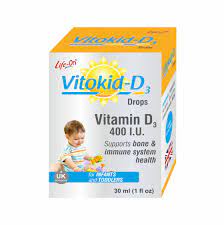
Vitokid-D3 drops 400IU 30ml
Vitokid-D3 drops 400IU 30ml
- ✔️ Delivers the NHS-recommended 400IU vitamin D3 daily for infants
- ✔️ Supports healthy bone mineralisation and calcium absorption in babies
- ✔️ Suitable from birth for breastfed and partially formula-fed infants
- ✔️ Easy-to-use dropper for accurate, mess-free dosing every time
- ✔️ Helps reduce risk of rickets and vitamin D deficiency in young children
Price Checker
 Lowest price guarantee
 Includes FREE private prescription


Couldn't load pickup availability
What Are Vitokid-D3 Drops 400IU — the Vitamin D Drops for Babies?
Vitokid-D3 drops 400IU 30ml are an oral vitamin D3 supplement formulated specifically for babies and young children. Each dose delivers 400 International Units (IU) — equivalent to 10 micrograms — of colecalciferol, the same form of vitamin D your body produces naturally when skin is exposed to sunlight. In the UK, sunlight is simply not strong enough for most of the year to allow babies to make sufficient vitamin D on their own, which is why the NHS recommends daily supplementation for all breastfed infants and formula-fed babies drinking less than 500ml of formula per day. You can browse the full range of vitamins and supplements available at Cured Pharmacy if you are looking for additional nutritional support for your family.
Vitamin D deficiency in infancy can lead to rickets — a condition causing soft, weakened bones — as well as delayed growth and increased susceptibility to infections. The drops format makes dosing straightforward, even for newborns, and at just £5.21 for a 30ml bottle, Vitokid-D3 is an affordable way to protect your child's development from day one.
How Do Vitokid-D3 Drops Work in the Body?
Colecalciferol (vitamin D3) is a fat-soluble vitamin that undergoes a two-step conversion once absorbed. Understanding this process helps explain why consistent daily dosing matters so much in early life.
- Colecalciferol is absorbed from the gut into the bloodstream after oral administration.
- It travels to the liver, where it is converted to calcidiol (25-hydroxyvitamin D) — the main circulating storage form.
- The kidneys then convert calcidiol into calcitriol (1,25-dihydroxyvitamin D), the biologically active hormone.
- Calcitriol regulates the absorption of calcium and phosphate from the intestine, supporting healthy bone mineralisation.
- It also plays a role in immune cell function, helping the body respond to infections during a critical developmental window.
Because vitamin D is fat-soluble, it is best given alongside a feed containing some fat — such as breast milk or formula — to maximise absorption.
Who Should Use Vitokid-D3 Drops 400IU?
The NHS is clear: vitamin D supplementation is recommended for most babies in the UK, regardless of the season. Vitokid-D3 drops are particularly suitable for:
- Breastfed babies from birth to 12 months, as breast milk contains very little vitamin D.
- Formula-fed babies consuming less than 500ml of infant formula per day, since formula is already fortified but only at adequate levels when larger volumes are taken.
- Children aged 1–4 years who may not get enough vitamin D through diet alone.
- Babies and toddlers with darker skin tones, who are at higher risk of deficiency due to reduced cutaneous vitamin D synthesis.
If your baby was born prematurely or has a medical condition affecting fat absorption, speak to your GP or neonatal team before starting any supplement. You can also explore our baby and toddler range for other products to support your little one's health.
How Does Vitokid-D3 Compare to Other Infant Vitamin D Supplements?
| Feature | Vitokid-D3 Drops 400IU 30ml | Typical Multivitamin Drops (e.g. Abidec) |
|---|---|---|
| Active ingredient | Colecalciferol (D3) only | Multiple vitamins including D2 or D3 |
| Dose per serving | 400IU (10mcg) vitamin D3 | Variable; often lower vitamin D content |
| Suitable from | Birth | Usually from 1 month |
| Price | £5.21 / 30ml | Typically £4–£8 per bottle |
How Should Vitokid-D3 Drops Be Stored and Handled?
Store Vitokid-D3 drops below 25°C, away from direct sunlight and sources of heat. Keep the bottle tightly closed when not in use. Do not refrigerate unless the label specifically instructs you to do so, as condensation can affect the dropper mechanism. Once opened, use within the period stated on the packaging — typically within three months.
These vitamin D drops for babies should always be kept out of the sight and reach of children. While a single accidental extra drop is unlikely to cause harm, ingesting large quantities of any vitamin D supplement can lead to hypercalcaemia. If you suspect your child has taken more than the recommended amount, contact NHS 111 or your nearest A&E immediately.
This product is a medicine. Speak to your doctor or pharmacist before using if you have an underlying medical condition or are taking other medicines.
Vitokid-D3 Drops 400IU 30ml specifications
| Treatment category | Vitamin D deficiency prevention; nutritional supplement |
| Mechanism of action | Colecalciferol is converted to active calcitriol, regulating calcium and phosphate absorption |
| Effective for | Prevention of vitamin D deficiency and rickets in infants and young children |
| Suitable for | Babies from birth; children up to 4 years |
| Active ingredient | Colecalciferol (Vitamin D3) |
| Pack size | 30ml |
| Strength | 400IU (10 micrograms) per dose |
| UK classification | General Sale List (GSL) |
| Drug class | Fat-soluble vitamin / nutritional supplement |
| Preparation | Oral drops (liquid) |
| Route of administration | Oral |
Specifications of Vitokid-D3 Drops 400IU 30ml
What Is Vitokid-D3 Drops 400IU and What Is It Used For?
Vitokid-D3 drops 400IU 30ml contain colecalciferol — the natural form of vitamin D3 — in an easy-to-administer liquid format. It is used to prevent and treat vitamin D deficiency in babies and young children. Vitamin D is essential for the normal absorption of calcium and phosphate, both of which are needed for healthy bone growth, muscle function, and a well-regulated immune system. In the UK, where sunlight exposure is limited for much of the year, the NHS recommends that all breastfed babies receive a daily vitamin D supplement from birth.
Vitamin D deficiency in early childhood can cause rickets — a condition characterised by soft, deformed bones — as well as muscle weakness and increased risk of respiratory infections. Vitokid-D3 drops provide a straightforward, once-daily solution to meet the recommended intake of 8.5–10 micrograms (340–400IU) per day for infants under 12 months.
What Do You Need to Know Before Using Vitokid-D3 Drops?
Do not use Vitokid-D3 drops if any of the following apply to your child:
- Known hypersensitivity to colecalciferol or any of the excipients in the formulation.
- Hypercalcaemia (high blood calcium levels) or hypercalciuria (high calcium in the urine).
- Conditions associated with excessive vitamin D sensitivity, such as sarcoidosis or certain forms of lymphoma.
- Kidney stones (nephrolithiasis) or severe kidney disease.
Tell your doctor or pharmacist if your child is already receiving vitamin D from another source, such as fortified formula or a multivitamin, to avoid inadvertent over-supplementation. The following medicines may interact with vitamin D supplements:
- Thiazide diuretics — may increase the risk of hypercalcaemia when used alongside vitamin D.
- Digoxin and other cardiac glycosides — hypercalcaemia can increase the risk of cardiac arrhythmias.
- Corticosteroids — may reduce the absorption and effectiveness of vitamin D.
- Anticonvulsants (e.g. phenytoin, phenobarbital) — may accelerate the metabolism of vitamin D, reducing its effect.
How Should You Use Vitokid-D3 Drops?
Always use Vitokid-D3 drops exactly as directed on the label or as advised by your pharmacist or GP. The drops are given orally, once daily.
- Wash your hands thoroughly before handling the dropper.
- Hold the bottle upright and remove the cap.
- Squeeze the dropper bulb, insert the tip into the bottle, and release to draw up the liquid.
- Dispense the correct number of drops directly into your baby's mouth, or onto a clean spoon.
- Alternatively, add the drops to a small amount of breast milk, formula, or food — but ensure the full dose is consumed.
- Replace the cap securely after each use.
| Age Group | Recommended Daily Dose | Frequency |
|---|---|---|
| Birth to 12 months (breastfed) | 400IU (10 micrograms) | Once daily |
| Birth to 12 months (formula-fed, <500ml/day) | 400IU (10 micrograms) | Once daily |
| 1–4 years | 400IU (10 micrograms) | Once daily |
What Are the Possible Side Effects of Vitokid-D3 Drops?
At the recommended dose of 400IU daily, Vitokid-D3 drops are very well tolerated by most babies and young children. Side effects are rare when the product is used correctly. However, taking more than the recommended amount over a prolonged period can cause vitamin D toxicity.
Common side effects (may affect up to 1 in 10 people with excessive dosing):
- Nausea or vomiting
- Constipation
- Loss of appetite
Less common side effects (associated with hypercalcaemia from overdose):
- Excessive thirst and frequent urination
- Fatigue or unusual drowsiness
- Muscle weakness
- Confusion or irritability in infants
- Kidney problems with very prolonged excessive intake
If you notice any of these signs, stop giving the drops and seek medical advice promptly. You can also find further support through our baby and toddler health range for complementary products.
How Should You Store Vitokid-D3 Drops?
- Store below 25°C in a cool, dry place away from direct sunlight and heat sources.
- Do not freeze the product.
- Keep the bottle tightly closed when not in use to prevent contamination.
- Once opened, use within the period stated on the packaging (typically within three months).
- Keep out of the sight and reach of children at all times.
- Do not use after the expiry date printed on the bottle or carton.
- Do not dispose of medicines via wastewater or household waste — return unused product to your pharmacist for safe disposal.
If you are looking for other health essentials to support your family's wellbeing, explore our vitamins and supplements collection for a wide selection of nutritional products.
References
- https://www.nhs.uk/conditions/vitamins-and-minerals/vitamin-d/
- https://www.nhs.uk/conditions/rickets-and-osteomalacia/
- https://www.nhs.uk/pregnancy/keeping-well/vitamins-supplements-and-nutrition/
- https://www.nhs.uk/conditions/baby/weaning-and-feeding/vitamins-for-children/
- https://bnf.nice.org.uk/drugs/colecalciferol/
Written and reviewed by our qualified team
Your safety and success are our highest priorities. Our medical team rigorously evaluates every product and piece of advice we provide, ensuring you receive only the most effective, science-backed solutions available.
Frequently Asked Questions
Where can I buy Vitokid-D3 drops 400IU online in the UK?
You can buy Vitokid-D3 drops 400IU 30ml directly from Cured Pharmacy online for just £5.21, with no prescription required. It is classified as a General Sale List (GSL) medicine, meaning it is available over the counter. Simply add it to your basket and it will be dispatched to your door.
How do vitamin D drops for babies work in the body?
Colecalciferol (vitamin D3) is absorbed from the gut and converted first in the liver to calcidiol, then in the kidneys to calcitriol — the active form. Calcitriol regulates how much calcium and phosphate the intestines absorb, which is critical for healthy bone development. Without adequate vitamin D, babies cannot properly mineralise their growing bones.
How do I give Vitokid-D3 drops to my newborn?
Use the dropper provided to measure the correct dose and place it gently into your baby's cheek or onto a clean spoon. You can also add the drops to a small amount of breast milk or formula, but make sure your baby finishes the full feed so they receive the complete dose. Always give the drops once daily, ideally at the same time each day to build a routine.
What is the correct dose of Vitokid-D3 drops for a baby under 12 months?
The NHS recommends that breastfed babies and formula-fed babies drinking less than 500ml of formula daily receive 8.5–10 micrograms (340–400IU) of vitamin D per day. Vitokid-D3 drops 400IU deliver exactly this amount in a single daily dose. Do not give more than the stated dose without medical advice.
Do formula-fed babies need vitamin D drops?
Formula-fed babies who drink 500ml or more of infant formula per day generally do not need an additional vitamin D supplement, as formula is already fortified with vitamin D. However, if your baby is drinking less than 500ml daily — for example, during the transition to solid foods — the NHS recommends supplementing with 400IU of vitamin D. Check with your health visitor if you are unsure.
Are there any side effects of giving babies vitamin D drops?
At the recommended dose of 400IU per day, Vitokid-D3 drops are very well tolerated and side effects are extremely rare. The main risk arises from giving too much vitamin D over a prolonged period, which can cause hypercalcaemia — symptoms include excessive thirst, irritability, and poor feeding. Always stick to the recommended dose and never give additional vitamin D from multiple sources without checking with a pharmacist or GP first.
Who is eligible to use Vitokid-D3 drops 400IU?
Vitokid-D3 drops are suitable for babies from birth and young children up to 4 years of age who need daily vitamin D supplementation. The NHS particularly recommends them for breastfed infants, babies with darker skin tones, and those who have limited sun exposure. Children with certain medical conditions such as hypercalcaemia or kidney disease should not use this product without medical supervision.
What happens if I miss a dose of Vitokid-D3 drops?
If you forget to give a dose, simply give it as soon as you remember on the same day. If you do not remember until the following day, skip the missed dose entirely and continue with the normal daily schedule. Never give a double dose to compensate for a missed one, as this could increase the risk of side effects.
How long should my baby take vitamin D drops?
The NHS advises that babies should take vitamin D supplements from birth until at least their first birthday. Children aged 1–4 years are also recommended to take 10 micrograms (400IU) of vitamin D daily throughout the year. Your GP or health visitor can advise on whether supplementation should continue beyond this age based on your child's diet and lifestyle.
Can I give Vitokid-D3 drops alongside other vitamins or supplements?
You can, but you need to be careful about the total daily vitamin D intake from all sources combined. If your baby is already receiving a multivitamin drop that contains vitamin D, adding Vitokid-D3 on top could result in exceeding the safe upper limit. Always check the vitamin D content of any other supplements your child is taking and speak to a pharmacist if you are unsure. You can browse our full vitamins and supplements range for guidance on suitable products.
What are the alternatives to Vitokid-D3 drops for babies?
Other infant vitamin D supplements available in the UK include Abidec multivitamin drops (which contain vitamin D alongside other vitamins), Dalivit drops, and own-brand vitamin D drops from pharmacies. Vitokid-D3 provides vitamin D3 only, which is useful if you want to supplement a single nutrient without additional vitamins. Always compare the vitamin D content per dose when choosing an alternative to ensure it meets the NHS-recommended 400IU daily.
Is vitamin D3 better than vitamin D2 for babies?
Research suggests that vitamin D3 (colecalciferol), the form used in Vitokid-D3, is more effective than vitamin D2 (ergocalciferol) at raising and maintaining blood levels of 25-hydroxyvitamin D. This is why most UK health guidelines and NHS-recommended supplements now favour D3. Both forms are considered safe for infants at the recommended dose, but D3 is generally the preferred choice.
What is the best time of day to give Vitokid-D3 drops to my baby?
There is no strict requirement for a specific time of day, but giving the drops at the same time each day — such as during the morning feed — helps build a consistent routine and reduces the chance of forgetting. Because vitamin D is fat-soluble, giving it alongside a milk feed may help with absorption. Consistency matters more than timing.
Can Vitokid-D3 drops interact with any medicines my baby is taking?
Vitamin D supplements can interact with certain medicines, including thiazide diuretics (which may increase calcium levels), digoxin (where raised calcium can affect heart rhythm), and anticonvulsants such as phenytoin, which can reduce vitamin D effectiveness. If your baby is on any prescribed medication, always check with your GP or pharmacist before starting Vitokid-D3 drops. For other health products, explore our baby and toddler range.
What does the latest research say about vitamin D supplementation in infants?
Current evidence consistently supports daily vitamin D supplementation for breastfed infants in the UK, where dietary sources and sunlight exposure are insufficient to meet requirements. The Scientific Advisory Committee on Nutrition (SACN) reviewed the evidence in 2016 and recommended 10 micrograms (400IU) daily for all infants from birth. Ongoing research continues to explore vitamin D's role in immune regulation and respiratory health in early childhood, with findings broadly supporting the existing NHS guidance.
Written and reviewed by our qualified team

Reviewed by:
Tarun Kumar
Superintendent/ Clinical Lead
📖 Find out more about our team of medical content authors and how we ensure the accuracy of our content with our content guidelines.
Content last updated: 14 Sep 2026

We’re a safe and
regulated UK service

Lowest Price Guarantee

We're convinced you won't find your treatment cheaper, but if you do we'll refund the difference.
Find out more
100% discreet packaging

Discreet, unbranded packaging for every order.
Find out more

Need help?
Talk to our friendly experts now


How our service works

Service setup

Discreet packaging

Express delivery