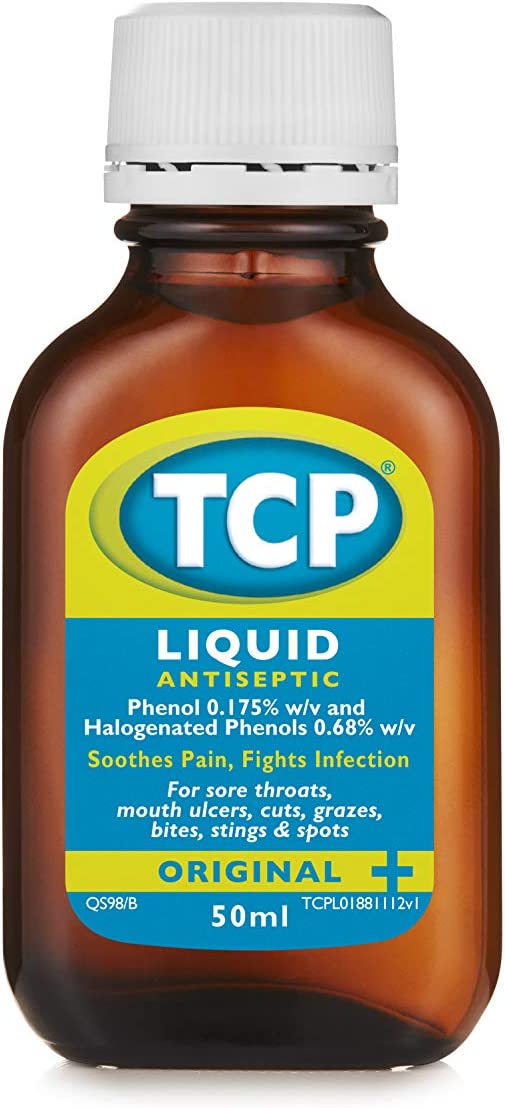
TCP Liquid Antiseptic - 50ml
TCP Liquid Antiseptic - 50ml
- ✔️ Kills bacteria on minor cuts, grazes and skin infections
- ✔️ Diluted solution soothes and cleanses sore throats effectively
- ✔️ Treats spots, cold sores and mouth ulcers with targeted application
- ✔️ Suitable for adults and children aged 3 and over
- ✔️ Compact 50ml bottle ideal for home first aid kits
Price Checker
 Lowest price guarantee
 Includes FREE private prescription


Couldn't load pickup availability
What Is TCP Liquid Antiseptic and How Does It Help?
If you've ever reached for a bottle of that distinctive-smelling liquid after a cut or graze, you'll know exactly what TCP liquid antiseptic is. It's one of the most recognisable first aid products in UK households — and for good reason. TCP has been used for decades to help cleanse minor wounds, treat skin infections, and soothe sore throats. Available here at Cured Pharmacy for just £3.99, this 50ml bottle is a compact, practical addition to any home medicine cabinet or first aid kit.
TCP contains phenol (0.175% w/v) alongside a blend of halogenated phenols. These active ingredients give it that characteristic sharp smell and its well-established antibacterial action. It's classified as a general sale medicine in the UK, meaning you can buy it without a prescription — though that doesn't mean it should be used carelessly. Always read the label and follow the instructions.
How Does TCP Liquid Antiseptic Work Against Bacteria?
TCP works by targeting the outer membranes of bacterial cells. When applied to skin or used as a gargle, the phenolic compounds penetrate and disrupt the structural integrity of bacterial cell walls, effectively killing a broad spectrum of bacteria. It's not a sterilising agent — it won't eliminate all microorganisms — but it significantly reduces bacterial load on the skin surface, which is exactly what you need when dealing with minor wounds or infections.
- Phenol and halogenated phenols disrupt bacterial cell membranes
- Reduces bacterial colonisation on broken or irritated skin
- Provides a mild antiseptic barrier to help prevent secondary infection
- Also has mild antifungal properties at higher concentrations
Who Should Use TCP Liquid Antiseptic?
TCP is suitable for most adults and children over 3 years old. It's particularly useful if you're prone to minor skin infections, frequently deal with cuts and grazes, or want a reliable antiseptic gargle for sore throats. That said, it's not appropriate for everyone — and there are situations where you should seek medical advice rather than reaching for the TCP.
- Adults with minor cuts, grazes, spots, or blisters
- People experiencing mild sore throats or mouth ulcers
- Children aged 3 and over (always diluted, under adult supervision)
- Anyone needing a quick, accessible antibacterial skin cleanser
It is not suitable for use on deep wounds, puncture wounds, or large areas of broken skin. If you have a known sensitivity to phenol or iodine-based products, speak to your pharmacist before use. Pregnant or breastfeeding women should also seek advice before using TCP regularly.
How Does TCP Liquid Antiseptic Compare to Other Antiseptics?
| Feature | TCP Liquid Antiseptic | Savlon Antiseptic Liquid |
|---|---|---|
| Active ingredient | Phenol 0.175% w/v, halogenated phenols | Chlorhexidine gluconate 0.3%, cetrimide 3% |
| Suitable for gargling | Yes (diluted) | No |
| Use on broken skin | Yes (diluted) | Yes (diluted) |
| UK OTC availability | Yes | Yes |
How Should You Store TCP Liquid Antiseptic?
Store your bottle of TCP liquid antiseptic below 25°C, away from direct sunlight and sources of heat. Keep the cap tightly closed when not in use to prevent evaporation of the active ingredients. Always store it out of reach and sight of children — even though it's an over-the-counter product, it can cause harm if swallowed in quantity.
Check the expiry date printed on the bottle before use. If the solution has changed colour significantly or smells different from usual, do not use it. You can browse our wider range of skin care products if you're looking for complementary treatments for minor skin conditions.
This product is a medicine. Speak to your doctor or pharmacist before using if you have an underlying medical condition or are taking other medicines.
TCP Liquid Antiseptic 50ml specifications
| Treatment category | Antiseptic / First Aid |
| Mechanism of action | Disrupts bacterial cell membranes via phenolic compounds |
| Effective against | Broad-spectrum bacteria; mild antifungal activity |
| Suitable for | Adults and children aged 3 and over |
| Active ingredient | Phenol 0.175% w/v, halogenated phenols |
| Pack size | 50ml |
| UK classification | General Sale Medicine (GSL) |
| Drug class | Antiseptic / Disinfectant |
| Preparation | Liquid solution |
| Route of administration | Topical (skin); oral gargle (diluted only) |
Specifications of TCP Liquid Antiseptic 50ml
What Is TCP Liquid Antiseptic and What Is It Used For?
TCP Liquid Antiseptic is a topical antibacterial and antiseptic solution used to cleanse and disinfect minor skin injuries and infections. It contains phenol (0.175% w/v) and halogenated phenols as its active ingredients. It is used for a range of everyday minor ailments, including:
- Minor cuts, grazes, and abrasions
- Spots, pimples, and blisters
- Mouth ulcers and cold sores
- Sore throats (as a diluted gargle)
- Minor skin infections and insect bites
TCP is classified as a General Sale Medicine (GSL) in the UK, meaning it is available without a prescription. However, it should still be used responsibly and in line with the instructions provided.
What Do You Need to Know Before Using TCP Liquid Antiseptic?
Before using TCP, it's important to check whether it is appropriate for you. Do not use TCP if any of the following apply:
- You are allergic to phenol, halogenated phenols, or any other ingredient in the product
- You have deep, puncture, or heavily contaminated wounds — these require medical attention
- You are applying it to large areas of broken or damaged skin
- The product is intended for use in or near the eyes
- You are treating a child under 3 years of age
Use with caution if you are pregnant or breastfeeding — speak to your GP or pharmacist before use. TCP should never be swallowed undiluted. If accidental ingestion occurs, seek medical advice immediately or contact NHS 111.
There are no clinically significant drug interactions known at standard topical doses. However, if you are using other topical preparations on the same area of skin — such as those from our creams and ointments range — allow each product to absorb fully before applying another, and seek pharmacist advice if unsure.
How Should You Use TCP Liquid Antiseptic?
Always follow the instructions on the label. The method of use varies depending on the condition being treated. Here are the general steps:
- Wash your hands thoroughly before handling the product
- For skin use: dilute 1 part TCP with 3 parts water, or use undiluted on spots and cold sores with a cotton bud
- Apply to the affected area using a clean cotton wool pad or cotton bud
- Allow to dry naturally — do not rinse off unless irritation occurs
- For sore throat gargle: dilute 15ml of TCP in a small amount of warm water and gargle for 30 seconds — do not swallow
- Repeat up to 3 times daily as needed
| Indication | Age Group | Dose | Frequency |
|---|---|---|---|
| Minor cuts / skin | Adults & children 3+ | Diluted (1:3 with water) | Up to 3 times daily |
| Spots / cold sores | Adults | Undiluted (cotton bud) | Up to 3 times daily |
| Sore throat gargle | Adults & children 12+ | 15ml diluted in warm water | Up to 3 times daily |
| Mouth ulcers | Adults | Diluted (1:3 with water) | Up to 3 times daily |
What Are the Possible Side Effects of TCP Liquid Antiseptic?
Like all medicines, TCP can cause side effects, although not everyone experiences them. Most side effects are mild and localised to the area of application.
Common side effects:
- Mild burning or stinging sensation on application
- Temporary redness or skin irritation at the site of use
- Slight discomfort when used as a gargle
Less common side effects:
- Skin sensitisation with prolonged or repeated use
- Contact dermatitis in individuals with phenol sensitivity
- Nausea if accidentally swallowed (seek medical advice immediately)
If you notice any signs of an allergic reaction — such as swelling, severe redness, rash, or difficulty breathing — stop using TCP immediately and seek urgent medical attention. You can call NHS 111 or visit your nearest A&E if symptoms are severe.
How Should You Store TCP Liquid Antiseptic?
Correct storage helps maintain the effectiveness of TCP and keeps it safe for use. Follow these storage guidelines:
- Store below 25°C in a cool, dry place
- Keep away from direct sunlight and heat sources
- Always replace the cap tightly after use
- Keep out of reach and sight of children
- Do not store in the bathroom — humidity can affect the product
- Check the expiry date before each use and do not use after the date shown
- Dispose of unused or expired product responsibly — return to your local pharmacy
If you're building a complete home first aid kit, you might also want to explore our pain relief range for complementary products to manage discomfort alongside minor wound care.
References
- https://www.nhs.uk/conditions/cuts-and-grazes/
- https://www.nhs.uk/conditions/sore-throat/
- https://www.nhs.uk/conditions/mouth-ulcers/
- https://www.nhs.uk/conditions/cold-sores/
- https://www.nhs.uk/conditions/skin-infections/
- https://www.nhs.uk/conditions/insect-bites-and-stings/
- https://www.medicines.org.uk/emc/product/1442
Written and reviewed by our qualified team
Your safety and success are our highest priorities. Our medical team rigorously evaluates every product and piece of advice we provide, ensuring you receive only the most effective, science-backed solutions available.
Frequently Asked Questions
Where can I buy TCP liquid antiseptic online in the UK?
You can buy TCP Liquid Antiseptic 50ml directly from Cured Pharmacy online for just £3.99, with no prescription required. It's a General Sale Medicine, so it's available over the counter and can be ordered to your home. Browse our full first aid range for other essential products to keep alongside it.
How does TCP liquid antiseptic work in the body?
TCP works by releasing phenol and halogenated phenols that penetrate and disrupt the outer membranes of bacterial cells, effectively killing them. This reduces the bacterial load on the skin surface or in the throat, helping to prevent infection and support natural healing. It does not absorb significantly into the bloodstream when used topically as directed.
How do I use TCP liquid antiseptic step by step?
For minor cuts and skin conditions, dilute one part TCP with three parts water and apply with a clean cotton wool pad. For spots or cold sores, apply undiluted using a cotton bud. For a sore throat gargle, mix 15ml of TCP in a small amount of warm water, gargle for 30 seconds, and spit out — never swallow.
Can I use TCP liquid antiseptic undiluted on my skin?
TCP can be applied undiluted directly to spots, pimples, and cold sores using a cotton bud, as these are small, localised areas. However, for larger areas of skin or broken skin, it should always be diluted with water to reduce the risk of irritation. If you experience burning or redness, rinse the area with water and dilute further before reapplying.
What is the correct dose of TCP liquid antiseptic for a sore throat?
For adults and children aged 12 and over, dilute 15ml of TCP in a small amount of warm water and gargle for approximately 30 seconds. This can be repeated up to three times daily. Do not swallow the solution — always spit it out after gargling.
What are the side effects of TCP liquid antiseptic?
The most common side effects are a mild burning or stinging sensation and temporary redness at the site of application, particularly on broken skin. Less commonly, some people may experience skin sensitisation or contact dermatitis with repeated use. If you notice swelling, a rash, or difficulty breathing, stop use immediately and seek medical attention.
How do I manage side effects of TCP liquid antiseptic?
If you experience stinging or irritation, rinse the affected area with cool water and try diluting the TCP further before your next application. Avoid applying to large areas of broken skin, which increases the risk of irritation. If side effects persist or worsen, stop using the product and speak to your pharmacist or GP.
Is TCP liquid antiseptic safe for children?
TCP is not recommended for children under 3 years of age. For children aged 3 and over, the solution should always be diluted before use and applied under adult supervision. The gargle use is generally only recommended for those aged 12 and over — always check the label and consult a pharmacist if you are unsure about use in younger children.
Who is eligible to use TCP liquid antiseptic?
TCP is suitable for most adults and children aged 3 and over for topical use on minor skin conditions. It is not suitable for people with a known allergy to phenol or halogenated phenols, or for use on deep or heavily contaminated wounds. Pregnant or breastfeeding women should consult a pharmacist or GP before use.
What happens if I accidentally swallow TCP liquid antiseptic?
If TCP is swallowed undiluted or in significant quantities, it can cause nausea, vomiting, and irritation to the mouth and digestive tract. You should seek medical advice immediately by calling NHS 111 or going to your nearest A&E. Always keep TCP out of reach of children to prevent accidental ingestion.
What are the alternatives to TCP liquid antiseptic?
Common alternatives include Savlon Antiseptic Liquid (containing chlorhexidine and cetrimide), Dettol Antiseptic Liquid (chloroxylenol-based), and iodine-based antiseptics such as povidone-iodine. Each has a slightly different active ingredient and range of uses — TCP is unique in that it can also be used as a diluted gargle for sore throats, which most alternatives cannot. You can also explore our skin care collection for other topical treatment options.
How long can you use TCP liquid antiseptic for?
TCP is intended for short-term use on minor conditions only. If your symptoms — such as a sore throat, wound, or skin infection — have not improved within 5 days of use, you should stop using TCP and consult a pharmacist or GP. Prolonged use on the same area of skin may increase the risk of sensitisation or irritation.
Can I use TCP liquid antiseptic on mouth ulcers?
Yes, TCP can be used on mouth ulcers when diluted with water (1 part TCP to 3 parts water) and applied carefully with a cotton bud or used as a mouth rinse. It helps reduce bacterial activity around the ulcer and may ease discomfort. If mouth ulcers are large, persistent, or recurring frequently, speak to your dentist or GP as this may indicate an underlying condition.
Can TCP liquid antiseptic be used during pregnancy?
There is limited clinical data on the safety of TCP during pregnancy, particularly with regular or widespread topical use. It is advisable to consult your GP or midwife before using TCP if you are pregnant or breastfeeding. For minor wound care during pregnancy, your healthcare provider can recommend the most appropriate option.
What are the latest findings on antiseptic use for minor wounds?
Current NHS guidance recommends cleaning minor cuts and grazes with clean running water rather than antiseptics as the primary step, as antiseptics can sometimes slow tissue healing if overused. However, antiseptic solutions like TCP remain useful for reducing bacterial contamination in higher-risk wounds or where clean water alone is insufficient. Always follow NHS wound care advice and use antiseptics as a complementary measure rather than a replacement for proper wound cleaning.
Written and reviewed by our qualified team

Reviewed by:
Tarun Kumar
Superintendent/ Clinical Lead
📖 Find out more about our team of medical content authors and how we ensure the accuracy of our content with our content guidelines.
Content last updated: 14 Sep 2026

We’re a safe and
regulated UK service

Lowest Price Guarantee

We're convinced you won't find your treatment cheaper, but if you do we'll refund the difference.
Find out more
100% discreet packaging

Discreet, unbranded packaging for every order.
Find out more

Need help?
Talk to our friendly experts now


How our service works

Service setup

Discreet packaging

Express delivery