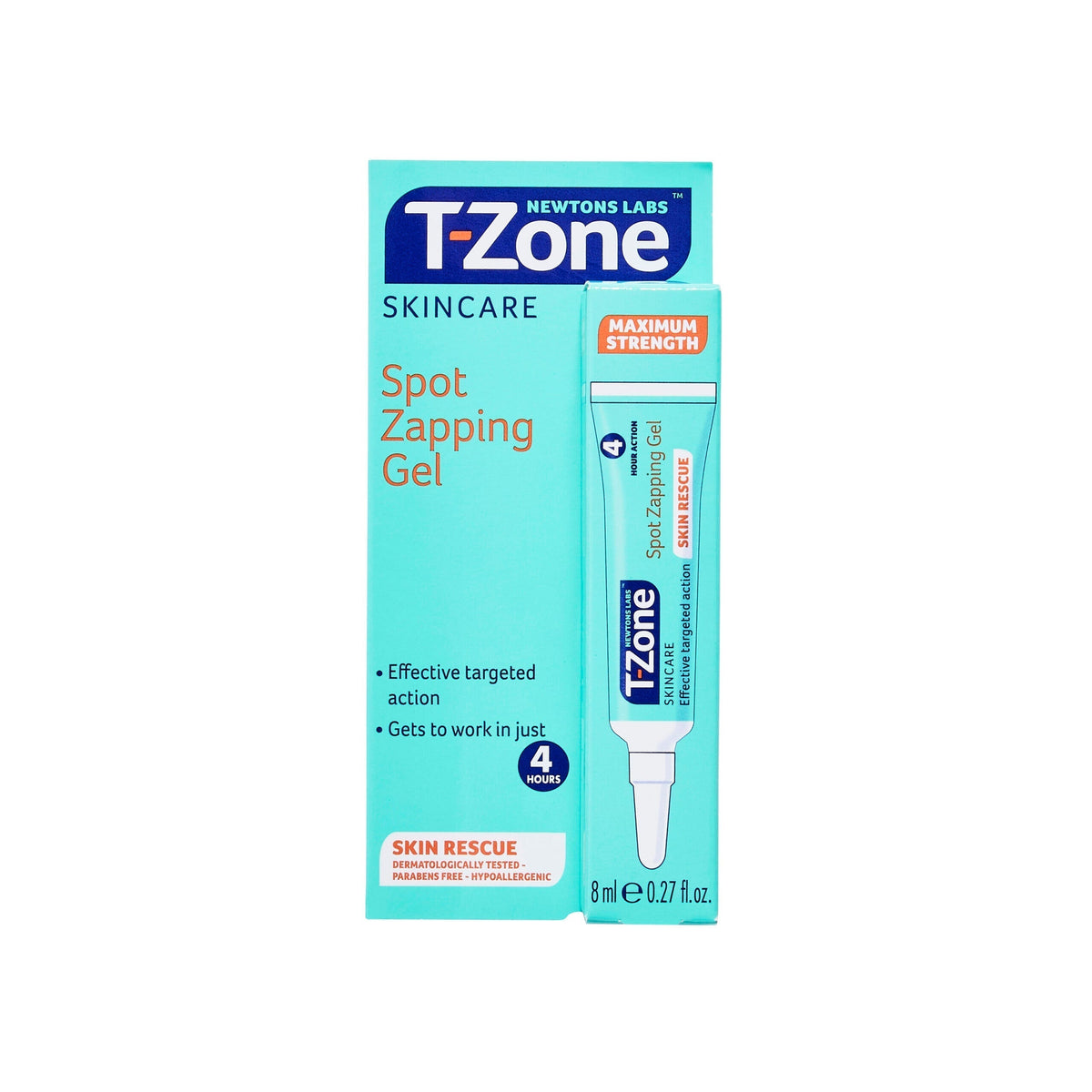
T-Zone Spot Zapping Gel 8ml
T-Zone Spot Zapping Gel 8ml
- ✔️ Targets individual spots with salicylic acid directly
- ✔️ Helps unblock pores and reduce spot inflammation
- ✔️ Visible reduction in blemish size within 24–48 hours
- ✔️ Suitable for oily and combination skin aged 12 and over
- ✔️ Compact 8ml tube ideal for on-the-go spot treatment
Price Checker
 Lowest price guarantee
 Includes FREE private prescription


Couldn't load pickup availability
What Is T-Zone Spot Zapping Gel and Does It Work?
Spots are frustrating. Whether you're dealing with the occasional blemish or a more persistent breakout, finding something that actually works — without breaking the bank — can feel like a challenge. The spot zapping gel from T-Zone is a targeted, over-the-counter topical treatment designed to tackle individual spots quickly and conveniently. At just £1.60 for an 8ml tube, it's one of the most accessible acne spot treatments available in the UK. If you're looking to build a simple, effective skincare routine, you'll find this gel sits neatly alongside other products in our skin care collection.
Acne is incredibly common. According to the NHS, it affects around 95% of people aged 11 to 30 to some degree, and it can continue well into adulthood. Spots form when hair follicles become blocked with sebum and dead skin cells, creating an environment where bacteria can thrive. A targeted spot treatment like this gel can help interrupt that process directly at the source.
How Does T-Zone Spot Zapping Gel Work on Spots?
The active ingredient in T-Zone Spot Zapping Gel is salicylic acid, a well-established beta-hydroxy acid (BHA) used widely in dermatology for acne management. Unlike some treatments that work systemically, this gel acts locally — right where you apply it. Here's how it works:
- Keratolytic action: Salicylic acid softens and loosens the outer layer of skin, helping to unblock pores clogged with dead skin cells and excess sebum.
- Anti-inflammatory effect: It helps to calm the redness and swelling associated with inflamed spots.
- Comedolytic properties: It helps prevent the formation of comedones (blackheads and whiteheads) by keeping pores clear.
- Drying action: The gel formulation helps to dry out existing spots, reducing their size and visibility over time.
Because it's applied directly to the spot rather than across the whole face, it minimises the risk of over-drying surrounding healthy skin — a common complaint with broader acne washes or toners.
Who Should Use T-Zone Spot Zapping Gel?
This gel is suitable for most people who experience occasional to moderate acne spots. It's particularly well-suited to those who want a simple, no-fuss spot treatment they can apply quickly as part of their daily routine. That said, it's not appropriate for everyone.
This product may be suitable for you if you:
- Are aged 12 and over and experience occasional or regular acne spots
- Have oily or combination skin prone to blackheads and whiteheads
- Want a targeted treatment rather than a full-face product
- Are looking for an affordable, pharmacy-quality spot treatment
It is not recommended for use on broken, sunburned, or eczema-affected skin, or for children under 12 without medical advice.
How Does T-Zone Spot Zapping Gel Compare to Other Spot Treatments?
| Feature | T-Zone Spot Zapping Gel | Benzoyl Peroxide Gel (e.g. Acnecide) |
|---|---|---|
| Active ingredient | Salicylic acid | Benzoyl peroxide |
| Primary action | Unclogs pores, reduces inflammation | Kills acne-causing bacteria |
| Risk of bleaching fabrics | No | Yes — can bleach clothing and bedding |
| Price | £1.60 / 8ml | Typically £5–£8 / 30g |
| Suitable for sensitive skin | Use with caution | Use with caution |
Is T-Zone Spot Zapping Gel Safe to Store and Use Long-Term?
This spot zapping gel should be stored below 25°C, away from direct sunlight, and kept out of the reach and sight of children. Do not use the product after the expiry date printed on the packaging. The 8ml tube is compact enough to keep in a bathroom cabinet or travel bag without taking up much space — handy if you want to treat spots on the go.
For long-term use, it's worth monitoring your skin's response. If you notice persistent dryness, peeling, or irritation, reduce the frequency of application or speak to your pharmacist. Those with skin conditions requiring medicated creams or ointments should seek professional advice before adding any new topical product to their routine.
This product is a medicine. Speak to your doctor or pharmacist before using if you have an underlying medical condition or are taking other medicines.
T-Zone Spot Zapping Gel 8ml specifications
| Treatment category | Acne / Spot treatment |
| Active ingredient | Salicylic acid |
| Mechanism of action | Keratolytic, comedolytic, anti-inflammatory |
| Suitable for | Adults and children aged 12 and over |
| Pack size | 8ml |
| UK classification | General Sale (GSL) |
| Drug class | Beta-hydroxy acid (BHA) |
| Preparation | Topical gel |
| Route of administration | Topical (skin) |
Specifications of T-Zone Spot Zapping Gel 8ml
What Is T-Zone Spot Zapping Gel and What Is It Used For?
T-Zone Spot Zapping Gel 8ml is a topical, over-the-counter acne treatment containing salicylic acid as its active ingredient. It is used to treat individual spots, pimples, and blemishes associated with mild to moderate acne. The gel is applied directly onto the affected area of skin, where it works to unblock pores, reduce inflammation, and dry out existing spots. It is not intended for use across large areas of skin or as a full-face treatment.
Acne is one of the most common skin conditions in the UK, particularly affecting teenagers and young adults, though it can persist or develop in adulthood too. The NHS notes that acne most commonly affects the face, back, and chest, and is caused by a combination of excess sebum production, blocked follicles, and bacterial activity. A targeted spot treatment like this gel can be a practical first step in managing mild breakouts before considering prescription options.
What Do You Need to Know Before Using T-Zone Spot Zapping Gel?
Before using this gel, read the following carefully. Do not use this product if any of the contraindications below apply to you.
Do not use T-Zone Spot Zapping Gel if you:
- Are allergic to salicylic acid or any other ingredient in the formulation
- Have broken, cracked, or sunburned skin in the area you intend to treat
- Have eczema, rosacea, or another active inflammatory skin condition in the treatment area
- Are pregnant or breastfeeding — consult your GP or pharmacist before use
- Are treating a child under 12 years of age without medical advice
Warnings and precautions:
- Avoid contact with eyes, nostrils, mouth, and mucous membranes
- Do not apply to large areas of skin — this is a spot treatment only
- If irritation, excessive dryness, or peeling occurs, reduce frequency of use or discontinue
- Keep out of reach and sight of children
- Do not use alongside other salicylic acid-containing products on the same area, as this may increase the risk of irritation
Known drug interactions:
- No significant systemic drug interactions are expected with topical salicylic acid at this concentration
- Avoid using alongside other topical exfoliants (e.g. retinoids, AHAs) on the same area without professional guidance, as combined use may increase skin sensitivity
How Should You Use T-Zone Spot Zapping Gel?
Using this gel correctly will help you get the most from it while minimising the risk of irritation. Follow these steps each time you apply it:
- Wash your hands thoroughly before and after application.
- Cleanse the affected area of skin gently with a mild, non-comedogenic cleanser and pat dry.
- Squeeze a small amount of gel — roughly the size of a pinhead — onto a clean fingertip or cotton bud.
- Apply directly onto the spot only. Avoid spreading onto surrounding healthy skin.
- Allow the gel to absorb fully. Do not rinse off.
- Apply up to twice daily — once in the morning and once in the evening.
| Indication | Age Group | Dose | Frequency |
|---|---|---|---|
| Acne spots / blemishes | 12 years and over | Small amount applied directly to spot | Up to twice daily |
| Acne spots / blemishes | Under 12 years | Not recommended without medical advice | — |
What Are the Possible Side Effects of T-Zone Spot Zapping Gel?
Like all medicines, T-Zone Spot Zapping Gel can cause side effects, although not everyone will experience them. Most side effects are mild and localised to the area of application.
Common side effects (may affect some users):
- Mild dryness or tightness of the skin at the application site
- Slight redness or flushing around the treated spot
- Tingling or mild stinging sensation immediately after application
Less common side effects (affect fewer users):
- Peeling or flaking of the skin around the treated area
- Increased skin sensitivity to sunlight (photosensitivity) — use SPF protection during the day
- Contact dermatitis or allergic skin reaction — stop use immediately if this occurs
If you experience a severe allergic reaction — including swelling of the face, lips, or throat, difficulty breathing, or widespread rash — seek emergency medical attention immediately. You can also browse our broader skin care range for complementary products that support your routine.
How Should You Store T-Zone Spot Zapping Gel?
Correct storage helps maintain the product's effectiveness and safety throughout its shelf life.
- Store below 25°C in a cool, dry place
- Keep away from direct sunlight and sources of heat
- Do not freeze
- Keep the cap tightly closed when not in use
- Store out of the reach and sight of children
- Do not use after the expiry date printed on the tube or packaging
- Do not dispose of medicines via wastewater or household waste — return unused product to your pharmacist for safe disposal
If you're managing multiple skin concerns alongside acne, it may be worth exploring our creams and ointments collection for additional topical options suited to your needs.
References
Written and reviewed by our qualified team
Your safety and success are our highest priorities. Our medical team rigorously evaluates every product and piece of advice we provide, ensuring you receive only the most effective, science-backed solutions available.
Frequently Asked Questions
Where can I buy T-Zone Spot Zapping Gel online in the UK?
You can buy T-Zone Spot Zapping Gel 8ml directly from Cured Pharmacy, a UK GPhC-registered online pharmacy, for just £1.60. No prescription is needed, and it's available as a general sale medicine. It's one of the most affordable spot treatments available online in the UK, and you can browse our full skin care collection for complementary products.
How does T-Zone Spot Zapping Gel work in the body?
T-Zone Spot Zapping Gel contains salicylic acid, a beta-hydroxy acid that works topically on the skin rather than systemically. It penetrates into the pore lining, loosening dead skin cells and excess sebum that cause blockages. It also has mild anti-inflammatory properties, which help to reduce the redness and swelling around active spots.
How do I use T-Zone Spot Zapping Gel step by step?
Start by washing your hands and cleansing the affected skin with a gentle cleanser, then pat dry. Apply a tiny amount of gel — about the size of a pinhead — directly onto the spot using a clean fingertip or cotton bud. Allow it to absorb fully without rinsing, and repeat up to twice daily for best results.
How often should I apply T-Zone Spot Zapping Gel?
Apply the gel up to twice daily — once in the morning and once in the evening — directly onto individual spots. Applying it more frequently than recommended won't speed up results and may increase the risk of skin dryness or irritation. Consistency over several days is more effective than over-application.
How long does it take for T-Zone Spot Zapping Gel to work?
Many people notice a visible reduction in spot size and redness within 24 to 48 hours of consistent use. Individual results will vary depending on the severity of the spot and your skin type. For persistent or widespread acne, it's worth speaking to your GP or pharmacist about additional treatment options.
What are the side effects of T-Zone Spot Zapping Gel?
The most commonly reported side effects include mild skin dryness, slight redness, and a tingling sensation at the application site. Less commonly, some people experience peeling or increased sensitivity to sunlight. If you notice a more significant reaction such as swelling, widespread rash, or difficulty breathing, stop use immediately and seek medical attention.
Is T-Zone Spot Zapping Gel suitable for sensitive skin?
This gel may cause dryness or irritation on very sensitive or reactive skin types, so it's advisable to do a small patch test before applying it to your face. If you have a diagnosed skin condition such as eczema or rosacea, consult your pharmacist before use. Those with sensitive skin should start with once-daily application and monitor their skin's response carefully.
Can I use T-Zone Spot Zapping Gel under makeup?
Yes — once the gel has fully absorbed into the skin, which usually takes a few minutes, you can apply makeup over the top as normal. Using non-comedogenic (non-pore-blocking) makeup products is recommended if you're prone to acne. Avoid applying thick, heavy foundations directly over the gel before it has dried, as this may reduce its effectiveness.
Who is eligible to use T-Zone Spot Zapping Gel?
This gel is suitable for adults and young people aged 12 and over who experience mild to moderate acne spots. It is not recommended for children under 12 without medical advice, or for anyone with broken, sunburned, or eczema-affected skin in the treatment area. Pregnant or breastfeeding individuals should consult their GP or pharmacist before use.
What happens if I accidentally apply too much T-Zone Spot Zapping Gel?
Applying too much gel to a spot or using it over a large area of skin may increase the risk of dryness, redness, and peeling. If this happens, gently rinse the area with cool water and apply a fragrance-free, non-comedogenic moisturiser to soothe the skin. Reduce the amount you apply going forward and stick to the recommended twice-daily maximum.
Can I use T-Zone Spot Zapping Gel alongside other acne treatments?
Using this gel alongside other topical exfoliants — such as retinoids, AHAs, or other salicylic acid products — on the same area of skin is not recommended without professional guidance, as this may cause excessive irritation. If you are using prescription acne treatments, speak to your GP or pharmacist before adding any new over-the-counter product. You can explore our creams and ointments range for other topical options.
What are the alternatives to T-Zone Spot Zapping Gel?
Common alternatives include benzoyl peroxide gels (such as Acnecide), which work by targeting acne-causing bacteria rather than unblocking pores. Topical retinoids and azelaic acid are also used for acne but are typically available on prescription. Your pharmacist can help you choose the most appropriate option based on your skin type and the severity of your acne.
How long can I use T-Zone Spot Zapping Gel for?
This gel can be used as needed for individual spots, but if you find yourself relying on it continuously for several weeks without improvement, it's worth speaking to your GP. Persistent or severe acne may require prescription treatment. The NHS recommends seeking medical advice if over-the-counter treatments haven't worked after about two months of consistent use.
Is T-Zone Spot Zapping Gel the same as a spot zapping gel sold in supermarkets?
Many supermarket and pharmacy own-brand spot gels contain similar active ingredients, such as salicylic acid, at comparable concentrations. The key difference is often in the formulation, additional ingredients, and price point. T-Zone Spot Zapping Gel is a well-recognised UK brand specifically formulated for targeted spot treatment, available here at just £1.60.
What does the latest research say about salicylic acid for acne?
Salicylic acid is a well-established, evidence-based ingredient for mild to moderate acne, recognised in both NHS guidance and the BNF as an effective keratolytic agent. Research consistently supports its use for unclogging pores and reducing comedones, though it is generally considered less effective than benzoyl peroxide for inflammatory acne. It remains a widely recommended first-line option for over-the-counter spot treatment due to its tolerability and accessibility.
Written and reviewed by our qualified team

Reviewed by:
Tarun Kumar
Superintendent/ Clinical Lead
📖 Find out more about our team of medical content authors and how we ensure the accuracy of our content with our content guidelines.
Content last updated: 14 Sep 2026

We’re a safe and
regulated UK service

Lowest Price Guarantee

We're convinced you won't find your treatment cheaper, but if you do we'll refund the difference.
Find out more
100% discreet packaging

Discreet, unbranded packaging for every order.
Find out more

Need help?
Talk to our friendly experts now


How our service works

Service setup

Discreet packaging

Express delivery