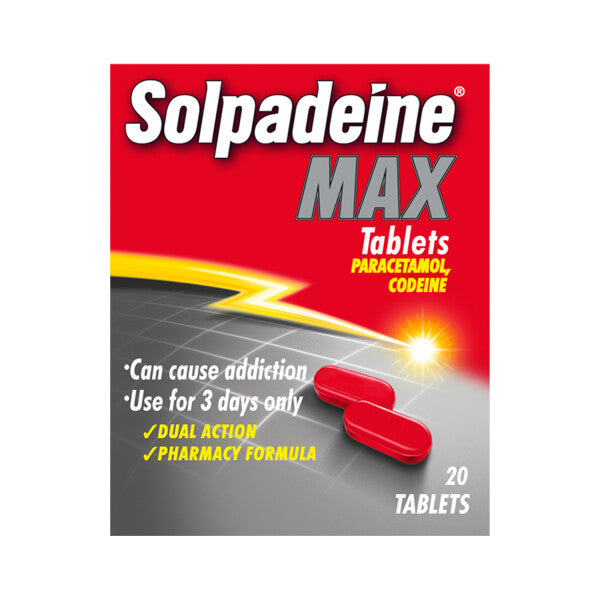
Solpadeine Max - 24 Tablets
- ✔️ Relieves moderate pain unresponsive to paracetamol alone
- ✔️ Dual-action formula: paracetamol plus codeine phosphate
- ✔️ Targets headache, dental, period and muscular pain
- ✔️ Convenient 24-tablet pack for short-term pain episodes
- ✔️ Suitable for adults and young people aged 16 and over
Price Checker
Not approved? Full refund
Includes FREE private prescription
Couldn't load pickup availability
How Should You Use Solpadeine Max?
Solpadeine Max tablets should be swallowed whole with a full glass of water. Do not crush or chew the tablets, and always take them at the intervals specified — taking them too close together increases the risk of side effects and paracetamol toxicity.
Follow these steps each time you take a dose:
What Is the Correct Dose of Solpadeine Max?
The dose of Solpadeine Max varies by age group. It is important to follow the dosage guidance carefully, as exceeding the recommended dose of paracetamol can cause serious liver damage, even if you feel well at the time.
When Is the Best Time to Use Solpadeine Max?
Solpadeine Max can be taken at any time of day when pain relief is needed, provided the 4-hour gap between doses is maintained. Taking it with or after food may help reduce the likelihood of nausea, particularly if your stomach is sensitive.
Bear in mind that codeine can cause drowsiness, so if you need to drive or operate machinery, consider whether this medicine is appropriate at that time. Evening doses may be preferable if drowsiness is a concern during your working day.
How Long Can You Use Solpadeine Max For?
Solpadeine Max is intended for short-term use only — a maximum of 3 consecutive days. This limit exists because codeine carries a risk of dependence with prolonged use, and regular use of any painkiller for more than a few days can lead to medication-overuse headache, where the medicine itself begins to cause the pain it was meant to treat.
If your pain has not improved after 3 days, or if it worsens at any point, stop taking Solpadeine Max and speak to your GP. Do not self-medicate beyond the recommended duration.
Do not exceed the recommended dose. If in doubt, speak to your pharmacist.
What Are the Most Common Side Effects of Solpadeine Max?
The most frequently reported side effects of Solpadeine Max are linked to its codeine content. Codeine acts on the central nervous system and the gut, which is why digestive and sedative effects are the most common complaints. Most people tolerate the medicine well when taken at the correct dose for a short period.
- Constipation
- Nausea or feeling sick
- Drowsiness or sedation
- Dizziness or light-headedness
What Are the Less Common Side Effects of Solpadeine Max?
Some people experience less frequent side effects that are still worth being aware of. These tend to occur more often if the medicine is taken at higher doses or for longer than recommended.
- Dry mouth
- Headache (particularly with overuse — known as medication-overuse headache)
- Skin rash or itching
- Difficulty passing urine
- Mood changes or feeling unusually euphoric or low
- Stomach discomfort
What Are the Serious Side Effects of Solpadeine Max?
Serious side effects are uncommon but require immediate medical attention if they occur. Paracetamol overdose is a particular concern — it can cause severe liver damage that may not become apparent for several days after the overdose. If you think you or someone else has taken too much, go to A&E immediately, even if you feel well.
Seek urgent medical help if you experience any of the following:
- Signs of a serious allergic reaction: swelling of the face, lips, tongue, or throat; difficulty breathing; severe skin rash
- Slow or shallow breathing (particularly in elderly patients or those with respiratory conditions)
- Severe abdominal pain or yellowing of the skin or eyes (signs of liver problems)
- Seizures
- Extreme confusion or loss of consciousness
Can Solpadeine Max Interact With Other Medicines?
Yes — Solpadeine Max can interact with several other medicines, which is why it is important to tell your pharmacist about everything you are currently taking. The most clinically significant interactions involve medicines that affect the central nervous system or liver metabolism.
- MAOIs: Do not take within 14 days of stopping a monoamine oxidase inhibitor — serious and potentially life-threatening interactions can occur.
- Other paracetamol-containing products: Taking these alongside Solpadeine Max risks exceeding the safe daily paracetamol limit of 4 g, which can cause liver damage.
- Warfarin and other anticoagulants: Regular paracetamol use may enhance the anticoagulant effect, increasing bleeding risk.
- Sedatives, sleeping tablets, or other opioids: Combining these with codeine increases the risk of excessive sedation and respiratory depression.
- Certain antidepressants (SSRIs, tricyclics): May increase the risk of serotonin-related side effects.
What Should You Do If You Experience Side Effects?
If you experience mild side effects such as constipation or nausea, these often improve as your body adjusts. Staying well hydrated and taking the tablets with food can help. If side effects are troublesome or persistent, stop taking the medicine and speak to your pharmacist or GP about alternative pain relief options.
For serious side effects or suspected overdose, do not wait — seek emergency medical attention immediately. You can also report suspected side effects directly to the MHRA via the Yellow Card scheme at yellowcard.mhra.gov.uk.
If you are concerned about any side effects, contact your pharmacist or GP immediately.
Written and reviewed by our qualified team
Reviewed by:
Tarun Kumar
Superintendent/ Clinical Lead
📖 Find out more about our team of medical content authors.
Content last reviewed: 11 November 2026
★ Other popular options
100% discreet packaging
Discreet, unbranded packaging for every order.
Need help?
Talk to our friendly experts now
How our service works
Service setup
Discreet packaging
Express delivery
Medically reviewed by
Tarun Kumar, Superintendent Pharmacist & Clinical Lead (GPhC 2233073)
Last updated on 11 November 2026.
Review History
Our experts continually monitor new findings in health and medicine, and we update our articles when new information becomes available.
Why this page was updated on 11 November 2026
Content checked and updated as part of our periodic review, to ensure accuracy and currentness.
Current version (11 November 2026)
Edited by: The Editorial Team
Medically reviewed by:
Tarun Kumar, GPhC No. 2233073, Superintendent Pharmacist & Clinical Lead
How we source info.
When we present you with stats, data, opinion or a consensus, we'll tell you where this came from.