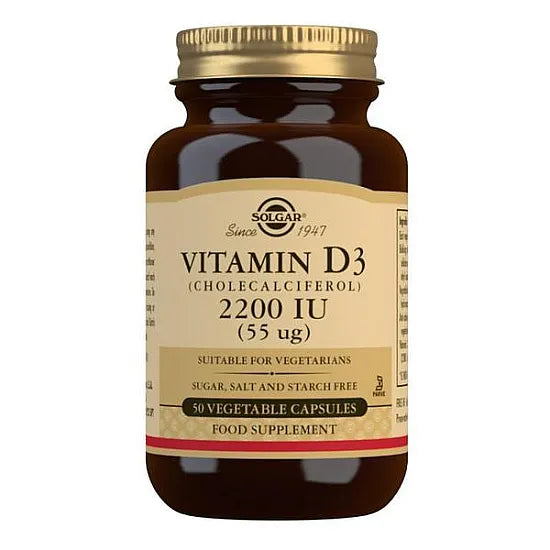
Solgar Vitamin D3 (Cholecalciferol) 2200 IU (55 mcg) - 50 Vegetable Capsules
Solgar Vitamin D3 (Cholecalciferol) 2200 IU (55 mcg) - 50 Vegetable Capsules
- ✔️ Supports normal bone mineralisation and reduces osteomalacia risk
- ✔️ Helps maintain healthy muscle function in adults
- ✔️ Contributes to normal immune system activity year-round
- ✔️ Vegetable capsule — suitable for vegetarians, no gelatin
- ✔️ Each capsule delivers 55 mcg cholecalciferol for reliable daily dosing
Price Checker
 Lowest price guarantee
 Includes FREE private prescription


Couldn't load pickup availability
What Is a Vitamin D3 Supplement and Do You Need One?
Vitamin D deficiency is surprisingly common in the UK. Because sunlight exposure is limited for much of the year — and many people spend the majority of their time indoors — the NHS advises that everyone should consider taking a vitamin D3 supplement during autumn and winter. Solgar Vitamin D3 (Cholecalciferol) 2200 IU (55 mcg) provides a well-established dose of cholecalciferol in a convenient vegetable capsule, making it suitable for those following a vegetarian lifestyle. You can browse the full range of options in our vitamins and supplements collection.
Each capsule delivers 55 mcg (2200 IU) of vitamin D3 — a form the body uses more efficiently than vitamin D2. Cholecalciferol is the same form of vitamin D that your skin produces naturally when exposed to sunlight, which is why it is generally considered the preferred supplemental form.
How Does Solgar Vitamin D3 Work in the Body?
Once you swallow a capsule, cholecalciferol is absorbed through the gut and transported to the liver, where it is converted to calcidiol (25-hydroxyvitamin D). The kidneys then convert this into calcitriol — the biologically active form. Calcitriol acts almost like a hormone, binding to vitamin D receptors found in tissues throughout the body.
- Increases calcium and phosphate absorption from the gut
- Supports normal bone mineralisation and reduces the risk of osteomalacia
- Contributes to normal muscle function, reducing the risk of falls in older adults
- Helps regulate immune cell activity, supporting the body's natural defences
- Plays a role in cell division and normal inflammatory responses
Who Should Consider Using Solgar Vitamin D3 2200 IU?
This supplement is suitable for a wide range of adults. The NHS specifically highlights certain groups who are at higher risk of vitamin D deficiency and who may benefit most from supplementation.
- Adults who spend little time outdoors or live in northern parts of the UK
- People with darker skin tones, who require more sunlight to produce adequate vitamin D
- Older adults, whose skin becomes less efficient at synthesising vitamin D
- Those following a vegan or vegetarian diet with limited dietary sources of vitamin D
- People who cover most of their skin for cultural or medical reasons
It is not recommended for children under 18 without specific medical advice, as paediatric dosing requirements differ. Always speak to your GP or pharmacist if you are unsure whether this dose is right for you.
How Does Solgar Vitamin D3 2200 IU Compare to Other Vitamin D Options?
| Feature | Solgar Vitamin D3 2200 IU | Standard 400 IU Supplement |
|---|---|---|
| Dose per capsule | 2200 IU (55 mcg) | 400 IU (10 mcg) |
| Form of vitamin D | Cholecalciferol (D3) | Cholecalciferol (D3) or Ergocalciferol (D2) |
| Capsule type | Vegetable capsule (vegetarian-friendly) | Varies — may contain gelatin |
| Suitable for | Adults with higher supplementation needs | General population maintenance dose |
Is Solgar Vitamin D3 Suitable for Vegetarians and How Should It Be Stored?
Yes — each capsule uses a plant-derived vegetable shell, making this vitamin D3 supplement suitable for vegetarians. It does not contain gelatin, which is commonly used in standard softgel capsules. Store the product below 25°C in a cool, dry place away from direct sunlight. Keep the lid tightly closed and out of reach of children.
If you are managing other aspects of your health alongside supplementation, you may also find our skin care collection useful, as vitamin D plays a role in normal skin cell function.
This product is a food supplement. Speak to your doctor or pharmacist before using if you have an underlying medical condition or are taking other medicines.
Solgar Vitamin D3 (Cholecalciferol) 2200 IU (55 mcg) - 50 Vegetable Capsules specifications
| Treatment category | Vitamin D deficiency prevention; bone, muscle, and immune support |
| Mechanism of action | Converted to active calcitriol; regulates calcium and phosphate absorption |
| Effective for | Supporting normal bone mineralisation, muscle function, and immune health |
| Suitable for | Adults; vegetarians |
| Active ingredient | Cholecalciferol (Vitamin D3) |
| Pack size | 50 vegetable capsules |
| Strength | 2200 IU (55 mcg) per capsule |
| UK classification | Food supplement (not a licensed medicine) |
| Drug class | Fat-soluble vitamin |
| Preparation | Vegetable capsule |
| Route of administration | Oral |
Specifications of Solgar Vitamin D3 (Cholecalciferol) 2200 IU (55 mcg) - 50 Vegetable Capsules
What Is Solgar Vitamin D3 and What Is It Used For?
Solgar Vitamin D3 (Cholecalciferol) 2200 IU (55 mcg) is a food supplement containing cholecalciferol — the naturally occurring form of vitamin D that the body produces when skin is exposed to sunlight. It is used to help maintain adequate vitamin D levels in adults, particularly during autumn and winter when sunlight in the UK is insufficient for the skin to synthesise enough vitamin D naturally. Vitamin D contributes to the normal absorption of calcium and phosphorus, the maintenance of normal bones and teeth, normal muscle function, and the normal functioning of the immune system.
What Do You Need to Know Before Using Solgar Vitamin D3?
Before starting this supplement, it is important to be aware of the following contraindications and warnings:
- Do not take if you have hypercalcaemia (high blood calcium levels)
- Do not take if you have hypervitaminosis D (vitamin D toxicity)
- Use with caution if you have kidney disease, kidney stones, or sarcoidosis
- Consult your GP before use if you are pregnant or breastfeeding
- Not recommended for children under 18 without medical supervision
- Do not take alongside other high-dose vitamin D supplements without medical advice
The following medicines may interact with vitamin D3 supplementation:
- Thiazide diuretics (e.g. bendroflumethiazide) — may increase the risk of hypercalcaemia
- Digoxin — hypercalcaemia caused by excess vitamin D can increase the risk of digoxin toxicity
- Corticosteroids — may reduce the effectiveness of vitamin D
- Orlistat and cholestyramine — may reduce absorption of fat-soluble vitamins including vitamin D
- Anticonvulsants (e.g. phenytoin, carbamazepine) — may increase the breakdown of vitamin D
How Should You Use Solgar Vitamin D3 2200 IU?
This supplement is straightforward to use. Follow these steps for best results:
- Take one vegetable capsule daily
- Swallow whole with a full glass of water
- Take with a meal containing some fat to support absorption, as vitamin D is fat-soluble
- Take at the same time each day to help maintain a consistent routine
- Do not exceed one capsule per day unless directed by a healthcare professional
| Indication | Age Group | Dose | Frequency |
|---|---|---|---|
| Vitamin D maintenance | Adults (18+) | 1 capsule (2200 IU / 55 mcg) | Once daily with food |
| Children under 18 | Under 18 | Not recommended without medical advice | — |
If you are also looking to support your overall wellbeing, our hair care collection includes products that complement a healthy supplement routine, as vitamin D receptors are present in hair follicle cells.
What Are the Possible Side Effects of Solgar Vitamin D3?
At the recommended dose, side effects are uncommon. However, taking too much vitamin D over a prolonged period can lead to a build-up in the body and cause harm.
Common side effects (with excessive intake):
- Nausea and vomiting
- Loss of appetite
- Constipation
- Fatigue and weakness
Less common side effects (associated with hypercalcaemia):
- Increased thirst and frequent urination
- Confusion or disorientation
- Muscle weakness or bone pain
- Kidney problems with very prolonged excessive intake
Stop taking the supplement and seek medical advice promptly if you experience any of the above symptoms. These effects are not expected at the recommended daily dose but can occur if multiple vitamin D-containing products are taken simultaneously.
How Should You Store Solgar Vitamin D3?
- Store below 25°C in a cool, dry place
- Keep away from direct sunlight and sources of heat
- Keep the lid tightly closed after each use
- Keep out of the sight and reach of children
- Do not use after the expiry date printed on the label
- Do not store in the bathroom or near a sink where moisture may affect the capsules
For other health products you may need alongside your supplement routine, explore our cold and flu range — vitamin D plays a recognised role in supporting immune function during the winter months.
References
Written and reviewed by our qualified team
Your safety and success are our highest priorities. Our medical team rigorously evaluates every product and piece of advice we provide, ensuring you receive only the most effective, science-backed solutions available.
Frequently Asked Questions
Where can I buy Solgar Vitamin D3 2200 IU online in the UK?
You can buy Solgar Vitamin D3 2200 IU (55 mcg) 50 vegetable capsules directly from Cured Pharmacy, a GPhC-registered UK online pharmacy. It is available without a prescription as an over-the-counter food supplement. You can also browse our full vitamins and supplements collection for related products.
How does vitamin D3 work in the body?
Cholecalciferol (vitamin D3) is absorbed from the gut and converted in the liver to calcidiol, then further converted in the kidneys to calcitriol — the active form. Calcitriol binds to vitamin D receptors throughout the body, regulating calcium and phosphate absorption, supporting bone mineralisation, and modulating immune cell activity. This is why maintaining adequate vitamin D levels matters year-round, not just in winter.
How do I take Solgar Vitamin D3 step by step?
Take one vegetable capsule daily with a meal that contains some fat, as vitamin D is fat-soluble and absorption is improved in the presence of dietary fat. Swallow the capsule whole with a full glass of water, and try to take it at the same time each day to build a consistent habit. Do not take more than one capsule per day unless a healthcare professional has advised otherwise.
What is the best time of day to take Solgar Vitamin D3?
Most people find it easiest to take their vitamin D3 capsule with their main meal — typically lunch or dinner — as this is usually the meal with the highest fat content, which aids absorption. There is no strong clinical evidence that morning versus evening makes a significant difference to efficacy, so consistency matters more than timing. Choose whichever time fits best into your daily routine.
What are the side effects of Solgar Vitamin D3 2200 IU?
At the recommended dose of one capsule daily, side effects are uncommon. However, taking too much vitamin D over time can cause hypercalcaemia — symptoms include nausea, fatigue, increased thirst, frequent urination, and confusion. If you experience any of these, stop taking the supplement and speak to your GP promptly. Do not take this product alongside other high-dose vitamin D supplements without medical advice.
Who is eligible to take Solgar Vitamin D3 2200 IU?
This supplement is suitable for adults aged 18 and over, including vegetarians, who want to maintain adequate vitamin D levels — particularly during autumn and winter. It is especially relevant for people with limited sun exposure, darker skin tones, or older adults whose skin is less efficient at producing vitamin D. It is not recommended for children under 18 without specific medical guidance, as their dosing requirements differ.
What happens if I miss a dose of Solgar Vitamin D3?
If you forget to take your capsule, simply take it as soon as you remember — unless it is nearly time for your next scheduled dose, in which case skip the missed one entirely. Never take two capsules at once to compensate for a missed dose. Because vitamin D is fat-soluble and stored in the body, an occasional missed day is unlikely to have a significant impact on your overall levels.
Can I take Solgar Vitamin D3 if I am pregnant or breastfeeding?
The NHS recommends that pregnant and breastfeeding women take a daily vitamin D supplement, but the standard recommended dose during pregnancy is 10 mcg (400 IU) per day. The 2200 IU dose in this product exceeds that standard recommendation, so you should speak to your GP or midwife before taking it during pregnancy or whilst breastfeeding. They can advise on the most appropriate dose for your individual circumstances.
What are the alternatives to Solgar Vitamin D3 2200 IU?
Alternatives include lower-dose vitamin D3 supplements at 400 IU (10 mcg) or 1000 IU (25 mcg), which are widely available and suitable for general maintenance. Vitamin D2 (ergocalciferol) is another option, though research suggests D3 is more effective at raising and maintaining blood levels. If you are looking for a broader range of options, our vitamins and supplements collection includes various formulations to suit different needs.
How long should I take a vitamin D3 supplement for?
The NHS advises that adults in the UK consider taking a vitamin D supplement throughout autumn and winter (approximately October to March), when sunlight is insufficient for the skin to produce adequate vitamin D. People at higher risk of deficiency — including those with limited sun exposure, darker skin, or older adults — may benefit from year-round supplementation. Speak to your GP about long-term use, particularly at doses above the standard 10 mcg (400 IU) recommendation.
Is 2200 IU of vitamin D3 safe to take daily?
The NHS states that taking up to 100 mcg (4000 IU) of vitamin D per day is unlikely to cause harm in most adults. At 55 mcg (2200 IU), this product sits well within that safe upper limit for healthy adults. However, if you are taking other supplements or medicines that affect calcium or vitamin D metabolism, it is sensible to check with your pharmacist or GP before starting.
Does Solgar Vitamin D3 contain any allergens or animal products?
Solgar Vitamin D3 2200 IU uses a plant-derived vegetable capsule shell, making it free from gelatin and suitable for vegetarians. The cholecalciferol used in most vitamin D3 supplements is typically derived from lanolin (sheep's wool), so it may not be considered vegan by all standards — check the product label or contact Solgar directly if this is a concern for you. It does not contain gluten, wheat, dairy, or artificial preservatives according to the manufacturer's labelling.
Can vitamin D3 supplements interact with my other medicines?
Yes, certain medicines can interact with vitamin D3 supplementation. Thiazide diuretics may increase the risk of hypercalcaemia when taken alongside vitamin D, and anticonvulsants such as phenytoin can increase the breakdown of vitamin D, reducing its effectiveness. Orlistat and cholestyramine may reduce absorption of fat-soluble vitamins including vitamin D3. Always tell your pharmacist about all medicines and supplements you are taking before starting a new product.
What are the latest findings on vitamin D3 and immune health?
Research continues to explore the role of vitamin D in immune regulation. Vitamin D receptors are found on most immune cells, and adequate levels are associated with normal immune function. The NHS acknowledges vitamin D's role in supporting the immune system, though it does not currently recommend supplementation specifically for immune enhancement beyond correcting deficiency. Maintaining sufficient levels through a daily supplement during winter remains the most evidence-based approach for the general UK population.
How do I know if I am vitamin D deficient?
Symptoms of vitamin D deficiency can be vague and include fatigue, bone or muscle pain, low mood, and frequent infections — but many people have no symptoms at all. The only reliable way to confirm deficiency is through a blood test measuring your serum 25-hydroxyvitamin D level, which your GP can arrange. If you are in a high-risk group, your GP may recommend testing and could prescribe a higher-dose supplement if deficiency is confirmed.
Written and reviewed by our qualified team

Reviewed by:
Tarun Kumar
Superintendent/ Clinical Lead
📖 Find out more about our team of medical content authors and how we ensure the accuracy of our content with our content guidelines.
Content last updated: 14 Sep 2026

We’re a safe and
regulated UK service

Lowest Price Guarantee

We're convinced you won't find your treatment cheaper, but if you do we'll refund the difference.
Find out more
100% discreet packaging

Discreet, unbranded packaging for every order.
Find out more

Need help?
Talk to our friendly experts now


How our service works

Service setup

Discreet packaging

Express delivery