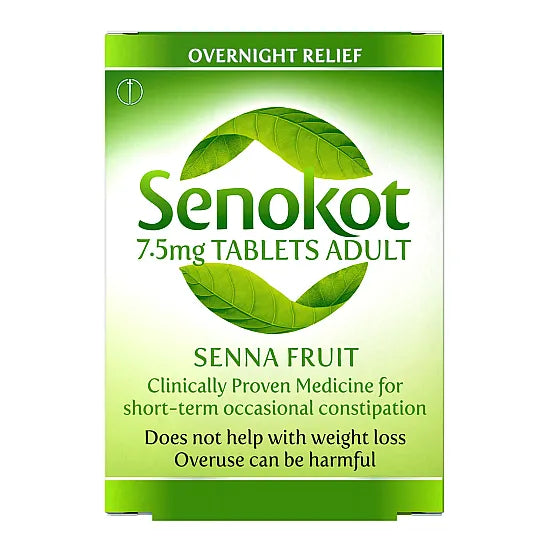
Senokot Senna - 60 Tablets
Senokot Senna - 60 Tablets
- ✔️ Relieves occasional constipation gently within 8–12 hours
- ✔️ Plant-derived senna stimulates natural bowel movement overnight
- ✔️ Suitable for adults and young people aged 12 and over
- ✔️ 60-tablet pack provides a practical short-term constipation solution
- ✔️ Each tablet contains 7.5 mg sennosides for consistent laxative action
Price Checker
 Lowest price guarantee
 Includes FREE private prescription


Couldn't load pickup availability
Are Senna Tablets for Constipation Right for You?
Constipation is something most people experience at some point — and it can be genuinely uncomfortable. Whether it's brought on by a change in diet, reduced activity, or simply not drinking enough water, that sluggish, bloated feeling is hard to ignore. Senna tablets for constipation have been used for decades as a reliable, plant-derived option to get things moving again. Senokot Senna 60 Tablets contain senna, a naturally occurring stimulant laxative derived from the Senna alexandrina plant, and are available over the counter without a prescription. You can browse our full range of constipation treatments if you'd like to compare your options before deciding.
Each pack contains 60 tablets, making it a practical choice if you need a short course of treatment or want to keep something in the medicine cabinet for occasional use. At £5.99, it offers straightforward value for a well-established laxative that has been trusted by patients and recommended by pharmacists across the UK for many years.
How Do Senokot Senna Tablets Work?
Senna works as a stimulant laxative. The active compounds — called sennosides — are not absorbed in the small intestine. Instead, they travel to the large bowel, where gut bacteria convert them into active metabolites. These metabolites then act directly on the lining of the colon.
- Sennosides stimulate the nerve plexus in the bowel wall, increasing peristaltic contractions (the wave-like muscle movements that push contents along).
- They also reduce the absorption of water and electrolytes from the colon, softening the stool.
- The combined effect typically produces a bowel movement within 8 to 12 hours of taking the dose.
- Because of this timing, most people take Senokot at bedtime and find relief the following morning.
This mechanism is well understood and has been studied extensively. The NHS notes that stimulant laxatives like senna are effective for short-term relief of constipation when dietary and lifestyle measures haven't been sufficient.
Who Should Use Senokot Senna Tablets?
Senokot Senna tablets are suitable for adults and children aged 12 and over who are experiencing occasional constipation. They're particularly useful when you need reliable, overnight relief rather than a slower-acting option. That said, they're not appropriate for everyone — and it's worth knowing who should avoid them before you start.
Senokot Senna tablets may be suitable if you:
- Are an adult or young person aged 12 or over with occasional constipation
- Have not found adequate relief from dietary changes or increased fluid intake
- Need a short-term laxative solution (up to 7 days)
- Prefer a plant-derived, well-established laxative option
They are not suitable for children under 12, people with intestinal obstruction, inflammatory bowel conditions such as Crohn's disease or ulcerative colitis, or anyone with unexplained abdominal pain. If you're also dealing with symptoms like bloating, cramping, or irregular bowel habits that might suggest something more complex, it's worth exploring our IBS and cramps range for additional support.
How Does Senokot Senna Compare to Other Laxatives?
| Feature | Senokot Senna 60 Tablets | Lactulose (Osmotic Laxative) |
|---|---|---|
| Type of laxative | Stimulant | Osmotic |
| Onset of action | 8–12 hours | 24–48 hours |
| Suitable for | Adults & children 12+ | Adults & children (dose varies) |
| Form | Tablet | Oral liquid |
How Should You Store Senokot Senna Tablets?
Store Senokot Senna 60 Tablets below 25°C in a dry place, away from direct sunlight. Keep them out of reach and sight of children at all times. Do not use the tablets after the expiry date printed on the packaging — even if they look unchanged, their efficacy may be reduced.
If you're managing constipation alongside other digestive concerns, it's worth noting that senna tablets for constipation are intended for short-term use only. Prolonged use without medical supervision can lead to dependence on laxatives for normal bowel function, electrolyte imbalances, and other complications. Always read the patient information leaflet supplied with the product.
This product is a medicine. Speak to your doctor or pharmacist before using if you have an underlying medical condition or are taking other medicines.
Senokot Senna 60 Tablets specifications
| Treatment category | Constipation relief |
| Mechanism of action | Stimulant laxative — increases bowel peristalsis via sennoside activation |
| Effective | Within 8–12 hours |
| Suitable for | Adults and children aged 12 and over |
| Active ingredient | Senna (as sennosides 7.5 mg per tablet) |
| Pack size | 60 tablets |
| Strength | 7.5 mg sennosides per tablet |
| UK classification | General Sale List (GSL) |
| Drug class | Stimulant laxative |
| Preparation | Film-coated tablet |
| Route of administration | Oral |
Specifications of Senokot Senna 60 Tablets
What Is Senokot Senna and What Is It Used For?
Senokot Senna 60 Tablets are an over-the-counter stimulant laxative used to relieve occasional constipation in adults and young people aged 12 and over. The active ingredient is senna, a plant-derived compound that has been used medicinally for centuries. Each tablet contains 7.5 mg of sennosides, which stimulate the bowel to produce a natural movement, typically within 8 to 12 hours. The NHS describes stimulant laxatives as appropriate for short-term use when other measures — such as increasing dietary fibre and fluid intake — have not provided adequate relief.
What Do You Need to Know Before Using Senokot Senna?
Before taking Senokot Senna tablets, it's important to check whether they are appropriate for you. Do not take these tablets if any of the following apply:
- You are under 12 years of age
- You have a known or suspected bowel obstruction or ileus
- You have severe abdominal pain, nausea, or vomiting of unknown cause
- You have inflammatory bowel disease (e.g. Crohn's disease or ulcerative colitis)
- You are allergic to senna or any other ingredient in the tablet
- You have appendicitis or have recently had abdominal surgery
Speak to your doctor or pharmacist before use if you are pregnant, breastfeeding, elderly, or have a history of kidney or liver problems. Prolonged or excessive use of stimulant laxatives can cause electrolyte imbalances, particularly low potassium (hypokalaemia), which may be clinically significant if you are taking certain heart or blood pressure medicines.
Known drug interactions to be aware of include:
- Digoxin — hypokalaemia caused by excessive laxative use may increase the risk of digoxin toxicity
- Diuretics — combined use may worsen electrolyte imbalances
- Other laxatives — concurrent use is generally not recommended without medical advice
How Should You Use Senokot Senna Tablets?
Always follow the instructions in the patient information leaflet. The standard recommended approach is as follows:
- Take the tablets orally with a full glass of water.
- Swallow the tablets whole — do not crush or chew them.
- Take your dose at bedtime for a bowel movement the following morning.
- Start with the lowest effective dose and increase only if needed, up to the stated maximum.
- Do not take for more than 7 consecutive days without speaking to a healthcare professional.
| Indication | Age Group | Dose | Frequency |
|---|---|---|---|
| Occasional constipation | Adults & children 12+ | 2 tablets (starting dose) | Once daily at bedtime |
| Occasional constipation (if needed) | Adults & children 12+ | Up to 4 tablets maximum | Once daily at bedtime |
| Children under 12 | Under 12 | Not recommended | — |
If you are also managing haemorrhoids alongside constipation, straining can worsen symptoms significantly. You may find it helpful to explore our haemorrhoids and piles range for complementary relief options.
What Are the Possible Side Effects of Senokot Senna?
Like all medicines, Senokot Senna tablets can cause side effects, although not everyone experiences them. Knowing what to expect can help you manage them if they occur.
Common side effects:
- Abdominal cramps or discomfort
- Loose stools or diarrhoea (particularly if the dose is too high)
- Flatulence (wind)
- Nausea
Less common side effects:
- Discolouration of urine (may appear yellow-brown or reddish — this is harmless)
- Skin reactions such as rash or urticaria (rare)
- Electrolyte disturbances with prolonged use (e.g. low potassium)
- Laxative dependence with long-term misuse
Stop taking the tablets and seek medical advice if you experience severe abdominal pain, blood in your stools, or symptoms that suggest an allergic reaction such as swelling of the face or difficulty breathing.
How Should You Store Senokot Senna Tablets?
Correct storage helps maintain the quality and safety of your tablets. Follow these guidelines:
- Store below 25°C in a cool, dry place
- Keep away from direct sunlight and moisture
- Keep out of reach and sight of children
- Do not use after the expiry date printed on the carton or blister pack
- Do not store in the bathroom or near a sink — humidity can affect the tablets
- Dispose of unused medicines safely — return to your local pharmacy for disposal
If you're looking to support your overall digestive health alongside short-term laxative use, our vitamins and supplements range includes fibre supplements and probiotics that may help maintain regular bowel habits over time.
References
Written and reviewed by our qualified team
Your safety and success are our highest priorities. Our medical team rigorously evaluates every product and piece of advice we provide, ensuring you receive only the most effective, science-backed solutions available.
Frequently Asked Questions
Where can I buy Senokot Senna tablets online in the UK?
You can buy Senokot Senna 60 Tablets directly from Cured Pharmacy, a UK GPhC-registered online pharmacy. No prescription is needed as senna is available over the counter. Simply add to your basket and choose your preferred delivery option at checkout.
How do senna tablets for constipation work in the body?
Senna contains naturally occurring compounds called sennosides that pass through the small intestine unabsorbed and reach the colon, where gut bacteria convert them into active metabolites. These stimulate the nerve plexus in the bowel wall, increasing muscle contractions and encouraging a bowel movement. They also reduce water reabsorption in the colon, helping to soften the stool.
How do I take Senokot Senna tablets step by step?
Take 2 tablets at bedtime with a full glass of water, swallowing them whole. If needed, the dose can be increased to a maximum of 4 tablets, but always start with the lowest effective dose. Do not take for more than 7 consecutive days without speaking to a pharmacist or GP.
What is the best time to take Senokot Senna tablets?
The best time to take Senokot Senna tablets is at bedtime. Because senna typically takes 8 to 12 hours to work, taking it in the evening means you're likely to experience a bowel movement the following morning. This timing fits naturally into most people's routines and minimises disruption during the day.
What are the common side effects of Senokot Senna tablets?
The most common side effects are abdominal cramps, loose stools, and flatulence — these are usually mild and settle once the course is finished or the dose is reduced. Some people notice a harmless yellow-brown or reddish discolouration of their urine, which is caused by senna metabolites and is not a cause for concern. If you experience severe pain or blood in your stools, stop taking the tablets and seek medical advice promptly.
How do I manage side effects of Senokot Senna tablets?
If you experience cramping or loose stools, try reducing your dose to 1 tablet at bedtime rather than 2. Staying well hydrated and eating a fibre-rich diet alongside treatment can help regulate the effect. If side effects persist or are severe, speak to your pharmacist — they can advise on whether a different type of laxative might suit you better.
Who is eligible to take Senokot Senna tablets?
Senokot Senna tablets are suitable for adults and young people aged 12 and over who have occasional constipation. They are not suitable for children under 12, people with bowel obstruction, inflammatory bowel disease, or unexplained abdominal pain. If you are pregnant, breastfeeding, or taking regular medication, speak to your pharmacist or GP before use.
Can I take Senokot Senna tablets during pregnancy?
Constipation is very common during pregnancy, but you should speak to your midwife or GP before taking senna. The NHS generally recommends bulk-forming laxatives such as ispaghula husk as the first-line option in pregnancy. Senna is sometimes used in the short term under medical guidance, but it should not be taken without professional advice during pregnancy.
What happens if I miss a dose of Senokot Senna tablets?
If you forget to take your dose at bedtime, simply take it the following night — do not double up to make up for a missed dose. Senokot Senna is taken as needed for occasional constipation rather than as a strict daily regimen, so missing one dose is unlikely to cause any problems. If constipation continues despite regular use, speak to your pharmacist.
How long can you take Senokot Senna tablets for?
Senokot Senna tablets should not be used for more than 7 consecutive days without medical advice. Long-term or excessive use of stimulant laxatives can lead to laxative dependence, where the bowel becomes reliant on stimulation to function normally. If constipation is a recurring problem, speak to your GP to identify and address any underlying cause.
What are alternatives to senna tablets for constipation?
There are several types of laxative available, each working differently. Alternatives include bulk-forming laxatives (e.g. ispaghula husk/Fybogel), osmotic laxatives (e.g. lactulose or macrogol), and stool softeners. You can explore the full range of options in our constipation treatments collection. Lifestyle changes — including increased dietary fibre, fluid intake, and physical activity — are also recommended as first-line measures by the NHS.
Can Senokot Senna tablets interact with other medicines?
Yes, senna can interact with certain medicines. The most clinically significant interaction is with digoxin — if senna causes low potassium (hypokalaemia) through excessive use, this can increase the risk of digoxin toxicity. Diuretics (water tablets) may also worsen electrolyte imbalances when taken alongside senna. Always tell your pharmacist about all medicines you are taking before starting a new treatment.
Is Senokot Senna suitable for elderly patients?
Senokot Senna can be used by older adults, but with caution. Elderly patients are more susceptible to electrolyte disturbances and dehydration, which can be worsened by stimulant laxatives. It's advisable for older people to speak to their GP or pharmacist before starting senna, particularly if they are taking multiple medicines or have heart or kidney conditions.
What are the latest studies on senna as a laxative?
Senna has a well-established evidence base built over many decades of clinical use. Current NHS and NICE guidance continues to support stimulant laxatives like senna as an effective short-term option for constipation when first-line measures have failed. Research also supports their use in palliative care settings, where constipation caused by opioid medicines is a common concern. No major new safety signals have emerged in recent years.
Can I take Senokot Senna tablets alongside IBS treatments?
If you have irritable bowel syndrome (IBS), you should speak to your GP or pharmacist before taking senna, as stimulant laxatives can sometimes worsen cramping and discomfort in people with IBS. There are gentler options that may be more appropriate — you can explore our IBS and cramps range for alternatives. A healthcare professional can help you find the most suitable approach for your symptoms.
Written and reviewed by our qualified team

Reviewed by:
Tarun Kumar
Superintendent/ Clinical Lead
📖 Find out more about our team of medical content authors and how we ensure the accuracy of our content with our content guidelines.
Content last updated: 14 Sep 2026
Other popular options


We’re a safe and
regulated UK service

Lowest Price Guarantee

We're convinced you won't find your treatment cheaper, but if you do we'll refund the difference.
Find out more
100% discreet packaging

Discreet, unbranded packaging for every order.
Find out more

Need help?
Talk to our friendly experts now


How our service works

Service setup

Discreet packaging

Express delivery