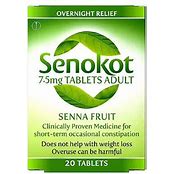
Senokot Senna - 20 Tablets
Senokot Senna - 20 Tablets
- ✔️ Relieves occasional constipation gently within 8–12 hours
- ✔️ Plant-derived senna stimulates natural bowel muscle contractions
- ✔️ Taken at bedtime for a comfortable morning result
- ✔️ Suitable for adults and young people aged 12 and over
- ✔️ Each pack contains 20 tablets for short-term constipation relief
Price Checker
 Lowest price guarantee
 Includes FREE private prescription


Couldn't load pickup availability
Are Senna Tablets for Constipation Right for You?
Constipation is something most people experience at some point — and it can be genuinely uncomfortable. Senokot Senna 20 Tablets offer a well-established, over-the-counter option for short-term relief. Each tablet contains senna, a plant-derived active ingredient that has been used as a laxative for centuries. If you're looking for senna tablets for constipation that work gently overnight, Senokot is one of the most recognised names in the UK. You can browse our full range of constipation treatments if you'd like to compare your options before deciding.
Senokot Senna tablets are classified as a stimulant laxative and are available without a prescription for adults and children aged 12 and over. They're designed for occasional use — not as a long-term solution — and are taken orally, usually at bedtime.
How Do Senokot Senna Tablets Work?
Senna works by stimulating the nerve endings in the wall of the large intestine (colon), encouraging the muscles to contract and push stool towards the rectum. The active compounds responsible are called sennosides — specifically sennoside A and sennoside B — which are converted by gut bacteria into their active form in the colon.
- Sennosides are absorbed minimally in the small intestine and reach the colon largely intact.
- Gut bacteria convert sennosides into rhein anthrone, the compound that stimulates bowel muscle contractions.
- Increased peristalsis (bowel movement) moves stool along more quickly.
- A bowel movement typically occurs within 8 to 12 hours of taking the tablet.
This is why most people take Senokot at bedtime — so it works while they sleep and produces a result the following morning.
Who Should Use Senokot Senna Tablets?
Senokot Senna tablets are suitable for adults and young people aged 12 and over who are experiencing occasional constipation. They're particularly useful when dietary changes and increased fluid intake haven't been enough on their own. That said, they're not appropriate for everyone.
- Adults experiencing occasional, short-term constipation
- People who need a predictable, overnight result
- Those who prefer a plant-derived laxative option
- Individuals who have been advised by a pharmacist that a stimulant laxative is appropriate
They are not suitable for children under 12, people with bowel obstruction, inflammatory bowel conditions such as Crohn's disease or ulcerative colitis, or those with unexplained abdominal pain. Always check with your pharmacist if you're unsure.
How Does Senokot Compare to Other Laxative Types?
| Feature | Senokot Senna Tablets | Lactulose (Osmotic Laxative) |
|---|---|---|
| Type of laxative | Stimulant | Osmotic |
| Onset of action | 8–12 hours | 24–48 hours |
| Suitable for children under 12 | No (without GP advice) | Yes (with appropriate dosing) |
| Plant-derived | Yes (senna plant) | No (synthetic sugar) |
Is Senokot Suitable for Long-Term Use and How Should It Be Stored?
Senokot Senna tablets should be stored below 25°C in a dry place, away from direct sunlight and out of the reach of children. Check the expiry date on the packaging before use and do not use the product after that date. If you're managing a digestive condition alongside constipation, you may also find our IBS and cramps collection helpful for broader gut health support.
These tablets are intended for short-term use only — no longer than 7 consecutive days. Prolonged use of stimulant laxatives without medical supervision can lead to electrolyte imbalances and, over time, reduced bowel function. If constipation persists beyond a week, speak to your GP.
This product is a medicine. Speak to your doctor or pharmacist before using if you have an underlying medical condition or are taking other medicines.
Senokot Senna 20 Tablets specifications
| Treatment category | Constipation relief |
| Mechanism of action | Stimulant laxative — stimulates colonic peristalsis via sennosides |
| Effective for | Occasional constipation in adults and children aged 12+ |
| Suitable for | Adults and children aged 12 and over |
| Active ingredient | Senna (7.5 mg total sennosides per tablet) |
| Pack size | 20 tablets |
| Strength | 7.5 mg sennosides per tablet |
| UK classification | General Sale List (GSL) |
| Drug class | Stimulant laxative (anthraquinone glycoside) |
| Preparation | Film-coated tablet |
| Route of administration | Oral |
Specifications of Senokot Senna 20 Tablets
What Is Senokot Senna and What Is It Used For?
Senokot Senna 20 Tablets contain senna as the active ingredient — specifically standardised to provide 7.5 mg of total sennosides per tablet. Senna is a naturally occurring plant extract derived from the leaves and pods of Cassia senna. It belongs to a class of medicines called stimulant laxatives, which work by directly stimulating the muscles of the bowel to contract.
These tablets are used to relieve occasional constipation in adults and young people aged 12 and over. Constipation is defined by the NHS as passing fewer than three stools per week, or passing stools that are hard, dry, or difficult to pass. Senokot is not intended to treat the underlying cause of constipation — it provides symptomatic relief while you address contributing factors such as diet, hydration, and physical activity.
What Do You Need to Know Before Using Senokot Senna Tablets?
Before taking these tablets, it's important to check whether they are appropriate for you. Do not take Senokot Senna tablets if any of the following apply:
- You have a bowel obstruction or suspected bowel obstruction
- You have severe abdominal pain of unknown cause
- You have inflammatory bowel disease (e.g. Crohn's disease or ulcerative colitis)
- You are allergic to senna or any other ingredient in the tablet
- You are under 12 years of age
- You are pregnant (especially in the first trimester) — seek medical advice first
- You have a condition causing muscle weakness (e.g. myasthenia gravis)
Speak to your pharmacist or GP before use if you are breastfeeding, as small amounts of senna metabolites may pass into breast milk. The following medicines may interact with senna:
- Diuretics (water tablets) — increased risk of electrolyte imbalance
- Corticosteroids — may worsen potassium loss
- Digoxin and other cardiac glycosides — electrolyte disturbances can affect their action
- Other laxatives — avoid combining without pharmacist advice
How Should You Use Senokot Senna Tablets?
Always follow the directions on the packaging or as advised by your pharmacist. Here's how to take Senokot Senna tablets correctly:
- Take the tablets orally with a full glass of water.
- Swallow the tablets whole — do not crush or chew them.
- Take at bedtime for a bowel movement the following morning.
- Do not take more than the recommended dose in any 24-hour period.
- Do not use for more than 7 consecutive days without speaking to a doctor.
| Indication | Age Group | Dose | Frequency |
|---|---|---|---|
| Occasional constipation | Adults and children 12+ | 2 tablets | Once daily at bedtime |
| Occasional constipation (elderly) | 65 and over | 2 tablets (start with 1 if sensitive) | Once daily at bedtime |
| Children under 12 | Under 12 | Not recommended without GP advice | — |
What Are the Possible Side Effects of Senokot Senna Tablets?
Like all medicines, Senokot Senna tablets can cause side effects, although not everyone experiences them. Knowing what to expect can help you manage them if they occur.
Common side effects:
- Abdominal cramps or discomfort
- Loose stools or diarrhoea (especially if the dose is too high)
- Discolouration of urine (yellow-brown or reddish) — harmless and caused by senna metabolites
Less common side effects:
- Nausea
- Electrolyte imbalance with prolonged use (e.g. low potassium)
- Skin reactions such as rash or itching (rare)
- Melanosis coli — a harmless darkening of the bowel lining seen with long-term use
If you experience severe abdominal pain, blood in your stool, or symptoms of dehydration, stop taking the tablets and seek medical advice promptly. If you're also managing related digestive symptoms, our indigestion range may offer additional support.
How Should You Store Senokot Senna Tablets?
- Store below 25°C in a dry place away from direct heat and sunlight.
- Keep the tablets in their original packaging.
- Store out of the sight and reach of children.
- Do not use after the expiry date printed on the pack.
- Do not dispose of medicines via wastewater or household waste — return unused tablets to your pharmacy.
If you're looking for broader digestive health support alongside constipation relief, you might also find our vitamins and supplements collection useful — particularly fibre supplements that support regular bowel habits long-term.
References
Written and reviewed by our qualified team
Your safety and success are our highest priorities. Our medical team rigorously evaluates every product and piece of advice we provide, ensuring you receive only the most effective, science-backed solutions available.
Frequently Asked Questions
Where can I buy Senokot Senna tablets online in the UK?
You can buy Senokot Senna 20 Tablets directly from Cured Pharmacy, a UK GPhC-registered online pharmacy. No prescription is needed, as these are a General Sale List (GSL) medicine. Simply add them to your basket and they'll be dispatched quickly to your door.
How do Senokot Senna tablets work in the body?
Senna contains naturally occurring compounds called sennosides, which are converted by gut bacteria in the colon into an active form called rhein anthrone. This stimulates the nerve endings in the bowel wall, causing the muscles to contract and move stool along. The result is typically a bowel movement within 8 to 12 hours.
How do I use Senokot Senna tablets step by step?
Take 2 tablets orally with a full glass of water, swallowing them whole without crushing or chewing. The best time to take them is at bedtime so they work overnight. Do not take more than 2 tablets in any 24-hour period, and do not use for more than 7 consecutive days without speaking to a pharmacist or GP.
What is the best time to take Senokot Senna tablets?
Senokot Senna tablets are best taken at bedtime because they typically take 8 to 12 hours to produce a bowel movement. Taking them in the evening means you're likely to have a comfortable result the following morning. This fits naturally into most people's daily routines without disruption.
What are the side effects of Senokot Senna tablets and how do I manage them?
The most common side effects are abdominal cramps and loose stools, which usually settle once the bowel has moved. You may also notice your urine turning a yellow-brown or reddish colour — this is harmless and caused by senna metabolites being excreted. If you experience severe pain, blood in your stool, or signs of dehydration, stop taking the tablets and contact your GP.
Who is eligible to take Senokot Senna tablets?
Senokot Senna tablets are suitable for adults and young people aged 12 and over who are experiencing occasional constipation. They are not suitable for children under 12 without GP guidance, or for people with bowel obstruction, inflammatory bowel disease, or severe unexplained abdominal pain. Pregnant or breastfeeding women should seek medical advice before use.
Can I take Senokot Senna tablets during pregnancy?
Senna is generally not recommended during pregnancy, particularly in the first trimester, due to limited safety data. If you're pregnant and struggling with constipation, speak to your GP or midwife before taking any laxative. They may recommend safer alternatives such as dietary changes, increased fluid intake, or a bulk-forming laxative.
What happens if I miss a dose of Senokot Senna tablets?
If you forget to take your dose at bedtime, simply take it the following evening — do not double up to make up for a missed dose. Senokot is taken on an as-needed basis for occasional constipation, so missing a single dose is not a concern. If constipation persists, speak to your pharmacist for further advice.
How long can I use Senokot Senna tablets for?
Senokot Senna tablets should not be used for more than 7 consecutive days without medical advice. Prolonged use of stimulant laxatives can lead to electrolyte imbalances, reduced bowel function, and dependence. If constipation continues beyond a week, it's important to see your GP to rule out an underlying cause.
What are the alternatives to Senokot Senna tablets for constipation?
There are several types of laxative available, including bulk-forming laxatives (e.g. ispaghula husk/Fybogel), osmotic laxatives (e.g. lactulose or macrogol), and stool softeners (e.g. docusate). You can explore our full constipation treatments range to compare options. Your pharmacist can help you decide which type is most appropriate for your situation.
Can Senokot Senna tablets be used for IBS-related constipation?
Senna can sometimes be used for constipation-predominant IBS, but it should be used with caution and ideally under pharmacist or GP guidance. Stimulant laxatives can occasionally worsen cramping in people with IBS. For broader IBS symptom management, our IBS and cramps collection includes a range of suitable products.
Do Senokot Senna tablets interact with other medicines?
Yes, senna can interact with certain medicines. The most clinically significant interactions are with diuretics and corticosteroids (increased risk of low potassium) and cardiac glycosides such as digoxin (where electrolyte disturbances can affect the drug's action). Always tell your pharmacist about all medicines you are taking before starting Senokot.
Are Senokot Senna tablets suitable for elderly people?
Senokot Senna tablets can be used by older adults, but it's worth starting with a lower dose if you are sensitive to laxatives, and ensuring adequate fluid intake. Elderly people are at greater risk of electrolyte imbalance with prolonged laxative use, so it's advisable to use them for the shortest time necessary and seek GP advice if constipation is a recurring problem.
What is the latest research on senna as a laxative?
Senna has been used medicinally for over a thousand years and remains one of the most studied stimulant laxatives. Current evidence supports its short-term effectiveness for constipation relief, and it is listed in the British National Formulary (BNF) as a first-line stimulant laxative option. Research continues to confirm its safety profile when used as directed for short periods.
Is Senokot Senna a natural or synthetic laxative?
Senna is a plant-derived ingredient, extracted from the leaves and pods of the Cassia senna plant, making it a naturally sourced active ingredient. However, "natural" does not mean it is without risk — it is still a medicine and should be used according to the recommended dose and duration. If you're interested in supporting gut health more broadly, our vitamins and supplements range includes fibre and probiotic options.
Written and reviewed by our qualified team

Reviewed by:
Tarun Kumar
Superintendent/ Clinical Lead
📖 Find out more about our team of medical content authors and how we ensure the accuracy of our content with our content guidelines.
Content last updated: 14 Sep 2026
Other popular options


We’re a safe and
regulated UK service

Lowest Price Guarantee

We're convinced you won't find your treatment cheaper, but if you do we'll refund the difference.
Find out more
100% discreet packaging

Discreet, unbranded packaging for every order.
Find out more

Need help?
Talk to our friendly experts now


How our service works

Service setup

Discreet packaging

Express delivery