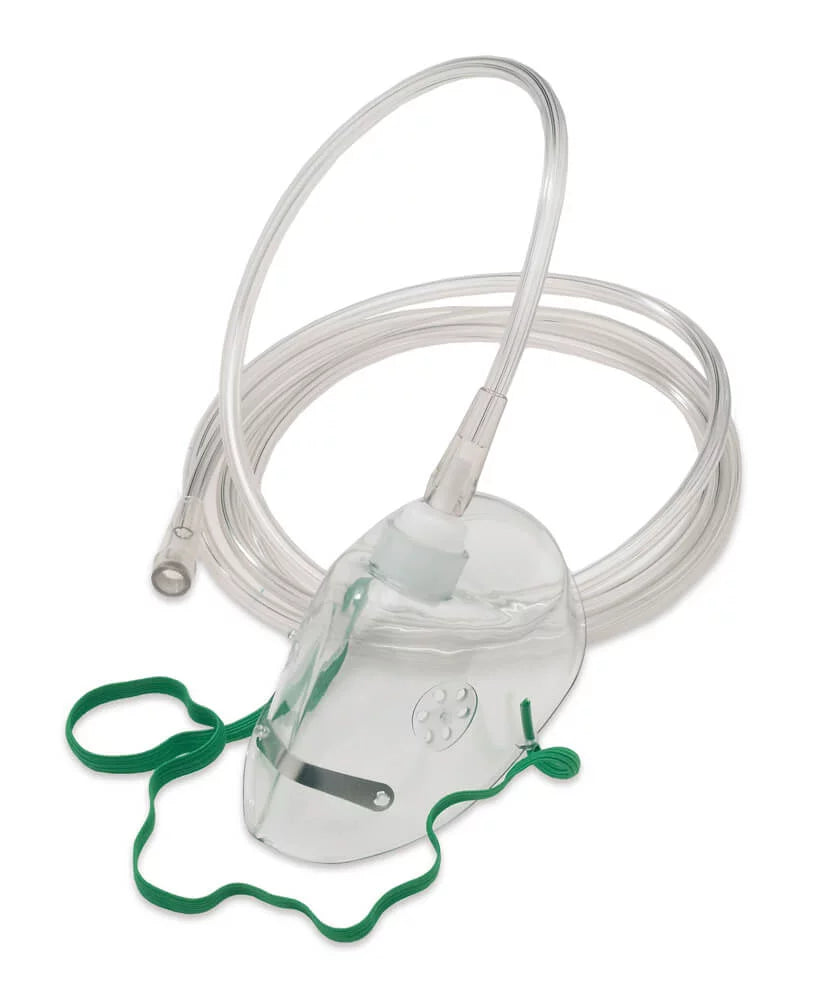
Oxygen mask and tube
Oxygen mask and tube
- ✔️ Delivers supplemental oxygen via a secure, adjustable face mask
- ✔️ Disposable single-use design reduces cross-contamination risk
- ✔️ Compatible with standard oxygen cylinders and concentrators
- ✔️ Adjustable nose clip and elastic strap for a comfortable, secure fit
- ✔️ Suitable for adults and older children on prescribed oxygen therapy
Price Checker
 Lowest price guarantee
 Includes FREE private prescription


Couldn't load pickup availability
What Is an Oxygen Mask and Tube Used For?
If you or someone you care for has been prescribed supplemental oxygen, having the right equipment at home matters more than most people realise. The oxygen mask and tube from Clear O2 is a single-use, disposable face mask designed to deliver medical oxygen from a cylinder or concentrator directly to the patient. It fits comfortably over the nose and mouth, with a soft adjustable nose clip and elastic head strap to keep it securely in place during use. At just £8.49, it offers a practical, cost-effective solution for home oxygen therapy or clinical settings.
Supplemental oxygen therapy is used when the body cannot maintain adequate blood oxygen levels on its own. The NHS recognises oxygen as a medical treatment used across a wide range of conditions, from chronic obstructive pulmonary disease (COPD) to recovery after surgery. Whether you are managing a long-term respiratory condition or need short-term support, having a reliable mask and tube is an essential part of safe oxygen delivery. You can also browse our First Aid range for other essential medical supplies.
How Does the Clear O2 Oxygen Mask and Tube Work?
The mechanism is straightforward, but understanding it helps you use the product safely. Oxygen flows from your supply source — a cylinder or concentrator — through the connecting tube and into the mask reservoir. When you inhale, you draw in this oxygen-enriched air. The mask's design limits the amount of room air that mixes with the oxygen, helping to maintain a consistent inspired oxygen concentration.
- Oxygen enters via the connecting tube from the supply source
- The mask reservoir holds a small volume of oxygen between breaths
- Exhalation ports on the sides allow carbon dioxide to escape
- The nose clip and strap create a seal to reduce air leakage
- Flow rate (set on the oxygen source) determines the concentration delivered
Who Should Use the Clear O2 Oxygen Mask and Tube?
This product is intended for patients who have been advised by a doctor or healthcare professional to use supplemental oxygen. It is not a device for general wellness use — oxygen therapy should always be medically indicated. That said, it is widely used across a range of clinical situations.
- Adults and older children prescribed home oxygen therapy
- Patients recovering from respiratory illness or surgery
- People with COPD, asthma, or other chronic lung conditions requiring supplemental oxygen
- Carers and healthcare workers needing a spare or replacement mask
How Does the Clear O2 Mask Compare to a Nasal Cannula?
| Feature | Clear O2 Oxygen Mask and Tube | Nasal Cannula |
|---|---|---|
| Oxygen concentration delivered | Approximately 35–60% (flow-rate dependent) | Approximately 24–44% (flow-rate dependent) |
| Comfort for long-term use | Moderate — covers nose and mouth | Higher — sits under the nose only |
| Suitable for mouth breathers | Yes | Less effective |
| Disposable / single-use | Yes | Yes (typically) |
Is the Clear O2 Oxygen Mask Clinically Suitable for Home Use?
Yes — provided oxygen therapy has been prescribed by a qualified clinician. The oxygen mask and tube is designed for use with standard oxygen cylinders and concentrators commonly supplied through NHS home oxygen services or purchased privately. The connecting tube is long enough to allow some movement without disconnecting from the supply. Store the mask in its original packaging in a cool, dry location away from heat sources and open flames — oxygen significantly increases the risk of fire, so this is a non-negotiable safety point. If you are managing other health conditions alongside your respiratory needs, our Electrical Health and Diagnostic range includes pulse oximeters and other monitoring tools that may be useful.
This product is a medicine-adjacent medical device. Speak to your doctor or pharmacist before using if you have an underlying medical condition or are taking other medicines.
Clear O2 Oxygen Mask and Tube specifications
| Treatment category | Respiratory / Oxygen therapy |
| Mechanism of action | Delivers supplemental oxygen from an external source via inhalation |
| Effective for | Supplemental oxygen delivery in hypoxic patients |
| Suitable for | Adults and older children prescribed oxygen therapy |
| Active ingredient | N/A (device — delivers medical oxygen) |
| Pack size | 1 mask with connecting tube |
| UK classification | Medical device (Class I) |
| Preparation | Disposable face mask with flexible oxygen tubing |
| Route of administration | Inhalation |
Specifications of Clear O2 Oxygen Mask and Tube
What Is the Clear O2 Oxygen Mask and What Is It Used For?
The Clear O2 Oxygen Mask and Tube is a disposable medical device used to deliver supplemental oxygen to patients who cannot maintain adequate blood oxygen saturation on their own. It is used in home oxygen therapy programmes, clinical environments, and first-aid situations where a reliable, single-use mask is needed. The NHS provides oxygen therapy to patients with conditions including COPD, severe asthma, heart failure, and certain neurological conditions — and a well-fitting mask is central to effective delivery.
This is not a standalone treatment. The mask works in conjunction with a prescribed oxygen source. It does not generate oxygen itself. Always use it as directed by your healthcare team.
What Do You Need to Know Before Using the Clear O2 Oxygen Mask?
Before using this product, read the following carefully. Oxygen therapy carries specific risks if used incorrectly, and certain situations require extra caution.
Do not use this mask if:
- You have not been prescribed or advised to use supplemental oxygen by a healthcare professional
- The mask or tubing is visibly damaged or the packaging has been opened previously
- You are in an environment where smoking or open flames are present — oxygen dramatically increases fire risk
- You are using it on an infant without specific medical guidance
Use with caution if:
- You have COPD — high-flow oxygen can suppress the hypoxic drive in some patients; always follow your prescribed flow rate
- You have claustrophobia or anxiety related to face coverings
- You have facial wounds, burns, or skin conditions around the nose and mouth
Known interactions:
- No drug interactions apply to this device directly
- High-concentration oxygen may interact with certain inhaled medications — consult your pharmacist or GP if you use nebulised treatments alongside oxygen therapy
How Should You Use the Clear O2 Oxygen Mask and Tube?
Always follow the instructions provided by your prescribing clinician. The steps below are general guidance only.
- Wash your hands thoroughly before handling the mask
- Remove the mask from its sterile packaging
- Connect one end of the oxygen tube to the mask inlet port
- Connect the other end to your oxygen cylinder or concentrator outlet
- Set the flow rate as prescribed by your doctor
- Place the mask over your nose and mouth
- Mould the nose clip gently to fit the bridge of your nose
- Adjust the elastic strap so the mask sits snugly without causing discomfort
- Breathe normally — do not hold your breath
- After use, dispose of the mask safely — do not reuse
| Indication | Age Group | Typical Flow Rate | Frequency |
|---|---|---|---|
| Home oxygen therapy (COPD) | Adults | As prescribed (typically 1–4 L/min) | As directed by clinician |
| Acute hypoxia / recovery | Adults | 5–10 L/min (simple face mask) | As directed by clinician |
| Paediatric supplemental oxygen | Older children (with medical guidance) | As prescribed | As directed by clinician |
What Are the Possible Side Effects of the Clear O2 Oxygen Mask?
As a medical device rather than a drug, the mask itself does not cause pharmacological side effects. However, oxygen therapy and prolonged mask use can cause some discomfort. If you are also managing other symptoms, our Ear, Nose and Throat range includes products that may help with dryness or irritation associated with oxygen use.
Common side effects of oxygen therapy via mask:
- Dryness or irritation of the nose, mouth, or throat
- Mild skin redness or pressure marks around the mask seal
- Feeling of claustrophobia or discomfort with the mask in place
Less common side effects:
- Headache (may indicate flow rate is too high — seek medical advice)
- Nausea in some patients receiving high-flow oxygen
- In patients with COPD, inappropriately high oxygen flow rates can reduce respiratory drive — always use your prescribed rate
How Should You Store the Clear O2 Oxygen Mask and Tube?
Correct storage keeps the mask sterile and ready for use. Follow these guidelines:
- Store in the original sealed packaging until needed
- Keep in a cool, dry place — avoid bathrooms or areas with high humidity
- Keep away from direct sunlight and heat sources
- Store well away from open flames, cigarettes, or any ignition source
- Keep out of reach of children
- Do not use after the expiry date printed on the packaging
- Dispose of used masks in general household waste — do not attempt to sterilise and reuse
If you are managing a broader health monitoring routine at home, our Electrical Health and Diagnostic collection includes pulse oximeters to help you track your blood oxygen levels alongside your therapy.
References
Written and reviewed by our qualified team
Your safety and success are our highest priorities. Our medical team rigorously evaluates every product and piece of advice we provide, ensuring you receive only the most effective, science-backed solutions available.
Frequently Asked Questions
Where can I buy an oxygen mask and tube online in the UK?
You can buy the Clear O2 oxygen mask and tube directly from Cured Pharmacy online for £8.49. No prescription is required to purchase the mask itself, though you will need a valid prescription or clinical recommendation to use supplemental oxygen. It is dispatched promptly to UK addresses.
How does an oxygen mask and tube work?
The mask fits over your nose and mouth and connects via a flexible tube to an oxygen cylinder or concentrator. Oxygen flows through the tube into the mask, where you inhale it with each breath. Exhalation ports on the sides of the mask allow carbon dioxide to escape, preventing rebreathing.
How do I use the Clear O2 oxygen mask and tube step by step?
Connect the tube to your oxygen source, then set the flow rate as prescribed by your doctor. Place the mask over your nose and mouth, mould the nose clip to your nose bridge, and adjust the elastic strap for a snug but comfortable fit. Breathe normally throughout your therapy session, and dispose of the mask after use — it is single-use only.
What flow rate should I use with a simple oxygen face mask?
Flow rate must always be set according to your prescribing clinician's instructions — never adjust it without medical advice. Simple face masks like the Clear O2 are typically used at flow rates of 5–10 litres per minute, but patients with COPD may be prescribed much lower rates to avoid suppressing their respiratory drive. Always follow your personalised prescription.
Can I reuse the Clear O2 oxygen mask?
No — the Clear O2 oxygen mask and tube is a single-use disposable device and should not be reused. Reusing a disposable mask risks contamination and infection, and the seal integrity may be compromised after the first use. Always use a fresh mask for each therapy session or as directed by your healthcare provider.
Who is eligible to use the Clear O2 oxygen mask?
The mask is suitable for adults and older children who have been prescribed supplemental oxygen by a healthcare professional. It is not intended for self-directed use without medical guidance, particularly in people with serious respiratory conditions such as COPD. If you are unsure whether oxygen therapy is appropriate for you, speak to your GP.
Can an oxygen mask cause skin irritation?
Yes, prolonged use of a face mask can cause mild redness, pressure marks, or irritation around the nose and cheeks. Keeping the skin clean and dry, repositioning the mask periodically, and ensuring the strap is not too tight can all help reduce discomfort. If irritation persists or worsens, speak to your healthcare team.
What are the alternatives to a simple oxygen face mask?
Alternatives include nasal cannulas (which sit under the nose and are more comfortable for long-term use), Venturi masks (which deliver a precise, fixed oxygen concentration), and non-rebreather masks (used in acute emergencies for high-concentration oxygen). Your healthcare team will advise which type best suits your clinical needs and oxygen prescription.
Is it safe to use an oxygen mask near a gas cooker or candles?
No — this is a serious safety point. Oxygen significantly increases the flammability of materials nearby, meaning flames, cigarettes, candles, and gas cookers pose a real fire hazard when oxygen is in use. Always ensure the room is well ventilated and free from ignition sources before starting oxygen therapy. The NHS advises patients on home oxygen to display fire safety notices.
How long can you use oxygen therapy for?
The duration of oxygen therapy depends entirely on your medical condition and your doctor's prescription. Some patients use it for short periods during acute illness, while others — particularly those with COPD — may require long-term oxygen therapy (LTOT) for 15 or more hours per day. Never stop or alter your oxygen therapy without consulting your healthcare team.
What is the difference between a simple face mask and a non-rebreather mask?
A simple face mask (like the Clear O2) delivers approximately 35–60% oxygen depending on flow rate, and allows some room air to mix with the oxygen. A non-rebreather mask has a reservoir bag and one-way valves that prevent exhaled air from re-entering, delivering up to 90% oxygen — it is used in acute emergencies. The Clear O2 mask is appropriate for standard supplemental oxygen therapy, not emergency high-concentration use.
Can I use the Clear O2 mask with any oxygen concentrator?
The Clear O2 mask is designed to connect to standard oxygen concentrators and cylinders via a universal-fit oxygen tube. Check that the connector fits your specific device before use — if in doubt, ask your oxygen supplier or pharmacist. You may also find our Electrical Health and Diagnostic range helpful for compatible monitoring equipment.
What should I do if I feel worse while using the oxygen mask?
If you feel more breathless, confused, drowsy, or develop a headache during oxygen therapy, remove the mask and seek medical advice immediately. These symptoms could indicate that the flow rate is incorrect or that your condition has changed. Do not adjust the flow rate yourself — contact your GP, respiratory nurse, or call 999 in an emergency.
How should I store the Clear O2 oxygen mask before use?
Keep the mask in its original sealed packaging in a cool, dry place away from direct sunlight, heat, and any open flames or ignition sources. Do not store it in a bathroom or near a gas appliance. Check the expiry date on the packaging before use and discard any mask that has passed its expiry date or whose packaging has been damaged.
What are the latest guidelines on home oxygen therapy in the UK?
NICE guideline NG115 (Chronic obstructive pulmonary disease in over 16s) and NHS home oxygen service guidance outline the clinical criteria for prescribing long-term oxygen therapy in the UK. Eligibility is assessed through arterial blood gas measurements and clinical review. Speak to your respiratory specialist or GP to find out whether you meet the criteria for NHS-funded home oxygen. You can also browse our First Aid range for related home health essentials.
Written and reviewed by our qualified team

Reviewed by:
Tarun Kumar
Superintendent/ Clinical Lead
📖 Find out more about our team of medical content authors and how we ensure the accuracy of our content with our content guidelines.
Content last updated: 14 Sep 2026

We’re a safe and
regulated UK service

Lowest Price Guarantee

We're convinced you won't find your treatment cheaper, but if you do we'll refund the difference.
Find out more
100% discreet packaging

Discreet, unbranded packaging for every order.
Find out more

Need help?
Talk to our friendly experts now


How our service works

Service setup

Discreet packaging

Express delivery