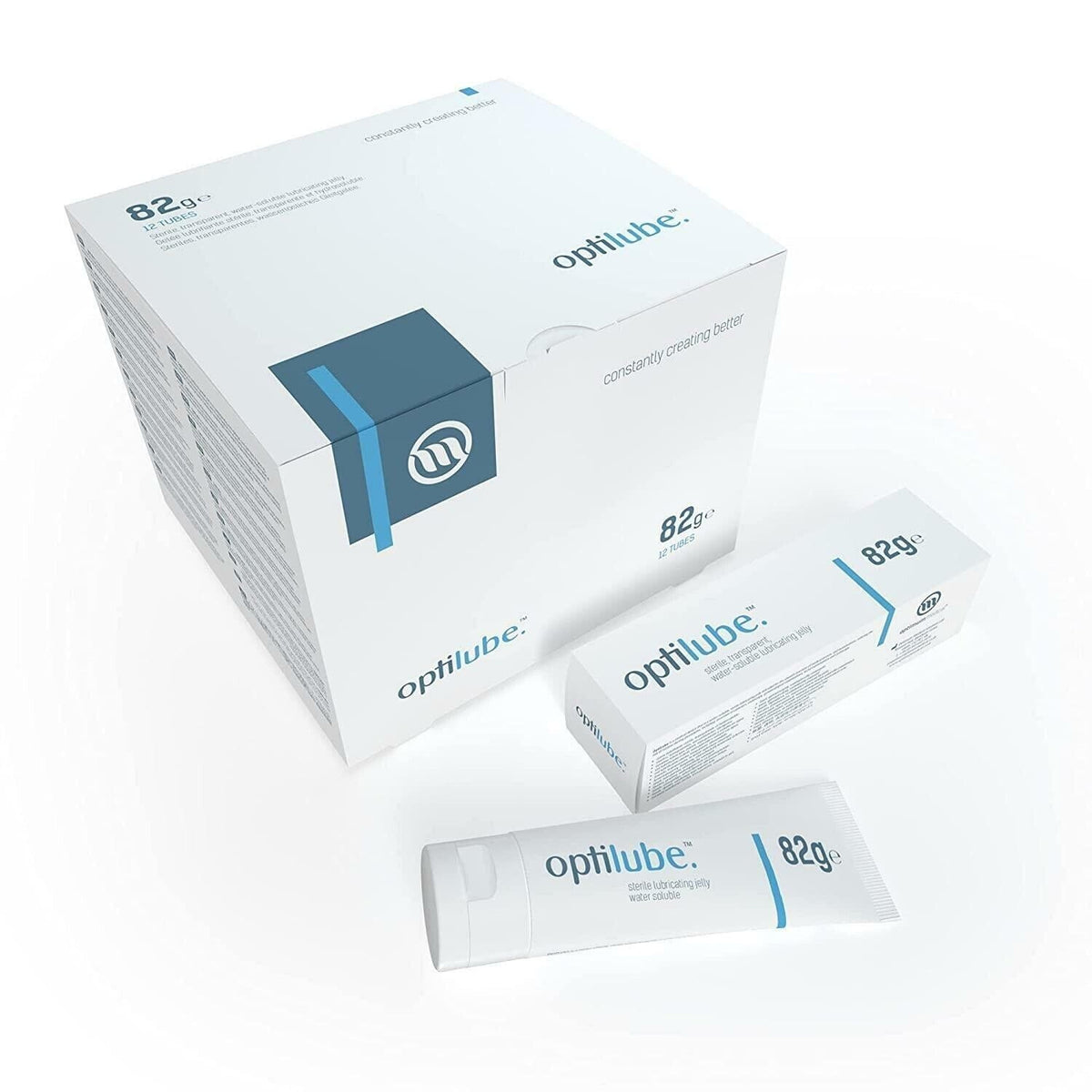
Optilube Sterile Lubricant Jelly 82g Tube Pack of 3 Water Soluble Medical Grade
Optilube Sterile Lubricant Jelly 82g Tube Pack of 3 Water Soluble Medical Grade
- ✔️ Sterile, water soluble jelly for safe catheter insertion
- ✔️ Reduces urethral friction and tissue trauma during procedures
- ✔️ Compatible with latex, silicone, and medical-grade devices
- ✔️ Antiseptic chlorhexidine formulation helps reduce infection risk
- ✔️ Pack of 3 x 82g tubes for ongoing catheter care supply
Price Checker
 Lowest price guarantee
 Includes FREE private prescription


Couldn't load pickup availability
What Is Optilube Sterile Lubricant Jelly and How Does It Help?
If you or a family member needs to use a catheter, nasal airway, or any medical instrument at home or in a clinical setting, friction and discomfort are real concerns. That is where sterile lubricant jelly comes in. Optilube Sterile Lubricant Jelly is a water soluble, medical grade topical gel designed to reduce friction during the insertion of catheters, nasal tubes, specula, and other medical devices. Each pack contains three 82g tubes, giving you a reliable supply whether you are managing ongoing catheter care or supporting a patient at home. You can browse related products in our Ear, Nose & Throat collection for complementary items.
Optilube is manufactured by Optimum Medical and is widely used across NHS trusts and community care settings throughout the UK. It is available over the counter without a prescription, making it straightforward to order and keep at home. The jelly is clear, odourless, and non-staining — practical qualities that matter when you are dealing with medical procedures regularly.
How Does Optilube Sterile Lubricant Jelly Work?
The mechanism is straightforward but clinically important. Optilube works by forming a slippery, water-based film over the surface of an instrument or body tissue, significantly reducing the friction that would otherwise cause pain, trauma, or tissue damage during insertion. Here is how it works in practice:
- The hydroxyethylcellulose base creates a smooth, viscous gel that coats surfaces evenly.
- Being water soluble, it does not leave an oily residue and is easily rinsed away with water after use.
- Some Optilube formulations contain chlorhexidine gluconate 0.05% w/w, which provides a mild antiseptic action to help reduce the risk of introducing bacteria during catheterisation or instrument insertion.
- The sterile formulation means the jelly itself does not introduce contaminants to the application site.
Because it is water based rather than oil based, it is compatible with most medical-grade materials including latex and silicone. This matters particularly for catheter users, where material compatibility directly affects safety.
Who Should Use Optilube Sterile Lubricant Jelly?
Optilube is suitable for a wide range of patients and healthcare professionals. It is particularly useful for anyone managing catheter care at home, as well as clinical staff performing routine procedures. It is not a personal sexual lubricant — it is specifically designed for medical applications.
- Adults and older patients performing intermittent self-catheterisation at home.
- Carers or district nurses assisting with urinary catheter insertion or changes.
- Healthcare professionals lubricating nasal airways, nasogastric tubes, or specula.
- Patients with conditions such as urinary retention or neurogenic bladder who require regular catheterisation.
It is not recommended for use in children unless specifically directed by a healthcare professional. If you are unsure whether this product is right for your situation, speak to your GP, district nurse, or community pharmacist before use.
How Does Optilube Compare to Other Medical Lubricant Jellies?
| Feature | Optilube Sterile Lubricant Jelly | KY Jelly (Personal Lubricant) |
|---|---|---|
| Sterile formulation | Yes — medical grade sterility | No — not sterile |
| Primary intended use | Medical instrument lubrication | Personal / sexual lubrication |
| Water soluble | Yes | Yes |
| Antiseptic option available | Yes (chlorhexidine formulation) | No |
Is Optilube Sterile Lubricant Jelly Suitable for Long-Term Use and How Should It Be Stored?
For patients who rely on regular catheterisation, having a consistent supply of sterile lubricant jelly is essential. Optilube can be used as part of an ongoing catheter care routine, provided you follow the instructions and replace tubes once opened within the recommended timeframe. Store the product below 25°C, away from direct sunlight and heat sources. Do not freeze. Once a tube has been opened, it should be used within the period stated on the packaging — typically within 28 days — to maintain sterility and product integrity. Keep all tubes out of reach of children. If you are also managing related conditions, you may find our Personal Lubricants collection useful for non-medical lubrication needs.
This product is a medicine. Speak to your doctor or pharmacist before using if you have an underlying medical condition or are taking other medicines.
Optilube Sterile Lubricant Jelly 82g Tube Pack of 3 specifications
| Treatment category | Medical lubrication / catheter care |
| Mechanism of action | Water soluble gel reduces friction on instruments and body surfaces |
| Effective for | Catheter insertion, nasal airway lubrication, medical instrument lubrication |
| Suitable for | Adults; use in children only under healthcare professional guidance |
| Active ingredient | Hydroxyethylcellulose base; some formulations contain chlorhexidine gluconate 0.05% w/w |
| Pack size | 3 x 82g tubes |
| UK classification | General Sale / Medical Device (CE marked) |
| Drug class | Topical lubricant / medical device |
| Preparation | Sterile aqueous gel |
| Route of administration | Topical / external |
Specifications of Optilube Sterile Lubricant Jelly 82g Tube Pack of 3
What Is Optilube Sterile Lubricant Jelly and What Is It Used For?
Optilube Sterile Lubricant Jelly is a water soluble, topical medical gel used to lubricate urinary catheters, nasal airways, nasogastric tubes, specula, and other medical instruments prior to insertion. It is designed to minimise friction, reduce patient discomfort, and lower the risk of tissue trauma during clinical or home-based procedures. The NHS recommends the use of an appropriate lubricant during catheterisation to reduce urethral trauma and infection risk. This product is not intended for use as a personal sexual lubricant.
What Do You Need to Know Before Using Optilube Sterile Lubricant Jelly?
Before using this product, read the following carefully. Do not use Optilube if any of the contraindications below apply to you.
Do not use if you:
- Are allergic to chlorhexidine gluconate, hydroxyethylcellulose, or any other ingredient in the formulation.
- Have a known sensitivity to any component of the jelly.
- Are using this product on broken, infected, or severely inflamed skin without healthcare professional advice.
- Are using it in children without specific guidance from a doctor or nurse.
Warnings and precautions:
- For external and topical use only — do not swallow.
- Avoid contact with eyes. If contact occurs, rinse thoroughly with clean water.
- Do not use beyond the expiry date printed on the tube.
- Once opened, use within 28 days and discard any remaining product after this period.
- If you are pregnant or breastfeeding, consult your healthcare professional before use.
Drug interactions:
- No clinically significant drug interactions are known when Optilube is used topically as directed.
- Chlorhexidine-containing formulations may theoretically interact with anionic compounds — avoid mixing with other topical agents unless advised by a healthcare professional.
How Should You Use Optilube Sterile Lubricant Jelly?
Always follow the instructions provided by your healthcare professional or those printed on the product packaging. General guidance for use is as follows:
- Wash your hands thoroughly with soap and water before handling the tube or any medical device.
- Remove the cap from the tube and, if required, pierce the seal using the reverse of the cap.
- Squeeze a small, sufficient amount of jelly onto the tip of the catheter, instrument, or directly onto the relevant body surface.
- Proceed with the procedure as instructed by your healthcare professional, inserting the device gently and steadily.
- After use, replace the cap securely and store the tube as directed.
- Dispose of any single-use items appropriately after the procedure.
| Indication | Age Group | Amount to Use | Frequency |
|---|---|---|---|
| Urinary catheterisation | Adults | Sufficient to coat catheter tip and shaft | Each catheterisation episode |
| Nasal airway / nasogastric tube | Adults (under clinical supervision) | Small amount to coat tube tip | Each insertion episode |
| Medical instrument lubrication | Adults | As required to reduce friction | Per procedure |
If you are managing catheter care at home and need additional support, the NHS provides guidance on catheter care that you may find helpful. You can also explore our First Aid collection for related wound care and hygiene products.
What Are the Possible Side Effects of Optilube Sterile Lubricant Jelly?
Like all medical products, Optilube may cause side effects in some people, although not everyone will experience them. Most people tolerate it well when used as directed.
Common side effects:
- Mild localised skin irritation at the application site.
- Temporary redness or warmth around the area of application.
Less common side effects:
- Allergic contact dermatitis — particularly in individuals sensitive to chlorhexidine.
- Itching or a burning sensation at the application site.
- Rare anaphylactic reactions have been reported with chlorhexidine-containing products; seek emergency medical help immediately if you experience swelling of the face, throat, or difficulty breathing.
If you experience any unexpected or persistent side effects, stop using the product and contact your pharmacist or GP. Serious allergic reactions to chlorhexidine, while rare, are recognised by the MHRA and should be treated as a medical emergency.
How Should You Store Optilube Sterile Lubricant Jelly?
Correct storage helps maintain the sterility and effectiveness of the product. Follow these instructions carefully:
- Store below 25°C in a cool, dry place.
- Do not freeze.
- Keep away from direct sunlight and heat sources.
- Keep all tubes out of reach and sight of children.
- Once opened, use within 28 days and then discard.
- Do not use after the expiry date printed on the tube or outer packaging.
- Do not dispose of medicines via wastewater or household waste — return unused product to your local pharmacy for safe disposal.
For patients managing ongoing conditions that require regular lubrication or catheter care, it is worth keeping a spare pack at home. You can also find related products in our Women's Health collection, which includes items relevant to pelvic health and intimate care.
References
- https://www.nhs.uk/conditions/urinary-catheters/
- https://www.nhs.uk/conditions/urinary-catheters/living-with/
- https://www.nhs.uk/conditions/allergies/
- https://www.nhs.uk/conditions/anaphylaxis/
- https://www.gov.uk/drug-safety-update/chlorhexidine-solutions-reminder-of-potential-for-serious-allergic-reactions
Written and reviewed by our qualified team
Your safety and success are our highest priorities. Our medical team rigorously evaluates every product and piece of advice we provide, ensuring you receive only the most effective, science-backed solutions available.
Frequently Asked Questions
Where can I buy Optilube Sterile Lubricant Jelly online in the UK?
You can buy Optilube Sterile Lubricant Jelly online from Cured Pharmacy, a UK GPhC-registered online pharmacy. It is available as a pack of 3 x 82g tubes and does not require a prescription. Simply add it to your basket and it will be dispatched directly to your door.
What is Optilube Sterile Lubricant Jelly used for?
Optilube Sterile Lubricant Jelly is used to lubricate urinary catheters, nasal airways, nasogastric tubes, specula, and other medical instruments before insertion. It reduces friction and discomfort during the procedure and helps minimise the risk of tissue trauma. It is not intended as a personal sexual lubricant.
How do I use Optilube Sterile Lubricant Jelly step by step?
Wash your hands thoroughly, then squeeze a small amount of jelly onto the tip of the catheter or instrument. Insert the device gently as instructed by your healthcare professional, then replace the cap and store the tube below 25°C. Always follow the specific instructions given by your nurse or doctor for your individual procedure.
Is Optilube Sterile Lubricant Jelly safe to use with latex catheters?
Yes, Optilube is water soluble and is compatible with latex, silicone, and most other medical-grade catheter materials. This makes it suitable for use across a wide range of catheter types used in both NHS and home settings. If you are unsure about compatibility with a specific device, check with your healthcare professional or the device manufacturer.
Can Optilube Sterile Lubricant Jelly be used for nasal procedures?
Yes, Optilube is commonly used to lubricate nasal airways and nasogastric tubes during clinical procedures. It should be applied under the guidance of a trained healthcare professional for such uses. You can find related products in our Ear, Nose & Throat collection.
What are the side effects of Optilube Sterile Lubricant Jelly?
Side effects are uncommon but may include mild localised skin irritation or redness at the application site. Rare allergic reactions, including anaphylaxis, have been reported with chlorhexidine-containing formulations — stop use immediately and seek emergency help if you experience swelling, rash, or breathing difficulties. Most people tolerate Optilube well when used as directed.
How should I store Optilube Sterile Lubricant Jelly?
Store Optilube below 25°C in a cool, dry place away from direct sunlight and heat. Do not freeze the product. Once opened, use within 28 days and then discard the tube — do not use beyond this period even if jelly remains.
What is the difference between Optilube and KY Jelly?
Optilube is a sterile, medical grade lubricant produced to clinical sterility standards and designed primarily for use with catheters and medical instruments. KY Jelly is marketed as a personal lubricant and is not sterile. Both are water soluble, but Optilube is the appropriate choice for medical procedures where sterility matters.
Does Optilube Sterile Lubricant Jelly contain chlorhexidine?
Some Optilube formulations contain chlorhexidine gluconate 0.05% w/w, which provides a mild antiseptic action during catheterisation. Other formulations are chlorhexidine-free. Check the product label carefully, particularly if you have a known sensitivity to chlorhexidine, and speak to your pharmacist if you are unsure which formulation is right for you.
Who is eligible to use Optilube Sterile Lubricant Jelly?
Optilube is suitable for adults who require lubrication for catheter insertion, nasal procedures, or other medical instrument use. It is not recommended for children unless specifically directed by a healthcare professional. People with known allergies to chlorhexidine or any other ingredient should avoid the relevant formulation.
How long can I use Optilube Sterile Lubricant Jelly for?
Optilube can be used as part of an ongoing catheter care or medical procedure routine for as long as it is clinically required. Each tube should be discarded 28 days after opening, regardless of how much product remains. There is no maximum duration of use provided you are following healthcare professional guidance and the product remains within its expiry date.
What happens if I accidentally swallow Optilube Sterile Lubricant Jelly?
Optilube is for external and topical use only and should not be swallowed. If accidental ingestion occurs, contact NHS 111 or your nearest A&E department immediately and take the product packaging with you. Do not induce vomiting unless specifically instructed to do so by a medical professional.
Is Optilube Sterile Lubricant Jelly available on the NHS?
Yes, Optilube is widely used within NHS trusts and community care settings across the UK. It may be supplied via district nursing services or on prescription for patients with ongoing catheter care needs. It is also available to purchase over the counter without a prescription from registered pharmacies like Cured Pharmacy.
What are the alternatives to Optilube Sterile Lubricant Jelly?
Alternatives include other sterile lubricant jellies such as Instillagel (which also contains lidocaine for local anaesthesia) and various own-brand medical lubricant gels. The right choice depends on your specific procedure and whether anaesthetic properties are required — speak to your healthcare professional for personalised advice. You can also explore our Personal Lubricants collection for non-medical options.
What does the latest research say about sterile lubricant jelly in catheter care?
Current NHS and clinical guidance consistently supports the use of sterile lubricant during urinary catheterisation to reduce urethral trauma and patient discomfort. Research published in nursing and urology literature highlights that adequate lubrication is a key factor in reducing catheter-associated complications. Always follow the most up-to-date guidance from your healthcare team regarding catheter care best practice.
Written and reviewed by our qualified team

Reviewed by:
Tarun Kumar
Superintendent/ Clinical Lead
📖 Find out more about our team of medical content authors and how we ensure the accuracy of our content with our content guidelines.
Content last updated: 14 Sep 2026

We’re a safe and
regulated UK service

Lowest Price Guarantee

We're convinced you won't find your treatment cheaper, but if you do we'll refund the difference.
Find out more
100% discreet packaging

Discreet, unbranded packaging for every order.
Find out more

Need help?
Talk to our friendly experts now


How our service works

Service setup

Discreet packaging

Express delivery