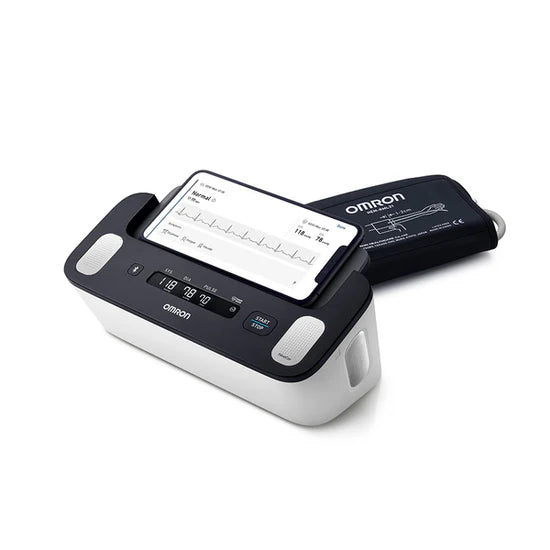
OMRON COMPLETE 2 IN 1 blood pressure & single-lead ECG monitor
OMRON COMPLETE 2 IN 1 blood pressure & single-lead ECG monitor
- ✔️ Simultaneously measures blood pressure and records a single-lead ECG
- ✔️ Clinically validated to detect possible atrial fibrillation at home
- ✔️ Stores up to 100 readings per user via Omron Connect app
- ✔️ Suitable for adults managing hypertension or at risk of AF
- ✔️ UKCA-marked Class IIa medical device for home cardiac monitoring
Price Checker
 Lowest price guarantee
 Includes FREE private prescription


Couldn't load pickup availability
What Is a Blood Pressure and ECG Monitor?
Managing your heart health at home has never been more accessible. The blood pressure and ECG monitor from Omron — the Omron Complete 2-in-1 — combines two clinically important measurements into a single, easy-to-use device. It measures your blood pressure using a standard upper arm cuff and simultaneously records a single-lead electrocardiogram (ECG) to screen for possible atrial fibrillation (AF). High blood pressure affects around one in three adults in the UK, and AF is one of the most common heart rhythm disorders — yet both conditions can go undetected for years without regular monitoring.
Priced at £149.99, this device sits within our Electrical Health and Diagnostic range and is designed for home use by adults who want to keep a closer eye on their cardiovascular health between GP appointments. It is not a replacement for professional medical assessment, but it gives you meaningful data to share with your healthcare team.
How Does the Omron Complete Monitor Work?
The device works in two stages during a single measurement session. First, the upper arm cuff inflates to measure your systolic and diastolic blood pressure using oscillometric technology — the same method used in many clinical settings. At the same time, electrodes built into the cuff detect the electrical activity of your heart through your fingertips, generating a single-lead ECG trace.
- Wrap the cuff around your upper arm and sit still in a relaxed position.
- Place the fingertips of your free hand on the metal electrodes on the cuff.
- Press start — the device inflates and records both readings simultaneously.
- Results display on screen within approximately 30 seconds, showing blood pressure values and an ECG result.
- Data syncs to the Omron Connect app via Bluetooth for long-term tracking.
The ECG analysis algorithm flags a possible AF result if an irregular rhythm is detected. It is important to understand that this is a screening indicator, not a clinical diagnosis.
Who Should Use the Omron Complete Monitor?
This device is suitable for adults who want to monitor their cardiovascular health proactively. It is particularly useful for people who have already been diagnosed with hypertension or AF and need to track their condition regularly at home. It may also benefit those with a family history of heart disease or stroke who want early awareness of any changes.
- Adults diagnosed with high blood pressure (hypertension) monitoring their condition at home.
- People at risk of atrial fibrillation, including those over 65 or with diabetes.
- Patients whose GP has recommended home blood pressure monitoring.
- Anyone wanting a convenient, combined cardiac health check without visiting a clinic.
How Does the Omron Complete Compare to a Standard Blood Pressure Monitor?
| Feature | Omron Complete 2-in-1 | Standard BP Monitor |
|---|---|---|
| Blood pressure measurement | Yes — upper arm cuff | Yes — upper arm cuff |
| ECG recording | Yes — single-lead ECG | No |
| AF detection | Yes — algorithmic screening | No |
| App connectivity | Yes — Omron Connect (Bluetooth) | Varies by model |
| Price range | £149.99 | £20–£60 typically |
Is the Omron Complete Suitable for Long-Term Home Use?
Yes — the Omron Complete is designed for repeated, long-term home monitoring. The device stores up to 100 readings per user (for two users) and syncs seamlessly with the Omron Connect app, making it straightforward to build a picture of your readings over weeks and months. This is particularly valuable when your GP asks for a home blood pressure log before making prescribing decisions. If you are also managing other long-term conditions such as diabetes, you may find it helpful to explore our Diabetes Monitoring range alongside this device, as cardiovascular and metabolic health are closely linked.
Store the device at room temperature, away from moisture and direct sunlight. Avoid dropping or exposing it to extreme temperatures, which can affect sensor accuracy. Replace the batteries as indicated by the low battery warning on screen.
This product is a medical device. Speak to your doctor or pharmacist before using if you have an underlying medical condition or are taking other medicines.
Omron Complete 2-in-1 Blood Pressure & ECG Monitor specifications
| Treatment category | Cardiovascular monitoring — blood pressure and cardiac rhythm |
| Mechanism of action | Oscillometric blood pressure measurement combined with single-lead ECG via finger electrodes |
| Effective for | Monitoring blood pressure and screening for possible atrial fibrillation |
| Suitable for | Adults aged 18 and over |
| Active ingredient | N/A — medical device |
| Pack size | 1 monitor, 1 upper arm cuff (22–42 cm), 4 AA batteries, carry case, instruction manual |
| UK classification | Class IIa Medical Device (CE/UKCA marked) |
| Preparation | Electronic medical device |
| Route of administration | External — upper arm cuff and finger electrode contact |
Specifications of Omron Complete 2-in-1 Blood Pressure & ECG Monitor
What Is the Omron Complete and What Is It Used For?
The Omron Complete 2-in-1 is a clinically validated home monitoring device that measures blood pressure and records a single-lead ECG in one simultaneous reading. It is used by adults who want to track their blood pressure regularly at home and screen for signs of atrial fibrillation (AF) — an irregular heart rhythm that significantly increases the risk of stroke if left undetected. The NHS recommends home blood pressure monitoring as a reliable way to support diagnosis and ongoing management of hypertension, and this device makes that process more informative by adding ECG capability.
Atrial fibrillation affects around 1.4 million people in the UK. Many are unaware they have it. Having a device that can flag a possible irregular rhythm during a routine blood pressure check could prompt an earlier conversation with your GP — and that matters.
What Do You Need to Know Before Using the Omron Complete?
Before using this device, read the following carefully. While it is available without a prescription, it is not suitable for everyone.
Do not use this device if you:
- Have a pacemaker or implantable cardioverter defibrillator (ICD) — the ECG function may be unreliable or cause interference.
- Have a known heart arrhythmia other than AF — results may be difficult to interpret without clinical support.
- Are pregnant — blood pressure monitoring during pregnancy should be supervised by a midwife or GP.
- Have lymphoedema or arteriovenous fistula in the arm being measured.
- Are under 18 years of age.
Use with caution if you:
- Have peripheral artery disease or poor circulation in the arms.
- Have very irregular heartbeats — readings may show an error or inconsistent result.
- Are taking antihypertensive medication — always continue prescribed treatment and do not adjust doses based solely on home readings without GP guidance.
Known interactions:
- This is a medical device and does not interact pharmacologically with medicines.
- However, certain medications (e.g. beta-blockers, calcium channel blockers) affect heart rate and rhythm, which may influence ECG interpretation — discuss results with your GP in context of your current medicines.
How Should You Use the Omron Complete?
For accurate results, follow these steps every time you take a reading. Consistency matters — small changes in technique can affect your numbers.
- Sit quietly for five minutes before measuring. Avoid caffeine, exercise, and smoking for at least 30 minutes beforehand.
- Sit upright in a chair with your back supported and feet flat on the floor.
- Rest your arm on a flat surface at heart level and wrap the cuff around your bare upper arm, 1–2 cm above the elbow.
- Place the fingertips of your free hand on the metal ECG electrodes on the cuff — ensure firm, still contact throughout.
- Press the start button and remain still and silent until the reading is complete.
- Note both the blood pressure result and the ECG indicator on screen.
- Take a second reading after one minute and record both results.
- Sync to the Omron Connect app via Bluetooth to log and track your readings over time.
| Indication | Age Group | Frequency | Notes |
|---|---|---|---|
| Home BP monitoring (diagnosis support) | Adults 18+ | Twice daily (morning & evening) for 7 days | As per NHS home monitoring guidance |
| Ongoing hypertension management | Adults 18+ | As directed by GP | Typically once or twice daily |
| AF screening | Adults 65+ or at risk | With each BP reading | Report repeated AF flags to GP |
What Are the Possible Side Effects of the Omron Complete?
As a medical device rather than a medicine, the Omron Complete does not cause systemic side effects. However, some users may notice localised discomfort associated with cuff use.
Common effects:
- Temporary tightness or pressure sensation in the upper arm during cuff inflation.
- Mild skin redness or indentation after cuff removal — this resolves quickly.
- Tingling in the fingers during ECG measurement if electrodes are pressed firmly.
Less common effects:
- Bruising in individuals with fragile skin or those on anticoagulant therapy (e.g. warfarin, apixaban) — use with care and consult your GP if bruising occurs.
- Anxiety or distress triggered by unexpected readings — if you see a repeated AF flag or very high blood pressure result, contact your GP rather than repeatedly re-testing.
If you experience persistent discomfort, skin damage, or are concerned about any reading, stop using the device and seek advice from your pharmacist or GP. You might also find it useful to browse our Pain Relief range if you experience any arm discomfort following use.
How Should You Store the Omron Complete?
Proper storage keeps the device accurate and extends its lifespan. Follow these guidelines:
- Store at room temperature between 10°C and 40°C.
- Keep away from direct sunlight, moisture, and humidity — do not store in bathrooms.
- Remove batteries if the device will not be used for an extended period.
- Store the cuff flat or loosely rolled — do not fold tightly, as this can damage the internal tubing.
- Keep out of reach of children.
- Use the provided carry case for transport to protect the screen and cuff.
- Do not expose to extreme cold (below 10°C) or heat (above 40°C), which can affect sensor calibration.
For general health monitoring support, our Vitamins and Supplements range includes products that support cardiovascular health as part of a balanced lifestyle — always discuss supplementation with your GP if you have a diagnosed heart condition.
References
Written and reviewed by our qualified team
Your safety and success are our highest priorities. Our medical team rigorously evaluates every product and piece of advice we provide, ensuring you receive only the most effective, science-backed solutions available.
Frequently Asked Questions
Where can I buy the Omron Complete monitor online in the UK?
You can buy the Omron Complete 2-in-1 blood pressure and ECG monitor directly from Cured Pharmacy online for £149.99 with fast UK delivery. It is a GPhC-registered pharmacy, so you can order with confidence knowing the product is genuine. It is also available from selected high street pharmacies and electrical retailers across the UK.
How does the ECG function on the Omron Complete work?
The ECG function works by detecting the electrical signals of your heart through metal electrodes built into the upper arm cuff. You place the fingertips of your free hand on these electrodes during measurement, completing a circuit that records a single-lead ECG trace. The device's algorithm then analyses the trace for signs of atrial fibrillation and displays the result alongside your blood pressure reading.
Is the Omron Complete clinically validated for accuracy?
Yes — the Omron Complete has been clinically validated for blood pressure measurement accuracy in accordance with the European Society of Hypertension International Protocol. The ECG and AF detection function has also been validated in published clinical studies. Clinical validation means the device has been tested against reference-standard equipment in real patients, not just in laboratory conditions.
How do I use the Omron Complete step by step?
Sit quietly for five minutes, then wrap the cuff around your bare upper arm 1–2 cm above the elbow with your arm resting at heart level. Place the fingertips of your opposite hand on the ECG electrodes on the cuff, press start, and remain still until the reading completes — usually around 30 seconds. Record both your blood pressure values and the ECG result, then sync to the Omron Connect app via Bluetooth if you wish to track your readings over time.
What is the best time to take a blood pressure reading at home?
The NHS recommends taking readings in the morning before you eat or take any medication, and again in the evening. Take two readings one minute apart each time and record the average. Doing this consistently over seven days gives your GP the most useful picture of your blood pressure pattern.
What does it mean if the Omron Complete shows an irregular heartbeat result?
An irregular heartbeat indicator on the Omron Complete means the device detected a possible irregular rhythm during your ECG reading — this could suggest atrial fibrillation, but it is not a clinical diagnosis. A single irregular result can sometimes occur due to movement or poor electrode contact, so repeat the reading. If you see the indicator repeatedly across multiple readings, contact your GP promptly for a formal assessment.
Can I use the Omron Complete if I have a pacemaker?
No — you should not use the ECG function of the Omron Complete if you have a pacemaker or implantable cardioverter defibrillator (ICD) without first consulting your cardiologist or GP. The electrical signals from the device may interfere with pacemaker function, and the ECG result may be unreliable. The blood pressure measurement function may still be usable, but always seek medical advice first.
Who is eligible to use the Omron Complete blood pressure and ECG monitor?
The Omron Complete is suitable for adults aged 18 and over who want to monitor their blood pressure and screen for possible atrial fibrillation at home. It is particularly recommended for people with diagnosed hypertension, those over 65, people with diabetes, and anyone with a family history of heart disease or stroke. It is not suitable for use during pregnancy without GP supervision, or for those with a pacemaker or ICD.
Does the Omron Complete connect to a smartphone app?
Yes — the Omron Complete connects to the free Omron Connect app via Bluetooth, available for both iOS and Android devices. The app stores your blood pressure and ECG readings, displays trends over time, and allows you to share your data with your GP or healthcare team. This makes it much easier to spot patterns and have informed conversations at your next appointment.
What is a normal blood pressure reading on the Omron Complete?
According to the NHS, a normal blood pressure reading is between 90/60 mmHg and 120/80 mmHg. Home readings are typically slightly lower than clinic readings, so a home reading below 135/85 mmHg is generally considered normal. If your readings are consistently above 135/85 mmHg at home, speak to your GP — this may indicate high blood pressure that needs further assessment or treatment.
What are the alternatives to the Omron Complete for home heart monitoring?
Alternatives include standard upper arm blood pressure monitors (without ECG), wrist blood pressure monitors, and dedicated single-use ECG devices such as the KardiaMobile by AliveCor. However, the Omron Complete is one of very few devices that combines clinically validated blood pressure measurement and ECG recording in a single simultaneous reading. You can browse our full Electrical Health and Diagnostic range to compare available options.
How long can I use the Omron Complete for?
The Omron Complete is designed for long-term home use and can be used indefinitely as part of an ongoing cardiovascular monitoring routine. Omron recommends having the device calibrated every two years to ensure measurement accuracy is maintained. If you notice readings that seem inconsistent or the device displays error codes repeatedly, contact Omron's customer support or your pharmacist for advice.
Can I use the Omron Complete during pregnancy?
Blood pressure monitoring during pregnancy is important, but it should be supervised by your midwife or GP rather than managed independently at home. The Omron Complete is not specifically validated for use in pregnancy, and blood pressure targets during pregnancy differ from standard adult thresholds. Always follow the guidance of your maternity care team regarding home monitoring equipment.
What are the latest studies on home ECG and blood pressure monitoring?
Research continues to support the value of home blood pressure monitoring in improving hypertension management and reducing cardiovascular risk. Studies on combined BP and ECG devices, including the Omron Complete, have demonstrated that opportunistic AF screening during routine blood pressure checks can identify previously undiagnosed AF in a meaningful proportion of users. NICE guidelines (NG136) recommend home blood pressure monitoring as part of the diagnostic pathway for hypertension in the UK.
How do I manage discomfort when using the Omron Complete?
Some users experience temporary tightness or pressure in the upper arm during cuff inflation — this is normal and resolves immediately after the reading. To minimise discomfort, ensure the cuff is the correct size for your arm (the standard cuff fits 22–42 cm) and is not wrapped too tightly. If you experience persistent bruising or skin irritation, particularly if you take blood-thinning medicines, speak to your GP or pharmacist before continuing use. You can also explore our First Aid range for any minor skin care needs.
Written and reviewed by our qualified team

Reviewed by:
Tarun Kumar
Superintendent/ Clinical Lead
📖 Find out more about our team of medical content authors and how we ensure the accuracy of our content with our content guidelines.
Content last updated: 14 Sep 2026
Other popular options


We’re a safe and
regulated UK service

Lowest Price Guarantee

We're convinced you won't find your treatment cheaper, but if you do we'll refund the difference.
Find out more
100% discreet packaging

Discreet, unbranded packaging for every order.
Find out more

Need help?
Talk to our friendly experts now


How our service works

Service setup

Discreet packaging

Express delivery