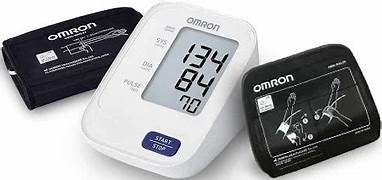
OMRON 9210T Upper Arm Blood Pressure Monitor
OMRON 9210T Upper Arm Blood Pressure Monitor
- ✔️ Clinically validated for accurate upper arm blood pressure readings
- ✔️ Detects irregular heartbeat during every measurement
- ✔️ Stores multiple readings for easy GP review
- ✔️ Recommended by NHS for home hypertension monitoring
- ✔️ Suitable for long-term daily cardiovascular health tracking
Price Checker
 Lowest price guarantee
 Includes FREE private prescription


Couldn't load pickup availability
What Is an Upper Arm Blood Pressure Monitor?
High blood pressure — or hypertension — affects around one in three adults in the UK, yet many people have no idea their readings are elevated. That is why monitoring at home matters. The upper arm blood pressure monitor from Omron, the 9210T, gives you a reliable, clinically validated way to track your readings between GP appointments. At £75.12, it sits in the mid-range of home monitors and offers a solid set of features for everyday use. You can find it alongside other electrical health and diagnostic devices at Cured Pharmacy.
The NHS recommends upper arm monitors over wrist monitors for home blood pressure measurement, as they tend to produce more consistent results. The OMRON 9210T is designed with this in mind — it uses a standard upper arm cuff and an oscillometric sensor to deliver readings you can actually trust.
How Does the OMRON 9210T Blood Pressure Monitor Work?
The monitor uses oscillometric technology. When the cuff inflates around your upper arm, it temporarily restricts blood flow. As it slowly deflates, the sensor detects tiny pressure oscillations caused by your pulse moving through the artery wall. These oscillations are converted electronically into your systolic (upper) and diastolic (lower) blood pressure values, plus your pulse rate.
- The cuff inflates automatically when you press the start button
- Oscillations in the brachial artery are detected during deflation
- Systolic and diastolic values are calculated and displayed on screen
- An irregular heartbeat indicator alerts you if an arrhythmia is detected during the reading
- Results are stored in memory so you can track trends over time
Who Should Use the OMRON 9210T Blood Pressure Monitor?
This monitor is designed for adults who want to keep a close eye on their cardiovascular health at home. It is particularly useful if your GP has asked you to record readings over several days, or if you are already taking antihypertensive medication and need to check whether it is working. People with a family history of hypertension or stroke may also benefit from regular home monitoring.
- Adults diagnosed with hypertension or pre-hypertension
- People taking blood pressure medication who need to track treatment response
- Those with white-coat hypertension (readings that spike in clinical settings)
- Anyone over 40 wanting to keep a proactive eye on their cardiovascular health
How Does the OMRON 9210T Compare to Other Home Monitors?
| Feature | OMRON 9210T | Wrist Blood Pressure Monitor |
|---|---|---|
| Measurement site | Upper arm (brachial artery) | Wrist (radial artery) |
| NHS recommended | Yes | Generally not preferred |
| Accuracy | Clinically validated | More position-sensitive |
| Irregular heartbeat detection | Yes | Varies by model |
Is the OMRON 9210T Suitable for Long-Term Home Use?
Yes. The upper arm blood pressure monitor is built for repeated, long-term use at home. Omron devices are widely used in clinical research and are trusted by healthcare professionals across the UK. The 9210T stores multiple readings in memory, making it straightforward to share a log of results with your GP or practice nurse. If you are also managing related conditions, you might find our diabetes monitoring range useful alongside your blood pressure tracking.
Store the device in its carry case when not in use, away from direct sunlight and extreme temperatures. Avoid dropping or exposing the cuff to moisture, as this can affect sensor accuracy over time.
This product is a medical device. Speak to your doctor or pharmacist before using if you have an underlying medical condition or are taking other medicines.
OMRON 9210T Upper Arm Blood Pressure Monitor specifications
| Treatment category | Blood pressure monitoring / cardiovascular health |
| Mechanism of action | Oscillometric blood pressure measurement |
| Effective for | Measuring systolic and diastolic blood pressure and pulse rate |
| Suitable for | Adults requiring home blood pressure monitoring |
| Active ingredient | N/A — medical device |
| UK classification | CE-marked medical device |
| Preparation | Electronic upper arm cuff monitor |
| Route of administration | External — upper arm |
Specifications of OMRON 9210T Upper Arm Blood Pressure Monitor
What Is the OMRON 9210T and What Is It Used For?
The OMRON 9210T is a clinically validated home blood pressure monitor that measures your systolic and diastolic blood pressure, as well as your resting pulse rate. It is used by people who want to monitor their blood pressure regularly outside of a clinical setting — whether that is because they have been diagnosed with hypertension, are on medication, or simply want to stay informed about their cardiovascular health. The NHS actively encourages home blood pressure monitoring as part of hypertension management, noting that home readings can be more representative of your true blood pressure than a single clinic measurement.
What Do You Need to Know Before Using the OMRON 9210T?
Before using this device, it is important to be aware of the following contraindications and precautions:
- Do not use on an arm with an arteriovenous fistula (e.g. in dialysis patients) without medical advice
- Not recommended for use on the arm on the same side as a mastectomy
- Use with caution if you have a diagnosed arrhythmia — readings may be less reliable
- Not intended for use on infants or children without clinical supervision
- Do not use near strong electromagnetic fields (e.g. MRI machines)
- Consult your GP if readings are consistently above 140/90 mmHg or below 90/60 mmHg
As a medical device rather than a medicine, there are no direct drug interactions. However, certain medications — including antihypertensives, diuretics, and vasoconstrictors — will naturally affect your blood pressure readings. Always interpret results in the context of any medicines you are taking.
- Antihypertensive medicines (e.g. amlodipine, ramipril) will lower readings
- Decongestants and some cold remedies may temporarily raise blood pressure
- Stimulants such as caffeine can affect readings if taken shortly before measuring
How Should You Use the OMRON 9210T?
Getting an accurate reading depends as much on technique as it does on the device itself. Follow these steps every time you take a measurement:
- Sit quietly for at least five minutes before measuring — avoid exercise, caffeine, or smoking for 30 minutes beforehand
- Sit upright in a chair with your back supported and feet flat on the floor
- Rest your arm on a flat surface so the cuff is at heart level
- Wrap the cuff around your bare upper arm, approximately 1–2 cm above the elbow crease
- Press the start button and remain still and silent while the cuff inflates and deflates
- Note the reading displayed — systolic (upper number), diastolic (lower number), and pulse
- Take a second reading after one to two minutes and record both results
| Indication | Age Group | Frequency | NHS Guidance |
|---|---|---|---|
| Routine home monitoring | Adults 18+ | Twice daily (morning and evening) for 7 days | Share average with GP |
| Ongoing hypertension management | Adults 18+ | As directed by GP | Keep a written log |
| Medication review | Adults 18+ | Daily during medication adjustment period | Discuss results with prescriber |
What Are the Possible Side Effects of the OMRON 9210T?
As a non-invasive medical device, the OMRON 9210T does not carry the same side effect profile as a medicine. That said, some users do report minor discomfort associated with cuff use. If you are also managing pain alongside your blood pressure monitoring, our pain relief range may be helpful.
Common side effects:
- Temporary arm discomfort or pressure sensation during cuff inflation
- Mild skin redness or indentation at the cuff site after use
- Occasional tingling in the hand or fingers during measurement
Less common side effects:
- Bruising at the cuff site in people with fragile skin or on anticoagulant therapy
- Petechiae (small red spots) in rare cases, particularly with repeated measurements in quick succession
If you notice persistent bruising, significant pain, or skin changes after use, stop using the device and speak to your pharmacist or GP.
How Should You Store the OMRON 9210T?
Proper storage helps maintain the accuracy and longevity of your monitor. If you are also storing other health products at home, it is worth keeping your vitamins and supplements in similarly controlled conditions.
- Store in a cool, dry place — avoid bathrooms or areas with high humidity
- Keep away from direct sunlight and extreme temperatures
- Store in the provided carry case to protect the cuff and display unit
- Remove batteries if the device will not be used for an extended period
- Do not fold the cuff tightly or store it under heavy objects
- Keep out of reach of children
References
- https://www.nhs.uk/conditions/high-blood-pressure-hypertension/
- https://www.nhs.uk/conditions/high-blood-pressure-hypertension/diagnosis/
- https://www.nhs.uk/conditions/high-blood-pressure-hypertension/treatment/
- https://www.nhs.uk/conditions/low-blood-pressure-hypotension/
- https://www.nice.org.uk/guidance/ng136
Written and reviewed by our qualified team
Your safety and success are our highest priorities. Our medical team rigorously evaluates every product and piece of advice we provide, ensuring you receive only the most effective, science-backed solutions available.
Frequently Asked Questions
Where can I buy the OMRON 9210T upper arm blood pressure monitor online in the UK?
You can buy the OMRON 9210T directly from Cured Pharmacy online, a GPhC-registered UK pharmacy. It is available without a prescription as it is a CE-marked medical device. It is also available alongside other electrical health and diagnostic devices in our dedicated collection.
How does the OMRON 9210T blood pressure monitor work in the body?
The OMRON 9210T uses oscillometric technology to measure blood pressure. As the cuff inflates and then slowly deflates around your upper arm, a sensor detects tiny pressure oscillations caused by your pulse in the brachial artery. These oscillations are processed electronically to calculate your systolic and diastolic blood pressure values and your pulse rate.
How do I use the OMRON 9210T step by step?
Sit quietly for five minutes, then wrap the cuff around your bare upper arm about 1–2 cm above the elbow crease with the cuff at heart level. Press the start button, stay still and silent during the measurement, and record both the systolic and diastolic numbers shown on the display. The NHS recommends taking two readings per session, one to two minutes apart.
What is a normal blood pressure reading on the OMRON 9210T?
According to the NHS, a healthy blood pressure reading is generally between 90/60 mmHg and 120/80 mmHg. Readings consistently at or above 140/90 mmHg at home may indicate hypertension and should be discussed with your GP. Readings below 90/60 mmHg may indicate low blood pressure and also warrant medical advice.
Is the OMRON 9210T clinically validated for accuracy?
Yes, the OMRON 9210T has been clinically validated to international standards, meaning it has undergone independent testing to confirm its accuracy for home blood pressure measurement. Omron is one of the most widely recognised brands in home blood pressure monitoring and its devices are frequently used in clinical research settings. Clinical validation is an important factor when choosing a home monitor, as not all devices on the market meet this standard.
Who is eligible to use the OMRON 9210T blood pressure monitor?
The OMRON 9210T is suitable for adults aged 18 and over who need to monitor their blood pressure at home. It is particularly recommended for people with diagnosed hypertension, those taking antihypertensive medication, and individuals with a family history of high blood pressure or cardiovascular disease. It is not intended for use on infants or children without clinical supervision.
Can I use the OMRON 9210T if I have an irregular heartbeat?
The OMRON 9210T includes an irregular heartbeat detection indicator that will flag if an arrhythmia is detected during a reading. However, if you have a diagnosed arrhythmia such as atrial fibrillation, you should consult your GP before relying solely on home readings, as oscillometric monitors can sometimes produce less reliable results in this group. Your GP may recommend additional monitoring or a different approach.
How often should I take my blood pressure with the OMRON 9210T?
The NHS recommends taking two readings in the morning and two in the evening for seven consecutive days when first monitoring your blood pressure at home. After that initial period, your GP will advise on how frequently to continue. Keeping a written or digital log of your readings makes it much easier to spot trends and share useful information at your next appointment.
What is the best time of day to use the OMRON 9210T?
The NHS advises taking readings in the morning before you have eaten or taken any medication, and again in the evening. Avoid measuring immediately after exercise, caffeine, alcohol, or a large meal, as these can temporarily affect your blood pressure. Consistency in timing helps produce a more accurate picture of your average blood pressure over time.
How long can I use the OMRON 9210T for?
The OMRON 9210T is designed for long-term home use and can be used indefinitely as part of an ongoing blood pressure management plan. Omron recommends having the device calibrated every two years to ensure continued accuracy, which can usually be arranged through the manufacturer. Replace the batteries as needed and inspect the cuff regularly for signs of wear.
What are the alternatives to the OMRON 9210T blood pressure monitor?
Alternatives include other clinically validated upper arm monitors from brands such as Microlife and A&D Medical, as well as other models within the Omron range. Wrist monitors are also available, though the NHS generally recommends upper arm devices for greater accuracy. You can browse the full range of home monitoring options in our electrical health and diagnostic collection.
Can I use the OMRON 9210T during pregnancy?
Home blood pressure monitoring during pregnancy can be useful, particularly for women at risk of pre-eclampsia or gestational hypertension. However, you should always discuss home monitoring with your midwife or obstetrician before starting, as they will advise on target readings and when to seek urgent care. Standard upper arm cuffs are generally suitable for use in pregnancy, but your healthcare team should confirm this for your individual circumstances.
What do I do if my OMRON 9210T gives an error reading?
Error readings on the OMRON 9210T are usually caused by movement during measurement, an incorrectly positioned cuff, or a weak battery. Ensure the cuff is snug but not too tight, sit still throughout the measurement, and check the battery level. If error readings persist despite correct technique, consult the user manual or contact Omron's customer support.
What are the latest studies on home blood pressure monitoring?
NICE guidance (NG136, updated 2023) recommends ambulatory or home blood pressure monitoring as the preferred method for confirming a hypertension diagnosis, as it provides a more accurate reflection of true blood pressure than clinic measurements alone. Research consistently shows that home monitoring improves medication adherence and helps identify white-coat hypertension. Omron devices have been used in numerous published clinical studies validating oscillometric home monitoring.
How do I manage discomfort when using the OMRON 9210T?
Some people find the cuff inflation uncomfortable, particularly at higher blood pressure levels where the cuff inflates further. Ensuring the cuff is correctly sized and positioned can reduce discomfort significantly. If you experience persistent pain, bruising, or skin irritation after use, stop and speak to your pharmacist — and if you need general support with pain management, our pain relief range is available online.
Written and reviewed by our qualified team

Reviewed by:
Tarun Kumar
Superintendent/ Clinical Lead
📖 Find out more about our team of medical content authors and how we ensure the accuracy of our content with our content guidelines.
Content last updated: 14 Sep 2026
Other popular options


We’re a safe and
regulated UK service

Lowest Price Guarantee

We're convinced you won't find your treatment cheaper, but if you do we'll refund the difference.
Find out more
100% discreet packaging

Discreet, unbranded packaging for every order.
Find out more

Need help?
Talk to our friendly experts now


How our service works

Service setup

Discreet packaging

Express delivery