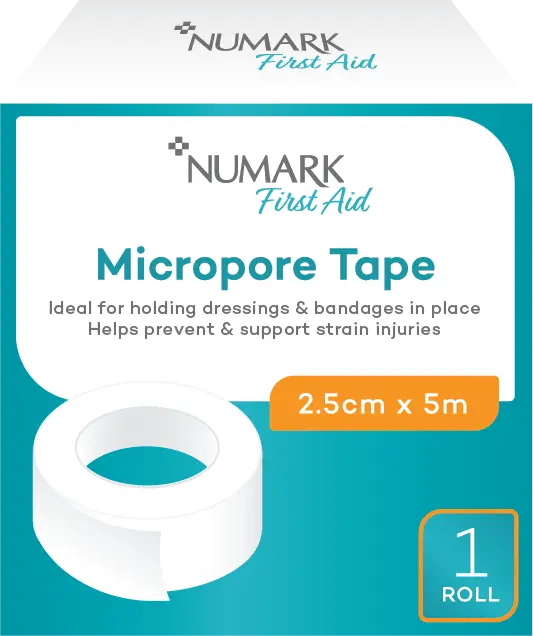
Numark Micropore 2.5cm x 5m
- ✔️ Breathable paper tape — gentle on sensitive and fragile skin
- ✔️ Hypoallergenic acrylic adhesive reduces risk of skin reactions
- ✔️ Tears cleanly by hand — no scissors needed for quick application
- ✔️ Secures wound dressings, gauze, and medical tubing reliably
- ✔️ Suitable for adults, children, and elderly patients
Price Checker
Not approved? Full refund
Includes FREE private prescription
Couldn't load pickup availability
How Should You Use Numark Micropore Tape?
Using micropore tape correctly ensures your dressing stays secure and your skin remains comfortable throughout the healing process. Always start with clean, dry skin — any moisture, oil, or cream residue will reduce how well the tape adheres.
When removing the tape, always peel it back slowly in the direction of hair growth. Hold the surrounding skin taut with your other hand to minimise discomfort, particularly on thin or sensitive skin.
What Is the Correct Dose of Numark Micropore Tape?
As a medical device rather than a medicine, there is no "dose" in the traditional sense. The amount of tape you use depends on the size of the dressing you need to secure and the area of the body being treated. Use only as much tape as is needed to hold the dressing firmly in place without restricting circulation.
When Is the Best Time to Use Numark Micropore Tape?
Apply micropore tape immediately after cleaning and dressing a wound to prevent the dressing from shifting. It is best applied when the skin is completely dry — after bathing or showering, wait until the skin has fully dried before reapplying. Avoid applying tape to skin that has recently had topical creams or ointments applied, as this will reduce adhesion significantly.
If you are changing a dressing as part of a regular wound care routine, the morning is often a practical time — skin tends to be drier and less sweaty than later in the day, which helps the tape bond more effectively.
How Long Can You Use Numark Micropore Tape For?
You can continue using micropore tape for as long as a wound requires a dressing to be secured. There is no fixed maximum duration, but the tape itself should be changed at least daily — or sooner if it becomes wet or soiled. Each time you change the tape, inspect the surrounding skin for any signs of redness, irritation, or breakdown.
If a wound has not shown signs of healing after several days, or if you notice increasing redness, swelling, or discharge, stop using the tape and seek advice from your GP or pharmacist. Do not exceed the recommended dose. If in doubt, speak to your pharmacist.
What Are the Most Common Side Effects of Numark Micropore Tape?
Most people use micropore tape without any problems at all. Because it uses a hypoallergenic acrylic adhesive and a breathable paper backing, it is one of the gentler surgical tapes available. That said, some individuals — particularly those with sensitive or fragile skin — may notice mild reactions, especially with repeated or prolonged use.
- Mild redness or erythema at the tape margins after removal
- Slight skin irritation or tenderness where the tape has been applied
- Minor adhesive residue left on the skin surface after peeling the tape away
- Temporary skin indentation from the tape edge, particularly on soft tissue areas
What Are the Less Common Side Effects of Numark Micropore Tape?
Less frequently, some people may experience more noticeable reactions. These are more likely if the tape is left in place for an extended period, applied to already compromised skin, or if the individual has an underlying sensitivity to adhesives.
- Skin maceration — softening and breakdown of the skin caused by moisture trapped beneath the tape
- Superficial skin tears on very thin or fragile skin, particularly in elderly patients, if the tape is removed too quickly
- Folliculitis — inflammation of hair follicles at the tape site, especially in areas with dense hair growth
- Blistering in individuals with particularly reactive skin
What Are the Serious Side Effects of Numark Micropore Tape?
Serious reactions to micropore tape are rare but can occur in people with a true allergy to acrylic adhesives. Contact dermatitis is the most clinically significant reaction — it presents as a spreading rash, intense itching, redness, and sometimes blistering at and around the application site. This is an immune-mediated response and is distinct from simple irritation.
If you develop signs of a severe allergic reaction — including widespread rash, swelling, or difficulty breathing — remove the tape immediately and seek urgent medical attention. This type of systemic reaction is extremely uncommon with topical medical devices but should not be ignored.
What Should You Do If You Experience Side Effects?
For mild redness or irritation, simply remove the tape, clean the area gently with water, and allow the skin to recover before reapplying. If adhesive residue remains, a small amount of medical adhesive remover or baby oil can help dissolve it without further irritating the skin. Avoid scrubbing the area.
If you develop a rash, blistering, or signs of contact dermatitis, stop using the tape and speak to your pharmacist or GP. They may recommend a patch test with an alternative tape type, or refer you to a dermatologist if the reaction is significant.
Can Numark Micropore Tape Interact With Other Products?
As a medical device, micropore tape does not interact with medicines in the pharmacological sense. However, its adhesive performance can be affected by topical products applied to the skin. Moisturisers, emollients, barrier creams, and topical corticosteroids can all reduce how well the tape sticks, potentially causing the dressing to shift or fall off. Always ensure the skin is clean and fully dry before applying the tape, and avoid applying any topical products to the area immediately before taping.
If you are concerned about any side effects, contact your pharmacist or GP immediately.
Written and reviewed by our qualified team
Reviewed by:
Tarun Kumar
Superintendent/ Clinical Lead
📖 Find out more about our team of medical content authors.
Content last reviewed: 11 November 2026
★ Other popular options
100% discreet packaging
Discreet, unbranded packaging for every order.
Need help?
Talk to our friendly experts now
How our service works
Service setup
Discreet packaging
Express delivery
Medically reviewed by
Tarun Kumar, Superintendent Pharmacist & Clinical Lead (GPhC 2233073)
Last updated on 11 November 2026.
Review History
Our experts continually monitor new findings in health and medicine, and we update our articles when new information becomes available.
Why this page was updated on 11 November 2026
Content checked and updated as part of our periodic review, to ensure accuracy and currentness.
Current version (11 November 2026)
Edited by: The Editorial Team
Medically reviewed by:
Tarun Kumar, GPhC No. 2233073, Superintendent Pharmacist & Clinical Lead
How we source info.
When we present you with stats, data, opinion or a consensus, we'll tell you where this came from.