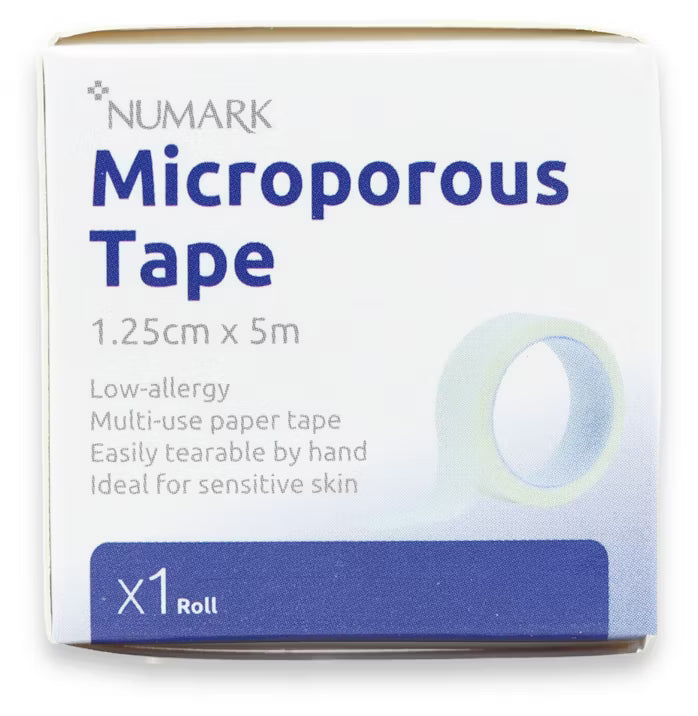
Numark Micropore 1.25cm x 5m
- ✔️ Hypoallergenic paper tape gentle on sensitive skin
- ✔️ Breathable backing reduces skin maceration risk
- ✔️ Tears easily by hand — no scissors needed
- ✔️ Narrow 1.25cm width ideal for small dressings
- ✔️ Secures dressings, cannulas, and gauze reliably
Price Checker
 Lowest price guarantee
 Includes FREE private prescription


Couldn't load pickup availability
What Is Micropore Tape and How Can It Help You?
If you've ever struggled to keep a dressing in place without irritating the surrounding skin, you'll know how frustrating it can be. Micropore tape is a lightweight, paper-based surgical tape designed to hold wound dressings, gauze, and medical tubing securely against the skin — without the harsh adhesive pull that some tapes leave behind. The Numark Micropore 1.25cm x 5m roll is a practical, affordable option for everyday first aid and post-operative wound care at home. At just £1.20, it's one of the most accessible wound care products you can keep in your medicine cabinet. You'll find it alongside other essentials in our first aid collection.
This tape is hypoallergenic, meaning it's formulated to minimise the risk of allergic skin reactions — a real consideration for anyone with sensitive skin or who needs to change dressings frequently. The narrow 1.25cm width makes it particularly useful for securing smaller dressings, cannula sites, or delicate areas where a wider tape would be impractical.
How Does Numark Micropore Tape Work?
The tape works through a combination of its paper construction and gentle acrylic adhesive. Here's what makes it effective:
- Breathable paper backing: Allows air and moisture vapour to pass through, reducing the risk of skin maceration (softening and breakdown caused by trapped moisture).
- Gentle acrylic adhesive: Bonds reliably to skin and dressing surfaces without causing trauma when removed carefully.
- Conformable design: The tape moulds to body contours, maintaining contact even over joints or curved surfaces.
- Easy tear: Can be torn by hand without scissors, making it convenient in clinical and home settings alike.
Because the adhesive is designed to be gentle, it's less likely to strip the outer layer of skin (the stratum corneum) on removal — something that matters a great deal if you're changing dressings daily or caring for fragile, elderly skin.
Who Should Use Numark Micropore Tape?
This tape is suitable for a wide range of people and situations. It's particularly well suited to:
- Adults and older children needing to secure wound dressings at home
- People recovering from minor surgery or procedures who need to keep dressings in place
- Carers managing wound care for elderly individuals with fragile skin
- Anyone with a sensitivity to stronger adhesive tapes who needs a gentler alternative
It's worth noting that micropore tape is not suitable for use directly over open wounds or infected skin without clinical guidance. If you're managing a wound that shows signs of infection — such as increasing redness, warmth, swelling, or discharge — speak to your GP or pharmacist before continuing home dressing changes.
How Does Numark Micropore Tape Compare to Other Surgical Tapes?
| Feature | Numark Micropore Tape | Zinc Oxide Tape |
|---|---|---|
| Adhesive type | Gentle acrylic | Strong zinc oxide |
| Skin sensitivity | Hypoallergenic, low trauma | Can cause irritation on sensitive skin |
| Breathability | High — paper backing | Low — occlusive |
| Best use | Securing dressings, cannulas, delicate skin | Strapping joints, high-tension areas |
Is Numark Micropore Tape Suitable for Long-Term Use?
For most people, micropore tape is safe to use repeatedly over time, provided the skin is monitored for any signs of irritation. If you're using it as part of ongoing wound management — for example, following surgery or for a chronic wound — it's sensible to rotate the application site slightly with each dressing change to give the surrounding skin a rest. The NHS recommends that wound dressings and securing tapes be changed regularly and that the skin around a wound is kept clean and dry to support healing.
Store the tape in a cool, dry place away from direct sunlight. Avoid leaving it in humid environments such as bathrooms where the adhesive may degrade over time. If you're also managing a wound that requires topical treatment, you might find our creams and ointments collection useful for complementary wound care products.
This product is a medicine. Speak to your doctor or pharmacist before using if you have an underlying medical condition or are taking other medicines.
Numark Micropore 1.25cm x 5m specifications
| Treatment category | Wound care / First aid |
| Mechanism of action | Gentle acrylic adhesive secures dressings to skin; breathable paper backing allows moisture vapour transmission |
| Effective for | Securing wound dressings, gauze, cannulas, and medical tubing |
| Suitable for | Adults, older children, sensitive and fragile skin |
| Active ingredient | None — medical device (acrylic adhesive on paper backing) |
| Pack size | 1 roll, 1.25cm x 5m |
| UK classification | Medical device (CE marked) |
| Preparation | Paper-backed adhesive tape |
| Route of administration | Topical / external |
Specifications of Numark Micropore 1.25cm x 5m
What Is Numark Micropore Tape and What Is It Used For?
Numark Micropore Tape is a hypoallergenic, paper-based surgical tape used to secure wound dressings, gauze pads, and medical devices — such as cannulas or nasal tubes — to the skin. It is classified as a medical device rather than a medicine, meaning it works mechanically rather than pharmacologically. The tape is widely used in both clinical settings and at home for routine wound care following minor injuries, surgical procedures, or skin treatments.
Common uses include securing post-operative dressings, holding gauze over minor cuts and abrasions, and keeping medical tubing in position. Because it is breathable and gentle, it is also frequently used in paediatric and elderly care where skin fragility is a concern. The NHS advises that wounds should be kept clean and covered to reduce the risk of infection, and micropore tape plays a key role in keeping dressings securely in place during the healing process.
What Do You Need to Know Before Using Numark Micropore Tape?
Before applying this tape, there are a few important things to be aware of. While it is designed to be gentle, it is not suitable for every situation.
Do not use this tape if:
- You have a known allergy to acrylic adhesives
- The skin at the application site is broken, infected, or severely inflamed
- You have a skin condition such as epidermolysis bullosa or other fragility disorders — seek clinical advice first
- The wound shows signs of infection (increasing pain, redness, warmth, swelling, or purulent discharge)
Warnings and precautions:
- Always remove the tape slowly and gently, peeling back parallel to the skin surface to minimise trauma
- Avoid applying over oily, wet, or dirty skin — the adhesive will not bond effectively and the dressing may slip
- Monitor the skin under and around the tape for signs of irritation or maceration with each dressing change
- Do not use as a primary wound closure device — it is not a substitute for sutures or wound closure strips
Drug and product interactions:
- No known drug interactions — this is a medical device, not a medicine
- Avoid using in combination with topical products containing solvents or alcohol directly under the tape, as these may affect adhesion or cause skin irritation
How Should You Use Numark Micropore Tape?
Correct application makes a real difference to both comfort and effectiveness. Follow these steps for best results:
- Wash and dry your hands thoroughly before handling the dressing or tape.
- Clean the wound area as directed by your healthcare professional and apply the appropriate dressing or gauze pad.
- Ensure the skin around the dressing is clean, dry, and free from lotions or oils.
- Tear or cut the required length of micropore tape — the tape tears easily by hand.
- Apply the tape across the edges of the dressing, pressing firmly but without stretching the tape or pulling the skin.
- Smooth down the full length of the tape to ensure good contact.
- When removing, peel back slowly and parallel to the skin — never pull upward at a sharp angle.
| Indication | Age Group | Application | Frequency |
|---|---|---|---|
| Securing wound dressings | Adults and children | Apply over dressing edges | Change every 24–48 hours or when soiled |
| Securing cannula or tubing | Adults | Loop tape around tubing and secure to skin | As directed by clinical staff |
| Post-operative dressing | Adults | Apply as instructed by surgeon or nurse | As per post-operative care plan |
If you're also looking for products to support wound healing, our skin care collection includes a range of complementary options.
What Are the Possible Side Effects of Numark Micropore Tape?
Because micropore tape is a medical device rather than a medicine, side effects are generally uncommon and localised to the skin at the application site. Most people tolerate it well, particularly those with sensitive skin who find stronger tapes problematic.
Common side effects:
- Mild redness or erythema at the tape margins
- Slight itching under or around the tape
- Minor skin dryness after repeated use
Less common side effects:
- Contact dermatitis — a localised allergic reaction presenting as a rash, blistering, or more intense itching
- Skin maceration if the tape is left in place for too long or applied over a moist area
- Superficial skin stripping if the tape is removed too quickly or at an incorrect angle
If you notice any signs of an allergic reaction — such as spreading redness, hives, or swelling — remove the tape immediately and seek advice from your pharmacist or GP. The NHS provides guidance on recognising and managing skin reactions, and it's always worth checking if a reaction is worsening rather than improving.
How Should You Store Numark Micropore Tape?
Proper storage keeps the adhesive effective and the tape hygienic between uses. Follow these simple guidelines:
- Store below 25°C in a cool, dry place
- Keep away from direct sunlight and sources of heat
- Do not store in humid environments such as bathrooms — moisture can degrade the adhesive
- Keep the roll in its original packaging when not in use
- Keep out of the reach and sight of children
- Do not use after the expiry date printed on the packaging
For a broader range of wound care and health essentials, browse our baby and toddler collection if you're looking for gentle products suitable for younger family members.
References
Written and reviewed by our qualified team
Your safety and success are our highest priorities. Our medical team rigorously evaluates every product and piece of advice we provide, ensuring you receive only the most effective, science-backed solutions available.
Frequently Asked Questions
Where can I buy Numark Micropore Tape online in the UK?
You can buy Numark Micropore Tape 1.25cm x 5m directly from Cured Pharmacy online for just £1.20, with no prescription required. It's available as part of our first aid collection, alongside a wide range of wound care essentials. Simply add it to your basket and choose your preferred delivery option at checkout.
How does micropore tape work on skin?
Micropore tape uses a gentle acrylic adhesive bonded to a breathable paper backing, which allows it to stick securely to skin without causing trauma on removal. The paper construction permits air and moisture vapour to pass through, reducing the risk of skin maceration beneath the tape. This makes it particularly suitable for people who need to change dressings frequently or who have sensitive skin.
How do I apply Numark Micropore Tape step by step?
Start by washing your hands and ensuring the skin around the wound is clean and completely dry. Place your dressing or gauze over the wound, then tear or cut the required length of tape and press it firmly over the dressing edges without stretching. When removing, peel back slowly and parallel to the skin surface to minimise any discomfort or skin damage.
Is micropore tape safe for sensitive or elderly skin?
Yes — micropore tape is hypoallergenic and specifically designed to be gentle on sensitive and fragile skin, including elderly skin that may be more prone to tearing. Always remove it slowly and carefully, peeling back parallel to the skin rather than pulling upward. If you notice persistent redness or irritation, speak to your pharmacist or GP for advice on alternative wound care options.
Can I use micropore tape on children?
Micropore tape can be used on older children to secure dressings over minor cuts and grazes, but extra care is needed when removing it to avoid discomfort or skin damage. For very young children or babies, always seek advice from a healthcare professional before applying any adhesive tape to the skin. You may also find gentle wound care options in our baby and toddler collection.
What are the side effects of micropore tape?
Side effects are uncommon but may include mild redness, itching, or skin dryness at the application site, particularly with repeated use. In rare cases, some individuals may develop contact dermatitis — a localised allergic reaction — presenting as a rash or blistering where the tape was applied. If this occurs, remove the tape immediately and consult your pharmacist or GP.
How long can you leave micropore tape on skin?
As a general guide, micropore tape and the dressing beneath it should be changed every 24 to 48 hours, or sooner if the tape becomes wet, soiled, or starts to peel away. Leaving tape in place for longer than recommended increases the risk of skin maceration and irritation. Always follow the wound care instructions provided by your GP, nurse, or pharmacist.
What is the difference between micropore tape and zinc oxide tape?
Micropore tape has a gentle acrylic adhesive on a breathable paper backing, making it ideal for securing dressings on sensitive or delicate skin. Zinc oxide tape has a much stronger adhesive and is better suited to strapping joints or high-tension areas where a firmer hold is needed. If you have sensitive skin or are changing dressings frequently, micropore tape is generally the more comfortable choice.
Can micropore tape get wet?
Micropore tape is not waterproof and its adhesion will be significantly reduced if it becomes wet. If the tape gets wet — for example, during bathing or showering — it should be removed and replaced with a fresh piece once the skin is clean and dry. For situations where the dressing is likely to get wet regularly, ask your pharmacist about waterproof alternatives.
Who is eligible to use Numark Micropore Tape?
Numark Micropore Tape is suitable for most adults and older children who need to secure wound dressings or medical devices at home. It is not recommended for use directly over open, infected, or severely inflamed wounds without clinical guidance. People with known allergies to acrylic adhesives or certain skin conditions should seek advice from a healthcare professional before use.
What happens if I apply micropore tape to broken skin?
Applying adhesive tape directly to broken or open skin can cause further trauma and increase the risk of infection or delayed healing. Micropore tape should always be applied to the intact skin surrounding a wound, not over the wound itself. If you are unsure how to dress a wound correctly, the NHS provides guidance on wound care, or you can speak to your local pharmacist.
How do I remove micropore tape without causing pain?
To remove micropore tape with minimal discomfort, hold the skin taut with one hand and peel the tape back slowly with the other, keeping it as parallel to the skin surface as possible. Avoid pulling the tape upward at a sharp angle, as this increases the risk of skin stripping. If the tape is particularly adherent, dampening the edge slightly with warm water can help loosen the adhesive before removal.
What are alternatives to micropore tape for wound care?
Alternatives include silicone-based medical tape (often preferred for very fragile skin), fabric-backed adhesive tape, and zinc oxide tape for areas requiring stronger adhesion. The right choice depends on the wound location, skin sensitivity, and whether the area is likely to be exposed to moisture. Your pharmacist can help you choose the most appropriate option for your specific situation.
How long can you use micropore tape for wound care?
You can use micropore tape for as long as a wound requires dressing, provided the skin around the application site remains healthy and free from irritation. For chronic wounds or long-term wound management, it's advisable to have the wound reviewed regularly by a healthcare professional. Rotating the tape application site slightly with each dressing change can help protect the surrounding skin over time.
What does the latest research say about paper surgical tape?
Clinical literature consistently supports the use of hypoallergenic paper-based surgical tapes as a first-line option for securing dressings in patients with sensitive or fragile skin, due to their low trauma removal profile and breathable construction. Research published in wound care journals highlights that breathable tapes reduce the incidence of skin maceration compared to occlusive alternatives. For everyday home wound care, micropore tape remains a well-established and clinically recognised choice.
Written and reviewed by our qualified team

Reviewed by:
Tarun Kumar
Superintendent/ Clinical Lead
📖 Find out more about our team of medical content authors and how we ensure the accuracy of our content with our content guidelines.
Content last updated: 14 Sep 2026
Other popular options


We’re a safe and
regulated UK service

Lowest Price Guarantee

We're convinced you won't find your treatment cheaper, but if you do we'll refund the difference.
Find out more
100% discreet packaging

Discreet, unbranded packaging for every order.
Find out more

Need help?
Talk to our friendly experts now


How our service works

Service setup

Discreet packaging

Express delivery