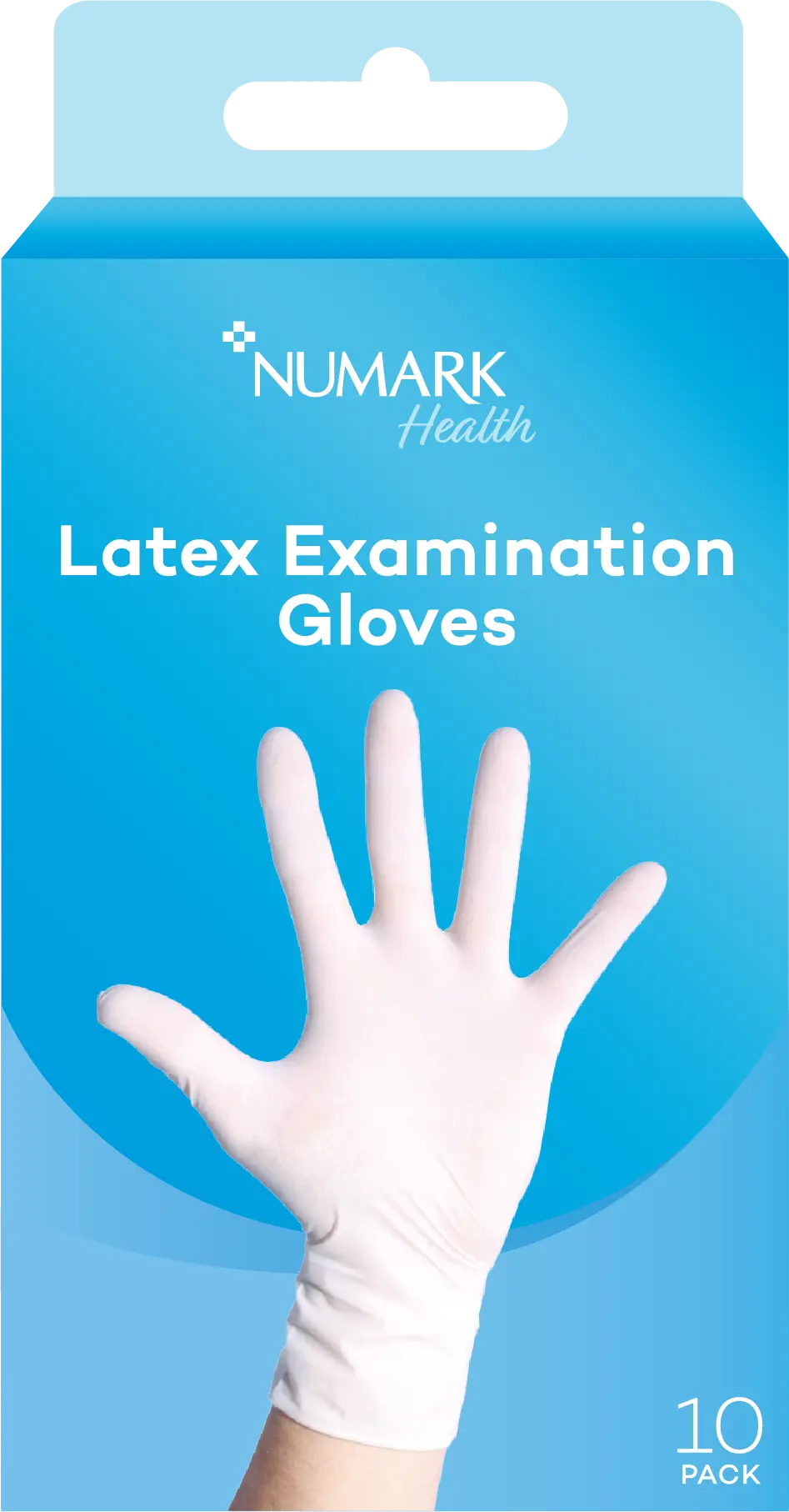
Numark Latex Examination Gloves
Numark Latex Examination Gloves
- ✔️ Provides a physical barrier against bodily fluids and contaminants
- ✔️ Single-use design prevents cross-contamination between tasks
- ✔️ Close-fitting latex material maintains tactile sensitivity during use
- ✔️ Suitable for first aid, wound care, and personal care tasks
- ✔️ Disposable and hygienic — no cleaning or maintenance required
Price Checker
 Lowest price guarantee
 Includes FREE private prescription


Couldn't load pickup availability
What Are Latex Examination Gloves Used For?
Whether you're managing a minor wound at home, assisting with personal care, or handling clinical tasks, having the right protective equipment matters. Latex examination gloves are a staple in both professional healthcare settings and everyday first aid kits — and Numark's version gives you reliable, single-use protection at an accessible price. At just £4.59, they're a practical addition to any home medicine cabinet or first aid kit.
Made from natural rubber latex, these gloves create a close-fitting barrier between your hands and potential contaminants. They're designed for examination and light procedural use — think wound cleaning, dressing changes, or handling medical equipment. Single-use and disposable, they help reduce the risk of cross-contamination between tasks or individuals.
How Do Numark Latex Examination Gloves Work?
The protective function of these gloves comes down to the physical barrier that natural rubber latex creates. When worn correctly, the glove material prevents direct skin contact with bodily fluids, wound exudate, or other potentially infectious material. Here's how that protection works in practice:
- Natural rubber latex forms a flexible, close-fitting layer over the hand
- The material resists tearing under normal examination conditions
- The snug fit allows tactile sensitivity, so you can still feel what you're doing
- Single-use design means each pair is discarded after one task, preventing cross-contamination
It's worth noting that these gloves do not provide protection against sharp objects or chemical exposure beyond their intended use. Always use the correct type of glove for the task at hand.
Who Should Use Numark Latex Examination Gloves?
These gloves are suitable for a wide range of users — from parents managing childhood scrapes to carers assisting with personal hygiene tasks. They're also useful for anyone who wants to maintain hygiene standards when handling medications, applying creams, or dealing with minor injuries. That said, they're not appropriate for everyone.
- Adults and carers performing first aid or wound care at home
- Healthcare support workers in non-sterile examination settings
- Anyone handling potentially infectious material who does not have a latex allergy
- People who need disposable hand protection for hygiene-sensitive tasks
They are not suitable for individuals with a known latex allergy or sensitivity. If you're unsure whether you have a latex allergy, speak to your GP or pharmacist before use.
How Do Latex Gloves Compare to Nitrile or Vinyl Alternatives?
| Feature | Numark Latex Examination Gloves | Nitrile Gloves | Vinyl Gloves |
|---|---|---|---|
| Material | Natural rubber latex | Synthetic nitrile rubber | Polyvinyl chloride (PVC) |
| Latex-free | No | Yes | Yes |
| Tactile sensitivity | High | High | Lower |
| Puncture resistance | Good | Very good | Lower |
| Typical cost | Low | Moderate | Low |
Are Latex Examination Gloves Safe to Store at Home?
Yes — provided you store them correctly. Keep the box in a cool, dry place away from direct sunlight, heat sources, and ozone-generating equipment (such as electric motors). Exposure to UV light or heat can degrade the latex over time, reducing the integrity of the glove material. Always check the expiry date on the packaging before use.
If you're building a home first aid kit, latex examination gloves pair well with other essentials. You might also want to explore our skin care range for products to support wound healing and skin health alongside your protective equipment.
This product is a medical device. Speak to your doctor or pharmacist before using if you have an underlying medical condition or are taking other medicines.
Numark Latex Examination Gloves specifications
| Treatment category | Protective/hygiene equipment |
| Mechanism of action | Physical barrier protection against contamination |
| Effective for | First aid, wound care, examination tasks |
| Suitable for | Adults without latex allergy |
| Active ingredient | Natural rubber latex |
| UK classification | Medical device (CE marked) |
| Preparation | Disposable examination glove |
| Route of administration | External/topical (worn on hands) |
Specifications of Numark Latex Examination Gloves
What Are Numark Latex Examination Gloves and What Are They Used For?
Numark Latex Examination Gloves are single-use, disposable protective gloves made from natural rubber latex. They are designed to be worn on the hands to create a physical barrier during tasks that carry a risk of contact with bodily fluids, wound exudate, or other potentially infectious or contaminating material. They are used in both home and clinical settings for first aid, wound dressing, personal care assistance, and general hygiene tasks.
These gloves are a medical device rather than a medicine. They do not treat or prevent infection on their own — their role is purely protective, reducing the risk of cross-contamination between the wearer and the person being cared for. They are not sterile unless specifically labelled as such, so they are not appropriate for surgical procedures.
What Do You Need to Know Before Using Numark Latex Examination Gloves?
Before using these gloves, it's important to check whether they are appropriate for you and the task you're undertaking. There are some key contraindications and warnings to be aware of:
- Latex allergy: Do not use these gloves if you have a known allergy or sensitivity to natural rubber latex. Reactions can range from mild skin irritation to severe anaphylaxis.
- Skin conditions: If you have broken skin, eczema, or dermatitis on your hands, wearing latex gloves may worsen irritation. Consider a latex-free alternative.
- Not for sterile procedures: These are examination-grade gloves, not sterile surgical gloves. Do not use them for procedures requiring a sterile field.
- Single-use only: Do not wash and reuse. Reuse compromises the barrier integrity and increases contamination risk.
- Not suitable for children: Keep gloves out of reach of children — latex gloves pose a choking and suffocation hazard.
There are no known drug interactions associated with wearing latex gloves. However, if you are applying topical medicines — such as those found in our creams and ointments range — wearing gloves can help protect your hands from absorption of the active ingredient.
How Should You Use Numark Latex Examination Gloves?
Using examination gloves correctly is just as important as using them at all. Poor technique can transfer contamination even when gloves are worn. Follow these steps:
- Wash and dry your hands thoroughly before putting on gloves.
- Select the correct size — gloves that are too loose or too tight reduce dexterity and increase the risk of tearing.
- Hold the glove at the cuff and slide your dominant hand in first, then repeat for the other hand.
- Inspect the gloves for any visible tears or holes before beginning the task.
- Perform the task, avoiding touching non-contaminated surfaces where possible.
- To remove: pinch the outside of one glove near the wrist and peel it off, turning it inside out. Hold the removed glove in your gloved hand, then slide a finger under the cuff of the remaining glove and peel it off over the first.
- Dispose of used gloves in a suitable waste bin. Wash hands again immediately after removal.
| Indication | User | Glove type | Notes |
|---|---|---|---|
| First aid / wound care | Adults (no latex allergy) | Latex examination glove | Single-use, dispose after each task |
| Personal care assistance | Carers | Latex examination glove | Change between tasks |
| Latex allergy present | Any user | Nitrile or vinyl glove | Do not use latex gloves |
What Are the Possible Side Effects of Numark Latex Examination Gloves?
Most people use latex examination gloves without any problems. However, some individuals may experience skin reactions, particularly with repeated or prolonged use. It's worth knowing what to look out for.
Common side effects:
- Mild skin dryness or tightness after prolonged wear
- Irritant contact dermatitis — redness, dryness, or cracking of the skin, usually caused by friction or moisture rather than the latex itself
Less common side effects:
- Allergic contact dermatitis — a delayed reaction (typically 12–48 hours after exposure) causing itching, redness, and blistering
- Type I latex hypersensitivity — an immediate allergic reaction to latex proteins, which can cause hives, runny nose, or in severe cases, anaphylaxis
- Swelling or urticaria (hives) at the site of contact
If you notice any signs of an allergic reaction — particularly swelling of the face, throat, or difficulty breathing — remove the gloves immediately and seek emergency medical help. The NHS advises that anaphylaxis is a medical emergency requiring immediate treatment.
How Should You Store Numark Latex Examination Gloves?
- Store in a cool, dry place at room temperature (ideally below 25°C)
- Keep away from direct sunlight and UV light sources
- Avoid storing near heat sources, electric motors, or ozone-generating equipment
- Keep in the original packaging until use
- Do not store near sharp objects that could puncture the gloves
- Check the expiry date before use — degraded latex may not provide adequate protection
- Keep out of reach of children
If you're stocking a home first aid kit, it's a good idea to check your supplies regularly. You can also browse our first aid collection for other essentials to keep alongside your gloves.
References
- https://www.nhs.uk/conditions/first-aid/
- https://www.nhs.uk/conditions/anaphylaxis/
- https://www.nhs.uk/conditions/contact-dermatitis/
- https://www.nhs.uk/conditions/allergies/
- https://www.nhs.uk/conditions/skin-rash/
- https://www.gov.uk/guidance/medical-devices-how-to-comply-with-the-new-uk-regulations
Written and reviewed by our qualified team
Your safety and success are our highest priorities. Our medical team rigorously evaluates every product and piece of advice we provide, ensuring you receive only the most effective, science-backed solutions available.
Frequently Asked Questions
Where can I buy Numark Latex Examination Gloves online in the UK?
You can buy Numark Latex Examination Gloves directly from Cured Pharmacy online for just £4.59. No prescription is needed, and they can be ordered alongside other first aid essentials. Orders are dispatched promptly to your home address.
How do Numark Latex Examination Gloves work to protect you?
These gloves work by creating a physical barrier of natural rubber latex between your skin and any potentially contaminating material. The close-fitting design maintains tactile sensitivity while preventing direct contact with bodily fluids, wound exudate, or other substances. They are single-use, so each pair is discarded after one task to prevent cross-contamination.
How do I put on and remove latex examination gloves safely?
To put them on, wash your hands first, then slide each hand into the glove carefully, starting with your dominant hand. To remove them safely, pinch the outside of one glove near the wrist, peel it off inside out, then slide a finger under the cuff of the remaining glove and peel it off over the first. Always wash your hands again immediately after removal.
What size latex examination gloves should I choose?
Numark Latex Examination Gloves are typically available in small, medium, and large sizes. A well-fitting glove should feel snug but not restrictive — gloves that are too loose can slip and reduce protection, while gloves that are too tight are more likely to tear. If you're between sizes, size up for comfort during longer tasks.
Are Numark Latex Examination Gloves suitable for people with latex allergies?
No — these gloves contain natural rubber latex and are not suitable for anyone with a known latex allergy or sensitivity. Reactions to latex can range from mild skin irritation to severe anaphylaxis in sensitised individuals. If you have a latex allergy, look for nitrile or vinyl alternatives instead.
Can I reuse Numark Latex Examination Gloves after washing them?
No — these are single-use disposable gloves and must not be reused. Washing or reusing disposable latex gloves compromises the integrity of the material, creating micro-tears that reduce their protective barrier. Always use a fresh pair for each task and dispose of used gloves appropriately.
What side effects can latex examination gloves cause?
The most common issue is irritant contact dermatitis — dryness, redness, or cracking of the skin caused by friction or moisture inside the glove. Some people develop allergic contact dermatitis, a delayed reaction causing itching and blistering. In rare cases, individuals with latex sensitivity may experience an immediate allergic reaction including hives or, in severe cases, anaphylaxis.
How should I manage a skin reaction from latex gloves?
If you notice mild redness or dryness, remove the gloves and wash your hands with mild soap and water. Applying a gentle moisturiser can help soothe irritated skin — you can browse suitable options in our skin care range. If you experience swelling, hives, or difficulty breathing, remove the gloves immediately and seek emergency medical attention.
Who is eligible to use Numark Latex Examination Gloves?
These gloves are suitable for adults who do not have a latex allergy and need disposable hand protection for first aid, wound care, or hygiene tasks. They are not suitable for children, individuals with latex sensitivity, or for use in sterile surgical procedures. If you are unsure whether they are appropriate for your needs, speak to a pharmacist.
What are the alternatives to latex examination gloves?
The two main latex-free alternatives are nitrile gloves and vinyl gloves. Nitrile gloves offer excellent puncture resistance and are suitable for higher-risk tasks, while vinyl gloves are a lower-cost option for light-duty use. Both are suitable for individuals with latex allergies and are widely available from pharmacies and medical suppliers.
How long can you wear latex examination gloves at one time?
Latex examination gloves are designed for short-duration tasks rather than extended wear. Prolonged use increases the risk of skin irritation due to moisture and heat build-up inside the glove. For tasks lasting more than 30 minutes, consider taking breaks and changing gloves to reduce the risk of skin problems.
Are Numark Latex Examination Gloves sterile?
No — these are non-sterile examination gloves, which means they are not suitable for procedures requiring a sterile field, such as surgical interventions. They are appropriate for general examination, first aid, and hygiene tasks where sterility is not a clinical requirement. Always check the packaging if sterility is important for your intended use.
How should I store Numark Latex Examination Gloves?
Store the gloves in their original box in a cool, dry place away from direct sunlight, heat, and ozone sources. Exposure to UV light or high temperatures can degrade the latex material over time, reducing the glove's protective integrity. Always check the expiry date printed on the packaging before use.
Can latex examination gloves be used when applying topical creams or medicines?
Yes — wearing latex examination gloves when applying topical treatments can protect your hands from absorbing the active ingredient, which is particularly useful with potent topical medicines. This is a common practice among carers and healthcare workers. Browse our creams and ointments range for products you might use alongside protective gloves.
What is the latest guidance on using gloves for infection control at home?
The NHS advises that gloves should be used as part of standard precautions when there is a risk of contact with blood or bodily fluids, but they are not a substitute for thorough hand washing. Gloves should be changed between tasks and hands should always be washed after glove removal. Correct technique is essential — wearing gloves incorrectly can give a false sense of security and actually increase contamination risk.
Written and reviewed by our qualified team

Reviewed by:
Tarun Kumar
Superintendent/ Clinical Lead
📖 Find out more about our team of medical content authors and how we ensure the accuracy of our content with our content guidelines.
Content last updated: 14 Sep 2026
Other popular options


We’re a safe and
regulated UK service

Lowest Price Guarantee

We're convinced you won't find your treatment cheaper, but if you do we'll refund the difference.
Find out more
100% discreet packaging

Discreet, unbranded packaging for every order.
Find out more

Need help?
Talk to our friendly experts now


How our service works

Service setup

Discreet packaging

Express delivery