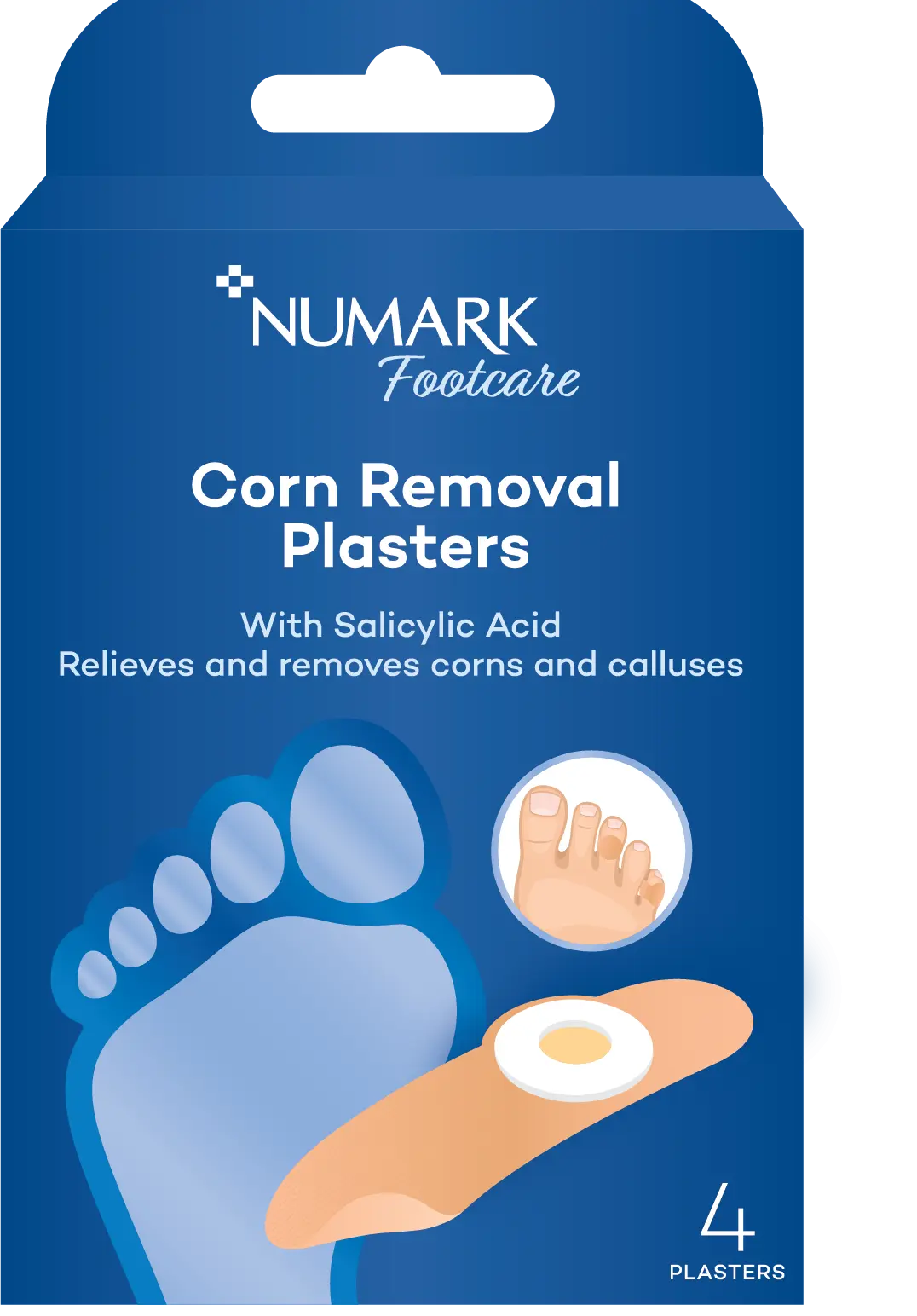
Numark Corn Removal Plasters With Salicylic Acid
Numark Corn Removal Plasters With Salicylic Acid
- ✔️ Targets and softens painful foot corns with salicylic acid 40%
- ✔️ Keratolytic action breaks down hardened corn tissue gradually
- ✔️ Cushioned plaster format relieves pressure while treating the corn
- ✔️ Suitable for adults with clearly defined corns on feet or toes
- ✔️ Simple peel-and-apply design for accurate, mess-free corn treatment
Price Checker
 Lowest price guarantee
 Includes FREE private prescription


Couldn't load pickup availability
What Are Corn Removal Plasters and Do They Really Work?
Corns are small, hardened areas of skin that develop on the feet — usually on the tops or sides of toes — in response to repeated friction or pressure. They can be surprisingly painful, especially when you're walking or wearing shoes. Corn removal plasters offer a straightforward, at-home solution that most people can use without a prescription. Numark Corn Removal Plasters With Salicylic Acid are available for just £2.49, making them one of the most accessible options for managing this common foot complaint. If you're looking after your feet more broadly, you might also find our foot care collection useful for related products.
Corns are distinct from calluses — they tend to have a hard central core and are more localised. According to the NHS, corns are caused by pressure or friction, often from poorly fitting footwear, and they can affect anyone. Salicylic acid has been used as a keratolytic treatment for decades and remains the standard active ingredient in most over-the-counter corn treatments available in the UK.
How Do Numark Corn Removal Plasters Work on Hard Skin?
The active ingredient in these plasters is salicylic acid at a concentration of 40%. It works by softening the keratin — the protein that makes up the outer layers of skin — causing the hardened tissue of the corn to break down gradually. Here's what happens when you apply the plaster:
- Salicylic acid penetrates the thickened skin of the corn
- It disrupts the bonds holding dead skin cells together (keratolysis)
- The softened tissue becomes easier to lift away gently
- Repeated applications over several days continue this process until the corn is fully removed
The plaster format is particularly helpful because it keeps the salicylic acid in direct, sustained contact with the corn while also providing a degree of cushioning to reduce discomfort when walking.
Who Should Use Numark Corn Removal Plasters?
These plasters are suitable for most adults who have a confirmed corn on their foot. They're especially useful if you want a simple, mess-free alternative to liquid corn paints or gels. That said, they're not appropriate for everyone.
- Adults aged 16 and over with a corn on the foot or toe
- People who prefer a targeted, plaster-based treatment over liquids
- Those with a single, clearly defined corn rather than widespread hard skin
- Individuals who have ruled out other causes of foot pain (such as verrucas or blisters)
You should not use these plasters if you have diabetes, poor circulation, or peripheral neuropathy. In these cases, even minor skin damage can lead to serious complications, and you should always seek advice from your GP or podiatrist before using any medicated corn treatment.
How Do Numark Corn Plasters Compare to Other Corn Treatments?
| Feature | Numark Corn Removal Plasters | Salicylic Acid Corn Paint/Gel |
|---|---|---|
| Active ingredient | Salicylic acid 40% | Salicylic acid (variable %) |
| Application method | Pre-cut medicated plaster | Brush or dropper application |
| Cushioning effect | Yes — built-in padding | No |
| Ease of use | Simple peel-and-apply | Requires careful application to avoid surrounding skin |
Are Numark Corn Removal Plasters Suitable for Sensitive Skin?
If you have sensitive skin, you should take care when using any product containing corn removal plasters with salicylic acid. The acid can irritate the healthy skin surrounding the corn if the plaster is not positioned accurately. Always apply the plaster so the medicated pad sits directly over the corn only, and avoid placing it on unaffected skin. If you notice redness, burning, or irritation beyond the corn itself, remove the plaster and allow the skin to recover before reapplying.
Storage is straightforward — keep the plasters below 25°C in a dry place, away from direct sunlight and out of reach of children. For other skin-related products, browse our skin care collection at Cured Pharmacy.
This product is a medicine. Speak to your doctor or pharmacist before using if you have an underlying medical condition or are taking other medicines.
Numark Corn Removal Plasters With Salicylic Acid specifications
| Treatment category | Foot care / Corn treatment |
| Mechanism of action | Keratolytic — softens and breaks down hardened skin |
| Effective for | Corns on feet and toes |
| Suitable for | Adults aged 16 and over (not suitable for diabetics without medical advice) |
| Active ingredient | Salicylic acid 40% |
| UK classification | General Sale List (GSL) |
| Drug class | Keratolytic agent |
| Preparation | Medicated adhesive plaster |
| Route of administration | Topical (cutaneous) |
Specifications of Numark Corn Removal Plasters With Salicylic Acid
What Are Numark Corn Removal Plasters and What Are They Used For?
Numark Corn Removal Plasters With Salicylic Acid are an over-the-counter topical treatment designed to remove corns from the feet and toes. Each plaster contains a medicated pad impregnated with salicylic acid 40%, a well-established keratolytic agent that softens the hardened skin making up a corn. The plasters are used by adults aged 16 and over who have a clearly defined corn caused by friction or pressure — most commonly from ill-fitting shoes or abnormal foot mechanics.
Corns are not the same as verrucas or calluses, and it's worth being sure of what you're treating before you start. The NHS describes corns as small circles of hard skin with a central core, often found on the tops or sides of toes. If you're unsure whether you have a corn, a pharmacist can help you identify it before you begin treatment.
What Do You Need to Know Before Using Numark Corn Removal Plasters?
Before applying these plasters, read the following contraindications and warnings carefully:
- Do not use if you have diabetes mellitus — reduced sensation in the feet means skin damage may go unnoticed and lead to serious complications
- Do not use if you have poor circulation or peripheral arterial disease
- Do not apply to broken, infected, inflamed, or irritated skin
- Do not use on moles, birthmarks, warts, or verrucas
- Do not use on the face or genitals
- Not recommended for children under 16 without medical advice
- Avoid contact with eyes and mucous membranes
- Do not use during pregnancy or breastfeeding without first consulting your GP or pharmacist
Known drug interactions with topical salicylic acid at this concentration are minimal when used as directed. However, if you are using other topical medicines on the same area of skin, speak to your pharmacist first. There are no significant systemic drug interactions reported for topical salicylic acid used on a small skin area.
- No significant interactions with oral medicines at standard topical doses
- Avoid combining with other keratolytic agents on the same site
How Should You Use Numark Corn Removal Plasters Correctly?
Follow these steps carefully to get the best results and minimise the risk of skin irritation. Accurate placement is key — the medicated pad must sit directly over the corn and not on the surrounding healthy skin.
- Wash and dry your feet thoroughly before application
- Soak the affected foot in warm water for 5 minutes to soften the skin
- Dry the area completely — the plaster will not adhere well to damp skin
- Peel the backing from the plaster and position the medicated pad directly over the corn
- Press firmly around the edges to secure the plaster in place
- Leave in place for up to 48 hours before removing
- After removing, gently rub the softened skin with a pumice stone or emery board
- Repeat the process until the corn is fully removed
| Indication | Age Group | Dose | Frequency |
|---|---|---|---|
| Corn on foot or toe | Adults 16+ | One plaster per corn | Replace every 48 hours |
| Corn on foot or toe | Under 16 | Not recommended without medical advice | — |
What Are the Possible Side Effects of Numark Corn Removal Plasters?
Like all medicines, these plasters can cause side effects, although not everyone experiences them. Most side effects are localised to the skin at or near the application site.
Common side effects:
- Mild redness or irritation of the skin surrounding the corn
- Slight stinging or burning sensation on application
- Temporary whitening of the treated skin (this is normal with salicylic acid)
Less common side effects:
- Blistering of the skin around the corn
- Increased pain or tenderness at the site
- Signs of skin infection (warmth, swelling, discharge) — seek medical advice promptly if this occurs
If you experience significant burning, blistering, or any sign of infection, remove the plaster immediately and do not reapply. Contact your pharmacist or GP for advice. You can also browse our first aid collection for wound care products if the skin becomes broken.
How Should You Store Numark Corn Removal Plasters?
- Store below 25°C in a cool, dry place
- Keep away from direct sunlight and sources of heat
- Keep out of the sight and reach of children
- Do not use after the expiry date printed on the packaging
- Do not store in the bathroom — humidity can affect the adhesive and the medicated pad
If you have any unused plasters after completing your treatment, dispose of them responsibly. Your local pharmacy can advise on safe disposal of unused medicines and medical products. For other foot-related concerns, our athletes foot and fungal infections collection covers a range of treatments for common foot conditions.
References
Written and reviewed by our qualified team
Your safety and success are our highest priorities. Our medical team rigorously evaluates every product and piece of advice we provide, ensuring you receive only the most effective, science-backed solutions available.
Frequently Asked Questions
Where can I buy Numark Corn Removal Plasters online in the UK?
You can buy Numark Corn Removal Plasters With Salicylic Acid directly from Cured Pharmacy online for just £2.49, with fast UK delivery. They are a General Sale List (GSL) medicine, so no prescription is needed. They may also be available from selected high street pharmacies and supermarkets across the UK.
How do Numark Corn Removal Plasters work in the body?
The plasters contain salicylic acid 40%, which acts as a keratolytic — it breaks down the protein keratin that makes up the hardened skin of a corn. This softens the corn tissue over repeated applications, making it easier to lift away gently. The plaster format keeps the acid in sustained contact with the corn while also cushioning the area to reduce walking discomfort.
How do I use Numark Corn Removal Plasters step by step?
Start by soaking your foot in warm water for around 5 minutes, then dry the skin thoroughly. Peel the backing from the plaster and press the medicated pad firmly over the corn, making sure it doesn't overlap onto healthy skin. Leave it in place for up to 48 hours, then remove, gently rub the softened skin with a pumice stone, and repeat until the corn is gone.
How long does it take for corn removal plasters to work?
Most corns begin to soften noticeably within the first week of consistent use, with full removal typically taking 2 to 4 weeks depending on the size and depth of the corn. Smaller, more superficial corns may respond faster. If you see no improvement after 12 weeks of use, stop treatment and consult your pharmacist or GP.
What is the correct dose of Numark Corn Removal Plasters?
Apply one plaster per corn and replace every 48 hours. Do not apply more than one plaster to the same corn at a time, and do not use on more than one or two corns simultaneously without pharmacist advice. Always follow the instructions in the pack leaflet.
Are Numark Corn Removal Plasters safe for people with diabetes?
No — people with diabetes should not use salicylic acid corn plasters without first consulting their GP or podiatrist. Diabetes can cause reduced sensation in the feet (peripheral neuropathy), meaning skin damage from the acid could go unnoticed and lead to serious complications. The NHS strongly advises people with diabetes to seek professional foot care rather than self-treating with medicated corn products.
Can children use Numark Corn Removal Plasters?
These plasters are not recommended for children under 16 without medical advice. Corns are uncommon in children and may indicate an underlying foot problem — such as a structural issue or ill-fitting footwear — that should be assessed by a GP or podiatrist. Always seek professional guidance before using medicated corn treatments on a child.
What are the side effects of salicylic acid corn plasters?
The most common side effect is mild redness or irritation of the skin surrounding the corn, along with a slight stinging sensation. Temporary whitening of the treated skin is normal and expected with salicylic acid. Less commonly, blistering or signs of infection may occur — if this happens, remove the plaster and seek pharmacist advice promptly.
What should I do if the plaster irritates the skin around my corn?
Remove the plaster immediately if you notice significant redness, burning, or blistering on the healthy skin surrounding the corn. Allow the area to recover for a day or two before reapplying, and take extra care to position the medicated pad only over the corn itself. If irritation persists, speak to your pharmacist before continuing treatment.
Who is eligible to use Numark Corn Removal Plasters?
These plasters are suitable for adults aged 16 and over who have a clearly defined corn on the foot or toe caused by friction or pressure. They are not suitable for people with diabetes, poor circulation, peripheral neuropathy, or broken and infected skin. Pregnant or breastfeeding women should consult their GP or pharmacist before use.
What happens if I leave the plaster on for too long?
Leaving the plaster on for longer than the recommended 48 hours can increase the risk of irritation or maceration (over-softening) of the surrounding healthy skin. Always change the plaster at the recommended interval and inspect the skin each time you remove it. If the skin looks very white, soggy, or sore, give it a rest before reapplying.
What are the alternatives to corn removal plasters?
Alternatives include salicylic acid corn paints or gels, non-medicated cushioning pads that relieve pressure without treating the corn directly, and professional corn removal by a podiatrist. You can explore a range of related products in our foot care collection. Addressing the root cause — such as switching to better-fitting footwear — is also an important part of long-term management.
How long can I use Numark Corn Removal Plasters for?
You can use the plasters for up to 12 weeks. If the corn has not resolved within this time, stop using the product and consult your pharmacist or GP, as there may be an underlying cause that needs professional assessment. Do not use these plasters indefinitely without reviewing whether the treatment is working.
Can I use corn removal plasters on a verruca?
No — these plasters are specifically for corns and should not be used on verrucas, warts, moles, or birthmarks. Verrucas are caused by the human papillomavirus (HPV) and require different treatment. If you're unsure whether you have a corn or a verruca, a pharmacist can help you tell the difference before you start any treatment.
What are the latest recommendations for treating corns at home?
The NHS recommends using salicylic acid products as the first-line self-care treatment for corns, alongside addressing the cause of friction — typically by wearing well-fitting shoes and using protective padding. Regular use of a pumice stone after soaking can also help manage hard skin. For persistent or painful corns, a referral to a podiatrist is advised. You can also browse our pain relief collection if foot pain is affecting your daily life.
Written and reviewed by our qualified team

Reviewed by:
Tarun Kumar
Superintendent/ Clinical Lead
📖 Find out more about our team of medical content authors and how we ensure the accuracy of our content with our content guidelines.
Content last updated: 14 Sep 2026
Other popular options


We’re a safe and
regulated UK service

Lowest Price Guarantee

We're convinced you won't find your treatment cheaper, but if you do we'll refund the difference.
Find out more
100% discreet packaging

Discreet, unbranded packaging for every order.
Find out more

Need help?
Talk to our friendly experts now


How our service works

Service setup

Discreet packaging

Express delivery