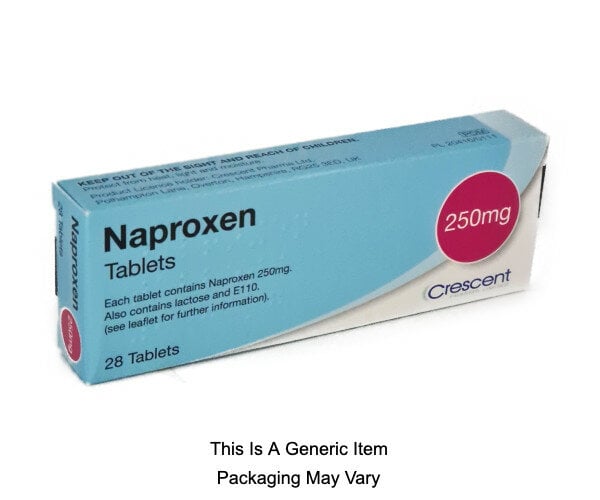
Naproxen 250mg/500mg tablets
Naproxen 250mg/500mg tablets
- ✔️ Relieves pain and inflammation for up to 12 hours per dose
- ✔️ Effective for arthritis, gout, period pain, and muscle injuries
- ✔️ Available in 250mg and 500mg strengths for flexible dosing
- ✔️ Clinically established NSAID with decades of evidence-based use
- ✔️ Suitable for adults managing both acute and chronic inflammatory pain
Price Checker
 Lowest price guarantee
 Includes FREE private prescription


Couldn't load pickup availability
What Are Naproxen Tablets and How Do They Help?
If you're dealing with persistent joint pain, muscle aches, or inflammation that just won't settle, naproxen tablets are one of the most widely used and clinically established options available. Naproxen belongs to a class of medicines called non-steroidal anti-inflammatory drugs (NSAIDs). It works to reduce pain, swelling, and stiffness caused by a range of conditions — from arthritis to period pain to acute musculoskeletal injuries. Available in 250mg and 500mg strengths, it offers flexibility depending on the severity of your symptoms. You can explore our full pain relief collection for a broader look at what's available.
Naproxen has been used clinically for decades and is well-supported by evidence. It's available on prescription in the UK and, in lower doses, over the counter. Whether you're managing a long-term condition or dealing with a short-term flare-up, it's worth understanding exactly how this medicine works before you start taking it.
How Does Naproxen Work to Reduce Pain and Inflammation?
Naproxen works by inhibiting enzymes called cyclooxygenase-1 (COX-1) and cyclooxygenase-2 (COX-2). These enzymes are responsible for producing prostaglandins — chemical messengers that trigger pain, inflammation, and fever in the body. By blocking their production, naproxen reduces the inflammatory response at the source rather than simply masking discomfort.
- Inhibits COX-1 and COX-2 enzymes throughout the body
- Reduces prostaglandin synthesis, lowering inflammation
- Decreases pain signals sent to the brain
- Lowers fever by acting on the hypothalamus
- Provides longer-lasting relief compared to some other NSAIDs, with effects lasting up to 12 hours per dose
Who Is Naproxen Suitable For?
Naproxen is suitable for adults and, in some cases, children over 16 years of age. It's commonly prescribed or recommended for people experiencing a variety of painful or inflammatory conditions. That said, it isn't right for everyone — certain health conditions and medications can make it unsuitable, so always check with a pharmacist or GP first.
- Adults with osteoarthritis, rheumatoid arthritis, or gout
- People with acute musculoskeletal pain (e.g. sprains, strains, back pain)
- Women experiencing painful periods (dysmenorrhoea)
- Adults with mild to moderate post-operative or dental pain
How Does Naproxen Compare to Other NSAIDs?
| Feature | Naproxen 250mg/500mg | Ibuprofen 200mg/400mg |
|---|---|---|
| Duration of action | Up to 12 hours | 4–6 hours |
| Dosing frequency | Twice daily | Three times daily |
| Suitable for arthritis | Yes | Yes |
| GI risk profile | Moderate | Moderate |
How Should You Store Naproxen Tablets?
Store naproxen tablets below 25°C in a dry place, away from direct sunlight and moisture. Keep them in their original packaging and out of reach of children at all times. Do not use tablets past the expiry date printed on the pack — if in doubt, return them to your local pharmacy for safe disposal.
If you're managing a condition that also involves digestive discomfort, it may be worth browsing our indigestion collection, as some patients taking NSAIDs benefit from a stomach-protective medicine alongside their treatment.
This product is a medicine. Speak to your doctor or pharmacist before using if you have an underlying medical condition or are taking other medicines.
Naproxen 250mg/500mg Tablets specifications
| Treatment category | Pain relief and anti-inflammatory |
| Mechanism of action | COX-1 and COX-2 inhibitor (NSAID) |
| Effective for | Arthritis, musculoskeletal pain, period pain, gout, dental pain |
| Suitable for | Adults and children over 16 years |
| Active ingredient | Naproxen |
| Strengths | 250mg, 500mg |
| UK classification | Prescription-only medicine (POM) / Pharmacy (P) depending on strength and indication |
| Drug class | Non-steroidal anti-inflammatory drug (NSAID) |
| Preparation | Tablet |
| Route of administration | Oral |
Specifications of Naproxen 250mg/500mg Tablets
What Is Naproxen and What Is It Used For?
Naproxen is a non-steroidal anti-inflammatory drug (NSAID) used to relieve pain and reduce inflammation. It's prescribed or recommended for a wide range of conditions including rheumatoid arthritis, osteoarthritis, ankylosing spondylitis, gout, and acute musculoskeletal disorders. It can also be used for period pain and mild to moderate post-operative pain. Naproxen tablets are available in two strengths — 250mg and 500mg — allowing your doctor or pharmacist to tailor the dose to your specific needs.
What Do You Need to Know Before Using Naproxen?
Before taking naproxen, it's important to be aware of certain conditions and medicines that may make it unsuitable for you. Always read the patient information leaflet supplied with your medicine and speak to a pharmacist or GP if you're unsure.
Do not take naproxen if you:
- Are allergic to naproxen, aspirin, or any other NSAID
- Have or have had a peptic ulcer or gastrointestinal bleeding
- Have severe heart failure, kidney disease, or liver disease
- Are in the third trimester of pregnancy
- Have a history of asthma triggered by NSAIDs
Medicines that may interact with naproxen:
- Warfarin and other anticoagulants — increased bleeding risk
- Lithium — naproxen can raise lithium blood levels
- Methotrexate — risk of toxicity increases
- SSRIs (e.g. fluoxetine) — higher risk of gastrointestinal bleeding
- Other NSAIDs or aspirin — do not combine
- ACE inhibitors and diuretics — reduced effectiveness and kidney risk
If you are managing a long-term condition alongside pain, it may also be worth exploring our vitamins and supplements collection for supportive nutritional options.
How Should You Use Naproxen Correctly?
Always take naproxen exactly as directed by your doctor or pharmacist. Swallow tablets whole with a full glass of water. Taking naproxen with food, milk, or an antacid can help reduce the chance of stomach upset — this is particularly important if you're taking it regularly.
- Take the tablet with a full glass of water
- Take with food or milk to protect your stomach
- Do not crush or chew the tablets
- Take at regular intervals as prescribed — usually twice daily
- Do not exceed the maximum recommended daily dose
- If you miss a dose, take it as soon as you remember — unless it's nearly time for your next dose
| Indication | Age Group | Dose | Frequency |
|---|---|---|---|
| Arthritis / inflammation | Adults | 500mg–1,000mg daily | Twice daily |
| Acute pain / gout | Adults | 750mg initially, then 250mg every 8 hours | As directed |
| Period pain | Adults / over 16 | 500mg initially, then 250mg every 6–8 hours | As needed |
What Are the Possible Side Effects of Naproxen?
Like all medicines, naproxen can cause side effects, although not everyone experiences them. Most side effects are mild and improve as your body adjusts. However, some can be serious — stop taking naproxen and seek medical advice immediately if you notice signs of gastrointestinal bleeding (such as black or tarry stools), chest pain, or a severe allergic reaction.
Common side effects (may affect up to 1 in 10 people):
- Nausea and indigestion
- Stomach pain or discomfort
- Headache
- Dizziness
- Constipation or diarrhoea
Less common side effects:
- Fluid retention (swelling of ankles or feet)
- Raised blood pressure
- Skin rash or itching
- Tinnitus (ringing in the ears)
- Visual disturbances
If you experience any side effects that concern you, speak to your pharmacist or GP. You can also report side effects directly to the MHRA via the Yellow Card scheme.
How Should You Store Naproxen Tablets Safely?
- Store below 25°C in a dry place away from direct sunlight
- Keep in the original packaging until use
- Keep out of reach and sight of children
- Do not use after the expiry date printed on the pack
- Do not dispose of medicines via wastewater or household waste — return to a pharmacy
For other conditions that may accompany chronic pain or inflammation, our women's health collection includes products relevant to period pain and related concerns.
References
Written and reviewed by our qualified team
Your safety and success are our highest priorities. Our medical team rigorously evaluates every product and piece of advice we provide, ensuring you receive only the most effective, science-backed solutions available.
Frequently Asked Questions
Where can I buy naproxen tablets online in the UK?
You can buy naproxen tablets online in the UK from Cured Pharmacy, a GPhC-registered online pharmacy. Simply complete a short health questionnaire and a pharmacist will review your order before dispatch. Visit our pain relief collection to browse all available options.
How does naproxen work in the body?
Naproxen works by blocking COX-1 and COX-2 enzymes, which reduces the production of prostaglandins — the chemicals responsible for pain, swelling, and fever. This anti-inflammatory action makes it effective for both acute and chronic painful conditions. Effects can last up to 12 hours per dose, which is longer than many other NSAIDs.
How do I take naproxen tablets step by step?
Swallow the tablet whole with a full glass of water — do not crush or chew it. Always take naproxen with food or milk to reduce the risk of stomach irritation. Follow the dose and frequency recommended by your pharmacist or GP, and never exceed the maximum daily dose stated on the label.
What is the correct dose of naproxen for adults?
The standard adult dose is 500mg to 1,000mg daily, usually taken as 500mg twice daily. For acute gout, an initial dose of 750mg is sometimes used, followed by 250mg every eight hours. Always follow the specific dosing instructions provided with your prescription or by your pharmacist.
What is the best time of day to take naproxen?
Naproxen is typically taken twice daily — once in the morning and once in the evening — ideally with meals to protect the stomach lining. Spacing doses approximately 12 hours apart helps maintain consistent levels of the medicine in your bloodstream. Try to take it at the same times each day to build a routine.
What are the most common side effects of naproxen and how do I manage them?
The most common side effects include nausea, indigestion, stomach pain, headache, and dizziness. Taking naproxen with food or milk significantly reduces stomach-related side effects. If indigestion persists, your GP may recommend a stomach-protective medicine such as a proton pump inhibitor (PPI) to take alongside it.
Who is eligible to take naproxen tablets?
Naproxen is suitable for most adults aged 18 and over, and in some cases for young people over 16. It is not suitable for people with a history of peptic ulcers, severe kidney or liver disease, heart failure, or NSAID-induced asthma. Pregnant women, particularly in the third trimester, should avoid naproxen entirely.
What happens if I miss a dose of naproxen?
If you miss a dose, take it as soon as you remember — unless it's nearly time for your next scheduled dose, in which case skip the missed one entirely. Never take a double dose to make up for a missed one, as this increases the risk of side effects. Continue with your regular dosing schedule as normal.
Can I take naproxen with ibuprofen or aspirin?
No — you should not take naproxen alongside ibuprofen or high-dose aspirin. All three are NSAIDs, and combining them significantly raises the risk of gastrointestinal bleeding and kidney problems without providing any additional pain relief. If you need additional pain relief, paracetamol can usually be taken safely alongside naproxen — but always check with your pharmacist first.
What are the alternatives to naproxen for pain relief?
Common alternatives include ibuprofen (another NSAID with a shorter duration of action), paracetamol (suitable for mild to moderate pain with a lower GI risk), and diclofenac (another NSAID available in tablet or topical form). The right choice depends on your condition, medical history, and any other medicines you're taking — your pharmacist can advise. You can also explore our pain relief collection for further options.
How long can you take naproxen for?
For acute conditions such as period pain or a muscle strain, naproxen is typically used for a few days only. For chronic conditions like arthritis, it may be taken long-term under medical supervision. Long-term use increases the risk of gastrointestinal, cardiovascular, and renal side effects, so regular review by your GP is important.
Is naproxen safe to take during pregnancy?
Naproxen is not recommended during the third trimester of pregnancy as it can affect the baby's circulation and kidneys. Use during the first and second trimesters should only occur under medical supervision and is generally avoided. If you are pregnant or trying to conceive, always speak to your GP or midwife before taking any NSAID.
What is the difference between naproxen 250mg and 500mg tablets?
Naproxen 250mg is typically used for milder pain or as a lower starting dose, while 500mg is the standard therapeutic dose for moderate to severe pain and inflammatory conditions. Both strengths are taken orally and work in the same way — the difference is simply the amount of active ingredient per tablet. Your pharmacist or GP will advise which strength is appropriate for your condition.
Can naproxen affect the kidneys or heart?
Yes — like all NSAIDs, naproxen can affect kidney function, particularly in people who are dehydrated, elderly, or have pre-existing kidney disease. Long-term use has also been associated with a modest increase in cardiovascular risk, including raised blood pressure. If you have heart disease, kidney problems, or are at cardiovascular risk, discuss the suitability of naproxen with your GP before use.
What are the latest findings on naproxen compared to other NSAIDs?
Research, including data reviewed by NICE, suggests naproxen may carry a lower cardiovascular risk compared to some other NSAIDs such as diclofenac and high-dose ibuprofen, making it a preferred option for patients with moderate cardiovascular risk. However, it still carries gastrointestinal risks similar to other NSAIDs. Clinicians are advised to use the lowest effective dose for the shortest duration necessary, in line with current NHS guidance. For digestive support during NSAID therapy, our indigestion collection may be helpful.
Written and reviewed by our qualified team

Reviewed by:
Tarun Kumar
Superintendent/ Clinical Lead
📖 Find out more about our team of medical content authors and how we ensure the accuracy of our content with our content guidelines.
Content last updated: 14 Sep 2026

We’re a safe and
regulated UK service

Lowest Price Guarantee

We're convinced you won't find your treatment cheaper, but if you do we'll refund the difference.
Find out more
100% discreet packaging

Discreet, unbranded packaging for every order.
Find out more

Need help?
Talk to our friendly experts now


How our service works

Service setup

Discreet packaging

Express delivery