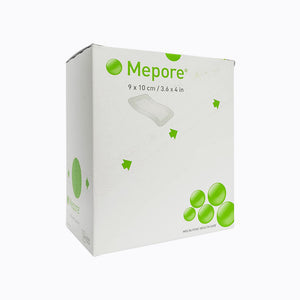
Mepore 9x10cm - 50 Dressings
- ✔️ Sterile island dressing protects minor cuts and grazes effectively
- ✔️ Absorbent pad manages low-to-moderate wound exudate
- ✔️ Breathable backing reduces risk of skin maceration
- ✔️ Gentle acrylic adhesive stays secure without traumatising skin
- ✔️ Pack of 50 provides long-lasting home or clinical wound care supply
Price Checker
 Lowest price guarantee
 Includes FREE private prescription


Couldn't load pickup availability
What Is a Mepore Self-Adhesive Dressing?
If you've ever struggled with a dressing that peels off too soon, irritates the skin around a wound, or simply doesn't stay put, you'll understand why choosing the right product matters. The Mepore self-adhesive dressing is a sterile, non-woven island dressing manufactured by Mölnlycke Health Care — a company with decades of experience in wound management. Each 9x10cm dressing features a central absorbent pad surrounded by a gentle acrylic adhesive border, making it suitable for a wide range of everyday wounds. At just £11.99 for a pack of 50, it offers reliable wound protection whether you're stocking a home first aid kit or managing wound care in a professional setting. You'll find it and other essentials in our first aid collection.
Mepore dressings are classified as a medical device rather than a medicinal product, which means they work through physical action rather than pharmacological means. They are CE-marked and widely used across NHS community and hospital settings for both acute and post-operative wound care.
How Does a Mepore Dressing Work?
The design of a Mepore dressing is straightforward, but each element serves a specific clinical purpose. Understanding how it works helps you use it correctly and get the most from it.
- Absorbent pad: The central non-woven pad absorbs wound exudate (fluid), keeping the wound surface moist enough to support healing without becoming waterlogged.
- Breathable backing: The outer layer allows moisture vapour to pass through, reducing the risk of maceration (skin softening from excess moisture) around the wound edges.
- Acrylic adhesive border: A gentle but secure adhesive holds the dressing in place on intact surrounding skin without causing trauma on removal.
- Sterile packaging: Each dressing is individually sterile, reducing the risk of introducing bacteria to an open wound during application.
Together, these features create a moist wound environment — something the NHS recognises as beneficial for wound healing — while protecting the site from dirt, friction, and external contamination.
Who Should Use a Mepore 9x10cm Dressing?
Mepore dressings are suitable for a broad range of people and wound types. They're particularly useful when you need a dressing that stays in place during everyday activity without causing discomfort. That said, they're not appropriate for every wound — heavily infected wounds or those requiring specialist dressings should always be assessed by a healthcare professional.
- Adults and children with minor cuts, grazes, or abrasions
- People recovering from minor surgical procedures or skin biopsies
- Individuals managing low-to-moderate exuding wounds at home
- Healthcare professionals and carers needing a reliable, cost-effective dressing supply
If you're managing a wound alongside other skin concerns, it's worth exploring our skin care range for complementary products that support skin health during recovery.
How Does Mepore Compare to Other Adhesive Dressings?
| Feature | Mepore 9x10cm | Standard Fabric Plaster |
|---|---|---|
| Size | 9x10cm island dressing | Typically 6x2cm strip |
| Absorbency | Moderate — suitable for exuding wounds | Low — minimal absorbency |
| Sterility | Individually sterile packed | Varies — not always sterile |
| Breathability | Breathable non-woven backing | Varies by product |
How Should You Store Mepore Dressings?
Proper storage keeps each dressing sterile and ready to use when you need it. Store your Mepore 9x10cm dressings below 25°C in a cool, dry place away from direct sunlight and moisture. Keep them in their original sealed packaging until the moment of use — opening the packaging early compromises sterility. Check the expiry date printed on each individual wrapper before applying any dressing to a wound.
Do not use a dressing if the packaging is damaged, torn, or has been previously opened. If you're unsure whether a dressing is still safe to use, it's always better to discard it and use a fresh one. The Mepore self-adhesive dressing is designed for single use only — never reapply a used dressing.
This product is a medical device. Speak to your doctor or pharmacist before using if you have an underlying medical condition or are taking other medicines.
Mepore 9x10cm - 50 Dressings specifications
| Treatment category | Wound care / First aid |
| Mechanism of action | Physical barrier; absorbs exudate and maintains moist wound environment |
| Effective for | Minor cuts, grazes, abrasions, low-to-moderate exuding wounds, post-operative wounds |
| Suitable for | Adults and children |
| Active ingredient | None (non-medicated medical device) |
| Pack size | 50 dressings |
| Dressing size | 9x10cm |
| UK classification | Medical device (CE-marked) |
| Preparation | Sterile, self-adhesive island dressing |
| Route of administration | Topical / external application |
Specifications of Mepore 9x10cm - 50 Dressings
What Is Mepore 9x10cm and What Is It Used For?
Mepore 9x10cm is a sterile, self-adhesive island wound dressing manufactured by Mölnlycke Health Care. It is a non-medicated medical device, meaning it works by physical action rather than by delivering any active drug to the body. The dressing consists of a soft, absorbent non-woven pad bonded to a breathable backing layer, with an acrylic adhesive border that secures it to the surrounding intact skin.
It is used to cover and protect a variety of wound types, including:
- Minor cuts and lacerations
- Grazes and abrasions
- Blisters and superficial skin injuries
- Low-to-moderate exuding post-operative wounds
- Donor sites and minor skin procedure sites
The NHS advises that most minor wounds can be managed at home with appropriate wound care, including cleaning the wound and applying a suitable dressing to protect it while healing takes place.
What Do You Need to Know Before Using Mepore Dressings?
Mepore dressings are generally well tolerated, but there are some important points to be aware of before use.
Do not use Mepore dressings if:
- You have a known allergy or sensitivity to acrylic adhesives
- The wound shows signs of active infection (increasing redness, warmth, swelling, pus, or fever) — seek medical advice first
- The wound is heavily bleeding and has not been controlled
- The wound is deep, gaping, or may require stitches — attend your nearest urgent treatment centre or A&E
- The packaging is damaged or the dressing's sterility has been compromised
Warnings and precautions:
- Check the skin around the wound at each dressing change for signs of irritation, maceration, or allergic contact dermatitis
- Use with caution on fragile or elderly skin, as adhesive removal can cause skin tears
- Do not apply to mucous membranes or eyes
- This dressing is for single use only — never reuse
Drug interactions:
- As a non-medicated medical device, Mepore dressings have no known drug interactions
How Should You Apply a Mepore Dressing Correctly?
Correct application makes a real difference to how well the dressing stays in place and how effectively it protects the wound. Follow these steps each time you apply a fresh dressing.
- Wash your hands thoroughly with soap and water before touching the wound or dressing.
- Clean the wound gently with clean running water or a saline solution to remove any debris. Pat dry with a clean gauze or tissue.
- Open the sterile packaging carefully, avoiding touching the absorbent pad.
- Peel back the release paper from one side of the dressing.
- Centre the absorbent pad directly over the wound, then peel away the remaining release paper.
- Press the adhesive border firmly onto dry, intact surrounding skin, smoothing from the centre outwards.
- Check that all edges are secure and no air pockets are present beneath the dressing.
| Wound Type | Age Group | Dressing Size | Change Frequency |
|---|---|---|---|
| Minor cuts / grazes | Adults & children | 9x10cm | Every 1–3 days or when soiled |
| Post-operative wound | Adults | 9x10cm | As directed by clinician |
| Blister / abrasion | Adults & children | 9x10cm | Daily or when saturated |
If you're also managing pain associated with a wound or injury, our pain relief range includes options suitable for use alongside wound care.
What Are the Possible Side Effects of Using Mepore Dressings?
Because Mepore is a non-medicated device, systemic side effects are not expected. However, local skin reactions can occur in some individuals, particularly those with sensitive or fragile skin.
Common side effects:
- Mild redness or irritation at the adhesive border after removal
- Slight discomfort when removing the dressing, especially on hairy skin
- Temporary skin marking from the adhesive
Less common side effects:
- Allergic contact dermatitis — itching, blistering, or a rash at the adhesive site
- Skin maceration (softening and whitening) if the dressing is left in place too long on a heavily exuding wound
- Skin tears on removal in elderly or very fragile skin
If you notice any signs of an allergic reaction or worsening skin condition, remove the dressing and consult your pharmacist or GP. For babies and young children, always check the wound site carefully — you'll find age-appropriate first aid products in our baby and toddler range.
How Should You Store Mepore 9x10cm Dressings?
- Store below 25°C in a cool, dry environment
- Keep away from direct sunlight and sources of heat or moisture
- Store in the original sealed packaging until point of use
- Do not use if the individual wrapper is torn, punctured, or previously opened
- Check the expiry date on each wrapper before use
- Keep out of reach of children
- Dispose of used dressings in general household waste — do not flush
References
Written and reviewed by our qualified team
Your safety and success are our highest priorities. Our medical team rigorously evaluates every product and piece of advice we provide, ensuring you receive only the most effective, science-backed solutions available.
Frequently Asked Questions
Where can I buy Mepore 9x10cm dressings online in the UK?
You can buy Mepore 9x10cm dressings directly from Cured Pharmacy, a GPhC-registered UK online pharmacy, for £11.99 per pack of 50. They are available without a prescription as an over-the-counter medical device. Browse our full first aid collection for a wide range of wound care products.
How does a Mepore self-adhesive dressing work on a wound?
Mepore dressings work by physically covering and protecting the wound from contamination while the central absorbent pad draws away excess wound fluid. The breathable backing allows moisture vapour to escape, helping to prevent maceration of the surrounding skin. The acrylic adhesive border holds the dressing securely in place without causing trauma to intact skin on removal.
How do I apply a Mepore 9x10cm dressing step by step?
Start by washing your hands and cleaning the wound with running water, then pat the area dry. Peel back the release paper, centre the absorbent pad over the wound, and press the adhesive border firmly onto dry surrounding skin. Smooth from the centre outwards to ensure all edges are secure and no air pockets remain beneath the dressing.
How often should I change a Mepore dressing?
For most minor wounds, change the dressing every one to three days, or sooner if it becomes saturated, soiled, or starts to lift at the edges. Post-operative wounds should be changed according to the specific instructions given by your surgeon or practice nurse. Never leave a dressing in place longer than recommended, as this can increase the risk of infection or skin maceration.
Are Mepore dressings suitable for children?
Yes, Mepore dressings can be used on children for minor cuts, grazes, and abrasions. Always inspect the skin around the wound at each dressing change, as children's skin can be more sensitive to adhesives. If you notice any redness, rash, or irritation at the adhesive border, remove the dressing and seek advice from a pharmacist or GP.
Can Mepore dressings be used on post-operative wounds?
Mepore dressings are widely used in NHS clinical settings for low-to-moderate exuding post-operative wounds, and they are suitable for home use following minor procedures. Always follow the specific wound care instructions provided by your surgeon, nurse, or GP after any operation. If your wound shows signs of infection — such as increasing redness, warmth, swelling, or discharge — seek medical advice promptly.
What are the side effects of using Mepore dressings?
Because Mepore is a non-medicated device, systemic side effects are not expected. Some people may experience mild redness or irritation at the adhesive border, particularly those with sensitive skin. Rarely, allergic contact dermatitis can develop — if you notice itching, blistering, or a spreading rash, remove the dressing and consult your pharmacist or GP.
How do I manage skin irritation caused by Mepore dressings?
If you experience mild redness at the adhesive border, allow the skin to rest between dressing changes and avoid applying the new dressing to exactly the same area of skin. For more significant irritation or a suspected allergic reaction, remove the dressing, clean the area gently, and speak to your pharmacist. They may recommend a silicone-bordered alternative dressing that is gentler on sensitive skin.
Who is eligible to use Mepore 9x10cm dressings?
Mepore 9x10cm dressings are suitable for most adults and children who need to cover and protect a minor wound. They are not suitable for use on heavily infected wounds, deep or gaping wounds that may need stitches, or by individuals with a known allergy to acrylic adhesives. If you are unsure whether this dressing is appropriate for your wound, speak to a pharmacist before use.
What happens if I leave a Mepore dressing on too long?
Leaving a dressing in place beyond the recommended period — especially on a wound producing significant fluid — can lead to maceration, where the surrounding skin becomes soft, white, and fragile. This can slow healing and increase the risk of skin breakdown. Change the dressing as soon as it becomes saturated or soiled, and inspect the wound and surrounding skin at every change.
What are the alternatives to Mepore dressings?
Alternatives to Mepore include other self-adhesive island dressings such as Primapore, Mepilex Border (for more sensitive skin), or non-adherent dressings such as Melolin secured with surgical tape. The right choice depends on your wound type, the amount of fluid it produces, and your skin sensitivity. A pharmacist can help you select the most appropriate option from our first aid range.
Can I use Mepore dressings on infected wounds?
No — Mepore dressings should not be applied to wounds that are actively infected without first seeking medical advice. Signs of wound infection include increasing redness, warmth, swelling, pain, pus, or a fever. An infected wound may require antibiotic treatment and specialist wound care dressings, so always consult your GP or practice nurse if you suspect infection.
How long can I keep using Mepore dressings on a wound?
Continue using Mepore dressings for as long as the wound requires protection and is still healing — this varies from a few days for a minor graze to several weeks for a larger wound or post-operative site. Once the wound has fully closed and the skin surface is intact, a dressing is no longer necessary. If a wound has not shown signs of healing after two weeks, seek advice from your GP.
Are there any latest studies or clinical evidence supporting Mepore dressings?
Mepore dressings have been used in clinical practice for many years and are included in NHS wound care protocols for post-operative and minor wound management. The principle of moist wound healing — which these dressings support — is well established in wound care literature. Mölnlycke Health Care publishes clinical evidence on their products, and the dressings are CE-marked as medical devices meeting EU safety and performance standards.
Is the Mepore 9x10cm dressing waterproof?
Mepore dressings are breathable and water-resistant to a degree, but they are not fully waterproof. Prolonged exposure to water — such as bathing or swimming — can cause the adhesive border to lift and the dressing to become saturated. If the dressing gets wet, replace it with a fresh sterile dressing as soon as possible to maintain wound protection.
Written and reviewed by our qualified team

Reviewed by:
Tarun Kumar
Superintendent/ Clinical Lead
📖 Find out more about our team of medical content authors and how we ensure the accuracy of our content with our content guidelines.
Content last updated: 14 Sep 2026
Other popular options


We’re a safe and
regulated UK service

Lowest Price Guarantee

We're convinced you won't find your treatment cheaper, but if you do we'll refund the difference.
Find out more
100% discreet packaging

Discreet, unbranded packaging for every order.
Find out more

Need help?
Talk to our friendly experts now


How our service works

Service setup

Discreet packaging

Express delivery