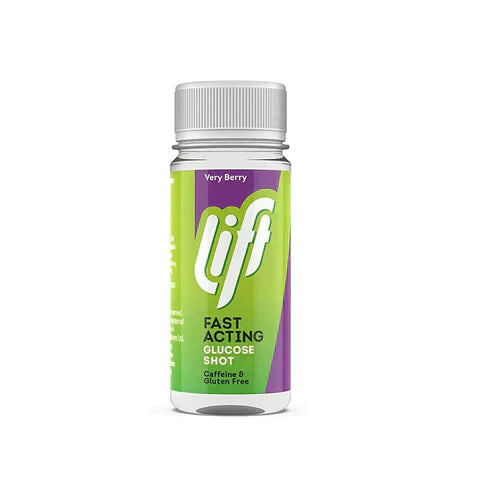
Lift Glucose Juice Shot Berry Burst Flavour - 60 ml
- ✔️ Rapidly raises blood glucose levels within 10–15 minutes
- ✔️ Provides approximately 15g fast-acting dextrose per shot
- ✔️ Suitable for adults and children over 4 with hypoglycaemia
- ✔️ Compact 60ml bottle — ideal for on-the-go hypo management
- ✔️ Berry Burst flavour makes glucose correction more palatable
Price Checker
Not approved? Full refund
Includes FREE private prescription
Couldn't load pickup availability
How Should You Use the Lift Glucose Juice Shot?
Using this product correctly ensures you get the fastest possible response when your blood glucose drops. Always drink the shot as soon as you notice symptoms of hypoglycaemia — do not wait to see if they resolve on their own.
What Is the Correct Dose of the Lift Glucose Shot?
The dose depends on your age and the reason for use. One 60ml shot provides approximately 15g of glucose, which aligns with NHS guidance for treating a mild to moderate hypoglycaemic episode. Do not exceed two shots in a single episode without seeking medical advice.
When Is the Best Time to Use the Lift Glucose Shot?
The best time to use this shot is at the very first sign of a hypoglycaemic episode — early treatment prevents symptoms from worsening and reduces the risk of a severe hypo. For athletes, it can be taken during prolonged exercise lasting more than 60 to 90 minutes when blood glucose is at risk of dropping. Carrying a shot with you at all times means you are always prepared, whether you are at work, exercising, or travelling.
How Long Can You Use the Lift Glucose Shot For?
This product is intended for use on an as-needed basis — it is not a daily supplement or a substitute for a balanced diet. There is no set limit on how long you can keep it in your emergency kit, provided it is stored correctly and used before the expiry date. However, if you find yourself needing a glucose shot for low blood sugar very frequently, this is a sign that your diabetes management plan may need reviewing. Speak to your GP or diabetes nurse for personalised advice.
Do not exceed the recommended dose. If in doubt, speak to your pharmacist.
What Are the Most Common Side Effects of the Lift Glucose Shot?
When used as directed, the Lift Glucose Juice Shot is generally well tolerated. Most people experience no side effects at all. However, some individuals may notice mild reactions, particularly if the shot is consumed quickly or in larger quantities than recommended.
- Mild nausea or an unsettled stomach, especially if taken on an empty stomach.
- Temporary feeling of fullness or bloating.
- Rebound hyperglycaemia — blood sugar rising above normal if too much glucose is taken at once.
What Are the Less Common Side Effects of the Lift Glucose Shot?
Less common side effects are unlikely with occasional use but may become relevant if you use glucose shots frequently over a long period of time.
- Dental erosion — the acidity and sugar content of glucose drinks can affect tooth enamel with repeated use. Rinsing your mouth with water after each shot can help reduce this risk.
- Headache — this may occur if blood glucose swings significantly in either direction.
- Stomach cramps or discomfort if the product is consumed too rapidly.
What Are the Serious Side Effects of the Lift Glucose Shot?
Serious side effects from a glucose drink are extremely rare. However, you should be aware of the following situations that require prompt medical attention.
- Severe allergic reaction (anaphylaxis) — symptoms include swelling of the face, lips, or throat, difficulty breathing, and a rapid heartbeat. Call 999 immediately if this occurs.
- Persistent or worsening hypoglycaemia despite taking glucose — this may indicate a more serious underlying cause and requires urgent medical assessment.
- Significant hyperglycaemia following overuse — if blood glucose rises very high and you feel unwell, contact your diabetes team or GP promptly.
What Should You Do If You Experience Side Effects?
If you notice any mild side effects such as nausea or bloating, these usually resolve on their own without treatment. Drinking a glass of water and resting for a few minutes is often sufficient. If you experience a more significant reaction, stop using the product and contact your pharmacist or GP for advice. For any severe or life-threatening reaction, call 999 without delay.
Can the Lift Glucose Shot Interact With Other Medicines?
Yes, glucose can interact with certain medicines used to manage blood sugar. If you take any of the following, be aware of how glucose shots may affect your treatment.
- Insulin — glucose will counteract the blood-lowering effect of insulin. Always monitor your blood glucose carefully after use and inform your diabetes team if you are using glucose shots frequently.
- Sulphonylureas (e.g. gliclazide, glibenclamide) — these medicines lower blood sugar and may increase the frequency of hypos requiring glucose correction.
- Acarbose — this medicine slows carbohydrate digestion. Pure glucose (dextrose) remains effective even when taking acarbose, unlike sucrose-based products.
- Corticosteroids — these can raise blood glucose and may affect how much glucose correction you need.
If you are concerned about any side effects, contact your pharmacist or GP immediately.
Written and reviewed by our qualified team
Reviewed by:
Tarun Kumar
Superintendent/ Clinical Lead
📖 Find out more about our team of medical content authors.
Content last reviewed: 11 November 2026
★ Other popular options
100% discreet packaging
Discreet, unbranded packaging for every order.
Need help?
Talk to our friendly experts now
How our service works
Service setup
Discreet packaging
Express delivery
Medically reviewed by
Tarun Kumar, Superintendent Pharmacist & Clinical Lead (GPhC 2233073)
Last updated on 11 November 2026.
Review History
Our experts continually monitor new findings in health and medicine, and we update our articles when new information becomes available.
Why this page was updated on 11 November 2026
Content checked and updated as part of our periodic review, to ensure accuracy and currentness.
Current version (11 November 2026)
Edited by: The Editorial Team
Medically reviewed by:
Tarun Kumar, GPhC No. 2233073, Superintendent Pharmacist & Clinical Lead
How we source info.
When we present you with stats, data, opinion or a consensus, we'll tell you where this came from.