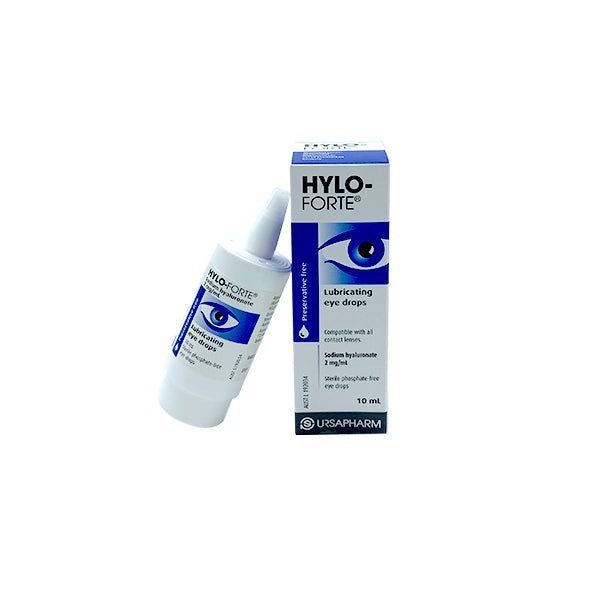
Hylo-Tear Long Lasting Soothing Eye Drops - 10ml
Hylo-Tear Long Lasting Soothing Eye Drops - 10ml
- ✔️ Soothes dry, gritty eyes with sodium hyaluronate 0.1%
- ✔️ Preservative-free formula safe for frequent daily use
- ✔️ COMOD® system delivers one precise sterile drop each time
- ✔️ Suitable for contact lens wearers and sensitive eyes
- ✔️ One bottle lasts up to six months after opening
Price Checker
 Lowest price guarantee
 Includes FREE private prescription


Couldn't load pickup availability
What Are Hylo-Tear Eye Drops and How Do They Help Dry Eyes?
Dry, gritty, or irritated eyes are surprisingly common — and often more disruptive than people expect. Whether it's hours in front of a screen, air conditioning, or simply getting older, the tear film can struggle to keep up. Hylo-Tear eye drops offer a preservative-free solution designed to restore moisture and comfort to the ocular surface, using a well-established lubricating agent that closely resembles the eye's own natural tears. If you're looking for reliable, gentle relief, you'll find a wide range of options in our eye care collection.
Each 10ml bottle contains sodium hyaluronate 0.1% — a naturally occurring substance found throughout the body, including in the vitreous humour of the eye itself. The NHS recognises dry eye disease as a very common condition, particularly in older adults and those who spend extended periods using digital screens. Hylo-Tear is available over the counter without a prescription, making it straightforward to access when you need it.
How Does Sodium Hyaluronate Work in Hylo-Tear?
The mechanism behind Hylo-Tear is rooted in the unique properties of sodium hyaluronate, a glycosaminoglycan with exceptional water-retaining capacity. When instilled into the eye, it forms a stable, viscoelastic film across the corneal surface. This film doesn't wash away quickly — it stays in place, reducing friction between the eyelid and the eye with every blink.
- Sodium hyaluronate binds to water molecules, maintaining hydration at the ocular surface
- It supports the natural mucin layer of the tear film, improving overall tear stability
- The viscoelastic properties mean it spreads evenly without causing blurring for extended periods
- Because it is preservative-free, it avoids the irritation that preservatives like benzalkonium chloride can cause with frequent use
The COMOD® multi-dose system used in Hylo-Tear allows you to dispense individual drops without introducing air or contamination into the bottle — a genuinely clever design that keeps the formula sterile throughout its six-month use period after opening.
Who Is Hylo-Tear Suitable For?
Hylo-Tear is suitable for a broad range of people experiencing dry or uncomfortable eyes. It's particularly well-suited to those who cannot tolerate preserved eye drops, which can cause cumulative irritation with regular use. It is also appropriate for contact lens wearers, though lenses should be removed before instillation.
- Adults and children with dry eye syndrome or keratoconjunctivitis sicca
- People who wear soft or rigid contact lenses and experience dryness
- Those with sensitivity to preservatives in standard eye drops
- Individuals experiencing eye discomfort related to screen use, air travel, or environmental conditions
It is not recommended for use if you have a known allergy to sodium hyaluronate or any other ingredient in the formulation. If you are pregnant or breastfeeding, speak to your pharmacist or GP before use, even though topical eye drops are generally considered low-risk.
How Does Hylo-Tear Compare to Other Dry Eye Drops?
| Feature | Hylo-Tear (0.1%) | Hylo-Forte (0.2%) |
|---|---|---|
| Active ingredient | Sodium hyaluronate 0.1% | Sodium hyaluronate 0.2% |
| Preservative-free | Yes | Yes |
| Suitable for mild–moderate dry eye | Yes | Less suitable (higher concentration) |
| Suitable for severe dry eye | Less suitable | Yes |
| Contact lens compatible | Yes (remove first) | Yes (remove first) |
How Should You Store Hylo-Tear and Is It Clinically Suitable for Long-Term Use?
Store Hylo-Tear below 25°C, away from direct sunlight. Once opened, the bottle should be used within six months — the COMOD® system maintains sterility throughout this period without the need for preservatives. Do not refrigerate unless specifically advised to do so.
For people managing chronic dry eye, hylo-tear eye drops can be used on a long-term basis. However, if your symptoms are not improving after a few weeks of regular use, it's worth speaking to your GP or optometrist to rule out an underlying cause. You might also find it helpful to explore our allergy and hay fever range if environmental triggers are contributing to your eye discomfort.
This product is a medicine. Speak to your doctor or pharmacist before using if you have an underlying medical condition or are taking other medicines.
Hylo-Tear Long Lasting Soothing Eye Drops 10ml specifications
| Treatment category | Dry eye / ocular lubricant |
| Mechanism of action | Forms a viscoelastic, hydrating film on the ocular surface using sodium hyaluronate |
| Effective for | Dry, irritated, or uncomfortable eyes; keratoconjunctivitis sicca |
| Suitable for | Adults and children; contact lens wearers; those sensitive to preservatives |
| Active ingredient | Sodium hyaluronate 0.1% |
| Pack size | 10ml |
| Strength | 0.1% w/v sodium hyaluronate |
| UK classification | General Sale List (GSL) |
| Drug class | Ocular lubricant / artificial tear |
| Preparation | Sterile aqueous eye drops solution |
| Route of administration | Ophthalmic (topical, into the eye) |
Specifications of Hylo-Tear Long Lasting Soothing Eye Drops 10ml
What Is Hylo-Tear and What Is It Used For?
Hylo-Tear Long Lasting Soothing Eye Drops contain sodium hyaluronate 0.1% as the active ingredient. They are used to relieve the symptoms of dry eye syndrome — a condition where the eyes do not produce enough tears, or where the tears evaporate too quickly. The NHS notes that dry eye is particularly common in people over 50, in women (especially post-menopause), and in those who spend long hours using screens or working in air-conditioned environments.
Hylo-Tear is also used to relieve discomfort caused by environmental factors such as wind, smoke, or low humidity, and to support the ocular surface following eye surgery or during contact lens wear. It is a preservative-free formulation, which makes it especially appropriate for people who use eye drops frequently throughout the day.
What Do You Need to Know Before Using Hylo-Tear?
Before using Hylo-Tear, it is important to check that it is appropriate for you. Do not use these drops if any of the following apply:
- You are allergic to sodium hyaluronate or any other ingredient in the formulation
- You have a known hypersensitivity to any component of the COMOD® bottle system
- You are using other eye drops at the same time without medical advice — allow at least 15 minutes between different eye preparations
- You have an active eye infection — treat the infection first before using lubricating drops
The following warnings also apply:
- Remove soft contact lenses before instilling drops; wait at least 15 minutes before reinserting
- If you are pregnant or breastfeeding, consult your pharmacist or GP before use
- Do not use if the bottle seal is broken before first use
- Discard the bottle six months after first opening, even if solution remains
Drug interactions: No significant drug interactions with Hylo-Tear have been identified. However, if you are using other prescribed eye drops or ointments, always leave at least 15 minutes between applications and apply ointments last.
- No known systemic drug interactions
- Use other eye medications at least 15 minutes apart
How Should You Use Hylo-Tear?
Using Hylo-Tear correctly ensures you get the most benefit from each drop. The COMOD® system dispenses one drop per press — there's no need to squeeze hard or worry about overdosing the eye.
- Wash your hands thoroughly before handling the bottle
- Remove contact lenses if you wear them
- Tilt your head back slightly and look upward
- Gently pull down your lower eyelid to create a small pocket
- Hold the bottle upside down and press the base once to release one drop into the pocket
- Close your eye gently and blink a few times to spread the drop across the surface
- Repeat in the other eye if required
- Replace the cap after use
| Indication | Age Group | Dose | Frequency |
|---|---|---|---|
| Mild to moderate dry eye | Adults and children | 1 drop per eye | 3 times daily or as needed |
| Contact lens discomfort | Adults | 1 drop per eye | As required (lenses removed first) |
| Post-operative eye care | Adults | 1 drop per eye | As directed by clinician |
What Are the Possible Side Effects of Hylo-Tear?
Hylo-Tear is generally very well tolerated. Because it is preservative-free, it is less likely to cause the cumulative irritation associated with preserved eye drops used multiple times daily. That said, as with any eye preparation, some people may notice mild effects.
Common side effects:
- Temporary blurred vision immediately after instillation (usually clears within a few minutes)
- Mild stinging or burning sensation on first application
Less common side effects:
- Eye redness or irritation
- Sticky or crusted eyelids
- Hypersensitivity reactions (rare) — stop use and seek medical advice if this occurs
If you experience any persistent or worsening eye symptoms, stop using the drops and consult your pharmacist or GP. You can also browse our first aid range for general eye wash products if you need to rinse the eye.
How Should You Store Hylo-Tear?
Correct storage helps maintain the sterility and effectiveness of Hylo-Tear throughout its shelf life. Follow these guidelines:
- Store below 25°C — do not refrigerate
- Keep away from direct sunlight and heat sources
- Keep out of the reach and sight of children
- Do not use after the expiry date printed on the bottle and carton
- Discard the bottle six months after first opening, regardless of how much solution remains
- Do not transfer the solution to another container
The COMOD® system keeps the solution sterile without preservatives for the full six-month period after opening — a key advantage over single-use vials for people who need drops regularly. If you're managing multiple eye or health conditions, our eye care collection includes a range of complementary products to support your routine.
References
Written and reviewed by our qualified team
Your safety and success are our highest priorities. Our medical team rigorously evaluates every product and piece of advice we provide, ensuring you receive only the most effective, science-backed solutions available.
Frequently Asked Questions
Where can I buy Hylo-Tear eye drops online in the UK?
You can buy Hylo-Tear Long Lasting Soothing Eye Drops 10ml online from Cured Pharmacy for just £10.49, with no prescription required. It is classified as a General Sale List (GSL) medicine, meaning it is available over the counter. Browse our full eye care collection for more dry eye and ocular health products.
How do Hylo-Tear eye drops work in the eye?
Hylo-Tear works by depositing a thin, stable, viscoelastic film of sodium hyaluronate 0.1% across the surface of the cornea. Sodium hyaluronate is a naturally occurring substance with a high capacity to bind and retain water, which helps to restore and maintain the tear film. This reduces friction, soothes irritation, and supports the natural healing of the ocular surface.
How do I use Hylo-Tear eye drops step by step?
Wash your hands, remove contact lenses, and tilt your head back. Pull down your lower eyelid gently to form a small pocket, then hold the bottle upside down and press the base once to release a single drop. Close your eye, blink gently to spread the drop, and repeat in the other eye if needed — then replace the cap securely.
How many times a day should I use Hylo-Tear?
The standard recommended dose is one drop in each affected eye three times daily, though you can use it more frequently if your symptoms require it. There is no strict upper limit for use, as the drops are preservative-free and designed for regular application. If you find you need drops very frequently throughout the day, speak to your GP or optometrist to assess the underlying cause.
What are the side effects of Hylo-Tear eye drops?
Hylo-Tear is generally very well tolerated, but some people may experience temporary blurred vision immediately after instillation, which usually clears within a few minutes. Mild stinging or a burning sensation on first application is also possible. Rarely, eye redness or signs of a hypersensitivity reaction may occur — if this happens, stop using the drops and consult your pharmacist or GP.
Can I use Hylo-Tear with contact lenses?
Yes, Hylo-Tear is suitable for contact lens wearers, but you must remove your lenses before instilling the drops. Wait at least 15 minutes after applying the drops before reinserting your lenses. This applies to both soft and rigid gas-permeable contact lenses.
Is Hylo-Tear suitable for children?
Hylo-Tear can be used in children, though it is always advisable to seek guidance from a GP or paediatric optometrist before starting any eye drop treatment in a young child. The dose is the same as for adults — one drop per affected eye as needed. Ensure the drops are stored safely out of children's reach.
What happens if I accidentally use too many drops?
Using more drops than recommended is unlikely to cause serious harm, as sodium hyaluronate is a naturally occurring substance and the drops are not absorbed systemically in significant amounts. Excess solution will simply overflow from the eye. If you experience any unusual symptoms after accidental overuse, contact your pharmacist for advice.
What are the alternatives to Hylo-Tear eye drops?
If Hylo-Tear does not provide sufficient relief, Hylo-Forte (sodium hyaluronate 0.2%) is a higher-concentration alternative suitable for more severe dry eye. Carbomer-based gels such as Viscotears are another option, particularly for overnight use. Your pharmacist can help you choose the most appropriate product based on the severity and pattern of your symptoms.
How long can I use Hylo-Tear eye drops for?
Hylo-Tear is suitable for long-term use in people with chronic dry eye conditions, and there is no defined maximum duration of treatment. However, if your symptoms persist or worsen after several weeks of regular use, it is important to see your GP or optometrist to rule out an underlying condition. Once opened, the bottle must be discarded after six months regardless of how much solution remains.
Can I use Hylo-Tear if I am pregnant or breastfeeding?
Topical eye drops are generally considered low-risk during pregnancy and breastfeeding because systemic absorption is minimal. However, as a precaution, you should always consult your GP or midwife before starting any new medicine during pregnancy or while breastfeeding. They can confirm whether Hylo-Tear is appropriate for your individual circumstances.
Does Hylo-Tear contain preservatives?
No — Hylo-Tear is completely preservative-free. This is one of its key advantages, particularly for people who use eye drops multiple times a day, as preservatives such as benzalkonium chloride can cause cumulative irritation and damage to the ocular surface with frequent use. The COMOD® multi-dose system maintains sterility without the need for any preservative.
How does the COMOD® bottle system work?
The COMOD® (Continuous Mono Dose) system is a patented multi-dose bottle that dispenses one precise drop per press without allowing air to enter the bottle. This prevents contamination and maintains the sterility of the preservative-free solution for up to six months after first opening. It is a more economical and environmentally friendly alternative to single-use vials.
Can Hylo-Tear help with eye irritation caused by hay fever?
Hylo-Tear can help to soothe and lubricate eyes that feel dry or irritated as a result of hay fever, but it does not contain an antihistamine and will not address the allergic component of your symptoms. For allergy-related eye symptoms, you may also benefit from antihistamine eye drops or oral antihistamines — explore our allergy and hay fever range for suitable options.
What is the latest research on sodium hyaluronate eye drops for dry eye?
Sodium hyaluronate has been extensively studied as an ocular lubricant and is well-supported by clinical evidence as an effective treatment for dry eye disease. Research published in peer-reviewed ophthalmology journals consistently demonstrates its ability to improve tear film stability, reduce symptoms, and support corneal healing. It remains one of the most widely recommended lubricating agents by eye care professionals in the UK.
Written and reviewed by our qualified team

Reviewed by:
Tarun Kumar
Superintendent/ Clinical Lead
📖 Find out more about our team of medical content authors and how we ensure the accuracy of our content with our content guidelines.
Content last updated: 14 Sep 2026
Other popular options


We’re a safe and
regulated UK service

Lowest Price Guarantee

We're convinced you won't find your treatment cheaper, but if you do we'll refund the difference.
Find out more
100% discreet packaging

Discreet, unbranded packaging for every order.
Find out more

Need help?
Talk to our friendly experts now


How our service works

Service setup

Discreet packaging

Express delivery