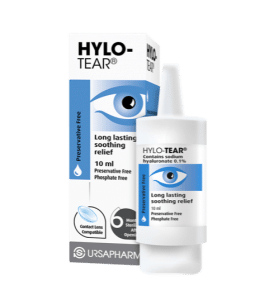
Hylo-Tear Eye Drops – 10ml
- ✔️ Relieves dry, gritty, and irritated eyes effectively
- ✔️ Preservative-free formula safe for frequent daily use
- ✔️ Sodium hyaluronate 0.1% forms a long-lasting lubricating film
- ✔️ Suitable for contact lens wearers and post-surgery recovery
- ✔️ COMOD system delivers up to 300 sterile, precise drops
Price Checker
 Lowest price guarantee
 Includes FREE private prescription


Couldn't load pickup availability
What Are Hylo-Tear Eye Drops and How Do They Help?
Dry, gritty, or tired eyes are something millions of people in the UK deal with every day — whether from screen use, air conditioning, contact lens wear, or underlying conditions. Hylo-Tear eye drops offer a preservative-free solution that lubricates and soothes the surface of the eye without the irritation that some preserved drops can cause. Available over the counter, they're a trusted choice for anyone looking for reliable, gentle relief. You can browse the full range of products in our eye care collection if you'd like to explore other options alongside this one.
Each 10ml bottle contains sodium hyaluronate at a concentration of 0.1%. Sodium hyaluronate is a form of hyaluronic acid — a substance found naturally in the body, including in the fluid that surrounds the eye. Because it's preservative-free, Hylo-Tear is particularly well suited to people who use eye drops frequently or who have found that preserved drops cause stinging or redness over time.
How Do Hylo-Tear Eye Drops Work to Relieve Dry Eyes?
The mechanism behind Hylo-Tear is straightforward but effective. Sodium hyaluronate is a viscoelastic polymer — meaning it has both liquid and gel-like properties. When instilled into the eye, it spreads evenly across the ocular surface and binds to water molecules, forming a stable, long-lasting lubricating film. This mimics the natural tear film and helps protect the cornea from dryness and environmental irritants.
- Sodium hyaluronate attracts and retains moisture on the eye surface
- It forms a uniform film that stabilises the tear layer
- The viscoelastic properties allow it to remain on the eye longer than simple saline drops
- It supports healing of the ocular surface epithelium in cases of mild irritation
- Being preservative-free, it avoids the toxic effects that some preservatives (such as benzalkonium chloride) can have on the corneal surface with repeated use
Who Should Use Hylo-Tear Eye Drops?
Hylo-Tear is suitable for a wide range of people experiencing dry or irritated eyes. It's particularly useful if you've been told by a healthcare professional that you have dry eye syndrome, or if you notice your eyes feel uncomfortable after prolonged screen time, in air-conditioned environments, or when wearing contact lenses. It's also a good option if you've previously reacted to preserved eye drops.
- Adults and children with dry eye syndrome
- Contact lens wearers experiencing dryness or discomfort
- People who work long hours at screens (digital eye strain)
- Those who have had laser eye surgery or other ocular procedures
- Individuals who are sensitive to preservatives in standard eye drops
How Does Hylo-Tear Compare to Other Lubricating Eye Drops?
| Feature | Hylo-Tear Eye Drops | Standard Preserved Eye Drops |
|---|---|---|
| Active ingredient | Sodium hyaluronate 0.1% | Varies (e.g. carmellose, hypromellose) |
| Preservative-free | Yes | No (typically contains BAK) |
| Suitable for contact lens wearers | Yes (remove lenses first) | Often not recommended |
| Duration of effect | Longer-lasting film | Shorter duration |
| Bottle doses (approx.) | Up to 300 drops per bottle | Varies by pack size |
Is Hylo-Tear Suitable for Long-Term Use and How Should It Be Stored?
One of the practical advantages of Hylo-Tear eye drops is the COMOD (Continuous Mono Dose) delivery system. This multi-dose bottle dispenses one drop at a time without allowing air into the container, which means the solution stays sterile without needing preservatives. It's a clever bit of engineering that makes the product both safe and economical to use over time. If you're managing a long-term condition like dry eye syndrome, this kind of reliability matters.
Store the bottle below 25°C and keep it away from direct sunlight. Once opened, the bottle should be used within six months — after that, discard it even if product remains. Do not use the drops if the solution appears cloudy or discoloured. If you wear contact lenses, remove them before instilling the drops and wait at least 15 minutes before reinserting. If you're also managing other health conditions and taking multiple products, it's worth checking our allergy and hay fever range, as allergic eye symptoms can sometimes overlap with dry eye complaints.
This product is a medicine. Speak to your doctor or pharmacist before using if you have an underlying medical condition or are taking other medicines.
Hylo-Tear Eye Drops – 10ml specifications
| Treatment category | Dry eye / ocular lubricant |
| Mechanism of action | Sodium hyaluronate forms a viscoelastic lubricating film on the ocular surface |
| Effective for | Dry, irritated, or tired eyes; contact lens discomfort |
| Suitable for | Adults and children; contact lens wearers; preservative-sensitive individuals |
| Active ingredient | Sodium hyaluronate 0.1% |
| Pack size | 10ml |
| UK classification | General Sale List (GSL) |
| Drug class | Ocular lubricant |
| Preparation | Sterile aqueous solution |
| Route of administration | Ophthalmic (instilled into the eye) |
Specifications of Hylo-Tear Eye Drops – 10ml
What Is Hylo-Tear and What Is It Used For?
Hylo-Tear Eye Drops contain sodium hyaluronate 0.1% as the active ingredient. They are used to relieve the symptoms of dry eye syndrome — a condition where the eyes do not produce enough tears, or where the tears evaporate too quickly. Symptoms can include a gritty or burning sensation, redness, blurred vision, and sensitivity to light. The NHS recognises dry eye as a common condition that can affect people of all ages, and lubricating eye drops are a first-line treatment option.
Hylo-Tear eye drops are also used to relieve eye discomfort caused by environmental factors such as wind, smoke, air conditioning, and prolonged screen use. They are suitable for use alongside contact lenses (with lenses removed prior to instillation) and can be used after eye surgery to support comfort during recovery.
What Do You Need to Know Before Using Hylo-Tear Eye Drops?
Before using Hylo-Tear, read the following carefully. Do not use these drops if any of the contraindications below apply to you, and always speak to a pharmacist or GP if you are unsure.
Do not use Hylo-Tear if you:
- Are allergic to sodium hyaluronate or any other ingredient in the formulation
- Have a known hypersensitivity to any component of the COMOD delivery system
Warnings and precautions:
- Remove contact lenses before instilling the drops; wait at least 15 minutes before reinserting
- Do not touch the tip of the bottle to your eye or any other surface — this can introduce contamination
- If your symptoms worsen or do not improve after a few days, consult a healthcare professional
- Discard the bottle six months after first opening, even if product remains
- Do not use if the solution appears cloudy or discoloured
- If you experience sudden changes in vision, eye pain, or significant redness, seek medical advice promptly — these may indicate a more serious condition
Drug interactions:
- No significant drug interactions with Hylo-Tear have been identified
- If you are using other eye drops or eye ointments, leave at least 15 minutes between applications; apply ointments last
How Should You Use Hylo-Tear Eye Drops?
Using Hylo-Tear correctly ensures you get the most benefit from each dose. The COMOD system is designed to deliver one drop per press — there's no need to squeeze hard or tip the bottle upside down.
- Wash your hands thoroughly before handling the bottle
- Remove contact lenses if you wear them
- Hold the bottle upright and press the pump once to prime it if using for the first time
- Tilt your head back slightly and gently pull down your lower eyelid to create a small pocket
- Hold the bottle tip close to (but not touching) your eye and press once to release one drop
- Close your eye gently and blink a few times to spread the drop across the surface
- Repeat in the other eye if needed
- Replace the cap securely after use
| Indication | Age Group | Dose | Frequency |
|---|---|---|---|
| Dry eye syndrome | Adults | 1 drop per eye | 3 times daily or as needed |
| Contact lens discomfort | Adults | 1 drop per eye | As required (lenses removed first) |
| Post-operative eye comfort | Adults | 1 drop per eye | As directed by your clinician |
| Dry eye symptoms | Children (under medical guidance) | 1 drop per eye | As directed by a doctor |
What Are the Possible Side Effects of Hylo-Tear Eye Drops?
Hylo-Tear is generally very well tolerated. Because it is preservative-free, it is less likely to cause the irritation associated with some other eye drops. That said, as with any medicine, side effects are possible in some people.
Common side effects:
- Temporary blurred vision immediately after instillation (usually clears within a few minutes)
- Mild stinging or burning sensation on first use
Less common side effects:
- Sensation of a foreign body in the eye
- Mild redness of the eye
- Eyelid irritation
If you notice any severe or persistent eye pain, significant swelling, or a sudden change in vision, stop using the drops and seek medical advice immediately. These could indicate an allergic reaction or a separate eye condition that needs assessment. You can find further information about eye health on the NHS website.
How Should You Store Hylo-Tear Eye Drops?
Correct storage keeps the drops safe and effective for the full duration of use. Follow these guidelines:
- Store below 25°C — do not refrigerate
- Keep away from direct sunlight and heat sources
- Keep the bottle tightly closed when not in use
- Do not freeze
- Discard the bottle six months after first opening
- Keep out of the reach and sight of children
- Do not use after the expiry date printed on the bottle and carton
If you're looking after your overall health alongside managing dry eyes, it's worth knowing that our vitamins and supplements range includes options such as omega-3 fatty acids, which some research suggests may support tear film quality in people with dry eye syndrome.
References
Written and reviewed by our qualified team
Your safety and success are our highest priorities. Our medical team rigorously evaluates every product and piece of advice we provide, ensuring you receive only the most effective, science-backed solutions available.
Frequently Asked Questions
Where can I buy Hylo-Tear eye drops online in the UK?
You can buy Hylo-Tear eye drops directly from Cured Pharmacy, a GPhC-registered UK online pharmacy, for just £10.49 per 10ml bottle. No prescription is needed as they are available over the counter. Simply add to your basket and choose your preferred delivery option for fast, discreet dispatch.
How do Hylo-Tear eye drops work in the eye?
Hylo-Tear eye drops contain sodium hyaluronate 0.1%, a viscoelastic substance that spreads across the surface of the eye and binds to water molecules, forming a stable lubricating film. This film mimics the natural tear layer, reducing friction and protecting the cornea from dryness and irritation. The effect lasts longer than many simpler lubricant drops because of sodium hyaluronate's unique water-retaining properties.
How do I use Hylo-Tear eye drops step by step?
Wash your hands, remove any contact lenses, and tilt your head back slightly. Pull down your lower eyelid to create a small pocket, hold the bottle upright close to (but not touching) your eye, and press the pump once to release a single drop. Blink gently to spread the drop, then replace the cap — the COMOD system keeps the solution sterile without preservatives.
How many times a day should I use Hylo-Tear eye drops?
The standard recommended dose is one drop in each affected eye three times daily, though you can use them more frequently if your symptoms require it. Because Hylo-Tear is preservative-free, there is no restriction on frequency of use that would apply to preserved drops. If you find you need them very frequently throughout the day, it's worth speaking to your GP or optometrist to rule out an underlying cause.
Can I use Hylo-Tear eye drops with contact lenses?
Yes, Hylo-Tear is suitable for contact lens wearers, but you must remove your lenses before instilling the drops and wait at least 15 minutes before reinserting them. This prevents any interaction between the sodium hyaluronate solution and the lens material. Many contact lens wearers find Hylo-Tear particularly helpful for managing dryness and discomfort during extended wear.
What are the side effects of Hylo-Tear eye drops?
Hylo-Tear is generally very well tolerated, and side effects are uncommon. Some people experience temporary blurred vision immediately after instillation, which usually clears within a minute or two. Less commonly, mild stinging, a foreign body sensation, or slight redness may occur — if any of these persist or worsen, stop using the drops and consult a pharmacist or GP.
Are Hylo-Tear eye drops suitable for children?
Hylo-Tear can be used in children, but it is advisable to consult a doctor or pharmacist before use in young children to confirm suitability and ensure the correct technique is used. Children may find it easier to have the drops instilled by an adult. If your child's dry eye symptoms are persistent, an optometrist or paediatrician should assess them.
Are Hylo-Tear eye drops safe to use during pregnancy or breastfeeding?
Sodium hyaluronate is a naturally occurring substance and is not expected to cause harm when used as eye drops during pregnancy or breastfeeding, as systemic absorption is minimal. However, as with any medicine used during pregnancy or breastfeeding, it is always best to check with your GP or midwife before starting a new product. They can advise based on your individual circumstances.
What happens if I miss a dose of Hylo-Tear eye drops?
If you forget to use your drops at the usual time, simply apply them as soon as you remember. Do not double up by using two doses at once to make up for a missed one. Hylo-Tear is used to manage symptoms rather than treat an underlying infection, so missing an occasional dose is unlikely to cause any harm — though your eyes may feel more uncomfortable in the meantime.
How long can I use Hylo-Tear eye drops for?
Hylo-Tear can be used long-term for chronic dry eye conditions without the concerns associated with preservative-containing drops. The bottle must be discarded six months after first opening, regardless of how much product remains, to ensure sterility. If you are using the drops daily and your symptoms are not improving after a few weeks, speak to your optometrist or GP for further assessment.
What are the alternatives to Hylo-Tear eye drops?
Alternatives to Hylo-Tear include other sodium hyaluronate drops at different concentrations (such as Hylo-Forte at 0.2%), carmellose-based drops, and hypromellose-based lubricants. The right choice depends on the severity of your dry eye and whether you are sensitive to preservatives. You can explore a range of options in our eye care collection to find the most suitable product for your needs.
Why are preservative-free eye drops better for frequent use?
Preservatives such as benzalkonium chloride (BAK), commonly found in standard eye drops, can damage the surface cells of the eye (the corneal epithelium) when used repeatedly over time. This can actually worsen dry eye symptoms in the long run. Preservative-free drops like Hylo-Tear avoid this risk entirely, making them the preferred choice for people who need to use lubricating drops multiple times a day.
Can I use Hylo-Tear eye drops after laser eye surgery?
Yes, Hylo-Tear is commonly recommended after laser eye surgery (such as LASIK or LASEK) to help manage post-operative dryness, which is a very common side effect of these procedures. Always follow the specific guidance given by your surgeon or clinical team, as they may recommend a particular frequency or duration of use. Do not use any eye drops after surgery without confirming they are appropriate with your treating clinician.
What is the COMOD system and why does it matter?
The COMOD (Continuous Mono Dose) system is a patented multi-dose bottle design that dispenses one drop at a time without allowing air into the container. This means the solution remains sterile throughout its use without needing preservatives — a significant advantage for people with sensitive eyes. Each 10ml bottle delivers approximately 300 individual drops, making it an economical as well as a clinically sound choice.
What does the latest research say about sodium hyaluronate eye drops for dry eye?
Clinical evidence supports sodium hyaluronate as an effective lubricant for dry eye syndrome, with studies showing it improves tear film stability and reduces symptoms such as grittiness and burning. The NHS recommends lubricating eye drops as a first-line treatment for dry eye, and sodium hyaluronate formulations are widely used in clinical practice across the UK. If you're also managing related conditions such as allergies that affect your eyes, our allergy and hay fever range may also be of interest.
Written and reviewed by our qualified team

Reviewed by:
Tarun Kumar
Superintendent/ Clinical Lead
📖 Find out more about our team of medical content authors and how we ensure the accuracy of our content with our content guidelines.
Content last updated: 14 Sep 2026
Other popular options


We’re a safe and
regulated UK service

Lowest Price Guarantee

We're convinced you won't find your treatment cheaper, but if you do we'll refund the difference.
Find out more
100% discreet packaging

Discreet, unbranded packaging for every order.
Find out more

Need help?
Talk to our friendly experts now


How our service works

Service setup

Discreet packaging

Express delivery