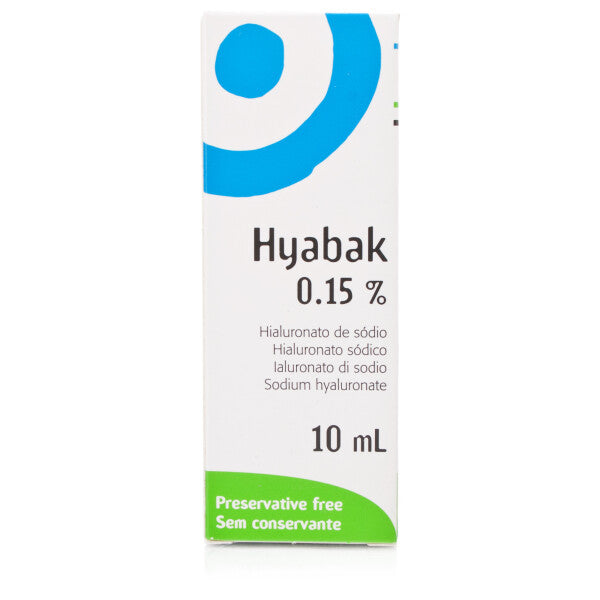
Hyabak - 10ml
Hyabak - 10ml
- ✔️ Preservative-free formula — gentle enough for daily long-term use
- ✔️ Sodium hyaluronate 0.15% stabilises and replenishes the natural tear film
- ✔️ ABAK® system maintains sterility without preservatives in every drop
- ✔️ Compatible with contact lens wear — soft and rigid lens wearers
- ✔️ Relieves gritty, burning, and irritated dry eyes on contact
Price Checker
 Lowest price guarantee
 Includes FREE private prescription


Couldn't load pickup availability
What Are Hyabak Eye Drops and How Do They Help?
If your eyes feel gritty, tired, or persistently uncomfortable, you are not alone. Dry eye syndrome affects millions of people in the UK, and finding a reliable, gentle solution matters. Hyabak eye drops offer a preservative-free approach to lubricating the ocular surface, using 0.15% sodium hyaluronate — a substance your body already produces naturally. Whether your dryness is triggered by screen use, air conditioning, contact lens wear, or simply getting older, these drops are designed to provide lasting comfort without the irritation that preservatives can sometimes cause. You can explore a wider range of products in our eye care collection if you are looking for additional support.
Dry eye is more than just an inconvenience. The NHS recognises it as a common condition that can significantly affect quality of life, causing burning, redness, and even temporary blurred vision. Hyabak is available over the counter, meaning no prescription is needed, and the 10ml bottle is designed with a multi-dose preservative-free delivery system — so every drop you instil is as clean as the first.
How Does Hyabak Work to Relieve Dry Eyes?
The active ingredient in Hyabak is sodium hyaluronate, a type of hyaluronic acid. It works by mimicking the natural components of your tear film, helping to stabilise and replenish the aqueous layer that keeps your cornea hydrated and protected.
- Sodium hyaluronate is a viscoelastic polymer — it thickens slightly under pressure (like blinking) and spreads evenly across the eye surface.
- It binds water molecules, retaining moisture on the ocular surface for longer than simple saline solutions.
- The preservative-free formulation means no benzalkonium chloride (BAK) or similar agents that can damage corneal epithelial cells with repeated use.
- The unique ABAK® bottle system allows multi-dose dispensing without preservatives, keeping the solution sterile throughout its shelf life.
This combination of sustained hydration and a clean delivery system makes Hyabak particularly suitable for people who need to use eye drops frequently throughout the day.
Who Is Hyabak Suitable For?
Hyabak is appropriate for a broad range of people experiencing dry, irritated, or uncomfortable eyes. It is particularly well-suited to those who have found preserved eye drops cause additional irritation over time.
- Adults and children over 12 experiencing dry eye symptoms
- Contact lens wearers who need a compatible lubricating drop
- People who work long hours at screens and experience digital eye strain
- Those in air-conditioned or heated environments where tear evaporation is increased
- Individuals who have had laser eye surgery and are managing post-operative dryness
It is not recommended for children under 12 without medical advice. If you are pregnant or breastfeeding, speak to your pharmacist or GP before use, even though topical eye drops are generally considered low-risk.
How Does Hyabak Compare to Other Dry Eye Drops?
| Feature | Hyabak 10ml | Standard Preserved Eye Drops |
|---|---|---|
| Active ingredient | Sodium hyaluronate 0.15% | Varies (e.g. carmellose, polyvinyl alcohol) |
| Preservative-free | Yes (ABAK® system) | No — contains BAK or similar |
| Contact lens compatible | Yes (wait 15 mins) | Often not recommended |
| Multi-dose bottle | Yes — 10ml | Yes, but with preservatives |
Is Hyabak Safe for Long-Term Use and How Should It Be Stored?
Because Hyabak eye drops are preservative-free, they are generally well-tolerated even with frequent, long-term use. The absence of preservatives reduces the risk of toxic keratopathy — a condition associated with prolonged exposure to BAK-containing drops. That said, if your symptoms persist or worsen despite regular use, it is worth speaking to your GP or an optometrist to rule out an underlying cause.
Store Hyabak below 25°C, away from direct sunlight. Once opened, the bottle should be discarded after three months, even if solution remains. Do not use the drops if the solution appears cloudy or discoloured. If you are managing other eye conditions alongside dry eye, check with your pharmacist before combining treatments.
This product is a medicine. Speak to your doctor or pharmacist before using if you have an underlying medical condition or are taking other medicines.
Hyabak 10ml specifications
| Treatment category | Dry eye / Ocular lubricant |
| Active ingredient | Sodium hyaluronate 0.15% |
| Mechanism of action | Viscoelastic lubricant that stabilises the tear film and retains moisture on the ocular surface |
| Suitable for | Adults and children over 12; contact lens wearers |
| Pack size | 10ml |
| Strength | 0.15% sodium hyaluronate |
| UK classification | General Sale List (GSL) |
| Drug class | Ocular lubricant / Tear substitute |
| Preparation | Sterile aqueous solution |
| Route of administration | Ophthalmic (instilled into the eye) |
Specifications of Hyabak 10ml
What Is Hyabak and What Is It Used For?
Hyabak 10ml is a sterile, preservative-free eye drop solution containing 0.15% sodium hyaluronate. It is used to relieve the symptoms of dry eye syndrome — a condition where the eyes do not produce enough tears, or where tears evaporate too quickly. Common symptoms include a gritty or burning sensation, redness, sensitivity to light, and intermittent blurred vision. The NHS notes that dry eye is particularly common in older adults, people who wear contact lenses, and those who spend extended periods looking at screens.
Hyabak acts as a tear substitute, supplementing the natural tear film to keep the surface of the eye moist and comfortable. It is suitable for use as often as needed throughout the day and is available without a prescription.
What Do You Need to Know Before Using Hyabak?
Before using Hyabak, it is important to be aware of the following contraindications and precautions:
- Do not use if you are allergic to sodium hyaluronate or any other ingredient in the formulation.
- Not recommended for children under 12 years of age without medical supervision.
- Remove soft contact lenses before instilling drops; wait at least 15 minutes before reinserting.
- Do not use if the solution appears cloudy, discoloured, or if the bottle seal is broken.
- If you have an eye infection, eye injury, or have recently had eye surgery, consult your GP or ophthalmologist before use.
- Seek medical advice if you are pregnant or breastfeeding, even though topical ocular use is generally considered low-risk.
Known drug interactions with Hyabak are not established, as sodium hyaluronate eye drops have negligible systemic absorption. However, if you are using other eye drops or eye ointments, allow at least 5–10 minutes between applications, and always apply ointments last.
- No significant interactions with systemic medicines have been identified.
- If using other topical ophthalmic preparations, space applications by at least 5 minutes.
How Should You Use Hyabak?
Using Hyabak correctly ensures you get the most benefit from each dose. The ABAK® bottle system is designed to dispense one drop at a time without contaminating the remaining solution — so there is no need to worry about sterility between uses.
- Wash your hands thoroughly before handling the bottle.
- Remove contact lenses if worn.
- Tilt your head back slightly and gently pull down your lower eyelid to create a small pocket.
- Hold the bottle above the eye and squeeze gently to release one drop into the lower eyelid pocket.
- Close your eye gently and blink a few times to spread the solution evenly across the eye surface.
- Repeat in the other eye if required.
- Replace the cap securely after use.
- Wait at least 15 minutes before reinserting contact lenses.
| Indication | Age Group | Dose | Frequency |
|---|---|---|---|
| Dry eye syndrome | Adults and children over 12 | 1 drop per affected eye | As often as needed |
| Contact lens-related dryness | Adults | 1 drop per eye | Before and/or after lens wear |
| Post-operative dry eye | Adults (under medical guidance) | 1 drop per eye | As directed by clinician |
What Are the Possible Side Effects of Hyabak?
Hyabak is generally very well tolerated. Because it is preservative-free, it is less likely to cause the irritation associated with some other eye drop formulations. Side effects, when they do occur, are usually mild and transient. If you experience any persistent or worsening symptoms, stop use and consult a healthcare professional. You may also find it helpful to browse our allergy and hay fever range if eye symptoms are related to seasonal allergies.
Common side effects:
- Temporary blurred vision immediately after instillation (clears within a few minutes)
- Mild stinging or burning sensation upon application
- Sensation of something in the eye
Less common side effects:
- Redness of the eye
- Watering or increased tear production
- Eyelid irritation
- Allergic reaction (rare) — symptoms may include swelling, severe itching, or rash around the eye
If you experience signs of a serious allergic reaction — such as swelling of the face, difficulty breathing, or severe eye pain — stop use immediately and seek urgent medical attention.
How Should You Store Hyabak?
Correct storage helps maintain the sterility and effectiveness of Hyabak throughout its use period.
- Store below 25°C in a cool, dry place.
- Keep away from direct sunlight and heat sources.
- Do not freeze.
- Keep out of the reach and sight of children.
- Discard the bottle 3 months after first opening, even if solution remains.
- Do not use after the expiry date printed on the bottle and carton.
- Do not share the bottle with another person — this risks cross-contamination.
If you are unsure whether your drops are still safe to use, speak to your pharmacist. Proper storage is especially important for eye preparations, as contaminated drops can cause serious eye infections. For general health and wellbeing support alongside your eye care routine, our vitamins and supplements collection includes products that may support overall eye health.
References
Written and reviewed by our qualified team
Your safety and success are our highest priorities. Our medical team rigorously evaluates every product and piece of advice we provide, ensuring you receive only the most effective, science-backed solutions available.
Frequently Asked Questions
Where can I buy Hyabak eye drops online in the UK?
You can buy Hyabak 10ml directly from Cured Pharmacy, a UK GPhC-registered online pharmacy. No prescription is required as it is an over-the-counter product. Simply add it to your basket and it will be dispatched to your door.
How do Hyabak eye drops work in the eye?
Hyabak contains 0.15% sodium hyaluronate, a viscoelastic polymer that attracts and retains water molecules on the surface of the eye. It forms a stable, lubricating film over the cornea that supplements your natural tear film. This helps reduce friction, soothe irritation, and restore comfort to dry, tired eyes.
How do I use Hyabak eye drops step by step?
Wash your hands, tilt your head back, and gently pull down your lower eyelid to create a small pocket. Squeeze one drop from the bottle into the pocket, then close your eye and blink gently to spread the solution. Repeat in the other eye if needed, and wait 15 minutes before reinserting contact lenses.
How often should I use Hyabak eye drops each day?
Hyabak can be used as often as needed throughout the day — there is no strict maximum number of doses. Most people find one drop per eye, used several times daily, is sufficient to manage symptoms. If you find you need to use them very frequently, it is worth speaking to your GP or optometrist about the underlying cause of your dry eye.
Can I use Hyabak eye drops while wearing contact lenses?
Hyabak is preservative-free, which makes it more compatible with contact lens wear than many other eye drops. However, you should always remove soft contact lenses before instilling the drops and wait at least 15 minutes before putting them back in. Hard (rigid gas permeable) lens wearers should also follow this guidance.
What are the side effects of Hyabak eye drops?
Side effects are uncommon and usually mild. You may experience temporary blurred vision, a brief stinging sensation, or a feeling of something in the eye immediately after use — these typically resolve within a few minutes. Rarely, some people may experience redness or an allergic reaction; if this occurs, stop use and consult a pharmacist or GP.
Are Hyabak eye drops safe to use during pregnancy?
Topical eye drops like Hyabak have very limited systemic absorption, which means very little of the active ingredient enters the bloodstream. They are generally considered low-risk during pregnancy and breastfeeding. That said, it is always sensible to speak to your GP or midwife before starting any new medicine during pregnancy.
How long can I use Hyabak eye drops for?
Hyabak is suitable for long-term use in people with chronic dry eye syndrome. Because it is preservative-free, it does not carry the same risk of corneal toxicity associated with prolonged use of preserved drops. The bottle must be discarded 3 months after first opening, regardless of how much solution remains.
What happens if I miss a dose of Hyabak?
Hyabak is used on an as-needed basis rather than on a fixed dosing schedule, so there is no concept of a "missed dose" in the traditional sense. Simply use the drops whenever your eyes feel dry or uncomfortable. Do not instil extra drops to compensate — one drop per eye per application is sufficient.
What are the alternatives to Hyabak eye drops?
There are several alternatives available for dry eye relief, including other sodium hyaluronate drops such as Hycosan and Clinitas, as well as carbomer-based gels like Viscotears. The right choice depends on your symptom severity, whether you wear contact lenses, and personal preference. You can browse a range of options in our eye care collection.
Is Hyabak suitable for children?
Hyabak is generally recommended for adults and children aged 12 and over. For children under 12, you should seek advice from a GP or paediatric ophthalmologist before use. Dry eye in young children can sometimes indicate an underlying condition that warrants investigation.
Can I use Hyabak after laser eye surgery?
Dry eye is a common side effect following laser eye surgery such as LASIK or LASEK, and preservative-free lubricating drops are frequently recommended as part of post-operative care. Hyabak may be suitable, but you should always follow the specific guidance given by your surgeon or ophthalmologist regarding which drops to use and when.
How does Hyabak differ from eye drops that contain preservatives?
Preserved eye drops typically contain benzalkonium chloride (BAK), which keeps the solution sterile in a standard multi-dose bottle but can irritate the corneal surface with repeated use over time. Hyabak uses the ABAK® filtration system to maintain sterility without any preservatives, making it a gentler option for frequent or long-term use.
What is the latest research on sodium hyaluronate eye drops for dry eye?
Sodium hyaluronate has been extensively studied as a tear substitute and is well-established in clinical practice for dry eye management. Research consistently supports its effectiveness in improving ocular surface hydration and reducing symptoms. It is widely recommended by ophthalmologists and optometrists across the UK as a first-line lubricant for mild to moderate dry eye.
Can dry eyes be a sign of something more serious?
In most cases, dry eye is a benign, chronic condition related to lifestyle factors, ageing, or contact lens wear. However, persistent or severe dry eye can occasionally be associated with autoimmune conditions such as Sjögren's syndrome or rheumatoid arthritis. If your symptoms are severe, do not improve with lubricating drops, or are accompanied by other symptoms, speak to your GP. You may also find useful information in our ear, nose and throat collection if you are experiencing related mucous membrane dryness.
Written and reviewed by our qualified team

Reviewed by:
Tarun Kumar
Superintendent/ Clinical Lead
📖 Find out more about our team of medical content authors and how we ensure the accuracy of our content with our content guidelines.
Content last updated: 14 Sep 2026
Other popular options


We’re a safe and
regulated UK service

Lowest Price Guarantee

We're convinced you won't find your treatment cheaper, but if you do we'll refund the difference.
Find out more
100% discreet packaging

Discreet, unbranded packaging for every order.
Find out more

Need help?
Talk to our friendly experts now


How our service works

Service setup

Discreet packaging

Express delivery