


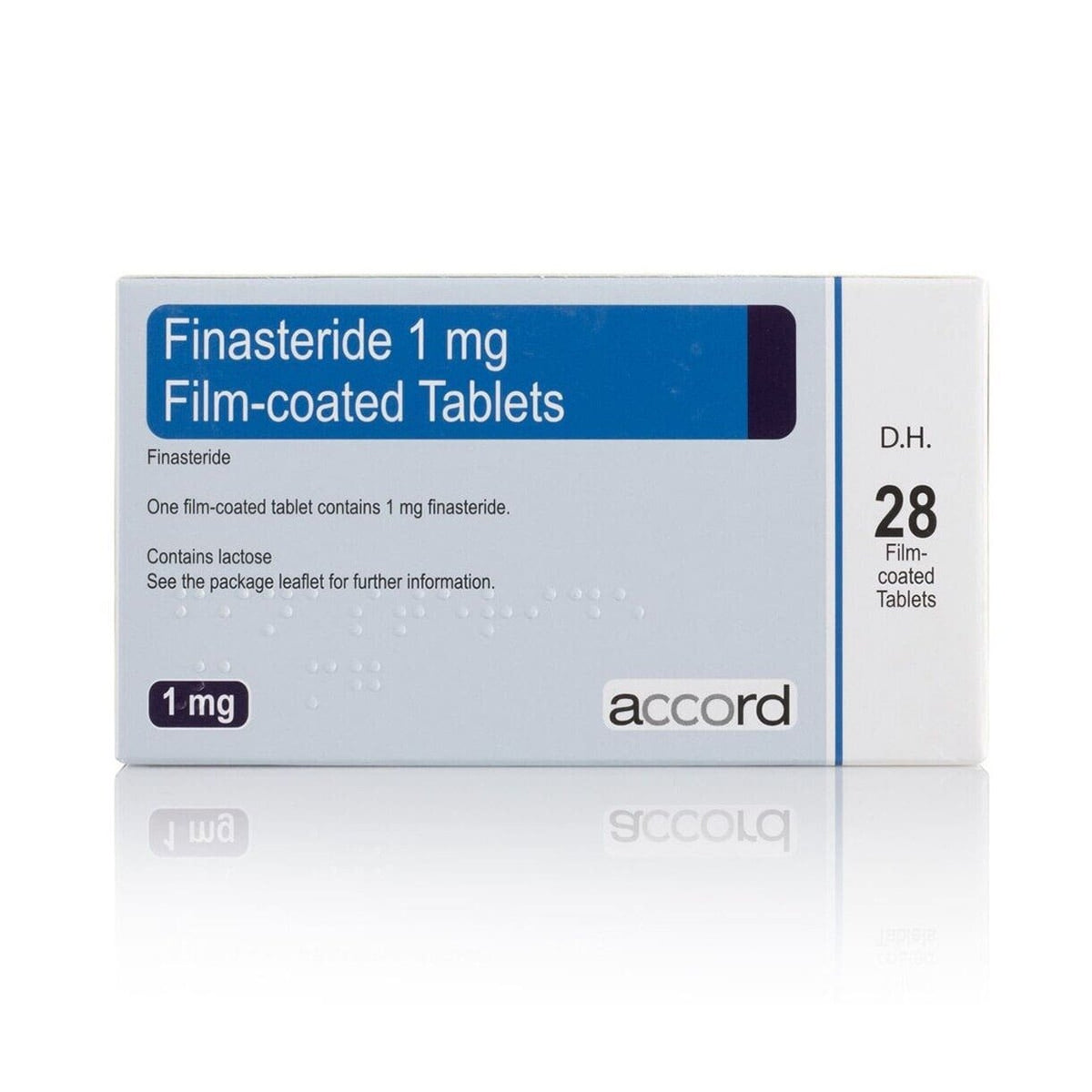
Finasteride 1mg Tablets
- ✔️ Clinically proven to reduce DHT and slow male pattern hair loss
- ✔️ Targets the hormonal root cause of androgenetic alopecia
- ✔️ Visible results typically seen within 12 months of daily use
- ✔️ Suitable for adult men aged 18 and over with thinning hair
- ✔️ Once-daily oral tablet — simple, discreet, and easy to maintain
Price Checker
 Not approved? Full refund
 Includes FREE private prescription


Couldn't load pickup availability
What Is Finasteride 1 mg and What Is It Used For?
Finasteride 1 mg is a prescription-only tablet licensed in the UK for men with male pattern hair loss (androgenetic alopecia), to increase hair growth and prevent further hair loss. It is not licensed for women or for anyone under 18. At Cured Pharmacy it is supplied only after a clinical assessment confirms it is suitable for you. See our hair loss collection for other options.
Finasteride slows hair loss and can help some men regrow hair, but it works only while you keep taking it. It does not cure the cause of male pattern hair loss.
How Does Finasteride Work in the Body?
Male pattern hair loss is driven by a hormone called dihydrotestosterone (DHT), which gradually shrinks hair follicles in people who are genetically sensitive to it.
- Finasteride blocks type II 5-alpha-reductase, the enzyme that turns testosterone into DHT
- Lower DHT levels in the scalp reduce further shrinking of the follicles
- Some thinning hairs can grow thicker again, and hair loss usually slows or stops
It generally takes three to six months of daily use before it is clear whether hair loss has stabilised.
Clinical Trial Results: What Did the Finasteride Studies Show?
Two one-year trials published in the Journal of the American Academy of Dermatology in 1998 (Kaufman et al.) gave 1,553 men aged 18 to 41 with male pattern hair loss finasteride 1 mg a day or placebo. A total of 1,215 men continued in blinded extension studies for a second year.
| Outcome (balding area of the crown, one-inch circle; baseline average 876 hairs) | After 1 year | After 2 years |
|---|---|---|
| Extra hairs with finasteride compared with placebo | 107 | 138 |
Finasteride improved scalp hair by all methods used, including hair counts, patient and investigator ratings and expert review of photographs, at one and two years (all comparisons statistically significant against placebo).
These are group averages and individual results vary. The trials were sponsored by the manufacturer of the original brand, in men aged 18 to 41, and benefit is lost within 9 to 12 months of stopping treatment.
Sources: Kaufman KD et al., J Am Acad Dermatol 1998;39:578-589 (PubMed 9777765).
Who Is Finasteride 1 mg Suitable For?
It is for adult men with male pattern hair loss, mainly at the crown and mid-scalp. It is not suitable for women or children, and not for hair loss caused by other things such as illness, medicines or iron deficiency. A prescriber will check your health and medicines first.
How Does Finasteride Compare to Minoxidil?
| Feature | Finasteride 1 mg tablets | Minoxidil 5% foam |
|---|---|---|
| How it works | Lowers scalp DHT, from inside | Applied to the scalp to stimulate follicles |
| How often | One tablet once a day | Applied twice a day |
| UK status | Prescription-only | Pharmacy medicine |
| Can they be combined? | Yes, they work in different ways and are often used together | |
How Should You Store Finasteride?
Keep the tablets in their original packaging, out of the sight and reach of children, and follow the storage instructions on the pack. Do not use them after the expiry date. Return unused tablets to a pharmacy for disposal.
This product is a medicine. Speak to your doctor or pharmacist before using if you have an underlying medical condition or are taking other medicines.
Finasteride 1 mg specifications
| Treatment category | Male pattern hair loss |
| Active ingredient | Finasteride 1 mg |
| Mechanism of action | Type II 5-alpha-reductase inhibitor |
| Pack sizes | 28, 84 and 168 tablets |
| UK classification | Prescription Only Medicine (POM) |
| Preparation | Film-coated tablet |
| Route of administration | Oral |
| Suitable for | Adult men |
Specifications of Finasteride 1 mg
What Do You Need to Know Before Using Finasteride?
Read the patient information leaflet before use. Do not take finasteride if you:
- Are a woman: it is contraindicated because of the risk of harm to a male baby if taken or absorbed in pregnancy
- Are allergic to finasteride or any other ingredient
- Already take finasteride 5 mg or another 5-alpha-reductase inhibitor, for example for an enlarged prostate
Important safety information:
- Women who are or may be pregnant must not handle crushed or broken tablets. Whole coated tablets are safe to touch
- Mood changes: depression and thoughts of suicide have been reported. Stop the tablets and get medical advice promptly if your mood changes. Read the patient alert card
- Sexual side effects such as reduced sex drive or erection problems can occur, and in some men have continued after stopping
- Finasteride lowers PSA, the prostate cancer blood test, by about half, so tell any doctor who tests it
- Breast changes: report any lumps, pain or nipple discharge to your doctor
- Liver problems: it has not been studied in liver impairment, so speak to a doctor first
How Should You Take Finasteride Correctly?
- Take one 1 mg tablet once a day, at about the same time
- Swallow it whole with water, with or without food
- Keep taking it daily. It generally takes three to six months to judge the result
- Do not take more than one tablet a day. A higher dose does not work better
If you stop, the benefit begins to reverse within about six months and hair returns to its starting pattern in nine to twelve months. If you miss a dose, skip it and take the next one as normal. Do not double up.
What Are the Possible Side Effects of Finasteride?
Like all medicines, finasteride can cause side effects, although not everybody gets them.
Reported side effects include:
- Reduced sex drive
- Difficulty getting or keeping an erection
- Ejaculation problems, such as a smaller volume of semen
- Breast tenderness or enlargement
- Low mood or depression
- Testicular pain, and reduced fertility or poor semen quality (reported rarely)
Get urgent medical help if you have:
- Thoughts of harming yourself or suicide
- Signs of a severe allergic reaction, such as swelling of the face, lips or throat
- A lump, pain or discharge from the breast
In the main trials, drug-related sexual side effects were most often reported in the first year and became less frequent afterwards. You can report suspected side effects to the MHRA through the Yellow Card scheme at yellowcard.mhra.gov.uk. For the full list, read the patient information leaflet.
References
Written and reviewed by our qualified team
Your safety and success are our highest priorities. Our medical team rigorously evaluates every product and piece of advice we provide, ensuring you receive only the most effective, science-backed solutions available.
Frequently Asked Questions
Where can I buy finasteride online in the UK?
Finasteride is a prescription-only medicine. You can order it from Cured Pharmacy, a GPhC-registered UK online pharmacy, after a clinical assessment confirms it is suitable for you. Orders are sent discreetly.
How does finasteride work for hair loss?
Finasteride blocks the enzyme that turns testosterone into DHT, the hormone that shrinks hair follicles in male pattern hair loss. Lower scalp DHT slows further loss and lets some thinning hairs recover.
How do I take finasteride step by step?
Take one 1 mg tablet once a day, swallowed whole with water, with or without food. Do not take more than one tablet a day, as a higher dose does not work better.
How long does finasteride take to work?
It generally takes three to six months of daily use before you can tell whether hair loss has stabilised. In the main trials, the gain in hair count was larger after two years than after one.
What happens if I stop taking finasteride?
The benefit begins to reverse within about six months of stopping and hair returns to its starting pattern in nine to twelve months, so it needs to be taken continuously.
What are the most common side effects of finasteride?
Reported side effects include reduced sex drive, erection problems, ejaculation problems, breast tenderness or enlargement and low mood. Speak to your pharmacist or doctor if they are troublesome.
Can finasteride affect mood or mental health?
Depression and thoughts of suicide have been reported. Stop taking it and get medical advice promptly if your mood changes or you have thoughts of harming yourself. Read the patient alert card in the pack.
Can finasteride cause sexual side effects that last?
Most sexual side effects are reported in the first year and become less frequent, but in some men they have continued after stopping. Tell your doctor if you notice problems.
Who should not take finasteride?
It must not be used by women or children, or by men who are allergic to it or already take finasteride 5 mg or another 5-alpha-reductase inhibitor. Pregnant women, or women who may be pregnant, must not handle crushed or broken tablets.
Does finasteride affect PSA or prostate cancer tests?
Yes. It lowers PSA by roughly half after several months, so tell any doctor who orders a PSA test that you take finasteride.
Can I use finasteride with minoxidil?
Yes. They work in different ways and are often used together. Minoxidil 5% foam is applied to the scalp twice a day. See our hair loss collection.
What were the results of the finasteride clinical trials?
In two one-year trials of 1,553 men aged 18 to 41, finasteride gave 107 more hairs than placebo in a one-inch crown area after one year and 138 more after two years, from a baseline of 876 hairs. Results are group averages and individual results vary.
Written and reviewed by our qualified team

Reviewed by:
Tarun Kumar
Superintendent/ Clinical Lead
📖 Find out more about our team of medical content authors and how we ensure the accuracy of our content with our content guidelines.
Content last reviewed: 11 November 2026
Other popular options


We’re a safe and
regulated UK service

100% discreet packaging

Discreet, unbranded packaging for every order.

Need help?
Talk to our friendly experts now


How our service works

Service setup

Discreet packaging

Express delivery

Medically reviewed by
Tarun Kumar, Superintendent Pharmacist & Clinical Lead (GPhC 2233073)