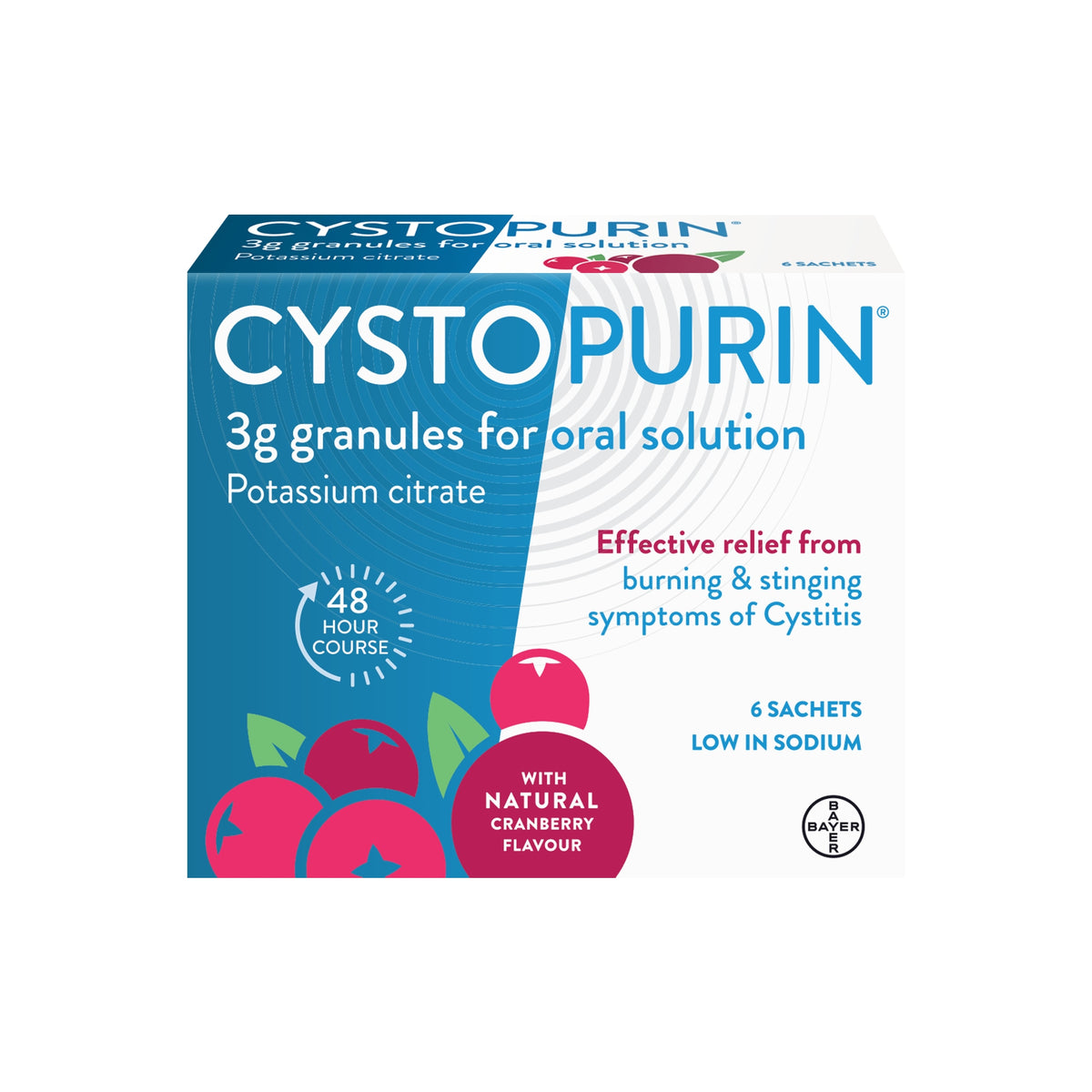
Cystopurin 3g granules 6 sachets
- ✔️ Relieves cystitis burning and stinging within hours
- ✔️ Alkalises urine to reduce urinary tract discomfort
- ✔️ Contains 3g potassium citrate per sachet for effective relief
- ✔️ Six-sachet pack provides a complete two-day treatment course
- ✔️ Suitable for women aged 16 and over without a prescription
Price Checker
 Lowest price guarantee
 Includes FREE private prescription


Couldn't load pickup availability
What Are Cystitis Sachets and How Can Cystopurin Help?
If you've ever had cystitis, you'll know how uncomfortable it can be. That burning sensation when you urinate, the constant urge to go, and the general feeling of being unwell — it's miserable. Cystitis sachets like Cystopurin 3g granules offer a simple, over-the-counter way to ease those symptoms quickly, without needing a prescription. Each pack contains six sachets of potassium citrate granules, designed to be dissolved in water and taken over a two-day period. You can browse our full range of cystitis and bladder infection treatments if you'd like to compare your options.
Cystitis is one of the most common urinary tract infections (UTIs) in women. The NHS estimates that around half of all women will experience at least one UTI in their lifetime. Cystopurin is a well-established OTC remedy that targets the discomfort directly, making it a go-to choice for many women who recognise the early signs of an episode.
How Does Cystopurin Work to Relieve Cystitis Symptoms?
Cystopurin works through a straightforward mechanism. The active ingredient, potassium citrate, is an alkalising agent. When you dissolve a sachet in water and drink it, the potassium citrate is absorbed and excreted via the kidneys into the urine. This raises the pH of the urine — making it less acidic — which in turn reduces the irritation and burning sensation in the bladder and urethra.
- Potassium citrate is absorbed from the gut into the bloodstream
- The kidneys filter it and excrete it into the urine
- Urinary pH rises, reducing acidity
- The burning and stinging sensation during urination decreases
- Symptoms typically begin to ease within a few hours of the first dose
It's worth noting that Cystopurin does not treat the underlying bacterial infection — it relieves symptoms only. If your symptoms don't improve within 48 hours, you should see a GP, as you may need antibiotic treatment.
Who Is Cystopurin Suitable For?
Cystopurin is intended for adults and young people aged 16 and over. It's particularly suited to women who experience recurrent mild cystitis and recognise the early symptoms. However, it's not appropriate for everyone, so it's important to check before you use it.
- Women aged 16 and over with mild cystitis symptoms
- Those who want fast symptomatic relief without a GP visit
- People who have used potassium citrate sachets safely before
- Those without kidney disease, heart failure, or high potassium levels
It is not suitable for men, children under 16, pregnant women (without medical advice), or anyone with kidney problems, as potassium citrate can affect electrolyte balance in these groups.
How Does Cystopurin Compare to Other Cystitis Remedies?
| Feature | Cystopurin 3g Granules | Canesten Oasis |
|---|---|---|
| Active ingredient | Potassium citrate 3g | Sodium citrate 4g |
| Mechanism | Alkalises urine (potassium-based) | Alkalises urine (sodium-based) |
| Pack size | 6 sachets | 6 sachets |
| Suitable for low-sodium diets | Yes | No |
| Prescription required | No (OTC) | No (OTC) |
How Should You Store Cystopurin and Is It Clinically Suitable for You?
Store Cystopurin below 25°C in a dry place, away from direct sunlight and out of reach of children. Do not use sachets past the expiry date printed on the packaging. Each sachet should be used immediately once dissolved — do not prepare a drink in advance and store it.
From a clinical suitability perspective, cystitis sachets containing potassium citrate are generally well tolerated when used as directed. However, if you are taking ACE inhibitors, potassium-sparing diuretics, or potassium supplements, you should speak to your pharmacist before use, as combining these with potassium citrate can raise potassium levels to unsafe levels. If you're also managing other health conditions, our women's health range includes a variety of products that may support your overall wellbeing.
This product is a medicine. Speak to your doctor or pharmacist before using if you have an underlying medical condition or are taking other medicines.
Cystopurin 3g Granules 6 Sachets specifications
| Treatment category | Urinary tract / cystitis relief |
| Mechanism of action | Alkalises urine by raising urinary pH via potassium citrate excretion |
| Effective for | Symptomatic relief of mild cystitis (burning, stinging on urination) |
| Suitable for | Women and young people aged 16 and over |
| Active ingredient | Potassium citrate 3g per sachet |
| Pack size | 6 sachets |
| Strength | 3g per sachet |
| UK classification | General Sale List (GSL) |
| Drug class | Urinary alkalinising agent |
| Preparation | Granules for oral solution |
| Route of administration | Oral (dissolved in water) |
Specifications of Cystopurin 3g Granules 6 Sachets
What Is Cystopurin 3g Granules and What Is It Used For?
Cystopurin 3g granules are an over-the-counter medicine used to relieve the symptoms of cystitis in women aged 16 and over. Cystitis is an inflammation of the bladder, most commonly caused by a bacterial infection. Symptoms include a burning or stinging sensation when passing urine, a frequent and urgent need to urinate, and urine that may appear cloudy or have an unpleasant smell. Cystopurin does not treat the infection itself — it works to reduce the discomfort caused by the acidic urine that irritates the bladder lining and urethra.
The active ingredient is potassium citrate 3g per sachet. Each pack contains six sachets, providing enough for a full two-day course taken three times daily. It is a GSL (General Sale List) medicine, meaning it can be purchased without a prescription from pharmacies and online retailers.
What Do You Need to Know Before Using Cystopurin 3g Granules?
Before using Cystopurin, read the following carefully. Do not use this product if any of the contraindications below apply to you.
Do not use Cystopurin if you:
- Are allergic to potassium citrate or any other ingredient in the product
- Have kidney disease or impaired kidney function
- Have heart failure or severe heart disease
- Have high potassium levels in your blood (hyperkalaemia)
- Are under 16 years of age
- Are male (cystitis in men requires medical assessment)
- Are pregnant or breastfeeding, unless advised by a doctor
- Have blood in your urine, a fever, or back/loin pain (these may indicate a kidney infection)
Possible drug interactions — tell your pharmacist if you take:
- Potassium-sparing diuretics (e.g. spironolactone, amiloride)
- ACE inhibitors (e.g. ramipril, lisinopril)
- Angiotensin receptor blockers (ARBs)
- Potassium supplements or salt substitutes containing potassium
- Lithium (potassium citrate may affect lithium excretion)
How Should You Use Cystopurin 3g Granules?
Always use Cystopurin exactly as described in the patient information leaflet. Do not exceed the stated dose. Drinking plenty of water throughout the day (at least 1.5–2 litres) can help flush the urinary tract and support recovery.
- Open one sachet of Cystopurin granules
- Pour the contents into a full glass of water (approximately 200ml)
- Stir until the granules are fully dissolved
- Drink the solution immediately — do not store it
- Repeat three times daily for up to two days
- If symptoms persist after 48 hours, stop use and consult a GP
| Indication | Age Group | Dose | Frequency |
|---|---|---|---|
| Cystitis symptom relief | Adults and young people 16+ | 1 sachet (3g) dissolved in water | 3 times daily for up to 2 days |
| Children under 16 | Not applicable | Not recommended | — |
What Are the Possible Side Effects of Cystopurin 3g Granules?
Like all medicines, Cystopurin can cause side effects, although not everyone experiences them. If you notice any side effects that concern you, stop using the product and speak to your pharmacist or GP. You can also report side effects directly to the MHRA via the Yellow Card scheme.
Common side effects:
- Nausea
- Stomach discomfort or mild abdominal pain
- Diarrhoea
Less common side effects:
- Vomiting
- Hyperkalaemia (raised potassium levels) — particularly in those with kidney problems or taking interacting medicines
- Weakness or muscle cramps (signs of electrolyte imbalance)
If you experience chest pain, irregular heartbeat, or severe weakness, seek urgent medical attention, as these may indicate a serious electrolyte disturbance.
How Should You Store Cystopurin 3g Granules?
Proper storage helps maintain the quality and safety of the product. If you're also managing other conditions alongside cystitis, our pain relief range may help with any associated discomfort.
- Store below 25°C in a dry place
- Keep away from direct sunlight and moisture
- Keep out of the sight and reach of children
- Do not use after the expiry date printed on the sachet and carton
- Do not store a prepared drink — use immediately after dissolving
- Dispose of unused sachets safely — return to a pharmacy if possible
References
Written and reviewed by our qualified team
Your safety and success are our highest priorities. Our medical team rigorously evaluates every product and piece of advice we provide, ensuring you receive only the most effective, science-backed solutions available.
Frequently Asked Questions
Where can I buy Cystopurin 3g granules online in the UK?
You can buy Cystopurin 3g granules 6 sachets online from Cured Pharmacy, a GPhC-registered UK online pharmacy, for just £6.45. It's available without a prescription and can be ordered directly to your door. You can also browse our full cystitis and bladder infection range for related products.
How do Cystopurin 3g granules work in the body?
Cystopurin contains potassium citrate, which is absorbed from the gut and excreted by the kidneys into the urine. This raises the pH of the urine, making it less acidic and reducing the burning and stinging sensation that cystitis causes. It does not kill bacteria — it simply eases the discomfort while your body fights the infection.
How do I use Cystopurin 3g granules step by step?
Open one sachet and pour the granules into a full glass of water (around 200ml), stir until dissolved, and drink immediately. Take one sachet three times a day for up to two days. Always drink plenty of additional water throughout the day to help flush the urinary tract.
What is the correct dose of Cystopurin for adults?
The recommended dose for adults and young people aged 16 and over is one 3g sachet dissolved in a glass of water, taken three times daily. The maximum treatment duration is two days — do not exceed six sachets in total without speaking to a healthcare professional.
When is the best time to take Cystopurin sachets?
There is no specific time of day required, but spacing your three daily doses evenly — for example morning, afternoon, and evening — helps maintain a consistent effect on urinary pH. Taking each sachet with a full glass of water and drinking additional fluids throughout the day is recommended. Starting treatment as soon as symptoms appear tends to give the quickest relief.
What are the side effects of Cystopurin 3g granules?
The most commonly reported side effects include nausea, mild stomach discomfort, and diarrhoea. Less commonly, some people may experience vomiting or signs of raised potassium levels such as muscle weakness. If you experience chest pain, irregular heartbeat, or severe weakness, seek urgent medical attention.
Who should not use Cystopurin 3g granules?
Cystopurin is not suitable for people with kidney disease, heart failure, or high potassium levels (hyperkalaemia). It should not be used by men, children under 16, or anyone taking potassium-sparing diuretics or ACE inhibitors without medical advice. Pregnant or breastfeeding women should consult a GP before use.
How long can you use Cystopurin for?
Cystopurin should be used for a maximum of two days (six sachets in total). If your symptoms have not improved after 48 hours, you should stop using it and see a GP, as you may have a bacterial infection requiring antibiotic treatment. Prolonged use without medical supervision is not recommended.
What happens if I miss a dose of Cystopurin?
If you miss a dose, take it as soon as you remember — unless it is nearly time for your next dose, in which case skip the missed one and continue as normal. Do not take two sachets at once to make up for a missed dose. Stick to the maximum of three sachets per day.
Can I take Cystopurin if I am pregnant?
Cystopurin is not recommended during pregnancy without medical advice, as cystitis in pregnancy can carry additional risks and may require antibiotic treatment rather than symptomatic relief alone. If you are pregnant and experiencing cystitis symptoms, contact your GP or midwife promptly. They can advise on the safest treatment option for you and your baby.
Can men use Cystopurin 3g granules?
No — Cystopurin is not recommended for men. Urinary symptoms in men are less likely to be simple cystitis and may indicate a more serious underlying condition such as a prostate problem or kidney infection. Men experiencing urinary symptoms should see a GP for proper assessment and diagnosis.
Does Cystopurin actually treat the infection or just the symptoms?
Cystopurin treats symptoms only — it does not kill bacteria or clear an infection. It works by alkalising the urine to reduce the burning and stinging sensation. If you have a confirmed bacterial UTI, you will likely need antibiotic treatment prescribed by a GP to fully resolve the infection.
What are the alternatives to Cystopurin for cystitis relief?
Other OTC cystitis sachets include Canesten Oasis (sodium citrate) and various own-brand pharmacy sachets. For bacterial cystitis, a GP may prescribe antibiotics such as trimethoprim or nitrofurantoin. You can explore our women's health range for additional support products.
Can I take Cystopurin alongside other medicines?
Cystopurin can interact with potassium-sparing diuretics, ACE inhibitors, ARBs, potassium supplements, and lithium. If you are taking any of these medicines, speak to your pharmacist before using Cystopurin. Always tell your pharmacist about all medicines, supplements, and herbal remedies you are currently taking.
What is the latest guidance on treating cystitis in the UK?
The NHS advises that mild cystitis in women can often be managed at home with OTC remedies and increased fluid intake, but antibiotics are recommended if symptoms persist beyond 48 hours or are severe. NICE guidelines also support a "delayed prescribing" approach for uncomplicated UTIs in women, meaning a GP may issue a prescription to use only if symptoms do not resolve. Cystitis sachets like Cystopurin remain a recognised first-line symptomatic option for mild cases.
Written and reviewed by our qualified team

Reviewed by:
Tarun Kumar
Superintendent/ Clinical Lead
📖 Find out more about our team of medical content authors and how we ensure the accuracy of our content with our content guidelines.
Content last updated: 14 Sep 2026
Other popular options


We’re a safe and
regulated UK service

Lowest Price Guarantee

We're convinced you won't find your treatment cheaper, but if you do we'll refund the difference.
Find out more
100% discreet packaging

Discreet, unbranded packaging for every order.
Find out more

Need help?
Talk to our friendly experts now


How our service works

Service setup

Discreet packaging

Express delivery