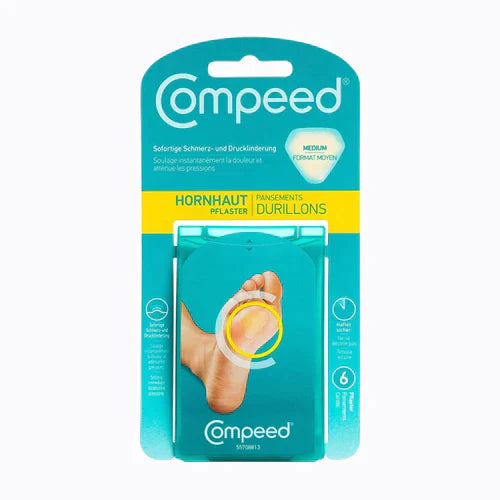
Compeed Callus 6 Medium Plasters
- ✔️ Softens and reduces hard callus skin on the feet
- ✔️ Hydrocolloid gel cushions and relieves callus pressure
- ✔️ Stays securely in place during walking and daily activity
- ✔️ Drug-free treatment suitable for sensitive skin types
- ✔️ Each pack contains six medium plasters for ongoing treatment
Price Checker
 Lowest price guarantee
 Includes FREE private prescription


Couldn't load pickup availability
What Are Callus Plasters and How Do They Help?
Calluses are areas of thickened, hardened skin that develop in response to repeated friction or pressure — most commonly on the soles of the feet, heels, and the balls of the feet. They can be uncomfortable, sometimes painful, and often stubborn to shift with regular moisturising alone. Callus plasters offer a targeted, non-invasive way to tackle them at home, without the need for a GP appointment or a trip to the podiatrist. Compeed Callus 6 Medium Plasters are a well-established option for managing this common foot complaint, and you can browse our full range of products in our foot care collection.
Each pack contains six medium-sized plasters, making them ideal for ongoing treatment of one or more calluses. At £6.34, they represent a straightforward, accessible solution for everyday foot discomfort.
How Do Compeed Callus Plasters Work?
The science behind these plasters is rooted in hydrocolloid technology — the same approach used in modern wound dressings. Here is how the process works:
- The hydrocolloid gel layer absorbs moisture from the skin surface, creating a moist microenvironment beneath the plaster.
- This moisture softens the hardened, keratinised skin cells that make up the callus, making them easier to reduce over time.
- The plaster simultaneously acts as a physical cushion, redistributing pressure away from the affected area and reducing pain during walking.
- The adhesive border keeps the plaster securely in place through normal daily activity, including wearing shoes.
Unlike salicylic acid-based treatments, Compeed callus plasters do not use a chemical keratolytic agent. They work purely through moisture management and mechanical cushioning, which makes them a gentler option for many people.
Who Should Use Compeed Callus Plasters?
These plasters are suitable for adults who have developed calluses due to friction, ill-fitting footwear, or prolonged standing. They are particularly useful if your callus is causing discomfort during everyday activities. That said, they are not appropriate for everyone.
- Adults with calluses on the soles, heels, or balls of the feet caused by pressure or friction.
- People who want a drug-free, non-chemical approach to callus management.
- Those who need to stay active and require cushioning support while the callus heals.
- Individuals who have tried regular moisturisers without sufficient improvement.
If you have diabetes, peripheral neuropathy, or poor circulation, you should speak to your GP or podiatrist before using any callus treatment, including these plasters. Reduced sensation in the feet means skin damage can go unnoticed, increasing the risk of complications.
How Do Compeed Callus Plasters Compare to Salicylic Acid Treatments?
| Feature | Compeed Callus Plasters | Salicylic Acid Callus Treatments |
|---|---|---|
| Mechanism | Hydrocolloid moisture management + cushioning | Chemical keratolytic — dissolves hardened skin |
| Active ingredient | Hydrocolloid gel (no drug) | Salicylic acid (typically 12–40%) |
| Suitable for sensitive skin | Generally yes | Use with caution — can irritate surrounding skin |
| Suitable for people with diabetes | Seek medical advice first | Generally not recommended without medical advice |
How Should You Store Compeed Callus Plasters?
Store the plasters below 25°C, away from direct sunlight and moisture. Keep them in their original packaging until use to preserve the integrity of the hydrocolloid gel. Do not use a plaster if the packaging has been damaged or if the plaster appears discoloured or degraded. If you are also managing other skin concerns alongside your callus, our skin care collection includes a range of supportive products worth exploring.
This product is a medicine. Speak to your doctor or pharmacist before using if you have an underlying medical condition or are taking other medicines.
Compeed Callus 6 Medium Plasters specifications
| Treatment category | Foot care / callus treatment |
| Mechanism of action | Hydrocolloid gel softens hardened skin and cushions the affected area |
| Effective for | Calluses on the feet |
| Suitable for | Adults |
| Active ingredient | Hydrocolloid gel |
| Pack size | 6 plasters |
| UK classification | General Sale (GSL) |
| Preparation | Medicated plaster |
| Route of administration | Topical (cutaneous) |
Specifications of Compeed Callus 6 Medium Plasters
What Are Compeed Callus 6 Medium Plasters and What Are They Used For?
Compeed Callus 6 Medium Plasters are topical hydrocolloid plasters designed to treat calluses — areas of thickened, hardened skin that form on the feet as a result of repeated pressure or friction. The NHS describes calluses as common and usually harmless, though they can cause discomfort or pain, particularly when walking or standing for long periods. These plasters work by softening the hardened skin while simultaneously cushioning the area to relieve pressure. They are available over the counter without a prescription and are classified as a general sale medicine in the UK.
What Do You Need to Know Before Using Compeed Callus Plasters?
Before applying these plasters, it is important to check that they are appropriate for your situation. Do not use them if any of the following apply:
- You have diabetes, peripheral arterial disease, or any condition affecting circulation or sensation in your feet — always seek podiatric or medical advice first.
- The skin in the affected area is broken, infected, inflamed, or shows signs of an open wound.
- You have a known allergy or sensitivity to hydrocolloid dressings or any component of the plaster.
- The callus is on a child — these plasters are intended for adult use only.
- You are unsure whether the thickened skin is a callus or another condition such as a verruca or corn.
There are no known significant drug interactions associated with Compeed Callus Plasters, as they do not contain a pharmacologically active drug ingredient. However, if you are using any topical foot treatments concurrently, avoid applying them to the same area as the plaster.
- No known drug interactions reported for hydrocolloid plasters.
- Do not combine with salicylic acid treatments on the same site simultaneously.
How Should You Use Compeed Callus Plasters?
Correct application is key to getting the most from these plasters. Follow these steps carefully:
- Wash and thoroughly dry the affected area of skin before application.
- Remove the plaster from its packaging and peel away the protective backing.
- Centre the plaster directly over the callus, ensuring the gel pad covers the entire hardened area.
- Press firmly around the edges to secure the adhesive border to the surrounding skin.
- Leave the plaster in place — do not remove it prematurely. It is designed to stay on until it falls off naturally.
- Once the plaster has come away, inspect the skin. If the callus persists, apply a new plaster and continue the process.
| Indication | Age Group | Application | Frequency |
|---|---|---|---|
| Foot callus | Adults (18+) | One plaster per callus site | Replace when plaster falls off naturally (typically every 1–2 days) |
If you are managing foot discomfort alongside your callus treatment, our pain relief collection includes options that may help with associated soreness.
What Are the Possible Side Effects of Compeed Callus Plasters?
Side effects from hydrocolloid callus plasters are uncommon, but it is worth knowing what to look out for. If you notice anything unusual after applying the plaster, remove it and assess the skin carefully.
Common side effects:
- Mild redness or irritation around the edges of the plaster where the adhesive contacts the skin.
- Temporary whitening or maceration of the skin beneath the plaster — this is a normal response to the moist environment created by the hydrocolloid gel.
Less common side effects:
- Contact dermatitis or allergic skin reaction — characterised by itching, swelling, or a rash beyond the plaster area.
- Skin breakdown or worsening of the affected area, particularly if the plaster is applied to already compromised skin.
If you experience signs of infection — such as increased warmth, swelling, pus, or spreading redness — remove the plaster immediately and seek medical advice. People with conditions affecting foot sensation should be especially vigilant, as they may not notice early signs of skin damage.
How Should You Store Compeed Callus Plasters?
- Store below 25°C in a cool, dry place.
- Keep away from direct sunlight and sources of heat or moisture.
- Store in the original packaging to protect the hydrocolloid gel from contamination.
- Keep out of the reach and sight of children.
- Do not use after the expiry date printed on the packaging.
- Do not use a plaster if the individual wrapper has been damaged or opened prior to use.
If you are looking for additional support for foot health or related skin concerns, our athletes foot and fungal infections collection covers a range of treatments for common foot conditions.
References
- https://www.nhs.uk/conditions/corns-and-calluses/
- https://www.nhs.uk/conditions/corns-and-calluses/treatment/
- https://www.nhs.uk/live-well/healthy-body/foot-health/
- https://www.nhs.uk/conditions/diabetes/living-with-diabetes/foot-care/
- https://www.nhs.uk/conditions/contact-dermatitis/
- https://www.medicines.org.uk/emc/
Written and reviewed by our qualified team
Your safety and success are our highest priorities. Our medical team rigorously evaluates every product and piece of advice we provide, ensuring you receive only the most effective, science-backed solutions available.
Frequently Asked Questions
Where can I buy Compeed Callus 6 Medium Plasters online in the UK?
You can buy Compeed Callus 6 Medium Plasters directly from Cured Pharmacy online for £6.34, with convenient delivery to your door. They are a general sale medicine, so no prescription is needed. You can also find them in most UK high street pharmacies and supermarkets.
How do Compeed callus plasters work on hard skin?
Compeed callus plasters use hydrocolloid gel technology to create a moist environment beneath the plaster, which gradually softens the thickened, keratinised skin cells that form a callus. At the same time, the plaster acts as a physical cushion, reducing pressure on the affected area during walking. This dual action addresses both the discomfort and the underlying hard skin.
How do I apply Compeed Callus plasters correctly?
Start by washing and thoroughly drying the affected foot. Peel the backing from the plaster and centre the gel pad directly over the callus, then press the adhesive edges firmly onto the surrounding skin. Leave the plaster in place until it detaches naturally — typically after one to two days — and replace as needed.
How long should I leave a Compeed callus plaster on?
Each plaster is designed to stay in place until it falls off on its own, which usually takes one to two days depending on activity levels and how much the foot perspires. You should not remove it early, as this interrupts the softening process. Once it comes away, assess the callus and apply a fresh plaster if the skin is still thickened.
How many plasters will I need to treat a callus?
The number of plasters required depends on the size and severity of the callus — mild calluses may respond after two or three plasters, while more established ones may need the full pack of six or more. If you have used an entire pack without significant improvement, it is worth speaking to a pharmacist or podiatrist. Persistent or painful calluses may benefit from professional assessment.
Are Compeed callus plasters suitable for people with diabetes?
People with diabetes should always consult their GP or podiatrist before using any callus treatment, including these plasters. Diabetes can cause reduced sensation and impaired circulation in the feet, meaning skin damage may go unnoticed and heal more slowly. The NHS recommends that people with diabetes have their feet checked regularly by a healthcare professional — you can read more about diabetic foot care on the NHS website.
Can I wear Compeed callus plasters inside shoes?
Yes — these plasters are specifically designed to stay securely in place during normal daily activities, including walking and wearing shoes. Their flexible construction allows them to move with the foot without peeling away. For best results, choose well-fitting footwear that does not create additional friction over the plaster.
Can I use Compeed callus plasters on my hands?
Compeed Callus Plasters are formulated and sized for use on the feet, and the manufacturer's instructions refer specifically to foot calluses. While calluses can develop on the hands — particularly from manual work or instrument playing — you should check with a pharmacist before using foot-specific plasters on other body areas. There may be more appropriate products available for hand calluses.
What are the side effects of Compeed callus plasters?
Side effects are uncommon but can include mild redness or irritation at the plaster edges, and temporary whitening of the skin beneath the gel pad — this is a normal response to the moist environment. In rare cases, an allergic contact reaction may occur, presenting as itching, swelling, or a rash. If you notice any signs of infection or worsening skin condition, remove the plaster and seek medical advice promptly.
What should I do if my skin becomes irritated under the plaster?
If you notice significant redness, itching, swelling, or any signs of an allergic reaction, remove the plaster immediately and allow the skin to air. Rinse the area gently with cool water and avoid reapplying until the irritation has fully settled. If symptoms persist or worsen, speak to your pharmacist or GP — they can advise on whether an alternative treatment is more suitable for your skin type.
What are the alternatives to Compeed callus plasters?
Alternatives include salicylic acid-based callus treatments (available as gels, pads, or liquids), regular use of a pumice stone after soaking the feet, and emollient-rich foot creams to soften hard skin over time. For severe or recurring calluses, a podiatrist can professionally debride the area. You can explore supportive options in our foot care collection.
How long does it take for callus plasters to show results?
Most people notice the callus beginning to soften after the first one or two plasters, though significant reduction in thickness typically takes several applications over a number of days. Results vary depending on how established the callus is and how consistently the plasters are used. Keeping the feet moisturised between applications can support the process.
Can I use Compeed callus plasters if I am pregnant?
Compeed Callus Plasters do not contain a pharmacologically active drug, so they are generally considered low risk during pregnancy. However, as with any product used during pregnancy, it is sensible to check with your midwife or GP before use, particularly if you have any foot health concerns. Swelling and changes in foot shape are common during pregnancy and may contribute to callus formation.
How do I prevent calluses from coming back after treatment?
Preventing callus recurrence involves addressing the underlying cause — most commonly friction from ill-fitting footwear. Wearing well-fitted shoes with adequate cushioning, using moisture-wicking socks, and regularly moisturising the feet can all help. If you stand for long periods at work, cushioned insoles may reduce pressure on vulnerable areas. The NHS recommends wearing comfortable, well-fitting shoes as a key step in foot care.
Are there any medicines that interact with Compeed callus plasters?
No significant drug interactions have been identified for hydrocolloid callus plasters, as they do not contain a pharmacologically active ingredient. However, you should avoid applying other topical foot treatments — such as salicylic acid gels or antifungal creams — to the same area of skin at the same time. If you are managing a fungal foot infection alongside a callus, our athletes foot and fungal infections collection has relevant treatment options to consider separately.
Written and reviewed by our qualified team

Reviewed by:
Tarun Kumar
Superintendent/ Clinical Lead
📖 Find out more about our team of medical content authors and how we ensure the accuracy of our content with our content guidelines.
Content last updated: 14 Sep 2026
Other popular options


We’re a safe and
regulated UK service

Lowest Price Guarantee

We're convinced you won't find your treatment cheaper, but if you do we'll refund the difference.
Find out more
100% discreet packaging

Discreet, unbranded packaging for every order.
Find out more

Need help?
Talk to our friendly experts now


How our service works

Service setup

Discreet packaging

Express delivery