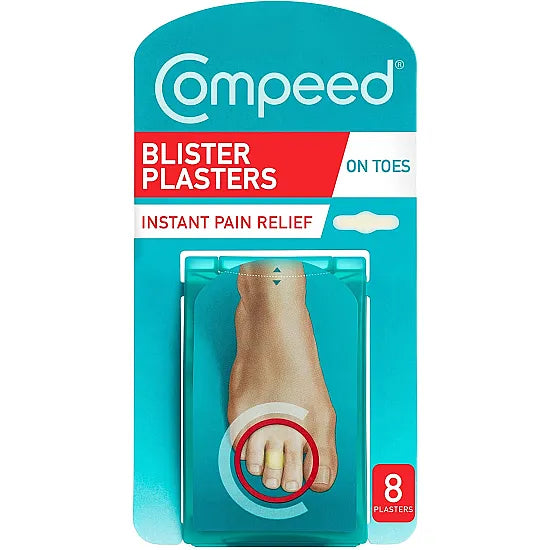
Compeed Blister On Toes - 8 Plasters
- ✔️ Shaped to fit toe contours for a secure, comfortable fit
- ✔️ Hydrocolloid gel actively absorbs blister fluid to reduce pain
- ✔️ Creates moist healing environment to support faster skin repair
- ✔️ Protects blisters from further friction inside footwear
- ✔️ Suitable for adults and children aged 12 and over
Price Checker
 Lowest price guarantee
 Includes FREE private prescription


Couldn't load pickup availability
What Are Blister Plasters for Toes and How Do They Help?
Blisters on toes are one of the most common foot complaints — and one of the most frustrating. Whether they've appeared after a long walk, a new pair of shoes, or a day on your feet, they can make every step genuinely uncomfortable. Blister plasters for toes offer a targeted solution, designed specifically for the curved, friction-prone surfaces of your toes rather than flat areas of skin. Compeed Blister On Toes 8 Plasters are shaped to conform to toe contours, staying in place even when you're moving around. You can browse our full range of products in our foot care collection if you're looking for additional support.
Each pack contains 8 individually wrapped plasters, making them easy to carry in a bag, gym kit, or travel pouch. At £4.69, they're an accessible option for anyone dealing with toe blisters regularly — whether you're a runner, a hiker, or simply someone who's broken in a new pair of shoes the hard way.
How Do Compeed Toe Blister Plasters Work?
The science behind these plasters is straightforward but genuinely effective. Compeed uses hydrocolloid gel technology — the same type used in clinical wound care — to create an optimal healing environment directly over the blister.
- The hydrocolloid matrix absorbs excess fluid (exudate) from the blister, reducing pressure and pain.
- It maintains a moist microenvironment at the wound surface, which supports faster skin regeneration.
- The outer layer acts as a physical barrier, protecting the blister from further friction and contamination.
- The plaster's shape is contoured to fit toes, reducing the risk of it lifting or bunching inside footwear.
As the plaster absorbs fluid, it turns white and slightly raised — this is completely normal and indicates it's working. You don't need to pop the blister first; in fact, leaving it intact is preferable as the fluid inside helps protect the underlying skin.
Who Should Use Compeed Blister On Toes Plasters?
These plasters are suitable for most adults and children over the age of 12 who have developed a blister on one or more toes. They're particularly useful for:
- Runners and athletes who experience friction blisters during training or events.
- People breaking in new footwear, especially leather shoes or boots.
- Hikers and walkers covering long distances on uneven terrain.
- Anyone whose occupation keeps them on their feet for extended periods.
They are not intended for use on infected blisters — if you notice increasing redness, warmth, swelling, or pus around the blister, seek advice from a pharmacist or GP before applying any plaster. People with diabetes or circulatory conditions should also consult a healthcare professional before self-treating any foot wound, as the risk of complications is higher in these groups.
How Do Compeed Toe Plasters Compare to Standard Plasters?
| Feature | Compeed Blister On Toes | Standard Fabric Plaster |
|---|---|---|
| Technology | Hydrocolloid gel | Absorbent pad with adhesive |
| Moist healing environment | Yes | No |
| Shaped for toes | Yes — contoured fit | No — flat strip |
| Duration of wear | Several days | Usually 1 day or less |
Are Compeed Toe Blister Plasters Safe to Store and Use Long-Term?
These plasters should be stored below 25°C in a dry place, away from direct sunlight. Each plaster is individually wrapped, which helps maintain sterility and adhesive quality until you need it. The shaped design of these blister plasters for toes means they're less likely to crease or lose their form in a bag or first aid kit. If you're building a home first aid kit, you might also want to explore our first aid collection for complementary products.
Check the expiry date printed on the packaging before use. Do not use a plaster if the individual wrapper has been damaged or opened, as this may compromise sterility.
This product is a medicine. Speak to your doctor or pharmacist before using if you have an underlying medical condition or are taking other medicines.
Compeed Blister On Toes 8 Plasters specifications
| Treatment category | Foot care / wound care |
| Mechanism of action | Hydrocolloid gel absorbs wound fluid and maintains moist healing environment |
| Effective for | Blisters on toes caused by friction |
| Suitable for | Adults and children aged 12 and over |
| Active ingredient | Hydrocolloid gel matrix |
| Pack size | 8 plasters |
| UK classification | General Sale (GSL) medical device |
| Preparation | Adhesive hydrocolloid plaster |
| Route of administration | Topical / cutaneous |
Specifications of Compeed Blister On Toes 8 Plasters
What Is Compeed Blister On Toes and What Is It Used For?
Compeed Blister On Toes 8 Plasters are hydrocolloid adhesive plasters designed specifically to treat and protect friction blisters on the toes. They work as both a treatment and a protective barrier — cushioning the affected area from further rubbing while actively supporting the skin's natural healing process. The plasters are shaped to fit the curved surface of toes, making them more effective in this area than a standard flat plaster would be.
They are used for blisters caused by friction — typically from footwear rubbing against the skin during walking, running, or other physical activity. They are not a treatment for burns, infected wounds, or blisters caused by medical conditions such as chickenpox or eczema.
What Do You Need to Know Before Using Compeed Blister On Toes?
Before applying these plasters, it's important to check that they're appropriate for your situation. Do not use them if any of the following apply:
- The blister shows signs of infection — increased redness, warmth, swelling, or discharge of pus.
- You have diabetes, peripheral arterial disease, or poor circulation — always seek professional advice first.
- You have a known allergy to hydrocolloid dressings or any component of the plaster adhesive.
- The affected skin is already broken and showing signs of a deep or serious wound.
- The blister is on a child under 12 years of age — consult a pharmacist or GP first.
There are no known significant drug interactions with this topical medical device. However, if you are using any medicated creams or ointments on the affected area — for example, from our creams and ointments range — allow the skin to dry fully before applying the plaster, as residue may affect adhesion.
- No known interactions with oral medications.
- Avoid concurrent use of topical antiseptics or emollients directly under the plaster unless advised by a healthcare professional.
How Should You Use Compeed Blister On Toes Plasters?
Applying the plaster correctly makes a real difference to how well it stays in place and how effectively it works. Follow these steps carefully:
- Wash your hands thoroughly before handling the plaster.
- Clean the skin around the blister gently with mild soap and water. Pat dry — do not rub.
- Do not burst the blister if it is still intact; the fluid inside protects the underlying skin.
- Peel the backing off the plaster without touching the gel surface.
- Centre the plaster over the blister and press down firmly, starting from the middle and smoothing outwards.
- Hold the plaster in place for approximately 30 seconds to activate the adhesive.
- Leave the plaster in place — do not remove it until the edges begin to peel naturally.
| Indication | Age Group | Application | Frequency |
|---|---|---|---|
| Friction blister on toe | Adults and children 12+ | 1 plaster per blister | Replace only when edges begin to lift |
| Blister prevention (high-friction area) | Adults and children 12+ | 1 plaster applied before activity | As needed before prolonged walking or sport |
What Are the Possible Side Effects of Compeed Blister On Toes?
Side effects from hydrocolloid blister plasters are uncommon, but it's worth knowing what to look out for. Most people use these plasters without any problems at all.
Common side effects:
- Mild redness or irritation around the edges of the plaster after removal.
- Temporary skin maceration (softening or wrinkling) if the plaster is left on for an extended period.
Less common side effects:
- Allergic contact dermatitis — itching, rash, or blistering beyond the original wound site.
- Difficulty removing the plaster without causing skin trauma, particularly on fragile or elderly skin.
If you notice signs of an allergic reaction or worsening of the wound, remove the plaster immediately and seek advice from a pharmacist or GP. Do not reapply if a reaction has occurred.
How Should You Store Compeed Blister On Toes Plasters?
Proper storage keeps the plasters effective and hygienic until you need them. If you're putting together a travel or sports kit, these store easily alongside other essentials — you might also find our pain relief collection useful for managing discomfort alongside blister treatment.
- Store below 25°C in a cool, dry place.
- Keep away from direct sunlight and sources of heat.
- Do not store in a bathroom cabinet where humidity may affect the adhesive.
- Keep each plaster in its individual wrapper until ready to use.
- Keep out of the reach and sight of children.
- Do not use after the expiry date printed on the packaging.
- Dispose of used plasters in household waste — do not flush.
References
Written and reviewed by our qualified team
Your safety and success are our highest priorities. Our medical team rigorously evaluates every product and piece of advice we provide, ensuring you receive only the most effective, science-backed solutions available.
Frequently Asked Questions
Where can I buy blister plasters for toes online in the UK?
You can buy Compeed Blister On Toes 8 Plasters directly from Cured Pharmacy online for £4.69 with fast UK delivery. No prescription is required as this is an over-the-counter product available to adults and children aged 12 and over. Browse our full foot care collection for additional foot health products.
How do Compeed toe blister plasters work in the body?
Compeed plasters use a hydrocolloid gel matrix that absorbs fluid from the blister, reducing internal pressure and pain. The gel creates a moist healing environment at the wound surface, which supports faster skin cell regeneration compared to a dry wound. The outer layer simultaneously acts as a physical barrier against further friction and contamination.
How do I apply Compeed Blister On Toes plasters step by step?
Start by washing your hands and cleaning the skin around the blister with mild soap and water, then pat dry. Peel the backing from the plaster without touching the gel surface, centre it over the blister, and press firmly from the middle outwards. Hold in place for around 30 seconds to ensure the adhesive bonds properly to the skin.
How long should I leave a Compeed toe blister plaster on?
Compeed plasters are designed to stay in place for several days and should ideally be left on until the edges begin to peel away naturally on their own. Removing the plaster too early can disrupt the healing process and may cause discomfort. If the plaster becomes visibly saturated or detaches completely, replace it with a fresh one.
Can I wear shoes with Compeed toe blister plasters on?
Yes — these plasters are specifically shaped to fit the contours of toes and are thin enough to wear comfortably inside most types of footwear. They provide a cushioning layer that reduces friction between the toe and the shoe, which is particularly helpful during walking, running, or hiking. Make sure your shoes are not excessively tight, as this can cause the plaster to shift.
Are Compeed blister plasters suitable for people with diabetes?
People with diabetes should always consult their GP or pharmacist before self-treating any foot wound, including blisters, as reduced sensation and circulation can increase the risk of complications. The NHS advises that people with diabetes check their feet daily and seek professional advice promptly for any skin breaks or wounds. Do not use these plasters on an infected or slow-healing blister without medical guidance.
What are the side effects of Compeed Blister On Toes plasters?
Side effects are uncommon but may include mild redness or irritation around the plaster edges after removal, and temporary skin softening if the plaster is worn for an extended period. Rarely, an allergic contact reaction to the adhesive may occur, presenting as itching, rash, or blistering beyond the original wound. If this happens, remove the plaster immediately and seek advice from a pharmacist or GP.
What are the alternatives to Compeed blister plasters for toes?
Alternatives include standard fabric plasters, foam padding, silicone toe protectors, or moleskin padding — though none of these replicate the hydrocolloid healing environment that Compeed provides. For recurring or persistent blisters, a podiatrist can assess your gait and footwear to address the underlying cause. You might also find products in our first aid collection useful as complementary options.
Can I use Compeed toe blister plasters to prevent blisters before they form?
Yes — applying a plaster to a high-friction area before activity can help prevent a blister from forming in the first place. This is a common strategy among runners, hikers, and anyone breaking in new footwear. Apply the plaster to clean, dry skin before putting on your shoes for best results.
Should I pop a blister before applying a Compeed plaster?
No — the NHS advises against deliberately bursting blisters, as the fluid inside acts as a natural protective cushion for the healing skin beneath. Compeed plasters are designed to work effectively over intact blisters, absorbing the fluid gradually through the hydrocolloid gel. Popping a blister increases the risk of infection and may slow healing.
How long does it take for a toe blister to heal with a Compeed plaster?
Healing time varies depending on the size and depth of the blister, but most small friction blisters on toes heal within 3 to 7 days when protected with a hydrocolloid plaster. Larger or deeper blisters may take longer. If a blister has not improved after two weeks or shows signs of infection, seek advice from a pharmacist or GP.
Is it normal for a Compeed plaster to turn white and bubble up?
Yes, this is completely normal and is a sign that the hydrocolloid gel is actively absorbing fluid from the blister. The white, raised appearance indicates the plaster is working as intended and does not mean the wound is worsening. Leave the plaster in place until the edges begin to lift naturally.
Who is eligible to use Compeed Blister On Toes plasters?
These plasters are suitable for adults and children aged 12 and over who have a friction blister on one or more toes. They are not suitable for use on infected blisters, burns, or blisters caused by medical skin conditions. People with diabetes, circulatory problems, or fragile skin should seek professional advice before use.
What happens if I remove a Compeed plaster too early?
Removing the plaster before the edges begin to lift naturally can disrupt the moist healing environment and may cause discomfort or minor skin trauma. The new skin forming beneath the blister is delicate and benefits from continued protection. If you need to remove the plaster early, do so gently by lifting one edge and peeling slowly in the direction of hair growth.
What does the latest research say about hydrocolloid blister plasters?
Clinical evidence consistently supports the use of moist wound healing — the principle behind hydrocolloid dressings — as more effective than dry wound management for superficial skin wounds including blisters. The NHS recommends covering blisters with a soft plaster or dressing to protect them and reduce pain during healing. Hydrocolloid technology has been used in clinical wound care settings for decades and is well established in the medical literature.
Written and reviewed by our qualified team

Reviewed by:
Tarun Kumar
Superintendent/ Clinical Lead
📖 Find out more about our team of medical content authors and how we ensure the accuracy of our content with our content guidelines.
Content last updated: 14 Sep 2026
Other popular options


We’re a safe and
regulated UK service

Lowest Price Guarantee

We're convinced you won't find your treatment cheaper, but if you do we'll refund the difference.
Find out more
100% discreet packaging

Discreet, unbranded packaging for every order.
Find out more

Need help?
Talk to our friendly experts now


How our service works

Service setup

Discreet packaging

Express delivery