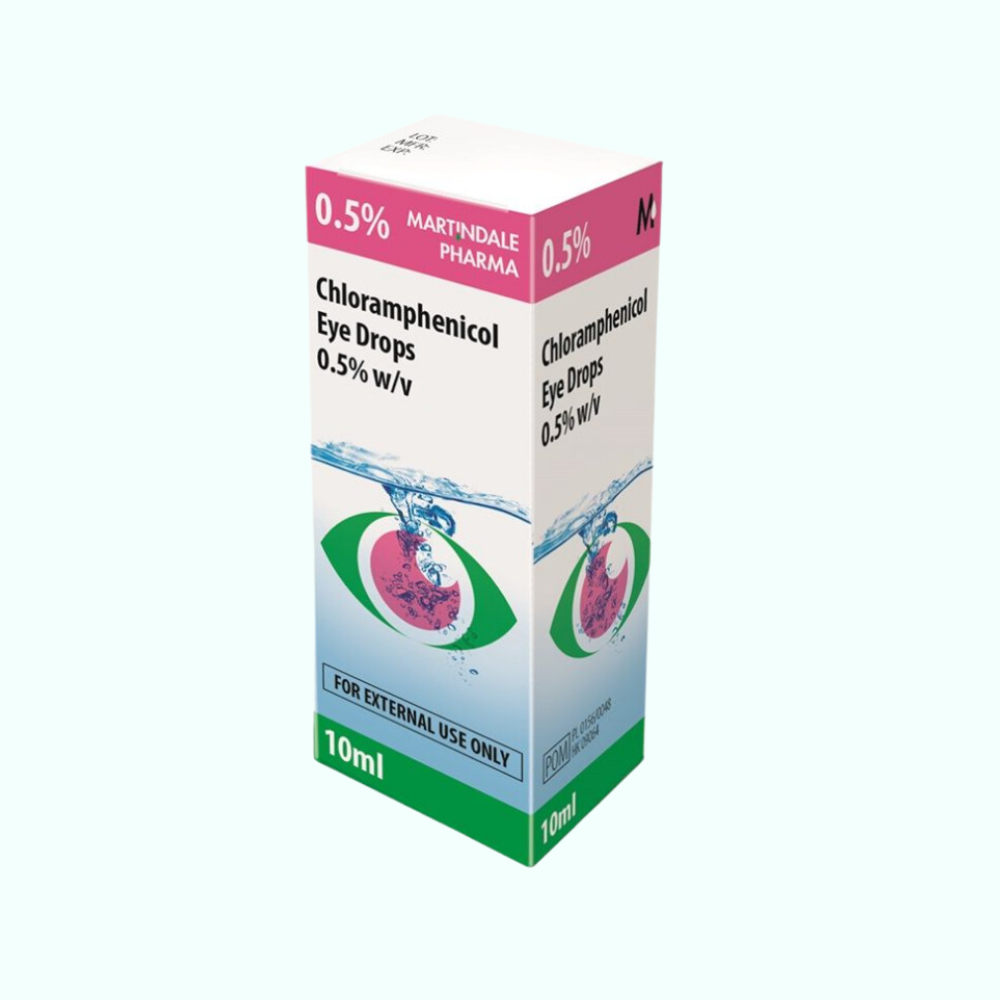
Chloramphenicol Eye Drops 0.5% (10 Ml) NOT FOR PET USE
Chloramphenicol Eye Drops 0.5% (10 Ml) NOT FOR PET USE
- ✔️ Treats bacterial conjunctivitis in adults and children aged 2+
- ✔️ Broad-spectrum antibiotic targets gram-positive and gram-negative bacteria
- ✔️ Symptoms typically improve within 48 hours of starting treatment
- ✔️ Sterile 10ml bottle provides a complete five-day treatment course
- ✔️ OTC availability — no GP prescription required for eligible patients
Price Checker
 Lowest price guarantee
 Includes FREE private prescription


Couldn't load pickup availability
What Are Chloramphenicol Eye Drops Used For?
If your eyes are red, sticky, and uncomfortable, bacterial conjunctivitis is one of the most likely culprits. Chloramphenicol eye drops 0.5% are a clinically established antibiotic treatment used to clear bacterial eye infections quickly and safely. Available over the counter in the UK for adults and children aged 2 years and over, this 10ml bottle provides a full treatment course without the need for a GP appointment. You can browse our full range of eye care products if you need additional support for your eye health.
Bacterial conjunctivitis is extremely common. It causes redness, a gritty feeling, and a yellow or green discharge that can cause the eyelids to stick together, particularly in the morning. The NHS confirms that conjunctivitis often clears on its own, but antibiotic drops can speed up recovery and reduce the risk of spreading the infection to others. This product is for human use only — it is not intended for animals.
How Do Chloramphenicol Eye Drops Work Against Infection?
Chloramphenicol is a broad-spectrum antibiotic that targets a wide range of bacteria responsible for eye infections. It works at the cellular level to stop bacteria from multiplying, giving your body the chance to clear the infection naturally.
- Chloramphenicol binds to the 50S subunit of bacterial ribosomes.
- This blocks the enzyme peptidyl transferase, preventing the formation of new proteins.
- Without the ability to synthesise proteins, bacteria cannot reproduce or survive.
- The drug is effective against both gram-positive and gram-negative organisms commonly found in bacterial conjunctivitis.
Because it acts directly on the bacteria rather than simply masking symptoms, the infection is treated at its source. Most people notice a significant improvement within 48 hours of starting treatment.
Who Is Suitable for Chloramphenicol Eye Drops?
These drops are suitable for a broad range of patients, but there are some important eligibility criteria to be aware of before purchasing. They are designed for short-term use in otherwise healthy individuals presenting with signs of bacterial conjunctivitis.
- Adults aged 18 and over with bacterial conjunctivitis symptoms.
- Children aged 2 years and over (under medical supervision where possible).
- People who have not had conjunctivitis more than twice in the past six months.
- Those who wear glasses rather than contact lenses during the treatment period.
They are not suitable for neonates, children under 2, or anyone with a known allergy to chloramphenicol. If you are pregnant or breastfeeding, speak to your pharmacist or GP before using this product.
How Do Chloramphenicol Eye Drops Compare to Alternatives?
| Feature | Chloramphenicol Eye Drops 0.5% | Fusidic Acid Eye Drops 1% |
|---|---|---|
| Antibiotic class | Broad-spectrum bacteriostatic | Narrow-spectrum bacteriostatic |
| Dosing frequency | Every 2 hours initially, then every 4 hours | Twice daily |
| OTC availability in UK | Yes, for adults and children 2+ | Prescription only |
| Suitable for children under 2 | No | No (prescription required) |
How Should You Store Chloramphenicol Eye Drops?
Proper storage is essential to maintain the effectiveness of this medicine. Before opening, store the bottle below 25°C in a cool, dry place away from direct sunlight. Once opened, keep the bottle in the refrigerator and use it within 28 days — any drops remaining after this point should be discarded safely.
Never share your drops with another person, even if they have similar symptoms. Cross-contamination can spread infection further. If you are managing other health concerns alongside an eye infection, our first aid range includes additional products that may help. Always keep medicines out of the reach of children.
This product is a medicine. Speak to your doctor or pharmacist before using if you have an underlying medical condition or are taking other medicines.
Chloramphenicol Eye Drops 0.5% (10ml) specifications
| Treatment category | Bacterial conjunctivitis / Eye infection |
| Mechanism of action | Inhibits bacterial protein synthesis via 50S ribosomal subunit binding |
| Effective against | Gram-positive and gram-negative bacteria |
| Suitable for | Adults and children aged 2 years and over |
| Active ingredient | Chloramphenicol 0.5% w/v |
| Pack size | 10ml |
| Strength | 0.5% |
| UK classification | Pharmacy (P) medicine |
| Drug class | Broad-spectrum antibiotic |
| Preparation | Sterile aqueous eye drops solution |
| Route of administration | Ophthalmic (topical instillation into the eye) |
Specifications of Chloramphenicol Eye Drops 0.5% (10ml)
What Is Chloramphenicol 0.5% Eye Solution and What Is It Used For?
Chloramphenicol Eye Drops 0.5% is a sterile antibiotic solution applied directly to the eye. It is used to treat acute bacterial conjunctivitis — an infection of the conjunctiva (the thin membrane covering the white of the eye and the inside of the eyelids). Symptoms typically include redness, a sticky or crusty discharge, and a gritty or burning sensation. The NHS advises that bacterial conjunctivitis is highly contagious and can affect one or both eyes. This product is for human use only and must not be used on animals.
What Do You Need to Know Before Using These Eye Drops?
Before using chloramphenicol eye drops, it is important to check whether they are appropriate for you. Do not use this product if any of the following apply:
- You are allergic to chloramphenicol or any other ingredient in the formulation.
- You or a close family member have a history of blood disorders, particularly aplastic anaemia.
- The patient is a child under 2 years of age.
- You are wearing contact lenses (remove lenses before instilling drops and wait at least 15 minutes before reinserting).
- You have had conjunctivitis more than twice in the past six months — seek GP advice instead.
- You are pregnant or breastfeeding — consult your pharmacist or GP before use.
Known drug interactions with topical chloramphenicol are limited due to minimal systemic absorption. However, be aware of the following:
- Concurrent use with other eye drops: leave at least 5 minutes between different eye preparations.
- Systemic anticoagulants such as warfarin: although topical absorption is very low, inform your GP if you are on anticoagulant therapy.
How Should You Apply Chloramphenicol Eye Drops Correctly?
Correct technique matters. Applying the drops properly ensures the medicine reaches the infected area and reduces the risk of contaminating the bottle. Follow these steps carefully:
- Wash your hands thoroughly with soap and water before handling the bottle.
- Tilt your head back slightly and look up towards the ceiling.
- Gently pull down your lower eyelid with a clean finger to create a small pocket.
- Hold the bottle above the eye and squeeze one to two drops into the pocket — do not let the tip touch your eye or eyelid.
- Close your eye gently for one to two minutes. You can press lightly on the inner corner of your eye to reduce drainage.
- Wipe away any excess liquid with a clean tissue.
- Repeat in the other eye if both are affected.
- Replace the cap immediately after use.
| Indication | Age Group | Dose | Frequency |
|---|---|---|---|
| Bacterial conjunctivitis | Adults and children 2+ | 1–2 drops per affected eye | Every 2 hours for first 48 hours, then every 4 hours |
| Bacterial conjunctivitis | Children under 2 | Not recommended OTC | GP supervision required |
The usual treatment course is five days. Continue using the drops for the full course even if symptoms improve earlier, to prevent the infection from returning. If you are also managing other conditions, you may find our allergy and hay fever range helpful, as allergic conjunctivitis can sometimes be confused with bacterial infection.
What Are the Possible Side Effects of Chloramphenicol Eye Drops?
Like all medicines, chloramphenicol eye drops can cause side effects, although not everyone experiences them. Most side effects are mild and localised to the eye.
Common side effects (may affect up to 1 in 10 people):
- Transient stinging or burning sensation immediately after instillation.
- Temporary blurred vision lasting a few minutes after application.
- Mild eye irritation or discomfort.
Less common side effects (may affect up to 1 in 100 people):
- Localised allergic reaction — increased redness, swelling, or itching of the eye or eyelid.
- Superficial punctate keratitis (minor damage to the corneal surface) — rare with short-term use.
A very rare but serious risk associated with systemic chloramphenicol is aplastic anaemia (a severe blood disorder). The NHS and MHRA note that this risk is extremely low with topical ophthalmic use due to minimal systemic absorption, but it is why this medicine should not be used long-term or in those with a personal or family history of blood disorders. Stop using the drops and seek immediate medical attention if you notice unusual bruising, bleeding, or signs of infection unrelated to your eye.
How Should You Store Chloramphenicol Eye Drops Safely?
- Store below 25°C before opening.
- Once opened, store in the refrigerator (2°C–8°C).
- Discard the bottle 28 days after first opening, even if liquid remains.
- Keep out of the reach and sight of children.
- Do not use after the expiry date printed on the label.
- Do not freeze.
- Keep the bottle tightly closed when not in use.
If you need to dispose of unused medicine, take it to your local pharmacy — do not pour it down the sink or throw it in household waste. For other eye health products and related treatments, explore our ear, nose and throat range for additional support with related conditions.
References
Written and reviewed by our qualified team
Your safety and success are our highest priorities. Our medical team rigorously evaluates every product and piece of advice we provide, ensuring you receive only the most effective, science-backed solutions available.
Frequently Asked Questions
Where can I buy chloramphenicol eye drops online in the UK?
You can buy chloramphenicol eye drops 0.5% directly from Cured Pharmacy, a GPhC-registered UK online pharmacy. A short suitability check is completed at the point of purchase to ensure the product is appropriate for you. Browse our full eye care collection for related products.
How do chloramphenicol eye drops work in the body?
Chloramphenicol binds to the 50S subunit of bacterial ribosomes, blocking protein synthesis and preventing bacteria from reproducing. Because it is applied directly to the eye, systemic absorption is very low, meaning it works locally at the site of infection. This targeted action makes it effective against the bacteria most commonly responsible for bacterial conjunctivitis.
How do I use chloramphenicol eye drops step by step?
Wash your hands, tilt your head back, and gently pull down your lower eyelid to create a small pocket. Squeeze one to two drops into the pocket without letting the dropper tip touch your eye, then close your eye gently for one to two minutes. Wipe away any excess with a clean tissue and replace the cap immediately.
What is the correct dose of chloramphenicol eye drops for adults?
The standard adult dose is one to two drops instilled into the affected eye every two hours during waking hours for the first 48 hours. After that, reduce to every four hours for the remainder of the five-day course. Do not exceed this dosing schedule without medical advice.
What is the best time to use chloramphenicol eye drops?
Apply the drops during waking hours only, spacing them evenly throughout the day according to the recommended frequency. There is no single "best" time, but consistency matters — try to apply them at regular intervals to maintain a steady concentration of the antibiotic in the eye. Setting reminders on your phone can help you stay on schedule.
What are the side effects of chloramphenicol eye drops and how do I manage them?
The most common side effects are a brief stinging or burning sensation immediately after instilling the drops and temporary blurred vision, both of which usually resolve within a few minutes. If you experience significant eye swelling, increased redness, or a rash around the eye, stop using the drops and contact your pharmacist or GP. Pressing gently on the inner corner of your eye after instillation can help minimise any discomfort.
Who is eligible to use chloramphenicol eye drops over the counter?
Chloramphenicol eye drops are available over the counter for adults and children aged 2 years and over who have symptoms of bacterial conjunctivitis. They are not suitable for children under 2, people with a history of blood disorders such as aplastic anaemia, or those allergic to chloramphenicol. Pregnant or breastfeeding individuals should consult a pharmacist or GP before use.
What happens if I miss a dose of chloramphenicol eye drops?
If you miss a dose, apply the drops as soon as you remember. If it is nearly time for your next scheduled dose, simply skip the missed one and carry on as normal. Never apply a double dose to make up for a missed one, as this will not speed up recovery and may increase the risk of irritation.
How long should you use chloramphenicol eye drops for?
The recommended treatment course is five days. You should complete the full course even if your symptoms clear up before the five days are finished, to ensure the infection is fully treated and to reduce the risk of antibiotic resistance. Do not use the drops for longer than five days without seeking medical advice.
Can I use chloramphenicol eye drops with contact lenses?
No — you should remove contact lenses before instilling the drops and wait at least 15 minutes before reinserting them. It is generally advisable to avoid wearing contact lenses altogether during the treatment course, as lenses can harbour bacteria and slow recovery. Switch to glasses for the duration of the five-day treatment.
Are chloramphenicol eye drops safe during pregnancy?
The safety of chloramphenicol eye drops during pregnancy has not been fully established, and the NHS advises that pregnant women should consult their GP or pharmacist before using this product. Systemic absorption from topical use is very low, but caution is always recommended during pregnancy. Your healthcare provider can advise on the most appropriate treatment for your situation.
What are the alternatives to chloramphenicol eye drops for conjunctivitis?
Fusidic acid eye drops (Fucithalmic) are a prescription-only alternative sometimes used for bacterial conjunctivitis, particularly in cases where chloramphenicol is not suitable. For viral or allergic conjunctivitis, antibiotic drops are not effective — antihistamine eye drops or lubricating drops may be more appropriate. The NHS recommends that mild conjunctivitis often resolves without treatment, so speak to your pharmacist about the right option for you.
Can children use chloramphenicol eye drops?
Yes, chloramphenicol eye drops can be used in children aged 2 years and over, but they are not recommended for children under 2 without GP supervision. For younger children or babies with eye discharge, always seek medical advice before using any antibiotic eye preparation. Our baby and toddler range includes products specifically designed for younger children.
What are the latest studies on chloramphenicol eye drops for conjunctivitis?
Clinical evidence consistently supports the use of topical chloramphenicol as a first-line treatment for bacterial conjunctivitis in primary care settings in the UK. Studies have shown that antibiotic eye drops modestly reduce the duration of symptoms compared to placebo, though many cases of bacterial conjunctivitis do resolve without treatment. The NHS and NICE continue to recommend chloramphenicol as the preferred OTC antibiotic option for this indication.
Is this product safe for use on pets or animals?
No — this product is strictly for human use only and must not be used on animals. Veterinary chloramphenicol preparations exist but are formulated and regulated differently. If your pet has an eye infection, please consult a registered veterinarian for appropriate treatment. Using human medicines on animals can be harmful and is not recommended.
Written and reviewed by our qualified team

Reviewed by:
Tarun Kumar
Superintendent/ Clinical Lead
📖 Find out more about our team of medical content authors and how we ensure the accuracy of our content with our content guidelines.
Content last updated: 14 Sep 2026

We’re a safe and
regulated UK service

Lowest Price Guarantee

We're convinced you won't find your treatment cheaper, but if you do we'll refund the difference.
Find out more
100% discreet packaging

Discreet, unbranded packaging for every order.
Find out more

Need help?
Talk to our friendly experts now


How our service works

Service setup

Discreet packaging

Express delivery