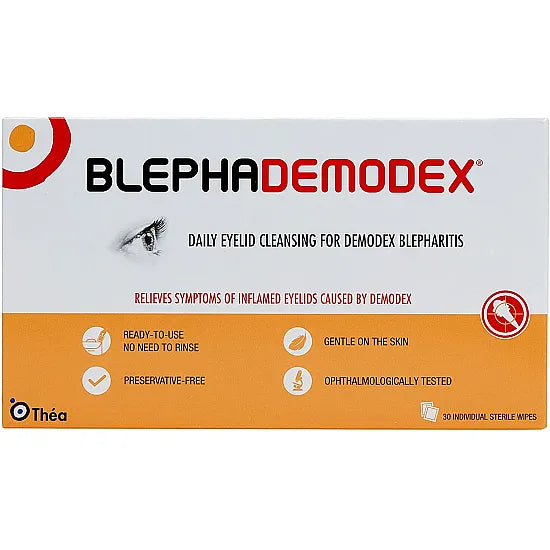
Blephademodex Sterile Eyelid Cleansing Wipes - 30 Sterile Wipes
Blephademodex Sterile Eyelid Cleansing Wipes - 30 Sterile Wipes
- ✔️ Targets Demodex mites with terpinen-4-ol formula
- ✔️ Relieves blepharitis symptoms including crusting and redness
- ✔️ Sterile individually wrapped wipes prevent cross-contamination
- ✔️ Suitable for contact lens wearers with eyelid irritation
- ✔️ Supports long-term eyelid hygiene with daily use
Price Checker
 Lowest price guarantee
 Includes FREE private prescription


Couldn't load pickup availability
What Are Blephademodex Eyelid Cleansing Wipes?
If you've been struggling with sore, crusty, or irritated eyelids, you're far from alone. Blepharitis — inflammation of the eyelid margins — affects a significant number of people in the UK, and it's often linked to an overpopulation of tiny mites called Demodex folliculorum that live in the hair follicles of your lashes. Eyelid cleansing wipes designed specifically for this purpose, like Blephademodex, offer a targeted, sterile way to manage this condition at home. Each pack contains 30 individually wrapped sterile wipes, making them hygienic, convenient, and easy to use daily. You can explore our full range of eye care products if you're looking for additional support alongside your eyelid hygiene routine.
Blephademodex wipes are manufactured by Théa Pharmaceuticals, a specialist ophthalmic company. They are formulated with terpinen-4-ol — a key active component derived from tea tree oil — which has been studied for its ability to reduce Demodex mite counts on the eyelid margins. Unlike standard facial wipes or cotton pads, these are sterile, pre-moistened, and specifically designed for the delicate skin around your eyes.
How Do Blephademodex Wipes Work on the Eyelids?
The mechanism behind Blephademodex is twofold: physical cleansing and active ingredient action. Here's how the process works:
- Physical removal: The wipe texture gently dislodges crusts, scales, excess sebum, and debris that accumulate along the eyelid margin — all of which can block the meibomian glands and worsen symptoms.
- Terpinen-4-ol activity: This tea tree oil derivative has demonstrated anti-parasitic properties against Demodex mites in published clinical studies, helping to reduce mite burden over time with consistent use.
- Sterile formulation: Each wipe is individually sealed to prevent contamination, which is particularly important when treating the periocular area.
- Gentle on skin: The formula is designed to be non-irritating to the eyelid skin, which is among the thinnest and most sensitive skin on the body.
Regular use helps maintain a cleaner eyelid margin environment, which can reduce the frequency and severity of blepharitis flare-ups over time.
Who Should Use Blephademodex Sterile Wipes?
These wipes are suitable for adults who experience symptoms associated with blepharitis or Demodex-related eyelid conditions. They are particularly useful if you've been advised by your GP, optometrist, or ophthalmologist to maintain a daily eyelid hygiene routine. They are not intended for use directly in the eye.
- Adults with anterior or posterior blepharitis
- People with confirmed or suspected Demodex eyelid infestation
- Contact lens wearers experiencing eyelid irritation or meibomian gland dysfunction
- Those with recurrent styes or chalazia linked to poor eyelid hygiene
How Do Blephademodex Wipes Compare to Other Eyelid Wipes?
| Feature | Blephademodex Wipes | Standard Blepharitis Wipes (e.g. Blephaclean) |
|---|---|---|
| Sterile packaging | Yes — individually wrapped | Yes — individually wrapped |
| Active ingredient | Terpinen-4-ol (tea tree derivative) | Hyaluronic acid / micellar solution |
| Targets Demodex mites | Yes | No |
| Pack size | 30 wipes | 30 wipes |
Are Blephademodex Wipes Suitable for Sensitive Eyes and How Should They Be Stored?
Blephademodex eyelid cleansing wipes are formulated for use on the eyelid margin only — not directly on the eyeball — which makes them appropriate for most people with sensitive periocular skin. However, if you have a known allergy to tea tree oil or any of its components, you should not use this product. Always check the full ingredient list before first use. If you wear contact lenses, remove them before applying the wipe and wait at least 15 minutes before reinserting.
Store the wipes below 25°C, away from direct sunlight and out of reach of children. Do not use after the expiry date printed on the packaging. Once opened, individual sachets should be used immediately and not re-sealed for later use. If you're managing a broader skin or eye condition, our skin care range may also be of interest for complementary products.
This product is a medicine. Speak to your doctor or pharmacist before using if you have an underlying medical condition or are taking other medicines.
Blephademodex Sterile Eyelid Cleansing Wipes specifications
| Treatment category | Eyelid hygiene / Blepharitis management |
| Mechanism of action | Physical cleansing of eyelid margins; terpinen-4-ol reduces Demodex mite burden |
| Effective for | Blepharitis, Demodex eyelid infestation, meibomian gland dysfunction |
| Suitable for | Adults; contact lens wearers (remove lenses before use) |
| Active ingredient | Terpinen-4-ol (tea tree oil derivative) |
| Pack size | 30 sterile individually wrapped wipes |
| UK classification | CE-marked medical device |
| Preparation | Pre-moistened sterile wipe |
| Route of administration | Topical — eyelid margin |
Specifications of Blephademodex Sterile Eyelid Cleansing Wipes
What Is Blephademodex and What Is It Used For?
Blephademodex Sterile Eyelid Cleansing Wipes are a CE-marked medical device used to cleanse the eyelid margins in people with blepharitis or Demodex-related eyelid conditions. Blepharitis is a common condition in which the edges of the eyelids become inflamed, often causing redness, itching, crusting, and a gritty or burning sensation in the eyes. The NHS notes that blepharitis is usually a long-term condition that requires ongoing management rather than a one-off treatment.
The wipes are specifically formulated with terpinen-4-ol, a component of tea tree oil, which has been shown in clinical studies to reduce populations of Demodex folliculorum and Demodex brevis — microscopic mites that colonise the eyelash follicles and meibomian glands. When present in excessive numbers, these mites contribute to eyelid inflammation, blocked glands, and chronic irritation. Daily use of eyelid cleansing wipes forms a cornerstone of blepharitis management recommended by eye care professionals across the UK.
What Do You Need to Know Before Using Blephademodex Wipes?
Before starting any new eye care product, it's worth understanding when it may not be appropriate. Please read the following carefully.
Do not use Blephademodex wipes if:
- You are allergic to terpinen-4-ol, tea tree oil, or any other listed ingredient
- You have an open wound or active infection on or around the eyelid
- You are using the wipes on children without specific guidance from a healthcare professional
- The sachet is damaged or the expiry date has passed
Warnings and precautions:
- For external use on the eyelid margin only — do not apply directly to the eyeball
- Remove contact lenses before use; wait at least 15 minutes before reinserting
- If you experience persistent redness, swelling, or worsening symptoms, stop use and consult your GP or optometrist
- Keep out of reach of children
- Do not reuse a wipe once opened
Known drug interactions:
- No clinically significant drug interactions have been identified for topical eyelid wipes of this type
- If you are using prescription eye drops or ointments, apply the wipe first and allow the area to dry before instilling drops
How Should You Use Blephademodex Wipes Correctly?
Correct technique matters when it comes to eyelid hygiene. Using the wipe properly ensures you get the most benefit while minimising any risk of irritation. Follow these steps each time:
- Wash your hands thoroughly with soap and water before handling the wipe.
- Open one sterile sachet and unfold the wipe fully.
- Close your eye gently and place the wipe against the upper eyelid margin.
- Using small, gentle circular motions, clean along the base of the lashes from the inner corner outward.
- Repeat on the lower eyelid margin of the same eye.
- Use a fresh wipe for the second eye — never use the same wipe on both eyes.
- Dispose of the used wipe immediately. Do not rinse the eye afterwards unless advised.
| Indication | Age Group | Frequency | Notes |
|---|---|---|---|
| Blepharitis / Demodex management | Adults | Once or twice daily | Use morning and/or evening as directed by your eye care professional |
| Maintenance eyelid hygiene | Adults | Once daily | Ongoing use recommended for chronic blepharitis |
If you're also managing dry eye symptoms, our eye care collection includes a range of lubricating drops and gels that can complement your eyelid hygiene routine.
What Are the Possible Side Effects of Blephademodex Wipes?
Blephademodex wipes are generally well tolerated. Side effects are uncommon, but as with any topical product applied near the eyes, some people may experience mild reactions — particularly during the first few uses.
Common side effects:
- Mild transient stinging or tingling at the eyelid margin immediately after application
- Temporary redness of the eyelid skin
- Slight watering of the eye
Less common side effects:
- Localised skin irritation or dryness around the eyelid
- Allergic contact dermatitis (rare) — presents as itching, swelling, or a rash around the eye area
If you notice any signs of a serious allergic reaction — such as significant swelling, difficulty breathing, or widespread skin reaction — seek urgent medical attention. The NHS advises contacting 111 or attending A&E if you suspect a severe allergic reaction.
How Should You Store Blephademodex Wipes?
Proper storage helps maintain the sterility and effectiveness of each wipe. Follow these guidelines:
- Store below 25°C in a cool, dry place
- Keep away from direct sunlight and sources of heat
- Do not freeze
- Keep the outer packaging closed until you are ready to use a wipe
- Do not use after the expiry date printed on the box or individual sachet
- Keep out of reach and sight of children
- Once a sachet is opened, use the wipe immediately and discard — do not reseal
If you're looking for other products to support your overall health alongside your eye care routine, you might find our vitamins and supplements range useful, particularly omega-3 fatty acids, which have been associated with meibomian gland health in some studies.
References
Written and reviewed by our qualified team
Your safety and success are our highest priorities. Our medical team rigorously evaluates every product and piece of advice we provide, ensuring you receive only the most effective, science-backed solutions available.
Frequently Asked Questions
Where can I buy Blephademodex eyelid cleansing wipes online in the UK?
You can buy Blephademodex Sterile Eyelid Cleansing Wipes directly from Cured Pharmacy, a GPhC-registered UK online pharmacy, for £21.49 per pack of 30 wipes. No prescription is required, and orders are dispatched promptly to your home address. Browse our full eye care collection for related products.
How do Blephademodex wipes work to treat blepharitis?
Blephademodex wipes work through two mechanisms: the physical action of the wipe removes crusts, scales, and excess sebum from the eyelid margin, while the active ingredient terpinen-4-ol — a tea tree oil derivative — targets Demodex mites that contribute to eyelid inflammation. Used consistently, this dual action helps reduce symptoms such as itching, redness, and crusting associated with blepharitis. The NHS recommends regular eyelid hygiene as a key part of managing this chronic condition.
How do I use Blephademodex wipes step by step?
Start by washing your hands, then open one sterile sachet and unfold the wipe. Close your eye and gently clean along the upper and lower eyelid margins using small circular motions, working from the inner corner outward. Always use a separate wipe for each eye and dispose of the used wipe immediately — never reuse it.
How often should I use Blephademodex eyelid wipes each day?
Most eye care professionals recommend using Blephademodex wipes once or twice daily — typically in the morning and/or evening — as part of a consistent eyelid hygiene routine. The exact frequency may vary depending on the severity of your blepharitis, so follow the advice of your GP or optometrist. Consistency is key, as blepharitis is a chronic condition that benefits from ongoing management rather than short-term treatment.
Are Blephademodex wipes safe for contact lens wearers?
Yes, Blephademodex wipes can be used by contact lens wearers, but you must remove your lenses before applying the wipe. Wait at least 15 minutes after use before reinserting your lenses to allow any residue to clear. If you experience any increased irritation while wearing lenses after use, consult your optometrist.
What are the side effects of Blephademodex sterile wipes?
Side effects are uncommon but may include mild transient stinging, temporary redness of the eyelid skin, or slight watering of the eye immediately after application. In rare cases, some people may experience localised skin irritation or an allergic reaction to terpinen-4-ol. If you notice significant swelling, a rash, or worsening symptoms, stop use and speak to your pharmacist or GP.
Can I use Blephademodex wipes if I have sensitive eyes?
Blephademodex wipes are applied to the eyelid margin rather than directly onto the eye, which makes them suitable for many people with sensitive eyes or skin. However, if you have a known allergy to tea tree oil or terpinen-4-ol, you should avoid this product and discuss alternatives with your eye care professional. Starting with once-daily use can help you assess your skin's tolerance before increasing frequency.
Who is eligible to use Blephademodex eyelid cleansing wipes?
Blephademodex wipes are intended for adults experiencing blepharitis, Demodex eyelid infestation, meibomian gland dysfunction, or recurrent styes linked to poor eyelid hygiene. They are not recommended for use in children without specific guidance from a healthcare professional. If you are pregnant or breastfeeding, it is advisable to check with your pharmacist before use, as a precaution.
What happens if I miss a day of using Blephademodex wipes?
Missing a single day is unlikely to significantly affect your overall progress, but consistency is important for managing a chronic condition like blepharitis. Simply resume your normal routine the following day — do not use two wipes at once to compensate. If you find it difficult to maintain a daily routine, try linking the habit to an existing one, such as brushing your teeth morning and evening.
How long should I use Blephademodex wipes for?
Because blepharitis is typically a long-term condition, ongoing daily eyelid hygiene is usually recommended indefinitely rather than for a fixed course. Many people find that symptoms improve noticeably within four to six weeks of consistent use, but stopping treatment often leads to a return of symptoms. Your GP or optometrist can advise on the most appropriate duration based on your individual response.
What are the alternatives to Blephademodex wipes for blepharitis?
Alternatives include other sterile eyelid wipes such as Blephaclean (which uses a micellar solution rather than terpinen-4-ol) and warm compress therapy combined with lid massage, which the NHS recommends as a first-line approach for blepharitis. The key difference with Blephademodex is its specific action against Demodex mites, making it particularly useful when mite infestation is suspected or confirmed. Speak to your optometrist about which option is most appropriate for your type of blepharitis.
Can Blephademodex wipes be used alongside eye drops or ointments?
Yes, Blephademodex wipes can generally be used alongside prescribed or over-the-counter eye drops and ointments. As a general rule, apply the wipe first to clean the eyelid margin, allow the area to dry, and then instil your eye drops or apply ointment. If you are unsure about the order of application with a specific medication, ask your pharmacist for guidance.
Are Blephademodex wipes suitable during pregnancy or breastfeeding?
There is limited specific safety data on the use of terpinen-4-ol-containing eyelid wipes during pregnancy or breastfeeding. As a precaution, it is advisable to consult your GP or midwife before using this product if you are pregnant or breastfeeding. They can help weigh up the potential benefits against any theoretical risks and suggest alternatives if needed.
What is the latest research on Demodex eyelid treatment?
Research into Demodex-related blepharitis has grown considerably in recent years, with studies confirming that terpinen-4-ol is effective at reducing Demodex mite counts on the eyelid margins when used consistently. A number of published clinical trials have demonstrated improvements in eyelid hygiene scores, symptom severity, and mite burden with regular use of tea tree oil-based eyelid wipes. Ongoing research continues to explore optimal treatment durations and concentrations, so it is worth discussing the latest evidence with your optometrist or ophthalmologist. You can also find a broader range of supportive health products in our allergy and hay fever section if ocular allergy is also a concern for you.
How should I store Blephademodex wipes to keep them effective?
Store Blephademodex wipes below 25°C in a cool, dry place away from direct sunlight and heat sources. Do not freeze the product, and always check the expiry date on the box before use. Keep the outer packaging sealed until you are ready to use an individual sachet, and once opened, use the wipe immediately rather than attempting to reseal it for later.
Written and reviewed by our qualified team

Reviewed by:
Tarun Kumar
Superintendent/ Clinical Lead
📖 Find out more about our team of medical content authors and how we ensure the accuracy of our content with our content guidelines.
Content last updated: 14 Sep 2026

We’re a safe and
regulated UK service

Lowest Price Guarantee

We're convinced you won't find your treatment cheaper, but if you do we'll refund the difference.
Find out more
100% discreet packaging

Discreet, unbranded packaging for every order.
Find out more

Need help?
Talk to our friendly experts now


How our service works

Service setup

Discreet packaging

Express delivery