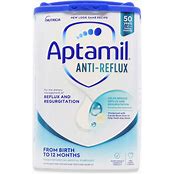
Aptamil Anti-Reflux Baby Milk Formula From Birth
Aptamil Anti-Reflux Baby Milk Formula From Birth
- ✔️ Specially thickened formula reduces frequent regurgitation from birth
- ✔️ Locust bean gum thickens feed in stomach, limiting reflux
- ✔️ Partially hydrolysed whey protein supports easier infant digestion
- ✔️ Nutritionally complete — suitable as sole nutrition from birth
- ✔️ Formulated for bottle-fed babies with frequent posseting
Price Checker
 Lowest price guarantee
 Includes FREE private prescription


Couldn't load pickup availability
What Is Aptamil Anti-Reflux Formula and Who Is It For?
If your baby regularly brings up milk after feeds, you are not alone. Regurgitation — sometimes called posseting — is extremely common in infants, particularly in the first few months of life. The NHS estimates that around half of all babies under three months experience some degree of reflux. For most, it is harmless, but when it becomes frequent or distressing, a specialist formula can make a real difference. Aptamil anti reflux formula is designed specifically for bottle-fed babies who regurgitate frequently, offering a thicker feed that is harder to bring back up. You can find this and other infant feeding essentials in our baby and toddler collection.
Aptamil Anti-Reflux Baby Milk Formula From Birth is a nutritionally complete infant milk. It meets all the nutritional requirements set out for infant formula under UK and EU regulations, meaning it can be used as your baby's sole source of nutrition from birth. At £18.99, it sits within a similar price range to other specialist infant formulas available in the UK.
How Does Aptamil Anti-Reflux Formula Work in the Stomach?
The key to this formula lies in its thickening agent. Aptamil Anti-Reflux contains locust bean gum (also known as carob bean gum), a natural plant-derived thickener. When the formula reaches the stomach, it thickens further in the acidic environment, making it more viscous and therefore less likely to travel back up the oesophagus. The formula also uses partially hydrolysed whey protein, which may be easier for some babies to digest compared to standard intact protein formulas.
- Locust bean gum thickens the feed once it reaches the stomach
- Thicker consistency reduces the likelihood of regurgitation
- Partially hydrolysed whey protein supports easier digestion
- Nutritionally complete — suitable as a sole source of infant nutrition from birth
Who Should Use Aptamil Anti-Reflux Formula?
This formula is intended for bottle-fed babies who frequently regurgitate after feeds. It is not a treatment for gastro-oesophageal reflux disease (GORD) and should not replace medical advice. Always speak to your GP or health visitor before switching your baby to a specialist formula — they can help rule out other causes of distress such as cow's milk protein allergy.
- Bottle-fed babies from birth who frequently bring up milk
- Infants where standard formula appears to cause discomfort after feeding
- Babies whose GP or health visitor has recommended an anti-reflux formula
- Families looking for a nutritionally complete alternative to standard infant milk
It is not suitable for babies with confirmed cow's milk protein allergy, galactosaemia, or those who require a lactose-free diet. Premature infants should only use this formula under direct medical supervision.
How Does Aptamil Anti-Reflux Compare to Standard Infant Formula?
| Feature | Aptamil Anti-Reflux Formula | Standard Aptamil First Infant Milk |
|---|---|---|
| Thickening agent | Locust bean gum (carob bean gum) | None |
| Protein type | Partially hydrolysed whey | Intact whey-dominant protein |
| Suitable for reflux | Yes — specifically formulated | No |
| Suitable from birth | Yes | Yes |
How Should You Store Aptamil Anti-Reflux Formula?
Store the unopened tin in a cool, dry place below 25°C. Once opened, keep the lid tightly closed and use within four weeks. Never store the tin in the fridge. Prepared feeds should be made fresh where possible — if you do need to store a prepared bottle, keep it in the back of the fridge (not the door) and use within 24 hours. Discard any unused feed left in the bottle after a feed. Using aptamil anti reflux formula safely means following these storage steps carefully to reduce the risk of bacterial contamination.
This product is a specialist infant formula. Speak to your GP, health visitor, or pharmacist before using if your baby has an underlying medical condition or if you have any concerns about their feeding.
Aptamil Anti-Reflux Baby Milk Formula From Birth specifications
| Treatment category | Specialist infant formula / dietary food for special medical purposes |
| Mechanism of action | Thickening via locust bean gum; reduces regurgitation by increasing feed viscosity in the stomach |
| Effective for | Frequent regurgitation in bottle-fed infants |
| Suitable for | Bottle-fed babies from birth |
| Active ingredient | Locust bean gum (carob bean gum); partially hydrolysed whey protein |
| Pack sizes | 800g |
| UK classification | Food for special medical purposes (FSMP) |
| Preparation | Powder — reconstituted with boiled water cooled to no less than 70°C |
| Route of administration | Oral (bottle feeding) |
Specifications of Aptamil Anti-Reflux Baby Milk Formula From Birth
What Is Aptamil Anti-Reflux Baby Milk and What Is It Used For?
Aptamil Anti-Reflux Baby Milk Formula From Birth is a nutritionally complete, thickened infant formula classified as a food for special medical purposes (FSMP). It is intended for the dietary management of frequent regurgitation — the effortless return of stomach contents into the oesophagus or mouth — in bottle-fed babies from birth. Regurgitation is one of the most common concerns parents raise with health visitors and GPs in the first year of life. While it is usually harmless, it can cause discomfort and worry. This formula is designed to help manage that by making feeds thicker and harder to bring back up.
It is not a medicine and does not treat the underlying cause of gastro-oesophageal reflux disease (GORD). If your baby seems to be in significant pain, is not gaining weight, or is showing signs of distress beyond simple posseting, please speak to your GP promptly.
What Do You Need to Know Before Using Aptamil Anti-Reflux Formula?
Before switching your baby to this formula, it is important to discuss it with your GP or health visitor. There are specific situations where this formula should not be used:
- Babies with confirmed cow's milk protein allergy (CMPA) — this formula contains cow's milk protein
- Infants with galactosaemia — this formula contains lactose
- Babies who require a lactose-free diet for any reason
- Premature infants — only use under direct medical supervision
- Babies where reflux may be a symptom of a more serious underlying condition — always seek medical advice first
There are no known drug interactions with this formula. However, if your baby is taking any prescribed medication — such as gaviscon infant or a proton pump inhibitor — speak to your GP before changing formula, as the thickening agent in anti-reflux formulas may affect how some medicines work in the gut. If your baby has any skin concerns alongside feeding difficulties, our skin care collection may also be of interest for managing common infant skin conditions.
How Should You Use Aptamil Anti-Reflux Formula?
Correct preparation is essential for both safety and effectiveness. Always wash your hands thoroughly before preparing a feed. Use freshly boiled tap water — never use bottled water, as it is not sterile. The water must be at no less than 70°C when you add the powder, as this temperature is needed to destroy any harmful bacteria that may be present in the powder.
- Boil fresh tap water and allow it to cool for no more than 30 minutes (so it remains above 70°C)
- Pour the required amount of water into a sterilised bottle
- Using the scoop provided, add the correct number of level scoops of powder — always add powder to water, not the other way around
- Replace the teat and cap, then shake well until the powder is fully dissolved
- Cool the feed to a safe feeding temperature by holding the bottle under cold running water or placing in a bowl of cold water
- Test the temperature on the inside of your wrist before feeding
- Discard any unused feed remaining in the bottle after the feed
| Age Group | Number of Scoops | Water (ml) | Feeds per Day (approximate) |
|---|---|---|---|
| Birth to 2 weeks | Follow pack guidance | Follow pack guidance | 6–8 |
| 2 weeks to 2 months | Follow pack guidance | Follow pack guidance | 5–7 |
| 2–4 months | Follow pack guidance | Follow pack guidance | 4–6 |
| 4–6 months | Follow pack guidance | Follow pack guidance | 4–5 |
Always follow the specific preparation instructions printed on the tin, as scoop-to-water ratios are product-specific. Never add extra scoops — this can be dangerous for your baby.
What Are the Possible Side Effects of Aptamil Anti-Reflux Formula?
As with any change in infant feeding, some babies may experience a period of adjustment. The thickening agent in this formula — locust bean gum — can affect gut motility in some infants. Most side effects are mild and temporary.
Common side effects:
- Firmer or harder stools than usual
- Constipation — particularly in the first few days of use
- Changes in stool colour or frequency
Less common side effects:
- Increased wind or bloating
- Temporary feeding refusal during the transition period
- Skin rash — if this occurs, stop use and consult your GP, as it may indicate a cow's milk protein sensitivity
If your baby develops blood in their stools, persistent vomiting, significant weight loss, or appears unwell, stop using the formula and seek medical advice immediately. These symptoms are not typical side effects and require prompt assessment.
How Should You Store Aptamil Anti-Reflux Formula?
- Store the unopened tin in a cool, dry place below 25°C
- Once opened, keep the lid tightly closed and use within four weeks
- Do not store the tin in the fridge or freezer
- Prepared feeds should be used immediately where possible
- If storing a prepared feed, place it in the back of the fridge (not the door) and use within 24 hours
- Never reheat a feed more than once
- Keep out of reach of children
For parents managing multiple aspects of their baby's health, our vitamins and supplements collection includes products relevant to infant and maternal nutrition.
References
- https://www.nhs.uk/conditions/reflux-in-babies/
- https://www.nhs.uk/conditions/baby/breastfeeding-and-bottle-feeding/bottle-feeding/formula-milk-questions/
- https://www.nhs.uk/conditions/baby/breastfeeding-and-bottle-feeding/bottle-feeding/types-of-formula/
- https://www.nhs.uk/conditions/baby/breastfeeding-and-bottle-feeding/bottle-feeding/how-to-make-up-baby-formula/
- https://www.nhs.uk/conditions/cows-milk-allergy/
- https://www.nice.org.uk/guidance/ng1
Written and reviewed by our qualified team
Your safety and success are our highest priorities. Our medical team rigorously evaluates every product and piece of advice we provide, ensuring you receive only the most effective, science-backed solutions available.
Frequently Asked Questions
Where can I buy Aptamil Anti-Reflux formula online in the UK?
You can buy Aptamil Anti-Reflux Baby Milk Formula From Birth directly from Cured Pharmacy, a GPhC-registered UK online pharmacy, for £18.99. It is also stocked in some supermarkets and high street pharmacies. Ordering online means you can have it delivered to your door without the need to travel, which is particularly helpful for new parents.
How does Aptamil Anti-Reflux formula work in the stomach?
Aptamil Anti-Reflux formula contains locust bean gum (carob bean gum), a natural thickener that becomes more viscous once it reaches the acidic environment of the stomach. This thicker consistency makes it harder for the feed to travel back up the oesophagus, reducing regurgitation. The partially hydrolysed whey protein also supports easier digestion compared to some standard formulas.
How do I prepare Aptamil Anti-Reflux formula step by step?
Boil fresh tap water and allow it to cool for no more than 30 minutes so it stays above 70°C. Pour the required amount of water into a sterilised bottle, then add the correct number of level scoops of powder using the scoop provided. Shake well, cool to feeding temperature, test on your wrist, and feed immediately — discarding any leftover milk after the feed.
What age is Aptamil Anti-Reflux formula suitable for?
Aptamil Anti-Reflux formula is suitable for bottle-fed babies from birth. It is nutritionally complete and can be used as your baby's sole source of nutrition. If your baby is premature or has a specific medical condition, always use this formula under direct medical supervision and seek advice from your GP or neonatal team.
Can Aptamil Anti-Reflux formula cause constipation in babies?
Yes, constipation or firmer stools are among the most commonly reported side effects of thickened anti-reflux formulas, including Aptamil Anti-Reflux. This is due to the locust bean gum thickening agent affecting gut motility. If your baby becomes significantly constipated or appears uncomfortable, speak to your GP or health visitor — they may suggest adjustments or an alternative approach.
Is Aptamil Anti-Reflux formula suitable for babies with cow's milk allergy?
No — Aptamil Anti-Reflux formula contains cow's milk protein and is not suitable for babies with confirmed cow's milk protein allergy (CMPA). If you suspect your baby has a milk allergy, speak to your GP before changing formula. Signs of CMPA can include skin rashes, persistent crying, blood in stools, and vomiting — these require medical assessment rather than a formula switch alone.
How long should my baby stay on Aptamil Anti-Reflux formula?
Most babies with reflux improve naturally as they grow, develop stronger lower oesophageal sphincter tone, and spend more time upright. Your GP or health visitor will advise on how long to continue using anti-reflux formula, typically reviewing at regular intervals. Many babies are able to transition back to a standard formula or move on to follow-on milk as their reflux resolves.
What are the alternatives to Aptamil Anti-Reflux formula?
Other anti-reflux formulas available in the UK include SMA Anti-Reflux and Cow & Gate Anti-Reflux, both of which use similar thickening mechanisms. Your GP may also recommend non-formula approaches such as feeding position changes, smaller and more frequent feeds, or prescribed treatments like gaviscon infant. Always discuss options with a healthcare professional before switching. You can also browse our baby and toddler collection for related products.
Can I mix Aptamil Anti-Reflux formula with breast milk?
Mixing anti-reflux formula with breast milk is generally not recommended, as the thickening properties of the formula depend on the correct powder-to-water ratio. Adding breast milk changes this ratio and may reduce the effectiveness of the thickening agent. If you are combining breastfeeding and bottle feeding, speak to your health visitor or a lactation consultant for personalised guidance.
Does Aptamil Anti-Reflux formula need a larger teat hole?
Yes — because this formula is thicker than standard infant milk, you may need to use a teat with a larger or variable-flow hole to allow the feed to flow freely. If the teat hole is too small, your baby may struggle to feed and become frustrated. Check the teat manufacturer's guidance and consider a medium or fast-flow teat designed for thicker feeds.
Is Aptamil Anti-Reflux formula available on prescription in the UK?
Aptamil Anti-Reflux formula is classified as a food for special medical purposes (FSMP) and is available to buy over the counter without a prescription. In some cases, GPs may recommend it, but it is not routinely prescribed on the NHS. Buying it directly from a registered pharmacy like Cured Pharmacy is a straightforward and convenient option.
What should I do if my baby refuses Aptamil Anti-Reflux formula?
It is not uncommon for babies to initially resist a new formula, particularly if they are used to a different taste or texture. Try introducing the new formula gradually by mixing it with the previous formula over several days, slowly increasing the proportion of anti-reflux formula. If your baby continues to refuse feeds or loses weight, contact your GP or health visitor promptly.
How should I store prepared Aptamil Anti-Reflux feeds?
Prepared feeds should ideally be used immediately after preparation. If you need to store a prepared bottle, place it in the back of the fridge (not the door) and use within 24 hours. Never reheat a feed more than once, and always discard any milk left in the bottle after a feed. Store the unopened or opened tin in a cool, dry place below 25°C and use within four weeks of opening.
Can Aptamil Anti-Reflux formula interact with infant medicines?
There are no widely documented drug interactions with Aptamil Anti-Reflux formula. However, the thickening agent (locust bean gum) may theoretically affect the absorption or action of some medicines given orally, such as gaviscon infant. If your baby is taking any prescribed medication, always check with your GP or pharmacist before changing formula. You can also explore our indigestion collection for related products relevant to digestive health.
What is the latest guidance on managing infant reflux in the UK?
NICE guidance (NG1, updated 2015) recommends that for formula-fed infants with frequent regurgitation, a trial of a thickened formula such as an anti-reflux formula is a reasonable first-line dietary approach before considering medication. The NHS advises that most cases of infant reflux resolve without treatment as babies grow. If symptoms are severe or associated with poor weight gain, further investigation may be needed.
Written and reviewed by our qualified team

Reviewed by:
Tarun Kumar
Superintendent/ Clinical Lead
📖 Find out more about our team of medical content authors and how we ensure the accuracy of our content with our content guidelines.
Content last updated: 14 Sep 2026

We’re a safe and
regulated UK service

Lowest Price Guarantee

We're convinced you won't find your treatment cheaper, but if you do we'll refund the difference.
Find out more
100% discreet packaging

Discreet, unbranded packaging for every order.
Find out more

Need help?
Talk to our friendly experts now


How our service works

Service setup

Discreet packaging

Express delivery