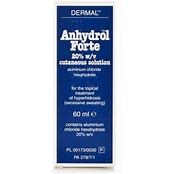
Anhydrol Forte Roll On 20% W/v Cutaneous Solution - 60ml
- ✔️ Treats excessive sweating of underarms, hands, and feet
- ✔️ Contains 20% aluminium chloride hexahydrate for strong sweat control
- ✔️ Reduces sweating within 2 to 7 nights of nightly application
- ✔️ Suitable for adults and children aged 5 years and over
- ✔️ Convenient roll-on applicator for precise, mess-free application
Price Checker
 Discreet, tracked delivery
 Includes FREE private prescription


Couldn't load pickup availability
What Is Anhydrol Forte Roll On and How Does It Treat Excessive Sweating?
If you sweat far more than feels normal — soaking through clothes, avoiding handshakes, or feeling self-conscious in social situations — you may be experiencing hyperhidrosis. It affects roughly 1–3% of the population in the UK, and it can have a real impact on daily life. The good news is that there are effective treatments available without a prescription. The Anhydrol Forte roll on is one of the most widely recommended options, containing 20% w/v aluminium chloride hexahydrate in a convenient roll-on applicator. You can find it alongside other treatments in our excessive sweating collection.
Each 60ml bottle delivers a clinically recognised concentration of aluminium chloride — the same active ingredient used in many dermatologist-recommended antiperspirant treatments. At just £4.99, it offers accessible relief for a condition that can otherwise feel difficult to manage.
How Does Anhydrol Forte Roll On Work to Reduce Sweating?
The mechanism behind Anhydrol Forte is well understood. Aluminium chloride hexahydrate works by physically obstructing the eccrine sweat gland ducts — the tiny channels through which sweat travels to the skin surface. When applied to dry skin, the aluminium ions penetrate the duct openings and form a gel-like plug, reducing sweat output at that site.
- Aluminium chloride ions enter the sweat duct openings on the skin surface
- A gel-like precipitate forms within the duct, narrowing or blocking it
- Sweat production at the surface is significantly reduced
- With repeated use, the effect becomes more sustained, requiring less frequent application
This is a localised, reversible process — it does not affect sweat glands elsewhere on the body or interfere with your body's overall temperature regulation.
Who Should Use Anhydrol Forte Roll On?
Anhydrol Forte is suitable for adults and children aged 5 and over who experience excessive sweating that hasn't responded adequately to standard over-the-counter antiperspirants. It can be used on the underarms, palms of the hands, and soles of the feet — the areas most commonly affected by primary focal hyperhidrosis.
- Adults with axillary (underarm) hyperhidrosis
- People experiencing palmar (hand) or plantar (foot) excessive sweating
- Those who have found regular antiperspirants ineffective
- Children aged 5 and over, under appropriate guidance
It is not suitable for use on broken, inflamed, or recently shaved skin, or near the eyes and mucous membranes. If you are pregnant or breastfeeding, speak to your pharmacist or GP before use.
How Does Anhydrol Forte Compare to Other Antiperspirant Treatments?
| Feature | Anhydrol Forte Roll On 20% | Standard Antiperspirant Deodorant |
|---|---|---|
| Active ingredient | Aluminium chloride hexahydrate 20% w/v | Aluminium salts (typically 10–15%) |
| Intended use | Hyperhidrosis (medical-grade sweating) | Everyday sweat and odour control |
| Application frequency | Nightly initially, then 1–2x per week | Daily |
| Available without prescription | Yes (OTC medicine) | Yes (cosmetic product) |
Is Anhydrol Forte Roll On Suitable for Sensitive Skin?
Skin sensitivity is a common concern with high-strength aluminium chloride products. The Anhydrol Forte roll on can cause mild stinging or irritation, particularly if applied to damp skin or immediately after shaving. To minimise this, always ensure the skin is completely dry before application — using a hairdryer on a cool setting can help. Apply at night and wash the area thoroughly in the morning.
If you experience persistent redness, itching, or soreness, reduce the frequency of application or take a short break. Severe or worsening skin reactions should be discussed with your pharmacist or GP. For broader skin health support, browse our skin care collection.
This product is a medicine. Speak to your doctor or pharmacist before using if you have an underlying medical condition or are taking other medicines.
Anhydrol Forte Roll On 20% W/v Cutaneous Solution 60ml specifications
| Treatment category | Hyperhidrosis (excessive sweating) |
| Active ingredient | Aluminium Chloride Hexahydrate 20% w/v |
| Mechanism of action | Blocks eccrine sweat duct openings to reduce sweat output |
| Strengths | 20% w/v |
| Pack size | 60ml |
| Preparation | Cutaneous solution |
| Route of administration | Topical (cutaneous) |
| UK classification | P (Pharmacy medicine) |
| Drug class | Antiperspirant / Anhidrotic agent |
| Suitable for | Adults and children aged 5 and over |
| Effective for | Axillary, palmar, and plantar hyperhidrosis |
Specifications of Anhydrol Forte Roll On 20% W/v Cutaneous Solution 60ml
What Is Anhydrol Forte and What Is It Used For?
Anhydrol Forte Roll On 20% w/v Cutaneous Solution is a topical medicine used to treat hyperhidrosis — a condition characterised by excessive sweating beyond what the body needs for temperature regulation. It contains aluminium chloride hexahydrate as its active ingredient at a concentration of 20% w/v. The NHS recognises aluminium chloride as a first-line treatment for hyperhidrosis, particularly when standard antiperspirants have not provided sufficient relief. It is applied directly to the skin of the underarms, hands, or feet and works locally at the sweat gland ducts.
Hyperhidrosis can be primary (no underlying cause) or secondary (linked to another condition such as menopause, anxiety, or certain medications). Anhydrol Forte is primarily indicated for primary focal hyperhidrosis. If you suspect your sweating has an underlying cause, speak to your GP before starting treatment.
What Do You Need to Know Before Using Anhydrol Forte?
Before using this product, read the following carefully. There are situations where Anhydrol Forte should not be used or should be used with caution.
Do not use Anhydrol Forte if you:
- Are allergic to aluminium chloride hexahydrate or any other ingredient in the formulation
- Have broken, cut, or inflamed skin at the application site
- Have recently shaved the area to be treated
- Are applying it near the eyes, mouth, or other mucous membranes
Use with caution if you:
- Are pregnant or breastfeeding — consult your GP or pharmacist first
- Have sensitive or eczema-prone skin
- Are using it on a child under 5 years of age — not recommended
- Have any skin condition affecting the area to be treated
Drug interactions:
- No clinically significant drug interactions are currently known for topical aluminium chloride
- Avoid using other topical products on the same area at the same time unless advised by a healthcare professional
How Should You Use Anhydrol Forte?
Correct application is essential for both effectiveness and tolerability. Follow these steps carefully each time you use the product.
- Wash and thoroughly dry the area to be treated — skin must be completely dry before application
- If applying to underarms, consider using a cool hairdryer to ensure no moisture remains
- Apply a thin layer using the roll-on applicator to the affected area only
- Allow the solution to dry fully — do not cover with clothing immediately
- Leave on overnight and wash off thoroughly in the morning
- Do not apply immediately after shaving — wait at least 48 hours
| Indication | Age Group | Dose | Frequency |
|---|---|---|---|
| Axillary hyperhidrosis | Adults & children ≥5 years | Thin layer to dry skin | Nightly until controlled, then 1–2x per week |
| Palmar hyperhidrosis | Adults & children ≥5 years | Thin layer to dry skin | Nightly until controlled, then as needed |
| Plantar hyperhidrosis | Adults & children ≥5 years | Thin layer to dry skin | Nightly until controlled, then as needed |
If you are managing other skin conditions alongside hyperhidrosis, you may find our range of creams and ointments helpful for supporting skin health between treatments.
What Are the Possible Side Effects of Anhydrol Forte?
Like all medicines, Anhydrol Forte can cause side effects, although not everyone experiences them. Most side effects are localised to the application site and are mild in nature.
Common side effects:
- Skin irritation at the application site
- Stinging or burning sensation, particularly on first use
- Mild redness or erythema
Less common side effects:
- Itching (pruritus) at the treated area
- Dry or flaking skin
- Contact dermatitis with prolonged or frequent use
Most side effects can be reduced by ensuring the skin is completely dry before application and by reducing the frequency of use once sweating is controlled. If irritation is severe or persistent, stop using the product and consult your pharmacist or GP.
How Should You Store Anhydrol Forte?
Proper storage keeps the product safe and effective throughout its shelf life. Follow these guidelines:
- Store below 25°C in a cool, dry place
- Keep away from heat sources and naked flames — the solution is flammable
- Keep the cap tightly closed when not in use
- Keep out of the reach and sight of children
- Do not use after the expiry date printed on the packaging
- Do not dispose of via wastewater or household waste — return unused medicine to your pharmacist
If you are looking for further support with skin-related conditions, our foot care collection includes products that complement treatment for plantar hyperhidrosis.
References
Written and reviewed by our qualified team
Your safety and success are our highest priorities. Our medical team rigorously evaluates every product and piece of advice we provide, ensuring you receive only the most effective, science-backed solutions available.
Frequently Asked Questions
Where can I buy Anhydrol Forte roll on online in the UK?
You can buy Anhydrol Forte roll on from Cured Pharmacy, a GPhC-registered UK online pharmacy, for just £4.99. It is available without a prescription as an over-the-counter pharmacy medicine. Browse our full excessive sweating range for related products.
How does Anhydrol Forte roll on work in the body?
Anhydrol Forte contains 20% w/v aluminium chloride hexahydrate, which works by blocking the eccrine sweat duct openings on the skin surface. A gel-like plug forms within the duct, physically reducing the amount of sweat that reaches the skin. The effect is localised and reversible, and does not interfere with your body's overall temperature regulation.
How do I use Anhydrol Forte roll on step by step?
Apply Anhydrol Forte to completely dry skin at night before bed — use a cool hairdryer if needed to ensure no moisture remains. Roll a thin layer onto the affected area, allow it to dry fully, and wash it off thoroughly the following morning. Never apply to broken, irritated, or recently shaved skin.
How often should I apply Anhydrol Forte?
During the initial treatment phase, apply Anhydrol Forte every night until sweating is adequately controlled — this typically takes between 2 and 7 nights. Once you achieve control, reduce application to once or twice a week as a maintenance dose. Applying more frequently than needed increases the risk of skin irritation without improving results.
What is the best time to apply Anhydrol Forte?
The best time to apply Anhydrol Forte is at night, just before bed, when sweat gland activity is at its lowest. Applying at night also allows the solution to remain on the skin for several hours without being washed away by daytime sweating. Always wash the area thoroughly in the morning after application.
What are the side effects of Anhydrol Forte and how do I manage them?
The most common side effects are skin irritation, stinging, and mild redness at the application site. These are usually caused by applying the product to damp skin or too frequently. To manage them, ensure the skin is completely dry before each application, reduce frequency if irritation occurs, and take a short break from use if symptoms persist.
Who is eligible to use Anhydrol Forte roll on?
Anhydrol Forte is suitable for adults and children aged 5 years and over who experience excessive sweating of the underarms, hands, or feet. It is not suitable for use on broken, inflamed, or recently shaved skin, and should not be used near the eyes or mucous membranes. Pregnant or breastfeeding individuals should consult a pharmacist or GP before use.
Can I use Anhydrol Forte on my hands and feet as well as underarms?
Yes — Anhydrol Forte is indicated for use on the axillae (underarms), palms of the hands, and soles of the feet. These are the three areas most commonly affected by primary focal hyperhidrosis. Apply the same way regardless of the site: to completely dry skin at night, washing off in the morning.
What happens if I miss an application of Anhydrol Forte?
If you miss a nightly application during the initial treatment phase, simply apply it the following night as usual — do not double up. Missing the occasional application during the maintenance phase is unlikely to cause a significant setback. Consistency during the first week is most important for achieving good initial control.
What are the alternatives to Anhydrol Forte for excessive sweating?
Alternatives include other aluminium chloride-based roll-ons such as Driclor (also 20% aluminium chloride), or lower-strength clinical antiperspirants available over the counter. For more severe or treatment-resistant hyperhidrosis, the NHS may offer iontophoresis, botulinum toxin injections, or prescription anticholinergic medicines. Speak to your GP if over-the-counter options are not providing sufficient relief.
How long can you use Anhydrol Forte for?
Anhydrol Forte can be used long term as a maintenance treatment once sweating is under control. Most people find that applying it once or twice a week is sufficient to maintain results. If you see no improvement after 4 weeks of regular use, or if skin irritation becomes a persistent problem, consult your pharmacist or GP for further advice.
Is Anhydrol Forte safe to use during pregnancy?
There is limited clinical data on the use of topical aluminium chloride during pregnancy. As a precaution, you should consult your GP or pharmacist before using Anhydrol Forte if you are pregnant or breastfeeding. They can advise on whether the benefits outweigh any potential risks in your individual situation.
Can Anhydrol Forte be used on children?
Anhydrol Forte can be used in children aged 5 years and over, but it should be used under appropriate adult supervision. The same application instructions apply — dry skin, overnight use, and morning wash-off. If a child experiences significant skin irritation or distress, discontinue use and seek advice from a GP or pharmacist.
What are the latest findings on aluminium chloride for hyperhidrosis?
Aluminium chloride hexahydrate remains the recommended first-line topical treatment for primary focal hyperhidrosis according to NHS guidance and dermatology clinical guidelines. It has a well-established safety and efficacy profile built over decades of clinical use. Research continues to explore combination approaches for patients who do not respond adequately to topical treatment alone.
Is Anhydrol Forte flammable and are there any safety precautions I should know?
Yes — Anhydrol Forte contains alcohol and is flammable. Keep it away from naked flames, heat sources, and sparks, both during use and storage. Store below 25°C with the cap tightly closed, and keep out of reach of children. For other skin and personal care products, explore our skin care collection for complementary options.
Written and reviewed by our qualified team

Reviewed by:
Tarun Kumar
Superintendent/ Clinical Lead
📖 Find out more about our team of medical content authors and how we ensure the accuracy of our content with our content guidelines.
Content last updated: 14 Sep 2026

We’re a safe and
regulated UK service

100% discreet packaging

Discreet, unbranded packaging for every order.

Need help?
Talk to our friendly experts now


How our service works

Service setup

Discreet packaging

Express delivery