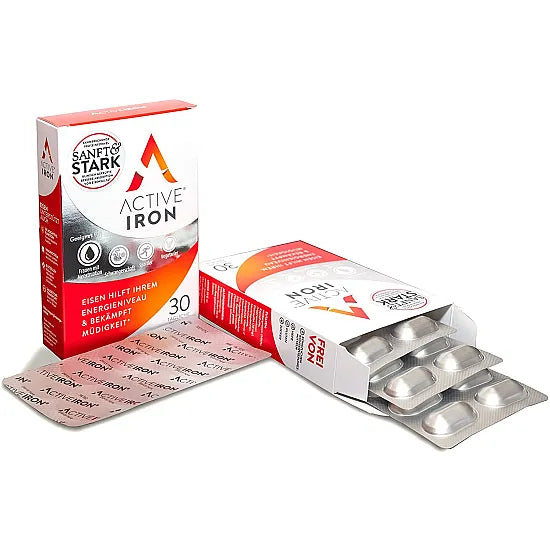
Active Iron - 30 Capsules
- ✔️ Supports healthy iron levels in women with daily bisglycinate iron
- ✔️ Gentle on the stomach compared to standard ferrous sulphate
- ✔️ Helps reduce fatigue and tiredness linked to iron deficiency
- ✔️ Suitable for women with heavy periods or plant-based diets
- ✔️ One capsule daily provides a full month of iron support
Price Checker
 Discreet, tracked delivery
 Includes FREE private prescription


Couldn't load pickup availability
Is Active Iron the Right Iron Supplement for Women?
Iron deficiency is one of the most common nutritional shortfalls in the UK, particularly among women of reproductive age. The NHS estimates that around one in ten women aged 16 to 64 may have low iron stores, often linked to menstruation, pregnancy, or a diet low in red meat and leafy greens. If you've been feeling persistently tired, breathless, or struggling to concentrate, your iron levels could be worth checking. Active Iron 30 Capsules offers a gentle, daily approach to restoring and maintaining healthy iron levels — and it's available without a prescription from our vitamins and supplements range.
Each pack contains 30 capsules, providing a full month's supply at one capsule per day. The formulation uses iron bisglycinate — a chelated form of iron — which is generally considered easier on the digestive system than traditional ferrous sulphate tablets. That matters, because gut discomfort is one of the main reasons people stop taking iron supplements before they've had a chance to work.
How Does Active Iron Work in the Body?
Iron is an essential mineral your body uses to produce haemoglobin — the protein in red blood cells that carries oxygen from your lungs to every tissue and organ. When iron stores fall too low, haemoglobin production drops, and you may start to feel the classic signs of iron deficiency: fatigue, pale skin, and difficulty concentrating. Active Iron works by replenishing those stores through daily oral supplementation.
- Iron bisglycinate is absorbed in the small intestine via amino acid transport pathways, which are less likely to cause irritation than the pathways used by inorganic iron salts.
- The chelated structure protects the iron molecule from binding to other compounds in the gut that would otherwise block absorption.
- Once absorbed, iron is transported in the blood bound to transferrin and stored in the liver, spleen, and bone marrow as ferritin.
- Over time, replenished iron stores support normal red blood cell production and help reduce symptoms of deficiency.
Who Should Consider Using Active Iron Capsules?
Active Iron is designed for adults who need to top up their iron intake — whether that's because blood tests have flagged low ferritin, or because lifestyle factors put them at higher risk of deficiency. It's particularly relevant for women, given the monthly iron losses associated with menstruation. That said, it's not a substitute for medical investigation if you have symptoms of anaemia — always speak to your GP first.
- Women with heavy periods who lose significant iron each month
- Pregnant or breastfeeding women (under medical supervision)
- People following vegetarian or vegan diets with limited dietary iron
- Those who have previously experienced gut side effects with standard iron tablets
How Does Active Iron Compare to Standard Ferrous Sulphate?
| Feature | Active Iron (Bisglycinate) | Ferrous Sulphate (Standard) |
|---|---|---|
| Iron form | Chelated bisglycinate | Inorganic sulphate salt |
| GI tolerability | Generally better tolerated | More likely to cause nausea/constipation |
| Prescription required | No — OTC | Available OTC and on prescription |
| Suitable for sensitive stomachs | Yes | Less so |
Is Active Iron Suitable for Everyday Use and How Should It Be Stored?
For most healthy adults, taking one capsule of this iron supplement for women daily is appropriate for ongoing support. If you have a diagnosed condition such as haemochromatosis (iron overload disorder), thalassaemia, or any other condition affecting iron metabolism, you must not take iron supplements without explicit medical advice. Similarly, if you are taking other medicines — particularly levothyroxine, certain antibiotics, or antacids — speak to your pharmacist, as iron can affect how these are absorbed. You'll find further guidance on managing your overall health through our women's health collection.
Store Active Iron capsules below 25°C in a dry place, away from direct sunlight. Keep the pack out of reach and sight of children. Do not use after the expiry date printed on the packaging.
This product is a medicine. Speak to your doctor or pharmacist before using if you have an underlying medical condition or are taking other medicines.
Active Iron - 30 Capsules specifications
| Treatment category | Iron deficiency / nutritional supplementation |
| Mechanism of action | Replenishes iron stores via chelated bisglycinate absorption |
| Effective for | Low iron levels, iron deficiency support |
| Suitable for | Adults, particularly women; not recommended for children under 12 without medical advice |
| Active ingredient | Ferrous bisglycinate (iron bisglycinate) |
| Pack size | 30 capsules |
| UK classification | General Sale / Food supplement |
| Drug class | Iron supplement (mineral) |
| Preparation | Hard capsule |
| Route of administration | Oral |
Specifications of Active Iron - 30 Capsules
What Is Active Iron and What Is It Used For?
Active Iron 30 Capsules is an oral iron supplement containing iron bisglycinate, a chelated form of elemental iron. It is used to help maintain healthy iron levels in adults, particularly those at risk of iron deficiency due to diet, lifestyle, or physiological factors such as menstruation or pregnancy. Iron is essential for the production of haemoglobin and myoglobin, and for normal energy metabolism. The NHS recognises iron deficiency anaemia as the most common form of anaemia in the UK, and dietary supplementation is a widely recommended first-line approach for mild to moderate deficiency.
What Do You Need to Know Before Using Active Iron?
Before starting any iron supplement, it's important to understand when it may not be appropriate. Taking iron when you don't need it can cause harm, so if you haven't had your iron levels checked, consider speaking to your GP first.
Do not take Active Iron if you:
- Have haemochromatosis (hereditary iron overload disorder)
- Have haemolytic anaemia or any condition causing increased red blood cell breakdown
- Are allergic to any of the ingredients in the capsule
- Have been told by a doctor that you should not take iron supplements
- Are a child under 12 years of age (unless directed by a healthcare professional)
Medicines that may interact with Active Iron:
- Levothyroxine (thyroid medication) — iron can reduce absorption; take at least four hours apart
- Tetracycline and quinolone antibiotics — iron may reduce their effectiveness
- Antacids and proton pump inhibitors — may reduce iron absorption
- Calcium supplements — can compete with iron for absorption; separate doses by at least two hours
- Levodopa (used in Parkinson's disease) — iron may reduce its absorption
How Should You Use Active Iron Capsules?
Always follow the directions on the product label or as advised by your pharmacist. Do not exceed the stated dose. If you are unsure whether this supplement is right for you, seek advice before starting.
- Take one capsule daily with a full glass of water.
- Swallow the capsule whole — do not crush or chew it.
- Take with or shortly after food to reduce the risk of stomach upset.
- Avoid taking alongside tea, coffee, milk, or calcium-rich foods, as these can reduce iron absorption.
- If you are taking other medicines, leave a gap of at least two to four hours between Active Iron and those medicines.
| Indication | Age Group | Dose | Frequency |
|---|---|---|---|
| Iron deficiency support | Adults (18+) | 1 capsule | Once daily |
| Pregnancy (under medical supervision) | Adults | As directed by GP or midwife | Once daily |
| Children under 12 | Under 12 | Not recommended without medical advice | — |
What Are the Possible Side Effects of Active Iron?
Iron bisglycinate is generally considered gentler on the digestive system than inorganic iron salts, but side effects can still occur. Most are mild and tend to improve as your body adjusts. If you experience severe or persistent symptoms, stop taking the supplement and speak to your pharmacist or GP.
Common side effects:
- Dark or black stools (this is harmless and expected)
- Mild nausea, particularly if taken on an empty stomach
- Constipation
- Stomach discomfort or bloating
Less common side effects:
- Diarrhoea
- Heartburn or indigestion
- Metallic taste in the mouth
- Allergic reactions (rash, itching, swelling) — seek medical attention immediately if these occur
If you experience signs of iron overload — such as joint pain, fatigue, abdominal pain, or skin bronzing — stop taking the supplement and contact your GP. Iron overload is rare with standard supplementation but can occur in those with underlying conditions. You can also explore our IBS and cramps range if digestive discomfort is an ongoing concern.
How Should You Store Active Iron Capsules?
- Store below 25°C in a cool, dry place away from direct sunlight and moisture.
- Keep the capsules in their original packaging until use.
- Keep out of reach and sight of children — iron overdose in children can be serious and requires immediate medical attention.
- Do not use after the expiry date printed on the pack.
- Do not store in the bathroom or near a sink, as humidity can affect the capsules.
- If you need to dispose of unused capsules, return them to your local pharmacy — do not flush or bin medicines.
References
- https://www.nhs.uk/conditions/iron-deficiency-anaemia/
- https://www.nhs.uk/conditions/vitamins-and-minerals/iron/
- https://www.nhs.uk/pregnancy/keeping-well/vitamins-supplements-and-nutrition/
- https://www.nhs.uk/conditions/anaemia/
- https://www.nhs.uk/live-well/eat-well/food-types/iron/
- https://bnf.nice.org.uk/drugs/ferrous-sulfate/
Written and reviewed by our qualified team
Your safety and success are our highest priorities. Our medical team rigorously evaluates every product and piece of advice we provide, ensuring you receive only the most effective, science-backed solutions available.
Frequently Asked Questions
Where can I buy Active Iron capsules online in the UK?
You can buy Active Iron 30 Capsules directly from Cured Pharmacy for £12.99 — no prescription needed. It's available as an over-the-counter supplement through our vitamins and supplements collection. Simply add to your basket and choose your preferred delivery option at checkout.
How does Active Iron work in the body?
Active Iron uses iron bisglycinate, a chelated form of iron where the mineral is bound to amino acids. This structure allows the iron to be absorbed through amino acid transport pathways in the small intestine, which tend to cause less irritation than the pathways used by inorganic iron salts like ferrous sulphate. Once absorbed, iron is used to produce haemoglobin, which carries oxygen around the body.
How do I take Active Iron step by step?
Take one capsule daily with a full glass of water, ideally with or shortly after a meal. Swallow the capsule whole — do not crush or chew it. Avoid taking it alongside tea, coffee, milk, or calcium supplements, as these can interfere with iron absorption.
What is the best time of day to take Active Iron?
There is no single "best" time, but taking Active Iron with breakfast or lunch tends to work well for most people, as food helps reduce the chance of stomach discomfort. Try to take it at the same time each day to build a consistent habit. Avoid taking it with your morning coffee or tea, as these drinks contain compounds that reduce iron absorption.
What are the side effects of Active Iron capsules?
The most commonly reported side effects of iron supplements include dark stools, mild nausea, constipation, and stomach bloating. Because Active Iron uses iron bisglycinate rather than ferrous sulphate, these effects are generally less pronounced. If you experience severe abdominal pain, vomiting, or signs of an allergic reaction, stop taking the capsules and seek medical advice promptly.
Who is Active Iron suitable for?
Active Iron is suitable for adults — particularly women — who have low iron levels or are at risk of deficiency due to menstruation, pregnancy, or a plant-based diet. It is also a good option for people who have previously found standard iron tablets hard on their stomach. It is not recommended for children under 12 without medical supervision, and should not be taken by anyone with haemochromatosis or other iron metabolism disorders.
Is Active Iron safe to take during pregnancy?
Iron requirements increase significantly during pregnancy, and the NHS recommends that pregnant women discuss supplementation with their midwife or GP. Active Iron may be suitable during pregnancy, but you should always get personalised advice before starting any supplement when pregnant. Your healthcare provider can check your ferritin levels and recommend the right dose for your situation.
What happens if I miss a dose of Active Iron?
If you forget to take your capsule, take it as soon as you remember — unless it is nearly time for your next scheduled dose, in which case simply skip the missed one. Never take two capsules at once to make up for a missed dose. Consistency matters more than perfection, so just carry on with your usual routine the following day.
How long should I take Active Iron for?
The NHS advises that treating iron deficiency anaemia typically requires supplementation for at least three to six months — first to restore haemoglobin levels, then to replenish iron stores. If you are taking Active Iron for general maintenance rather than a diagnosed deficiency, your pharmacist or GP can advise on the appropriate duration. Regular blood tests help track your progress.
Can I take Active Iron if I am vegetarian or vegan?
Vegetarians and vegans are at higher risk of iron deficiency because plant-based (non-haem) iron is less readily absorbed than the haem iron found in meat. Active Iron can be a useful supplement for those following a plant-based diet, though you should also focus on eating iron-rich plant foods such as lentils, tofu, and fortified cereals alongside vitamin C to enhance absorption. Check the product label or contact Cured Pharmacy to confirm the capsule shell is suitable for your dietary requirements.
Can Active Iron interact with other medicines I am taking?
Yes — iron can interact with several medicines. Key interactions include levothyroxine (take at least four hours apart), tetracycline and quinolone antibiotics, antacids, calcium supplements, and levodopa. If you are taking any prescription medicines, speak to your pharmacist before starting Active Iron. You can also browse our women's health range for related products and guidance.
How is Active Iron different from ferrous sulphate tablets?
The key difference lies in the form of iron used. Ferrous sulphate is an inorganic iron salt that is effective but frequently causes gastrointestinal side effects such as nausea, constipation, and stomach cramps. Active Iron uses iron bisglycinate, a chelated form that is absorbed via a different pathway and is generally better tolerated by the digestive system. This makes it a practical alternative for people who have struggled with standard iron tablets.
Will Active Iron make my stools dark?
Yes — dark or black stools are a well-known and harmless side effect of iron supplementation. This happens because unabsorbed iron reacts with compounds in the gut. It is not a sign that anything is wrong. However, if your stools are very dark and you also have stomach pain or feel unwell, speak to your GP to rule out other causes.
What are the alternatives to Active Iron for iron deficiency?
Common alternatives include ferrous sulphate, ferrous fumarate, and ferrous gluconate — all of which are available OTC or on prescription in the UK. These inorganic salts tend to be cheaper but may cause more digestive side effects. For those who cannot tolerate oral iron at all, intravenous iron infusions are available on the NHS under medical supervision. Your GP can advise on the most appropriate option based on your blood results and medical history.
What does the latest research say about iron bisglycinate supplements?
Published clinical studies suggest that iron bisglycinate is absorbed effectively and is associated with fewer gastrointestinal side effects compared to ferrous sulphate, making it a well-tolerated option for iron supplementation. Research published in peer-reviewed nutrition journals has found it particularly useful in populations prone to iron deficiency, including women of reproductive age. While it is not a prescription medicine, it is a recognised and widely used form of supplemental iron in clinical practice.
Written and reviewed by our qualified team

Reviewed by:
Tarun Kumar
Superintendent/ Clinical Lead
📖 Find out more about our team of medical content authors and how we ensure the accuracy of our content with our content guidelines.
Content last updated: 14 Sep 2026

We’re a safe and
regulated UK service

100% discreet packaging

Discreet, unbranded packaging for every order.

Need help?
Talk to our friendly experts now


How our service works

Service setup

Discreet packaging

Express delivery