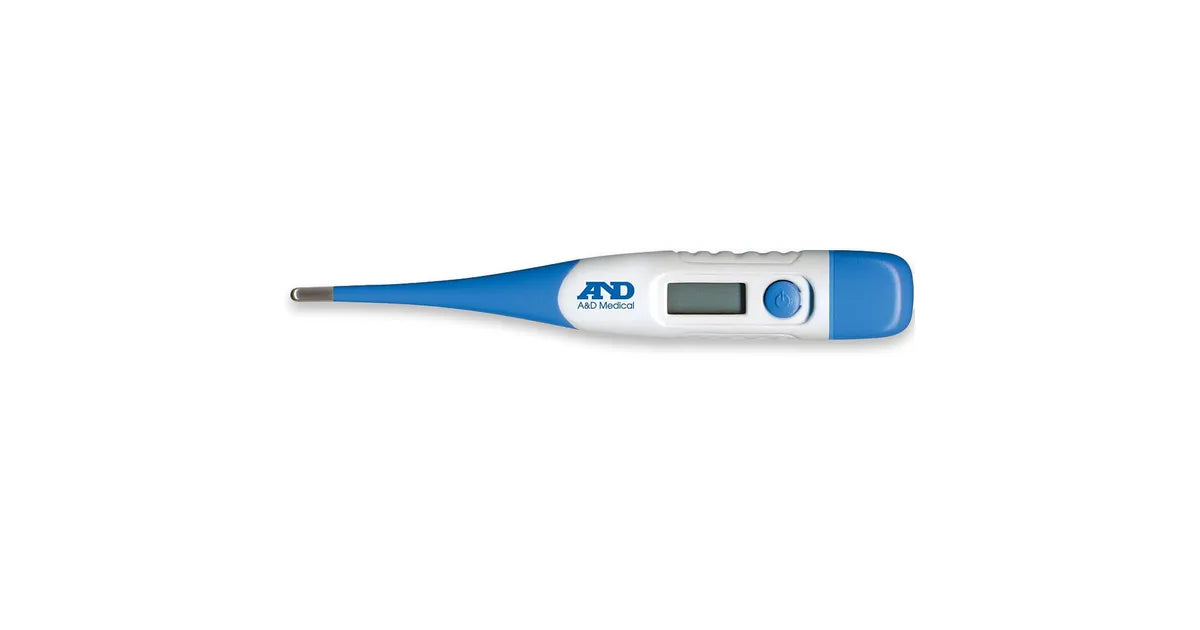
A&D Medical UT-113 Flex Tip Digital Thermometer
A&D Medical UT-113 Flex Tip Digital Thermometer
- ✔️ Flexible tip design for comfortable oral and underarm temperature readings
- ✔️ Accurate to ±0.1°C for reliable fever detection at home
- ✔️ Suitable for adults, children, and babies of all ages
- ✔️ Audible beep alerts you the moment your reading is complete
- ✔️ Memory recall function stores your last temperature reading
Price Checker
 Lowest price guarantee
 Includes FREE private prescription


Couldn't load pickup availability
What Is a Digital Thermometer UK Households Can Rely On?
The A&D Medical UT-113 Flex Tip digital thermometer UK families trust is a straightforward, affordable device designed to take the guesswork out of checking body temperature at home. Whether you're monitoring a feverish toddler at 2am or keeping an eye on your own temperature during a bout of cold or flu, having a reliable thermometer to hand really does matter. The NHS recommends checking temperature as a key step in assessing illness severity, particularly in children under five. You can find this thermometer alongside other useful products in our Electrical Health and Diagnostic collection.
At just £3.99, the UT-113 offers genuine value without cutting corners on accuracy. It features a flexible probe tip — a thoughtful design detail that makes it noticeably more comfortable to use orally or under the arm, especially with young children who tend to wriggle. The large, easy-to-read LCD display shows results clearly, and the device emits an audible beep when the reading is complete. Simple, practical, and effective.
How Does the A&D Medical UT-113 Thermometer Work?
The UT-113 uses a thermistor-based sensor embedded in its flexible tip. A thermistor is a type of resistor whose electrical resistance changes predictably with temperature — the device measures this change and converts it into a Celsius reading displayed on screen. Here's how the process works in practice:
- You switch the device on by pressing the power button.
- The thermometer runs a brief self-test and displays a ready signal.
- The flexible probe tip is placed at the measurement site — oral, axillary (underarm), or rectal.
- The sensor detects body heat and calculates the temperature in real time.
- An audible beep signals that the reading is complete, typically within 60 seconds.
- The temperature is shown on the LCD display in degrees Celsius.
The flexible tip is a key feature here. Unlike rigid probes, it bends slightly to conform to the measurement site, reducing discomfort and improving contact — which in turn supports a more consistent reading.
Who Should Use the A&D Medical UT-113 Thermometer?
This thermometer is suitable for a wide range of users. It's particularly well suited to families with young children, where ease of use and comfort during measurement are priorities. The NHS advises that a high temperature in adults is 38°C or above, and in babies and young children, fever should always be taken seriously. Having a dependable thermometer at home means you can act quickly and confidently.
The UT-113 is appropriate for:
- Adults monitoring their own temperature during illness
- Parents checking temperature in babies and young children
- Carers looking after elderly or vulnerable individuals
- Anyone wanting a simple, low-cost home health monitoring tool
If you're managing a child's illness alongside other symptoms, our Cold and Flu collection has a range of supportive products worth exploring.
How Does the UT-113 Compare to Other Thermometer Types?
| Feature | A&D Medical UT-113 (Flex Tip Digital) | Ear (Tympanic) Thermometer |
|---|---|---|
| Measurement site | Oral, axillary, rectal | Ear canal only |
| Suitable for babies | Yes (axillary use) | Not recommended under 3 months |
| Approximate cost | £3.99 | £15–£40+ |
| Flexible probe | Yes | No |
Is the A&D Medical UT-113 Clinically Suitable for Home Use?
Yes. The UT-113 is a CE-marked medical device, meaning it meets European safety and performance standards for home health monitoring. It is designed for non-professional use and does not require any special training to operate. The digital thermometer UK users will find this model particularly practical because it stores the last reading in memory — useful if you need to report a temperature to a GP or NHS 111 adviser.
Store the device in its protective case, away from moisture and direct sunlight. Replace the battery (LR41 button cell) when the low battery indicator appears. Do not use the thermometer if the probe tip is cracked or damaged.
This product is a medical device. Speak to your doctor or pharmacist before using if you have an underlying medical condition or are taking other medicines.
A&D Medical UT-113 Flex Tip Digital Thermometer specifications
| Treatment category | Body temperature monitoring |
| Mechanism of action | Thermistor sensor measures electrical resistance change with temperature |
| Effective for | Detecting fever and monitoring body temperature |
| Suitable for | Adults, children, and babies (axillary use) |
| Active ingredient | N/A — medical device |
| Pack size | 1 thermometer |
| UK classification | CE-marked medical device (General Sale) |
| Preparation | Digital electronic thermometer with flexible probe tip |
| Route of administration | Oral, axillary (underarm), or rectal |
Specifications of A&D Medical UT-113 Flex Tip Digital Thermometer
What Is the A&D Medical UT-113 and What Is It Used For?
The A&D Medical UT-113 Flex Tip Digital Thermometer is a battery-operated electronic thermometer used to measure body temperature in adults, children, and babies. It is intended for home use and provides a digital readout in degrees Celsius. The device is commonly used to detect fever — defined by the NHS as a temperature of 38°C or above — and to monitor temperature changes during illness.
Fever is one of the body's natural responses to infection. Knowing your exact temperature helps you make informed decisions: whether to manage symptoms at home, contact NHS 111, or seek urgent medical attention. This thermometer gives you that information quickly and without fuss.
What Do You Need to Know Before Using the A&D Medical UT-113?
The UT-113 is a medical device, not a medicine, so there are no drug interactions or contraindications in the traditional sense. However, there are important usage warnings you should be aware of before you start:
- Do not use the thermometer if the flexible probe tip is visibly cracked, bent out of shape, or damaged in any way.
- Do not use rectally in adults without appropriate clinical guidance — this route is generally reserved for infants under specific circumstances.
- Do not use near open flames or in environments with extreme heat, as this may affect accuracy.
- Do not share the thermometer between users without thoroughly cleaning the probe tip first.
- If the device displays an error code or gives readings that seem inconsistent, discontinue use and consult the manufacturer's instructions.
- This thermometer is not a substitute for professional medical assessment — always seek advice from a GP or NHS 111 if you are concerned about a fever.
There are no known drug interactions, as this is a non-invasive measuring device. However, certain factors can affect reading accuracy:
- Eating, drinking, or smoking within 15 minutes before an oral reading
- Vigorous physical activity immediately before measurement
- Incorrect probe placement at the measurement site
How Should You Use the A&D Medical UT-113 Thermometer?
Using the UT-113 correctly is straightforward. Follow these steps each time for a reliable reading:
- Remove the thermometer from its protective case and check the probe tip is clean and undamaged.
- Press the power button — the device will display a brief self-test sequence.
- Wait for the ready signal (usually a short beep or flashing display).
- Place the flexible probe tip at your chosen measurement site (see table below).
- Hold the thermometer in position without moving until you hear the completion beep.
- Read the temperature shown on the LCD display.
- Clean the probe tip with a 70% isopropyl alcohol swab before storing.
| Measurement Site | Age Group | Typical Normal Range | Notes |
|---|---|---|---|
| Oral (under tongue) | Adults and children over 5 | 36.1°C – 37.2°C | Avoid eating/drinking 15 min before |
| Axillary (underarm) | All ages including babies | 35.9°C – 36.9°C | May read slightly lower than oral |
| Rectal | Infants (with guidance) | 36.6°C – 38.0°C | Only with appropriate clinical advice |
If you're managing a fever alongside pain or discomfort, our Pain Relief collection includes a range of suitable options for adults and children.
What Are the Possible Side Effects of the A&D Medical UT-113?
As a non-invasive medical device, the UT-113 does not cause systemic side effects. However, improper use can occasionally lead to minor issues.
Common issues associated with incorrect use:
- Inaccurate temperature readings due to poor probe placement
- Mild discomfort if the probe is held too firmly against sensitive tissue
- Skin irritation at the measurement site if the probe is not cleaned between uses
Less common concerns:
- Battery leakage if the device is stored for extended periods without use — check the battery compartment periodically
- Display errors if the device is exposed to moisture or extreme temperatures
None of these are medical side effects in the clinical sense. If you notice any physical reaction at the measurement site, discontinue use and consult a pharmacist.
How Should You Store the A&D Medical UT-113 Thermometer?
Proper storage keeps the device accurate and extends its lifespan. Follow these guidelines:
- Store in the protective case provided, in a cool, dry location.
- Keep away from direct sunlight and sources of heat.
- Do not store in a bathroom or anywhere with high humidity.
- Keep out of reach of children when not in use — the battery is a small parts hazard.
- Remove the battery if the thermometer will not be used for an extended period.
- Do not store near strong electromagnetic fields or electronic equipment that may interfere with the sensor.
For broader home health preparedness, our First Aid collection is worth bookmarking — it covers everything from wound care to essential monitoring devices.
References
Written and reviewed by our qualified team
Your safety and success are our highest priorities. Our medical team rigorously evaluates every product and piece of advice we provide, ensuring you receive only the most effective, science-backed solutions available.
Frequently Asked Questions
Where can I buy the A&D Medical UT-113 Flex Tip Digital Thermometer online in the UK?
You can buy the A&D Medical UT-113 Flex Tip Digital Thermometer directly from Cured Pharmacy online for just £3.99. No prescription is needed, and it is dispatched quickly to your home address. It is also available in some high street pharmacies, though online purchasing is often more convenient.
How does the A&D Medical UT-113 digital thermometer work?
The UT-113 uses a thermistor sensor in its flexible probe tip to detect changes in body heat and convert them into a digital temperature reading. The result appears on the LCD screen within approximately 60 seconds of correct placement. The flexible tip improves contact with the measurement site, which supports a more consistent and reliable reading.
How do I use the A&D Medical UT-113 thermometer step by step?
Switch the device on by pressing the power button and wait for the ready signal. Place the flexible probe tip under the tongue, in the armpit, or as directed, and hold it still until you hear the completion beep. Read the temperature on the display, then clean the probe tip with an alcohol swab before storing the device.
Is the A&D Medical UT-113 thermometer suitable for babies and young children?
Yes — the flexible tip design makes the UT-113 particularly well suited to axillary (underarm) temperature measurement in babies and young children, where comfort and safety are especially important. The NHS recommends the underarm method for infants as a safe and practical option. Always follow NHS guidance on when to seek medical help for a feverish baby.
What is a normal body temperature reading on the UT-113?
A normal oral body temperature is generally between 36.1°C and 37.2°C, though this can vary slightly between individuals and throughout the day. The NHS defines a high temperature (fever) as 38°C or above. If you or your child has a temperature at or above this threshold, follow NHS guidance on next steps.
How accurate is the A&D Medical UT-113 Flex Tip Digital Thermometer?
The UT-113 is designed to provide clinically reliable readings with an accuracy of ±0.1°C when used correctly and with the probe properly positioned. Accuracy can be affected by factors such as eating or drinking before an oral reading, or incorrect probe placement. Always follow the manufacturer's instructions for the most dependable result.
How do I clean the A&D Medical UT-113 thermometer between uses?
Wipe the probe tip thoroughly with a cotton swab or pad dampened with 70% isopropyl alcohol before and after each use. Allow the tip to air dry completely before the next measurement or before storing the device. Do not submerge the thermometer in water or use abrasive cleaning products, as these can damage the sensor.
What are the alternatives to the A&D Medical UT-113 thermometer?
Alternatives include ear (tympanic) thermometers, forehead (temporal) infrared thermometers, and non-contact infrared devices — all of which tend to cost significantly more. The UT-113 is a cost-effective choice for everyday home use, offering reliable readings across multiple measurement sites. You can browse other health monitoring options in our Electrical Health and Diagnostic collection.
Can I use the UT-113 thermometer for rectal temperature measurement?
Rectal measurement is technically possible with the UT-113, but it should only be carried out in infants and only with appropriate clinical guidance — it is not a routine recommendation for home use. The NHS and most healthcare professionals recommend the axillary (underarm) method for babies as a safer and more practical alternative. If you are unsure which method to use, speak to your GP or pharmacist.
How long does the battery last in the A&D Medical UT-113?
The UT-113 uses an LR41 button cell battery, which typically provides several hundred measurement cycles under normal use conditions. A low battery indicator will appear on the display when the battery needs replacing. It is a good idea to keep a spare LR41 battery at home so you are never caught without a working thermometer when you need one most.
What should I do if the UT-113 thermometer displays an error code?
If an error code appears, first check that the probe tip is clean and undamaged, and that the battery is not depleted. Refer to the manufacturer's instruction leaflet included with the device for a full list of error codes and their meanings. If the error persists after troubleshooting, discontinue use and contact A&D Medical's customer support or your pharmacist for advice.
When should I call NHS 111 or see a GP about a fever reading?
The NHS advises contacting NHS 111 or your GP if an adult has a temperature of 39°C or above, or if a baby under three months has a temperature of 38°C or above. You should also seek urgent help if a fever is accompanied by a rash, difficulty breathing, or if the person seems very unwell. A thermometer reading is a useful starting point, but it should always be considered alongside other symptoms.
Is the A&D Medical UT-113 a CE-marked medical device?
Yes, the UT-113 is a CE-marked medical device, meaning it has been assessed and meets the safety and performance requirements set out in European medical device regulations. This marking gives you confidence that the device has undergone appropriate conformity assessment for home health use. It is available over the counter without a prescription.
How should I store the A&D Medical UT-113 thermometer?
Store the UT-113 in its protective case in a cool, dry place away from direct sunlight, moisture, and extreme temperatures. Avoid storing it in a bathroom cabinet where humidity levels can be high. If you do not plan to use the thermometer for an extended period, remove the battery to prevent potential leakage.
Can I use the UT-113 thermometer alongside other cold and flu remedies?
Absolutely — the UT-113 is a measuring device, not a medicine, so it can be used freely alongside any cold or flu treatments you are taking. Monitoring your temperature regularly during illness helps you track whether your condition is improving or worsening. Our Cold and Flu collection has a range of supportive remedies to help you manage symptoms at home.
Written and reviewed by our qualified team

Reviewed by:
Tarun Kumar
Superintendent/ Clinical Lead
📖 Find out more about our team of medical content authors and how we ensure the accuracy of our content with our content guidelines.
Content last updated: 14 Sep 2026
Other popular options


We’re a safe and
regulated UK service

Lowest Price Guarantee

We're convinced you won't find your treatment cheaper, but if you do we'll refund the difference.
Find out more
100% discreet packaging

Discreet, unbranded packaging for every order.
Find out more

Need help?
Talk to our friendly experts now


How our service works

Service setup

Discreet packaging

Express delivery