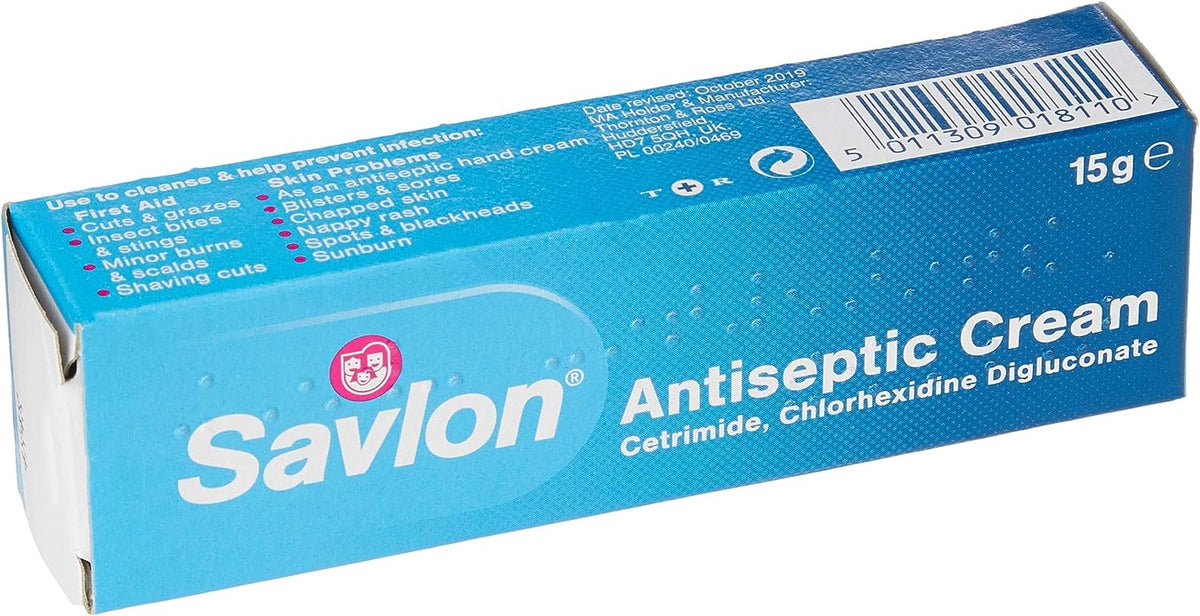
Savlon Antiseptic Cream 15g
- ✔️ Kills bacteria in minor cuts, grazes, and burns
- ✔️ Contains dual antiseptic action: chlorhexidine and cetrimide
- ✔️ Helps prevent wound infection from the first application
- ✔️ Suitable for adults and children with minor skin injuries
- ✔️ Compact 15g tube ideal for home and travel first aid kits
Price Checker
 Lowest price guarantee
 Includes FREE private prescription


Couldn't load pickup availability
What Is Savlon Antiseptic Cream and How Does It Help?
Minor cuts, grazes, and small burns are part of everyday life — and having something reliable in your medicine cabinet matters. Savlon antiseptic cream is a trusted, over-the-counter topical treatment that helps cleanse minor wounds and reduce the risk of bacterial infection. At just £2.99 for a 15g tube, it's an affordable and practical addition to any home first aid kit. You can browse our full range of first aid products at Cured Pharmacy if you're stocking up on essentials.
The cream contains two active ingredients — chlorhexidine digluconate 0.1% and cetrimide 0.5% — both of which are well-established antiseptic agents. Together, they work to kill bacteria on the skin surface and help keep minor wounds clean while they heal. It's a simple, no-fuss product that's been used in UK households for decades.
How Does Savlon Antiseptic Cream Work on Wounds?
The two active ingredients in this cream each play a distinct role in protecting your skin from infection:
- Chlorhexidine digluconate (0.1%): A broad-spectrum antiseptic that disrupts bacterial cell membranes, causing the bacteria to break down and die. It's effective against a wide range of gram-positive and gram-negative bacteria.
- Cetrimide (0.5%): A quaternary ammonium compound that acts as a surfactant, helping to cleanse the wound by lifting dirt and debris from the skin surface while also exerting its own antibacterial effect.
- Combined action: Together, these two ingredients provide both cleansing and antimicrobial protection, making the cream suitable for use immediately after a minor injury occurs.
The cream base also helps to soothe the skin around the wound, making application comfortable even on tender or broken skin.
Who Is Savlon Antiseptic Cream Suitable For?
This cream is designed for adults and children who need a quick, easy way to manage minor skin injuries at home. It's particularly useful for:
- Adults with minor cuts, grazes, or abrasions from everyday activities
- Children who are prone to playground scrapes and small wounds
- People with minor superficial burns, such as those from cooking
- Anyone looking for a simple antiseptic to include in a travel or sports first aid kit
It is not suitable for use on deep puncture wounds, animal bites, or large areas of broken skin. If you're unsure whether a wound needs medical attention, always speak to a pharmacist or GP first.
How Does Savlon Antiseptic Cream Compare to Other Antiseptic Creams?
| Feature | Savlon Antiseptic Cream 15g | Germolene Antiseptic Cream |
|---|---|---|
| Active ingredients | Chlorhexidine 0.1%, Cetrimide 0.5% | Phenol 1.2%, Chlorhexidine digluconate 0.25% |
| Anaesthetic effect | No | Yes (phenol provides mild local anaesthesia) |
| Suitable for children | Yes (with caution in infants) | Yes (check age guidance on pack) |
| Price (approx.) | £2.99 | £3.00–£4.00 |
How Should You Store Savlon Antiseptic Cream?
Store your tube of Savlon antiseptic cream below 25°C, away from direct sunlight and out of reach of children. Do not use the cream after the expiry date printed on the tube or packaging. Once opened, check the product regularly for any changes in colour, smell, or texture — if anything seems off, do not use it and dispose of it safely.
If you're building a home first aid kit, it's worth pairing this cream with other essentials from our skin care range to keep your skin protected and healthy. Always read the patient information leaflet before use.
This product is a medicine. Speak to your doctor or pharmacist before using if you have an underlying medical condition or are taking other medicines.
Savlon Antiseptic Cream 15g specifications
| Treatment category | Antiseptic / Wound care |
| Mechanism of action | Disrupts bacterial cell membranes; surfactant cleansing action |
| Effective against | Gram-positive and gram-negative bacteria |
| Suitable for | Adults and children (with caution in infants) |
| Active ingredients | Chlorhexidine digluconate 0.1%, Cetrimide 0.5% |
| Pack size | 15g |
| UK classification | General Sale List (GSL) |
| Drug class | Antiseptic |
| Preparation | Cream |
| Route of administration | Topical (applied to skin) |
Specifications of Savlon Antiseptic Cream 15g
What Is Savlon Antiseptic Cream and What Is It Used For?
Savlon Antiseptic Cream 15g is a topical antiseptic medicine used to help prevent infection in minor skin injuries. It is indicated for use on minor cuts, grazes, abrasions, and superficial burns where there is a risk of bacterial contamination. The cream works by killing bacteria on and around the wound site, helping to keep the area clean while natural healing takes place.
It is available over the counter without a prescription and is classified as a General Sale List (GSL) medicine in the UK. This means you can purchase it from pharmacies, supermarkets, and online retailers like Cured Pharmacy without needing to see a doctor first.
What Do You Need to Know Before Using Savlon Antiseptic Cream?
Before applying this cream, there are some important safety points to be aware of. Do not use it if any of the following apply to you:
- You are allergic to chlorhexidine, cetrimide, or any other ingredient in the cream
- The wound is deep, a puncture wound, or caused by an animal bite
- The wound covers a large area of skin
- You have previously had a severe allergic reaction (anaphylaxis) to any antiseptic product
- The wound shows signs of serious infection such as spreading redness, swelling, pus, or fever — seek medical attention instead
Use with caution in infants and young children. Always check with a pharmacist if you are unsure whether this product is appropriate.
In terms of drug interactions, topical antiseptic creams like this one are not known to have clinically significant interactions with other medicines when used as directed on intact or minor broken skin. However:
- Avoid using alongside other topical products on the same area without pharmacist advice
- Do not use in or near the eyes, ears, or mouth
- Chlorhexidine can be inactivated by some soaps and anionic compounds — rinse the area with clean water before applying
How Should You Use Savlon Antiseptic Cream?
Using this cream correctly gives you the best chance of keeping your wound clean and infection-free. Follow these steps each time you apply it:
- Wash your hands thoroughly with soap and water before touching the wound
- Gently clean the wound under cool running water to remove any dirt or debris
- Pat the area dry with a clean cloth or sterile gauze
- Squeeze a small amount of cream onto a clean fingertip or sterile applicator
- Apply a thin layer directly to the wound and the surrounding skin
- Cover with a sterile dressing or plaster if needed
- Wash your hands again after application
Apply the cream up to three times daily, or as directed by your pharmacist. Do not apply more than necessary — a thin layer is sufficient.
| Indication | Age Group | Dose | Frequency |
|---|---|---|---|
| Minor cuts and grazes | Adults and children | Thin layer to affected area | Up to 3 times daily |
| Minor superficial burns | Adults and children | Thin layer to affected area | Up to 3 times daily |
| Minor abrasions | Adults and children | Thin layer to affected area | Up to 3 times daily |
What Are the Possible Side Effects of Savlon Antiseptic Cream?
Like all medicines, Savlon Antiseptic Cream can cause side effects, although not everyone will experience them. Most side effects are mild and localised to the area of application. If you experience any severe or unexpected reaction, stop using the cream and seek medical advice promptly.
Common side effects (may affect a small number of users):
- Mild skin irritation at the application site
- Temporary redness or stinging on application
- Dry skin around the treated area
Less common side effects (rare but possible):
- Contact dermatitis (an allergic skin reaction causing itching, rash, or blistering)
- Hypersensitivity reactions, including urticaria (hives)
- In very rare cases, severe allergic reactions (anaphylaxis) have been reported with chlorhexidine-containing products — seek emergency help immediately if you experience swelling of the face, throat, or difficulty breathing
If you're managing a wound alongside other skin concerns, you may find it helpful to explore our creams and ointments collection for complementary products.
How Should You Store Savlon Antiseptic Cream?
Correct storage helps maintain the effectiveness of the cream and keeps it safe to use. Follow these guidelines:
- Store below 25°C in a cool, dry place
- Keep away from direct sunlight and heat sources
- Keep the tube tightly closed when not in use
- Keep out of the sight and reach of children
- Do not use after the expiry date printed on the tube or carton
- Do not dispose of medicines via wastewater or household waste — return unused medicines to your local pharmacy
If you're putting together a complete home first aid kit, consider pairing this cream with other essentials from our baby and toddler range if you have young children at home who are prone to minor scrapes.
References
Written and reviewed by our qualified team
Your safety and success are our highest priorities. Our medical team rigorously evaluates every product and piece of advice we provide, ensuring you receive only the most effective, science-backed solutions available.
Frequently Asked Questions
Where can I buy Savlon antiseptic cream online in the UK?
You can buy Savlon Antiseptic Cream 15g online from Cured Pharmacy for just £2.99 with fast UK delivery. It is a General Sale List medicine, so no prescription is needed. It's also available from most high street pharmacies and supermarkets across the UK.
How does Savlon antiseptic cream work in the body?
Savlon Antiseptic Cream works locally on the skin rather than being absorbed into the body. Chlorhexidine digluconate disrupts bacterial cell membranes, killing a broad range of bacteria, while cetrimide acts as a surfactant to cleanse the wound. Together, they reduce the bacterial load on the wound surface and help prevent infection from taking hold.
How do I use Savlon antiseptic cream step by step?
Start by washing your hands and cleaning the wound under cool running water. Pat the area dry, then apply a thin layer of the cream directly to the wound using a clean fingertip. Cover with a plaster or sterile dressing if needed, and repeat up to three times daily until the wound heals.
What is the correct dose of Savlon antiseptic cream?
Apply a thin layer of Savlon Antiseptic Cream to the affected area up to three times daily. There is no specific measured dose — use only as much as needed to cover the wound with a thin film. Do not apply excessively or to large areas of broken skin without medical advice.
What are the side effects of Savlon antiseptic cream?
Most people tolerate Savlon Antiseptic Cream well, but some may experience mild skin irritation, redness, or stinging at the application site. Rarely, contact dermatitis or an allergic reaction may occur. If you notice swelling, hives, or difficulty breathing, stop use immediately and seek emergency medical help.
How do I manage side effects of Savlon antiseptic cream?
If you experience mild irritation or redness, rinse the area with cool water and discontinue use temporarily. If symptoms persist or worsen, speak to your pharmacist or GP before reapplying. For any signs of a serious allergic reaction, call 999 or go to your nearest A&E immediately.
Can I use Savlon antiseptic cream on children?
Savlon Antiseptic Cream is generally suitable for use on children for minor cuts and grazes. Use with caution in infants and always consult a pharmacist if you are unsure. You can also explore our baby and toddler range for other child-appropriate first aid products.
Can I use Savlon antiseptic cream on burns?
Yes, Savlon Antiseptic Cream can be applied to minor, superficial burns — such as small scalds from hot water or steam — to help prevent infection. For any burn larger than a 50p coin, or one that is deep, blistered, or on the face, hands, or genitals, seek immediate medical attention rather than self-treating.
Who is eligible to use Savlon antiseptic cream?
Savlon Antiseptic Cream is suitable for most adults and children with minor skin injuries. It should not be used by anyone with a known allergy to chlorhexidine or cetrimide. People with deep wounds, infected wounds, or serious burns should seek medical advice rather than using an over-the-counter antiseptic cream.
What happens if I apply too much Savlon antiseptic cream?
Applying more cream than needed is unlikely to cause serious harm, but it may increase the risk of skin irritation or sensitisation over time. If you accidentally apply a large amount, wipe away the excess with a clean cloth and rinse the area with water. Speak to a pharmacist if you have any concerns.
What are the alternatives to Savlon antiseptic cream?
Common alternatives include Germolene Antiseptic Cream, which also contains chlorhexidine but adds phenol for a mild anaesthetic effect, and Sudocrem, which is more commonly used for nappy rash but has mild antiseptic properties. You can browse a wider selection in our creams and ointments collection to compare options.
How long can I use Savlon antiseptic cream for?
Use Savlon Antiseptic Cream only for as long as needed to treat the minor wound — typically a few days until the skin begins to heal. If the wound has not improved within five to seven days, or if it appears to be getting worse, stop using the cream and consult your pharmacist or GP. Prolonged use on the same area is not recommended without medical guidance.
What is the difference between Savlon antiseptic cream and Savlon antiseptic liquid?
Savlon Antiseptic Cream is applied directly to the wound as a ready-to-use topical treatment, making it ideal for targeted application to small cuts and grazes. Savlon Antiseptic Liquid is typically diluted in water and used to cleanse larger areas of skin or to soak dressings. The cream is generally more convenient for everyday minor wound care at home.
Is Savlon antiseptic cream safe to use during pregnancy?
There is no specific contraindication to using Savlon Antiseptic Cream on minor wounds during pregnancy, as it is applied topically and systemic absorption is minimal. However, as with any medicine during pregnancy, it is always best to consult your midwife, GP, or pharmacist before use to ensure it is appropriate for your individual circumstances.
What are the latest guidelines on treating minor wounds at home?
The NHS advises cleaning minor cuts and grazes under running water, applying an antiseptic if needed, and covering with a sterile dressing. Antiseptic creams like Savlon can help reduce infection risk in minor wounds. For wounds that are deep, won't stop bleeding, or show signs of infection, the NHS recommends seeking medical attention promptly.
Written and reviewed by our qualified team

Reviewed by:
Tarun Kumar
Superintendent/ Clinical Lead
📖 Find out more about our team of medical content authors and how we ensure the accuracy of our content with our content guidelines.
Content last updated: 14 Sep 2026
Other popular options


We’re a safe and
regulated UK service

Lowest Price Guarantee

We're convinced you won't find your treatment cheaper, but if you do we'll refund the difference.
Find out more
100% discreet packaging

Discreet, unbranded packaging for every order.
Find out more

Need help?
Talk to our friendly experts now


How our service works

Service setup

Discreet packaging

Express delivery