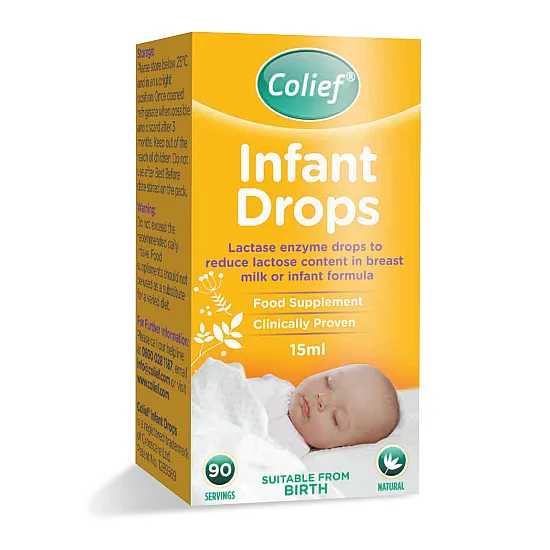
Colief Lactase Enzyme Infant Drops
- ✔️ Breaks down lactose in milk before every feed
- ✔️ Reduces infant colic crying linked to lactose intolerance
- ✔️ Suitable for breastfed and formula-fed babies from birth
- ✔️ Enzyme acts in milk — not absorbed into baby's bloodstream
- ✔️ Easy 4-drop dose added to every feed
Price Checker
 Discreet, tracked delivery
 Includes FREE private prescription


Couldn't load pickup availability
What Are Colief Infant Drops and How Do They Help Baby Colic?
If your baby cries inconsolably after feeds, draws their knees up, or seems in real discomfort, you are not alone. Infant colic affects roughly one in five babies in the UK, and it can be exhausting for the whole family. Colief infant drops are an over-the-counter lactase enzyme supplement designed to help reduce colic symptoms that may be linked to temporary lactose intolerance in newborns and young infants. Available from our baby and toddler range at Cured Pharmacy, they offer a practical, clinician-recommended option for parents looking for relief.
Lactose is the natural sugar found in both breast milk and standard infant formula. Some babies, particularly in the early weeks of life, produce lower levels of the enzyme lactase in their gut. This means lactose is not fully broken down before it reaches the large intestine, where it can ferment and cause gas, bloating, and the characteristic crying associated with colic. Colief works by supplementing this enzyme directly in the feed.
How Do Colief Lactase Enzyme Infant Drops Work?
The mechanism is straightforward. Each drop of Colief contains lactase enzyme, which pre-digests the lactose in milk before your baby swallows it. By reducing the lactose load reaching the gut, there is less fermentation, less gas production, and — for many families — noticeably less crying.
- Lactase enzyme is added directly to expressed breast milk or prepared formula
- The enzyme begins breaking down lactose during a short standing period before the feed
- Reduced lactose reaches the small intestine, limiting fermentation in the large bowel
- Symptoms such as bloating, wind, and prolonged crying may decrease over time
It is worth noting that Colief does not treat all causes of colic — colic is a complex condition with multiple possible contributors. However, for babies whose symptoms appear to be linked to lactose digestion, it can make a meaningful difference.
Who Should Use Colief Lactase Enzyme Infant Drops?
Colief is intended for infants who show signs of colic that may be related to temporary lactose intolerance. It is suitable for use from birth and can be used alongside both breastfeeding and formula feeding. Always speak to your health visitor, GP, or pharmacist before starting, particularly if your baby has any underlying health conditions.
- Newborns and young infants with colic symptoms after feeds
- Breastfed babies whose mothers wish to continue breastfeeding
- Formula-fed infants on standard (lactose-containing) formula
- Babies where other causes of distress have been ruled out by a healthcare professional
Colief is not suitable for infants diagnosed with galactosaemia, a rare inherited metabolic disorder. If you are unsure whether your baby's symptoms are colic-related, always seek professional advice first.
How Does Colief Compare to Other Infant Colic Remedies?
| Feature | Colief Infant Drops | Simethicone Drops (e.g. Infacol) |
|---|---|---|
| Active ingredient | Lactase enzyme | Simethicone |
| Mechanism | Pre-digests lactose in milk | Reduces surface tension of gas bubbles |
| Added to feed? | Yes — added before feeding | No — given directly to baby |
| Suitable from birth? | Yes | Yes |
How Should Colief Infant Drops Be Stored and Handled?
Before opening, colief infant drops can be stored at room temperature below 25°C. Once opened, the bottle must be kept in the refrigerator at 2–8°C and used within 30 days. Do not freeze the drops, as this can damage the enzyme. Always check the expiry date on the packaging before use, and keep the bottle tightly closed when not in use.
If you are managing other aspects of your baby's health alongside digestive concerns, you may also find it helpful to explore our vitamins and supplements section for products relevant to infant and maternal nutrition.
This product is a medicine. Speak to your doctor or pharmacist before using if you have an underlying medical condition or are taking other medicines.
Colief Lactase Enzyme Infant Drops specifications
| Treatment category | Infant colic / digestive support |
| Mechanism of action | Lactase enzyme pre-digests lactose in milk before feeding |
| Effective for | Colic symptoms associated with temporary lactose intolerance in infants |
| Suitable for | Newborns and infants from birth |
| Active ingredient | Lactase enzyme |
| Pack sizes | 7 ml |
| UK classification | General Sale Medicine (GSL) |
| Drug class | Digestive enzyme supplement |
| Preparation | Oral drops |
| Route of administration | Oral (added to expressed breast milk or formula) |
Specifications of Colief Lactase Enzyme Infant Drops
What Is Colief Lactase Enzyme Infant Drops and What Is It Used For?
Colief Lactase Enzyme Infant Drops is an oral digestive enzyme supplement for babies. It contains lactase, the enzyme responsible for breaking down lactose — the sugar naturally present in breast milk and most standard infant formulas. When a baby temporarily produces insufficient lactase in their gut, undigested lactose can ferment in the large intestine, producing gas and causing the prolonged crying, bloating, and discomfort associated with infant colic.
Colief is used to reduce these symptoms by pre-treating milk with lactase before each feed. It does not change the nutritional composition of the milk in any meaningful way and does not require you to switch from breastfeeding or standard formula. The NHS notes that colic is common and usually resolves on its own by around three to four months of age, but products like Colief may help manage symptoms in the interim.
What Do You Need to Know Before Using Colief Lactase Enzyme Infant Drops?
Before using Colief, it is important to be aware of the following contraindications and precautions:
- Do not use in infants with galactosaemia — a rare inherited condition where the body cannot process galactose (a product of lactose breakdown)
- Do not use if your baby is allergic to any of the ingredients in the formulation
- Consult your GP or health visitor if your baby's symptoms are severe, worsening, or accompanied by blood in stools, vomiting, or poor weight gain
- Colic symptoms can sometimes indicate an underlying condition — always rule out other causes with a healthcare professional before starting treatment
Regarding drug interactions:
- No clinically significant drug interactions with Colief have been identified
- If your baby is taking any prescribed medicines, speak to your pharmacist before use
How Should You Use Colief Lactase Enzyme Infant Drops?
The method of use differs slightly depending on whether you are breastfeeding or formula feeding. Follow these steps carefully to get the most from each dose.
For breastfed babies:
- Express a small amount of breast milk (approximately 1 teaspoon / 5 ml) into a sterilised container
- Add 4 drops of Colief to the expressed milk
- Stir gently and feed this treated milk to your baby using a sterilised spoon or dropper before breastfeeding
- Then breastfeed as normal
For formula-fed babies:
- Prepare the formula feed as directed on the packaging
- Allow the feed to cool to body temperature (approximately 37°C)
- Add 4 drops of Colief to the prepared formula
- Leave to stand for at least 30 minutes in the refrigerator before feeding
- Warm the feed again if needed and feed as normal
| Feeding Method | Age Group | Dose | Frequency |
|---|---|---|---|
| Breastfeeding | Newborn and infant | 4 drops per feed | Before every feed |
| Formula feeding | Newborn and infant | 4 drops per feed | Added to each prepared bottle |
What Are the Possible Side Effects of Colief Lactase Enzyme Infant Drops?
Colief is generally very well tolerated. Because it is an enzyme rather than a drug, systemic side effects are not expected. However, as with any product given to a young infant, it is worth knowing what to look out for.
Common side effects:
- Loose or slightly more frequent stools — this can occur as lactose is more efficiently broken down
Less common side effects:
- Mild digestive discomfort during the initial period of use
- Allergic reactions are rare but possible — stop use immediately and seek medical advice if you notice rash, swelling, or breathing difficulty
If your baby's symptoms do not improve after one week of consistent use, or if they worsen at any point, stop using Colief and speak to your GP or health visitor. You can also explore our sickness and nausea section for other products that may support your baby's digestive comfort.
How Should You Store Colief Lactase Enzyme Infant Drops?
- Before opening: store below 25°C in a cool, dry place away from direct sunlight
- After opening: refrigerate at 2–8°C and use within 30 days
- Do not freeze — freezing will deactivate the lactase enzyme
- Keep the bottle tightly closed when not in use
- Keep out of the sight and reach of children
- Do not use after the expiry date printed on the label
- Do not store in the bathroom or near a heat source
For parents managing broader family health needs, our baby and toddler collection includes a range of products to support infant wellbeing from the earliest weeks of life.
References
- https://www.nhs.uk/conditions/colic/
- https://www.nhs.uk/conditions/lactose-intolerance/
- https://www.nhs.uk/conditions/baby/breastfeeding-and-bottle-feeding/breastfeeding/breastfeeding-and-diet/
- https://www.nhs.uk/conditions/baby/caring-for-a-newborn/soothing-a-crying-baby/
- https://www.nhs.uk/conditions/baby/feeding/bottle-feeding/how-to-make-up-baby-formula/
- https://bnf.nice.org.uk/
Written and reviewed by our qualified team
Your safety and success are our highest priorities. Our medical team rigorously evaluates every product and piece of advice we provide, ensuring you receive only the most effective, science-backed solutions available.
Frequently Asked Questions
Where can I buy Colief infant drops online in the UK?
You can buy Colief Lactase Enzyme Infant Drops directly from Cured Pharmacy for just £9.49, with no prescription required. It is a General Sale Medicine available over the counter. Simply add it to your basket and it will be dispatched to your door — browse our full baby and toddler range for more infant health products.
How do Colief infant drops work in the body?
Colief contains lactase enzyme, which breaks down lactose — the natural sugar in breast milk and formula — before your baby swallows it. This reduces the amount of undigested lactose reaching the large intestine, where it would otherwise ferment and produce gas. Less fermentation means less bloating, wind, and the prolonged crying associated with colic.
How do I use Colief infant drops step by step?
For breastfeeding, express around a teaspoon of milk, add 4 drops of Colief, and give this to your baby before the feed. For formula, prepare the bottle as normal, cool it to body temperature, add 4 drops, and refrigerate for at least 30 minutes before warming and feeding. Always use a sterilised dropper or spoon when handling the drops.
What is the correct dose of Colief infant drops for my baby?
The recommended dose is 4 drops per feed, used at every feed throughout the day. There is no age-based dose variation — the same 4-drop dose applies from birth onwards. If you are unsure whether the dose is appropriate for your baby's weight or feeding pattern, speak to your pharmacist or health visitor.
When is the best time to use Colief infant drops?
Colief should be added to every feed, not just some of them, to maintain consistent lactose reduction throughout the day. For formula-fed babies, it works best when added at least 30 minutes before feeding so the enzyme has time to act. For breastfed babies, it is added to a small amount of expressed milk given just before the feed begins.
What are the side effects of Colief infant drops?
Colief is generally very well tolerated in infants. The most commonly reported change is slightly looser stools, which occurs because lactose is being broken down more efficiently. Serious side effects are rare, but if you notice any signs of an allergic reaction — such as a rash, swelling, or breathing difficulty — stop use immediately and seek medical advice.
How do I manage side effects of Colief infant drops?
If your baby develops loose stools, this usually settles within a few days as their digestive system adjusts. Ensure you are using the correct dose and that the drops are being stored properly in the fridge after opening. If side effects persist or concern you, contact your GP or pharmacist for guidance.
Who is eligible to use Colief infant drops?
Colief is suitable for newborns and infants from birth who experience colic symptoms that may be related to temporary lactose intolerance. It can be used by both breastfed and formula-fed babies. It is not suitable for infants with galactosaemia, and you should always consult a healthcare professional if you are unsure whether colic is the correct diagnosis.
What happens if I miss a dose of Colief infant drops?
If you forget to add Colief to a feed, simply continue as normal with the next feed and add the drops then. Do not add a double dose to compensate for a missed one. Missing an occasional feed is unlikely to cause harm, but consistent use at every feed gives the best results.
What are alternatives to Colief infant drops for baby colic?
Alternatives include simethicone-based drops such as Infacol, which work differently by reducing gas bubble surface tension rather than breaking down lactose. Lactose-free formula is another option for formula-fed babies. Your GP or health visitor can help you decide which approach is most appropriate based on your baby's specific symptoms. You can also explore our IBS and cramps section for digestive health products for older family members.
How long do you use Colief infant drops for?
Colief is typically used until colic symptoms resolve, which for most babies happens naturally between three and four months of age. Some parents use it for a shorter period if symptoms improve sooner. There is no fixed maximum duration, but if symptoms persist beyond four months, speak to your GP to rule out other causes.
Can I use Colief infant drops with any type of formula?
Colief is designed for use with standard lactose-containing infant formulas. It is not needed with lactose-free formula, as that milk has already had the lactose removed. It is also not appropriate for use with soya-based formula, which does not contain lactose. Always check the formula ingredients if you are unsure.
Is Colief safe to use from birth?
Yes, Colief Lactase Enzyme Infant Drops are suitable for use from birth. The lactase enzyme is not absorbed into the bloodstream — it acts locally within the milk itself before the baby feeds. This makes it a well-tolerated option even for very young newborns, though you should always consult your midwife, health visitor, or GP before starting any new product in the newborn period.
What are the latest studies on lactase enzyme drops for infant colic?
Research into lactase enzyme supplementation for infant colic has shown promising results in reducing crying time in some infants, particularly those with signs of lactose malabsorption. However, the evidence base is still developing, and colic is a multifactorial condition. The NHS recommends discussing all treatment options with a healthcare professional rather than self-treating based on research alone.
How should Colief infant drops be stored after opening?
Once opened, Colief must be stored in the refrigerator at 2–8°C and used within 30 days. Do not freeze the drops, as this will deactivate the lactase enzyme and make the product ineffective. Before opening, the bottle can be kept at room temperature below 25°C. Always check the expiry date before each use.
Written and reviewed by our qualified team

Reviewed by:
Tarun Kumar
Superintendent/ Clinical Lead
📖 Find out more about our team of medical content authors and how we ensure the accuracy of our content with our content guidelines.
Content last updated: 14 Sep 2026
Other popular options


We’re a safe and
regulated UK service

100% discreet packaging

Discreet, unbranded packaging for every order.

Need help?
Talk to our friendly experts now


How our service works

Service setup

Discreet packaging

Express delivery