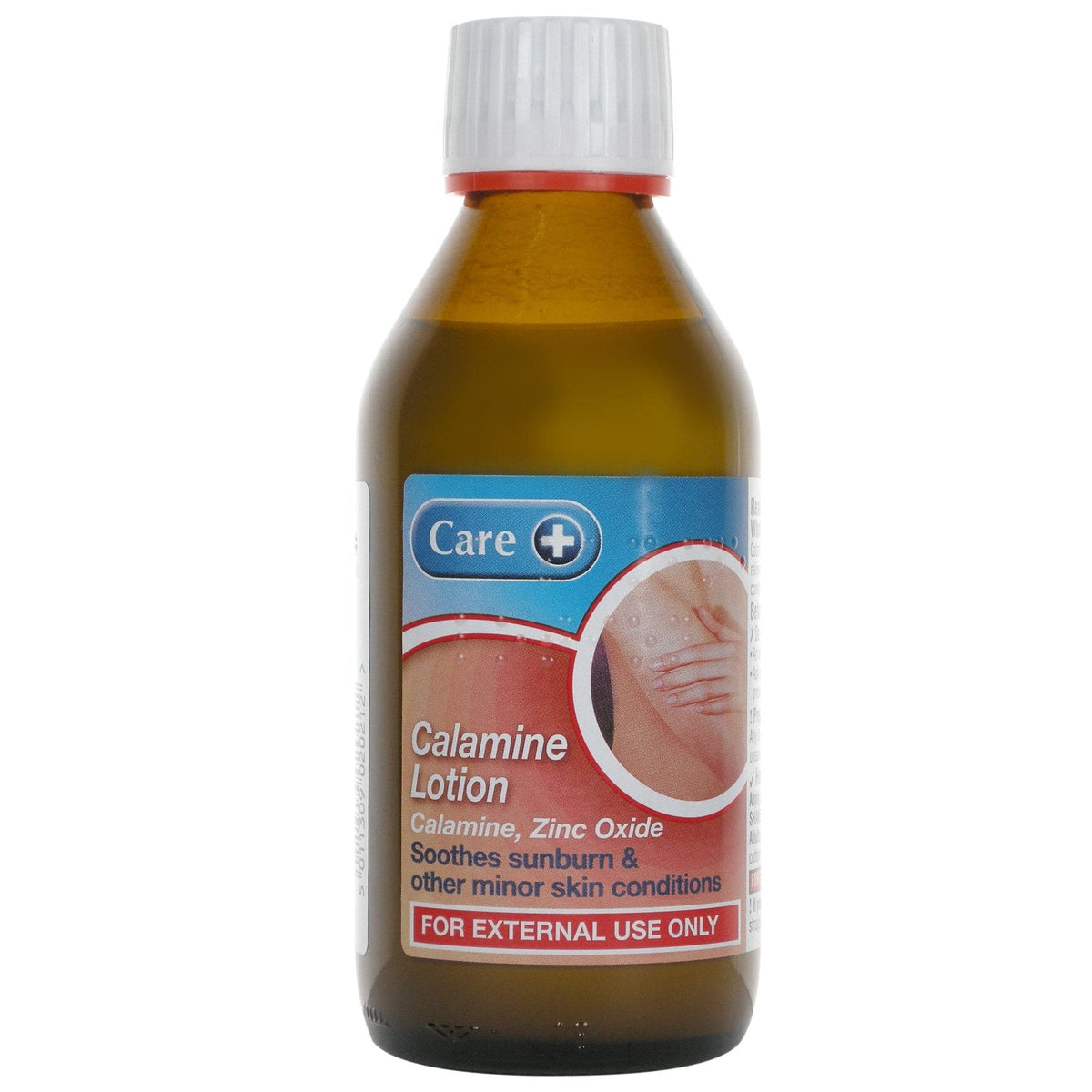
Care Calamine Lotion - 200ml
- ✔️ Soothes chicken pox itching quickly in children and adults
- ✔️ Relieves insect bite discomfort with gentle zinc oxide formula
- ✔️ Steroid-free lotion safe for everyday skin irritation relief
- ✔️ Cools and calms mild sunburn and heat rash on contact
- ✔️ Trusted NHS-recommended topical treatment for itchy skin
Price Checker
Not approved? Full refund
Includes FREE private prescription
Couldn't load pickup availability
How Should You Use Care Calamine Lotion?
Care Calamine Lotion is applied directly to the affected area of skin. It is for external use only — never swallow it or apply it inside the mouth, eyes, or nose. Always shake the bottle well before each use, as the ingredients settle on standing and an unmixed lotion will be less effective.
Follow these steps each time you apply the lotion:
What Is the Correct Dose of Care Calamine Lotion?
There is no fixed measured dose for calamine lotion — you apply enough to cover the affected area with a thin, even layer. The key is to use it as needed to manage symptoms rather than applying excessive amounts, which will not improve the effect and may cause unnecessary dryness.
The table below summarises typical usage guidance by indication and age group:
When Is the Best Time to Use Care Calamine Lotion?
There is no single "best" time of day to apply calamine lotion — you should use it whenever itching or irritation becomes uncomfortable. Many people find it particularly helpful at night, when itching tends to feel more intense and can disrupt sleep, especially in children with chicken pox.
Applying the lotion after a cool bath or shower can also enhance its soothing effect, as the skin is already slightly cooled and the lotion can dry more evenly on clean skin.
How Long Can You Use Care Calamine Lotion For?
Calamine lotion is designed for short-term use while symptoms last. For chicken pox, this is typically one to two weeks. For insect bites or mild sunburn, symptoms usually resolve within a few days. You should not need to use it for extended periods.
If your symptoms have not improved after two weeks of regular use, or if they are getting worse, stop using the lotion and speak to your GP or pharmacist. Persistent or worsening skin irritation may indicate an underlying condition that requires a different treatment approach.
Do not exceed the recommended dose. If in doubt, speak to your pharmacist.
What Are the Most Common Side Effects of Care Calamine Lotion?
Care Calamine Lotion is one of the most well-tolerated topical preparations available over the counter in the UK. The vast majority of people use it without experiencing any unwanted effects at all. That said, a small number of users may notice the following:
- Mild skin dryness at the site of application — this is a natural result of the astringent action of zinc oxide
- A white or pink residue left on the skin as the lotion dries — this is normal and can be gently wiped away once the itch has settled
- A temporary tightening sensation on the skin as the lotion evaporates
What Are the Less Common Side Effects of Care Calamine Lotion?
Less commonly, some people may experience a localised skin reaction at the site of application. This is more likely if you have particularly sensitive skin or a history of skin allergies. Signs to watch for include:
- Increased redness or warmth at the application site
- Itching that worsens rather than improves after application
- A rash or hives developing where the lotion was applied
- Mild swelling of the treated skin area
If any of these occur, stop using the lotion immediately and rinse the area with cool water. Speak to your pharmacist before trying any alternative product.
What Are the Serious Side Effects of Care Calamine Lotion?
Serious side effects from topically applied calamine lotion are extremely rare. However, a severe allergic reaction (anaphylaxis) is theoretically possible with any medicine, though it has not been commonly reported with this product. Seek emergency medical help immediately if you experience any of the following after applying the lotion:
- Swelling of the face, lips, tongue, or throat
- Difficulty breathing or swallowing
- Sudden dizziness or feeling faint
- A widespread skin rash developing rapidly across the body
What Should You Do If You Experience Side Effects?
For mild side effects such as skin dryness, simply reduce the frequency of application or apply a gentle, fragrance-free moisturiser to the area after the lotion has dried. If you experience a localised skin reaction, stop use and consult your pharmacist — they can advise on whether an alternative product would be more suitable for your skin type.
For any serious or unexpected reaction, stop using the product immediately and seek medical advice. You can also report suspected side effects to the MHRA via the Yellow Card scheme at yellowcard.mhra.gov.uk.
Can Care Calamine Lotion Interact With Other Medicines?
No clinically significant drug interactions have been identified for topically applied calamine lotion. Because very little of the active ingredients are absorbed through intact skin, the risk of systemic interactions is negligible. However, you should avoid applying calamine lotion to the same area of skin as other topical preparations at the same time, as this may reduce the effectiveness of both products or cause unexpected skin reactions. If you are using any prescription topical treatments, always check with your pharmacist before combining them with calamine lotion.
If you are concerned about any side effects, contact your pharmacist or GP immediately.
Written and reviewed by our qualified team
Reviewed by:
Tarun Kumar
Superintendent/ Clinical Lead
📖 Find out more about our team of medical content authors.
Content last reviewed: 11 November 2026
★ Other popular options
100% discreet packaging
Discreet, unbranded packaging for every order.
Need help?
Talk to our friendly experts now
How our service works
Service setup
Discreet packaging
Express delivery
Medically reviewed by
Tarun Kumar, Superintendent Pharmacist & Clinical Lead (GPhC 2233073)
Last updated on 11 November 2026.
Review History
Our experts continually monitor new findings in health and medicine, and we update our articles when new information becomes available.
Why this page was updated on 11 November 2026
Content checked and updated as part of our periodic review, to ensure accuracy and currentness.
Current version (11 November 2026)
Edited by: The Editorial Team
Medically reviewed by:
Tarun Kumar, GPhC No. 2233073, Superintendent Pharmacist & Clinical Lead
How we source info.
When we present you with stats, data, opinion or a consensus, we'll tell you where this came from.