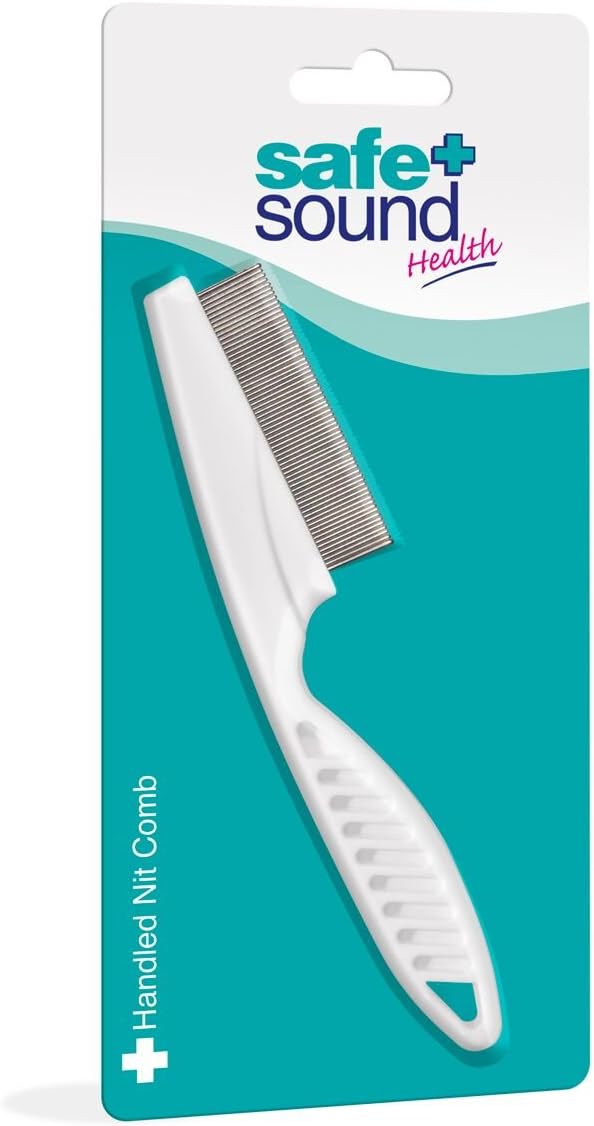
Safe & Sound Lice Comb Handled Large
- ✔️ Mechanically removes head lice and nits without chemicals
- ✔️ Large handle provides firm grip during combing sessions
- ✔️ Suitable for all hair types including thick and curly
- ✔️ Reusable and easy to clean after every session
- ✔️ Supports NHS-recommended wet combing treatment method
Price Checker
Not approved? Full refund
Includes FREE private prescription
Couldn't load pickup availability
How Should You Use the Safe & Sound Lice Comb?
Using the Safe & Sound Lice Comb correctly makes a significant difference to how effective the wet combing process is. Always use the comb on wet hair with conditioner applied — never on dry hair, as this is less comfortable and less effective at trapping lice.
What Is the Correct Dose of the Safe & Sound Lice Comb?
This is a mechanical device, so there is no "dose" in the pharmaceutical sense. The key measure is how frequently and consistently you carry out the combing sessions. The table below summarises the recommended usage schedule based on the purpose of use.
When Is the Best Time to Use the Safe & Sound Lice Comb?
There is no clinically defined optimal time of day for wet combing. However, many parents find that carrying out the process during or after bath time works well, as the hair is already wet and the child is in a calm routine. Choosing a well-lit room and a comfortable chair for the child can make the process easier for everyone involved.
Try to carry out each session at a similar time to build a consistent routine. Consistency is far more important than the specific time of day — missing sessions is the most common reason wet combing fails to clear an infestation.
How Long Can You Use the Safe & Sound Lice Comb For?
The NHS recommends continuing wet combing every two to three days for a minimum of two weeks. This timeframe is based on the lice life cycle — eggs hatch after approximately seven to ten days, so regular combing within this window catches newly hatched lice before they can mature and lay more eggs.
After two weeks of consistent combing with no lice or eggs found, you can stop treatment. If lice are still present after two weeks, consider adding a medicated lotion to your treatment plan and speak to your pharmacist for further advice. The comb itself can be reused indefinitely as long as it is cleaned and dried properly after each session and the teeth remain intact.
Do not exceed the recommended dose. If in doubt, speak to your pharmacist.
What Are the Most Common Side Effects of the Safe & Sound Lice Comb?
Because this is a mechanical device with no active pharmaceutical ingredients, it does not cause systemic side effects. Any discomfort associated with its use is localised and typically related to the combing process itself rather than any chemical action. Most people tolerate wet combing well, particularly when plenty of conditioner is used.
- Mild scalp tenderness, especially in children with sensitive scalps.
- Temporary hair tangling if conditioner is not applied generously enough before combing.
- Minor discomfort when working through thick, curly, or very long hair.
What Are the Less Common Side Effects of the Safe & Sound Lice Comb?
Less commonly, some individuals may experience minor issues related to technique or scalp sensitivity. These are generally avoidable with careful use and the correct amount of conditioner.
- Superficial scalp scratching if the comb is pressed too firmly against the skin.
- Increased scalp itching immediately after combing — this is usually temporary and settles within a few minutes.
- Hair breakage if the comb is drawn through severely tangled hair without adequate preparation.
What Are the Serious Side Effects of the Safe & Sound Lice Comb?
Serious side effects from using a lice comb are extremely rare. However, if the scalp is already broken, infected, or inflamed, using the comb could worsen the condition. Signs that you should stop using the comb and seek medical advice include:
- Increasing redness, swelling, or warmth of the scalp.
- Discharge or crusting from the scalp that was not present before.
- Significant pain during or after combing that does not settle quickly.
- Signs of secondary bacterial infection, such as fever or spreading redness.
What Should You Do If You Experience Side Effects?
If you experience mild discomfort during combing, try applying more conditioner and working in smaller hair sections. Reducing the pressure you apply with the comb can also help. If scalp irritation persists or worsens after a session, allow the scalp to rest and consult your pharmacist before continuing.
For any signs of infection or significant scalp inflammation, stop using the comb immediately and contact your GP. Do not attempt to continue combing through an infected or broken scalp, as this could spread bacteria and delay healing.
Can the Safe & Sound Lice Comb Interact With Other Products?
As a mechanical device, the Safe & Sound Lice Comb has no known interactions with medicines or other healthcare products. It can be used safely alongside medicated lice treatments such as dimeticone-based lotions or malathion sprays — in fact, combining wet combing with a medicated treatment is often recommended by the NHS for more persistent infestations. Always follow the instructions for any medicated product separately and allow the recommended time between applications.
If you are concerned about any side effects, contact your pharmacist or GP immediately.
Written and reviewed by our qualified team
Reviewed by:
Tarun Kumar
Superintendent/ Clinical Lead
📖 Find out more about our team of medical content authors.
Content last reviewed: 11 November 2026
100% discreet packaging
Discreet, unbranded packaging for every order.
Need help?
Talk to our friendly experts now
How our service works
Service setup
Discreet packaging
Express delivery
Medically reviewed by
Tarun Kumar, Superintendent Pharmacist & Clinical Lead (GPhC 2233073)
Last updated on 11 November 2026.
Review History
Our experts continually monitor new findings in health and medicine, and we update our articles when new information becomes available.
Why this page was updated on 11 November 2026
Content checked and updated as part of our periodic review, to ensure accuracy and currentness.
Current version (11 November 2026)
Edited by: The Editorial Team
Medically reviewed by:
Tarun Kumar, GPhC No. 2233073, Superintendent Pharmacist & Clinical Lead
How we source info.
When we present you with stats, data, opinion or a consensus, we'll tell you where this came from.