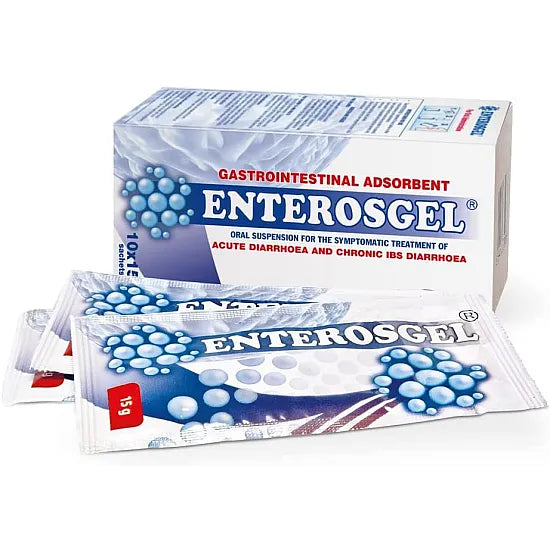
Enterosgel Oral Adsorbent 15g - 10 Sachets
Enterosgel Oral Adsorbent 15g - 10 Sachets
- ✔️ Binds and removes gut toxins without entering the bloodstream
- ✔️ Relieves acute diarrhoea including traveller's diarrhoea
- ✔️ Suitable for adults and children aged five and over
- ✔️ Non-systemic action means minimal risk of systemic side effects
- ✔️ Convenient pre-measured 15g sachets for accurate dosing
Price Checker
 Lowest price guarantee
 Includes FREE private prescription


Couldn't load pickup availability
What Is Enterosgel Oral Adsorbent and How Does It Help?
Dealing with sudden diarrhoea is never pleasant — and finding something that actually works quickly matters. Enterosgel oral adsorbent is an intestinal adsorbent gel containing the active ingredient polymethylsiloxane polyhydrate. It works directly inside the gut to bind and remove harmful substances, helping to settle an upset digestive system without entering your bloodstream. Each pack contains 10 convenient 15g sachets, making it easy to use at home or on the go. If you're looking for other gut-related remedies, you might also find our IBS and Cramps collection useful alongside this product.
Diarrhoea affects most people at some point, whether triggered by a stomach bug, food poisoning, or a change in diet. According to the NHS, most cases in adults clear up within a few days, but managing symptoms promptly can make a real difference to your comfort and recovery.
How Does Enterosgel Work Inside the Gut?
Enterosgel works through a process called adsorption — not to be confused with absorption. Rather than being taken into the body, it acts like a sponge within the intestinal tract, attracting and trapping unwanted substances so they can be safely eliminated.
- Polymethylsiloxane polyhydrate forms a porous gel matrix in the gut lumen
- The gel selectively binds toxins, pathogenic bacteria, viruses, and allergens
- Bound substances are carried through the intestine and excreted in the stool
- The active ingredient is not absorbed into the bloodstream — it remains entirely within the digestive tract
- Normal gut flora and essential nutrients are largely unaffected due to the selective binding properties
This mechanism makes it distinct from many other diarrhoea treatments, which either slow gut motility or replace lost fluids. Enterosgel targets the root cause — the irritants themselves.
Who Is Enterosgel Oral Adsorbent Suitable For?
Enterosgel is suitable for a wide range of people experiencing acute diarrhoea or gut irritation. It is available over the counter and does not require a prescription. That said, it is not appropriate for everyone, so it is worth checking the guidance below before use.
- Adults and adolescents aged 14 and over experiencing acute diarrhoea
- Children aged 5 to 14 years (at a reduced dose — see dosage section)
- Travellers dealing with traveller's diarrhoea — browse our Travel health collection for complementary products
- Individuals with food poisoning or viral gastroenteritis
It is not recommended for children under 3 years without medical supervision, and those with known hypersensitivity to any ingredient should avoid it. Always read the label carefully.
How Does Enterosgel Compare to Other Diarrhoea Treatments?
| Feature | Enterosgel Oral Adsorbent | Loperamide (e.g. Imodium) |
|---|---|---|
| Mechanism | Adsorbs toxins and pathogens in the gut | Slows gut motility via opioid receptors |
| Systemic absorption | None — stays in the gut | Minimal systemic absorption |
| Suitable for children (5+) | Yes, at reduced dose | Not recommended under 12 without advice |
| Addresses root cause | Yes — removes irritants | No — symptom control only |
How Should You Store Enterosgel and Is It Safe Long-Term?
Store Enterosgel below 25°C, away from direct sunlight and moisture. Do not freeze the sachets. Keep the product out of reach of children and do not use after the expiry date printed on the packaging. Once a sachet is opened, it should be used immediately and not stored for later use.
Enterosgel oral adsorbent is designed for short-term use only. If your symptoms have not improved within 48 hours, or if you notice blood in your stool, a high fever, or signs of dehydration, stop use and seek medical advice promptly. The NHS advises that persistent diarrhoea lasting more than a few days warrants professional assessment.
This product is a medicine. Speak to your doctor or pharmacist before using if you have an underlying medical condition or are taking other medicines.
Enterosgel Oral Adsorbent 15g - 10 Sachets specifications
| Treatment category | Diarrhoea / Intestinal adsorbent |
| Mechanism of action | Adsorbs toxins, pathogens, and irritants in the gut lumen |
| Effective for | Acute diarrhoea, food poisoning, traveller's diarrhoea |
| Suitable for | Adults and children aged 5 and over |
| Active ingredient | Polymethylsiloxane polyhydrate |
| Pack size | 10 sachets |
| Strength | 15g per sachet |
| UK classification | General Sale / Over the counter (OTC) |
| Drug class | Intestinal adsorbent |
| Preparation | Oral gel (sachet) |
| Route of administration | Oral |
Specifications of Enterosgel Oral Adsorbent 15g - 10 Sachets
What Is Enterosgel Oral Adsorbent and What Is It Used For?
Enterosgel Oral Adsorbent is a medical device/intestinal adsorbent gel used to relieve acute diarrhoea in adults and children aged 5 and over. Its active ingredient, polymethylsiloxane polyhydrate, is a silicon-based porous compound that binds harmful substances within the gastrointestinal tract. It is used for diarrhoea caused by infections, food poisoning, traveller's diarrhoea, and gut irritation. Because it is not absorbed into the bloodstream, it works locally within the intestine. You can browse our full Diarrhoea treatment collection for additional options.
What Do You Need to Know Before Using Enterosgel Oral Adsorbent?
Before using Enterosgel, check the following contraindications and warnings carefully:
- Do not use if you are allergic to polymethylsiloxane polyhydrate or any other ingredient
- Do not use in children under 3 years without medical supervision
- Stop use and seek medical advice if diarrhoea persists beyond 48 hours in adults or 24 hours in children
- Seek urgent medical attention if you notice blood or mucus in your stool, a high fever, or signs of severe dehydration
- Consult your GP before use if you have a chronic bowel condition such as Crohn's disease or ulcerative colitis
- Use with caution during pregnancy or breastfeeding — always consult your GP or midwife first
Regarding drug interactions, Enterosgel may reduce the absorption of other oral medicines taken at the same time. Key points:
- Leave a gap of at least 1 to 2 hours between taking Enterosgel and any other oral medication
- This is particularly important for medicines with a narrow therapeutic index, such as anticoagulants or antiepileptics
- If you are unsure, speak to your pharmacist before use
How Should You Use Enterosgel Oral Adsorbent?
Using Enterosgel correctly is straightforward. Follow these steps each time you take a dose:
- Tear open one sachet along the marked edge
- Empty the contents into half a glass of water (approximately 100ml)
- Stir well until the gel is evenly dispersed
- Drink the mixture immediately
- Take 1 to 2 hours before or after meals and other medicines
- Drink plenty of fluids throughout the day to stay hydrated
The NHS recommends staying well hydrated during any episode of diarrhoea, as fluid and electrolyte loss can lead to dehydration, particularly in young children and older adults. Oral rehydration salts may be used alongside Enterosgel — check our Sickness and Nausea collection for related products.
| Age Group | Dose per Administration | Frequency | Maximum Daily Dose |
|---|---|---|---|
| Adults and children 14+ | 1 sachet (15g) | 3 times daily | 3 sachets (45g) |
| Children aged 5–13 | ½ sachet (7.5g) | 3 times daily | 1.5 sachets (22.5g) |
| Children aged 3–4 | ¼ sachet (3.75g) | 3 times daily | ¾ sachet (11.25g) |
What Are the Possible Side Effects of Enterosgel Oral Adsorbent?
Enterosgel is generally well tolerated. Because it is not absorbed into the bloodstream, systemic side effects are uncommon. However, some people do experience gastrointestinal effects, particularly with prolonged use.
Common side effects:
- Constipation — especially if taken for longer than recommended
- Nausea
- Feeling of fullness or bloating
Less common side effects:
- Allergic reactions (rash, itching, swelling) — stop use immediately and seek medical advice
- Worsening of gastrointestinal symptoms in rare cases
If constipation develops, reduce the dose or stop use. If any side effect is severe or unexpected, contact your pharmacist or GP promptly.
How Should You Store Enterosgel Oral Adsorbent?
- Store below 25°C in a cool, dry place
- Do not freeze
- Keep away from direct sunlight and moisture
- Keep out of the sight and reach of children
- Do not use after the expiry date printed on the outer packaging
- Once a sachet is opened, use immediately — do not store for later use
- Do not dispose of medicines via wastewater or household waste — return unused sachets to your pharmacy
References
- https://www.nhs.uk/conditions/diarrhoea-and-vomiting/
- https://www.nhs.uk/conditions/dehydration/
- https://www.nhs.uk/conditions/food-poisoning/
- https://www.nhs.uk/conditions/gastroenteritis/
- https://www.nhs.uk/conditions/irritable-bowel-syndrome-ibs/
- https://bnf.nice.org.uk/drugs/loperamide-hydrochloride/
Written and reviewed by our qualified team
Your safety and success are our highest priorities. Our medical team rigorously evaluates every product and piece of advice we provide, ensuring you receive only the most effective, science-backed solutions available.
Frequently Asked Questions
Where can I buy Enterosgel Oral Adsorbent online in the UK?
You can buy Enterosgel Oral Adsorbent 15g 10 Sachets directly from Cured Pharmacy, a GPhC-registered UK online pharmacy. It is available without a prescription as an over-the-counter product. Simply add it to your basket and it will be dispatched to your door. You can also browse our full Diarrhoea collection for related treatments.
How does Enterosgel work in the body?
Enterosgel contains polymethylsiloxane polyhydrate, a porous silicon-based gel that acts as an intestinal adsorbent. Once swallowed, it travels through the gut and binds toxins, bacteria, viruses, and other irritants to its surface. These bound substances are then carried out of the body in the stool, without the active ingredient ever entering the bloodstream.
How do I use Enterosgel step by step?
Tear open one sachet and empty the contents into approximately half a glass of water. Stir well until the gel is evenly mixed, then drink immediately. Take each dose 1 to 2 hours before or after meals and other medicines to avoid any interaction with nutrient or drug absorption.
What is the correct dose of Enterosgel for adults?
Adults and young people aged 14 and over should take one 15g sachet up to three times daily. The maximum daily dose is three sachets (45g). Always follow the instructions on the packaging, and do not exceed the recommended dose without speaking to a pharmacist or GP first.
When is the best time to take Enterosgel?
Enterosgel is best taken between meals — ideally 1 to 2 hours before eating or 1 to 2 hours after a meal. This timing helps maximise its adsorptive effect in the gut. It is equally important to leave a gap of at least 1 to 2 hours between Enterosgel and any other oral medicines you are taking.
What are the side effects of Enterosgel Oral Adsorbent?
The most commonly reported side effect is constipation, particularly if Enterosgel is taken for longer than recommended or at higher doses. Some people also experience nausea or a feeling of fullness. Because the active ingredient is not absorbed into the bloodstream, systemic side effects are rare. If you experience an allergic reaction such as a rash or swelling, stop use immediately and seek medical advice.
How do I manage constipation caused by Enterosgel?
If you develop constipation while taking Enterosgel, try reducing the dose or stopping use once your diarrhoea has resolved. Drinking plenty of water throughout the day can also help. If constipation persists after stopping Enterosgel, speak to your pharmacist — they may recommend a suitable short-term remedy from our Constipation collection.
Can I take Enterosgel with other medicines?
Enterosgel may reduce the absorption of other oral medicines if taken at the same time, because its adsorptive properties are non-selective in the gut lumen. Always leave a gap of at least 1 to 2 hours between Enterosgel and any other medication. This is especially important for medicines with a narrow therapeutic window, such as anticoagulants, antiepileptics, or thyroid medications — speak to your pharmacist if you are unsure.
Is Enterosgel safe to use during pregnancy?
Enterosgel is not absorbed into the bloodstream and works entirely within the gut, which is reassuring. However, as with any medicine taken during pregnancy, you should consult your GP or midwife before use. They can advise whether it is appropriate for your individual circumstances and stage of pregnancy.
Can children use Enterosgel Oral Adsorbent?
Yes, Enterosgel can be used in children aged 5 and over at a reduced dose. Children aged 5 to 13 should take half a sachet (7.5g) up to three times daily. Children aged 3 to 4 may take a quarter of a sachet three times daily, but only under medical supervision. It is not recommended for children under 3 years without a doctor's guidance.
Who is eligible to use Enterosgel Oral Adsorbent?
Enterosgel is suitable for adults and children aged 3 and over experiencing acute diarrhoea, food poisoning, or gut irritation. It is available over the counter without a prescription. People with chronic bowel conditions, those taking multiple medications, or those who are pregnant should seek advice from a healthcare professional before use.
What happens if I miss a dose of Enterosgel?
If you miss a dose, simply take the next one when you remember — but do not double up to compensate for a missed dose. Enterosgel is taken as needed during an acute episode of diarrhoea, so strict timing is less critical than with some other medicines. Continue taking it at regular intervals until your symptoms resolve.
How long can you take Enterosgel for?
Enterosgel is intended for short-term use only, typically 3 to 5 days. If your diarrhoea has not improved within 48 hours in adults, or 24 hours in children, you should stop use and seek medical advice. Prolonged use without medical supervision is not recommended, as it may lead to constipation or mask an underlying condition that needs treatment.
What are the alternatives to Enterosgel for diarrhoea?
Common alternatives include loperamide (e.g. Imodium), which slows gut motility, and oral rehydration salts (e.g. Dioralyte), which replace lost fluids and electrolytes. Unlike Enterosgel, loperamide does not remove the cause of diarrhoea — it simply slows the gut down. The right choice depends on the cause and severity of your symptoms, so speak to a pharmacist if you are unsure which is most appropriate.
What are the latest studies on Enterosgel for diarrhoea?
Clinical research has investigated polymethylsiloxane polyhydrate in the management of acute infectious diarrhoea, irritable bowel syndrome, and even allergic conditions, with studies suggesting it may help reduce symptom duration and stool frequency. Research is ongoing, and while results are promising, Enterosgel is currently indicated and licensed for acute diarrhoea relief. Always rely on current NHS or MHRA guidance when making treatment decisions.
Written and reviewed by our qualified team

Reviewed by:
Tarun Kumar
Superintendent/ Clinical Lead
📖 Find out more about our team of medical content authors and how we ensure the accuracy of our content with our content guidelines.
Content last updated: 14 Sep 2026
Other popular options


We’re a safe and
regulated UK service

Lowest Price Guarantee

We're convinced you won't find your treatment cheaper, but if you do we'll refund the difference.
Find out more
100% discreet packaging

Discreet, unbranded packaging for every order.
Find out more

Need help?
Talk to our friendly experts now


How our service works

Service setup

Discreet packaging

Express delivery