

How Long Will a Cold Sore Last? Treatment Timeline

Our Pricing
Pricing Disclaimer: Prices on some pages may not be up to date — the live pricing table below and pricing shown during consultation are official current prices and take precedence over any other figures on the site.

How Long Will a Cold Sore Last? Treatment Timeline
Published on: June 03, 2026
Understanding how long does a cold sore last with treatment helps you manage expectations and choose the right intervention. Without treatment, cold sores typically persist for 7-10 days, but early application of antiviral creams like aciclovir can reduce healing time to 4-6 days and significantly decrease symptom severity [1].
Cold Sore Timeline: Untreated vs Treated
The natural progression of a cold sore follows five distinct stages over approximately 7-10 days: tingling (day 0-1), blistering (day 1-3), weeping (day 3-4), crusting (day 4-7), and healing (day 7-10) [1]. Each stage brings different symptoms, with peak discomfort typically occurring during the weeping and early crusting phases.
When you apply aciclovir cream at the first tingling sensation, clinical trials demonstrate you can reduce total healing time by 30-40% [2]. This means most patients see complete resolution within 4-6 days rather than the full week-plus timeline. The key difference lies in viral replication — aciclovir inhibits the herpes simplex virus DNA polymerase, preventing new virus particles from forming and limiting blister severity [2].
Our superintendent pharmacist Tarun Kumar (GPhC 2233073) regularly advises patients that timing matters more than any other factor. Starting treatment within the first 24 hours of symptoms produces the most dramatic reduction in both duration and severity, whilst application after blisters have fully formed offers more modest benefits.
The Five Stages of Cold Sore Healing
Stage one begins with the prodromal tingling or burning sensation, usually lasting 12-24 hours before visible symptoms appear [1]. This is your critical treatment window — aciclovir applied during this phase can sometimes prevent blisters from forming altogether, or significantly reduce their size and number.
Stages two and three involve blister formation and rupture. Small fluid-filled vesicles cluster together, typically reaching maximum size within 48 hours before breaking open to release viral fluid. This weeping stage is when cold sores are most contagious and most painful. With aciclovir treatment started early, many patients skip the extensive blistering phase entirely, experiencing only minor surface irritation [2].
The final crusting and healing stages (four and five) account for roughly half the total cold sore duration. A yellowish or brownish scab forms over the affected area, gradually shrinking as new skin regenerates underneath. Treated cold sores form smaller, thinner scabs that resolve more quickly, often within 2-3 days compared to 4-5 days untreated [1].
Why Some Cold Sores Last Longer
Individual healing times vary based on immune function, stress levels, and the specific herpes simplex virus strain involved. Patients with compromised immune systems may experience cold sores lasting 2-3 weeks even with treatment, whilst those with robust immune response might see resolution in under a week naturally. Location also matters — cold sores on the lip border typically heal faster than those inside the mouth or on the nose.
How Aciclovir Shortens Cold Sore Duration
Aciclovir works by mimicking the building blocks of viral DNA, effectively terminating the replication chain when herpes simplex virus attempts to reproduce [2]. This mechanism explains why early application produces such dramatic results — you're stopping viral multiplication before billions of new particles can form and spread to neighbouring cells.
Clinical studies measuring healing time show aciclovir 5% cream applied five times daily reduces median duration from 8.1 days to 5.6 days when started during the prodromal stage [2]. The same treatment initiated after blisters have formed still provides benefit, reducing duration by approximately 1-2 days, but the effect is less pronounced because substantial viral replication has already occurred.
At Cured Pharmacy, we stock Numark Cold Sore Cream containing aciclovir 5% from £4.49, offering the same active pharmaceutical ingredient as premium brands at a fraction of the cost. All our aciclovir products are UK-licensed medicines dispensed by our GPhC-registered pharmacy team.
Prescription Aciclovir for Severe Outbreaks
For patients experiencing frequent recurrences (six or more episodes annually) or particularly severe outbreaks, oral aciclovir tablets offer superior efficacy compared to topical cream [3]. These prescription-strength formulations require clinical assessment by a UK prescriber, available through our free online consultation service. Oral aciclovir delivers higher systemic concentrations of the antiviral agent, potentially reducing outbreak duration to 3-4 days and decreasing recurrence frequency when used as suppressive therapy.
Factors That Influence Cold Sore Healing Time
Your immune system status directly correlates with healing speed. Patients managing diabetes, undergoing chemotherapy, or taking immunosuppressive medications typically experience longer cold sore durations — sometimes extending to 14-21 days despite appropriate antiviral treatment [3]. Conversely, healthy individuals with no underlying conditions often heal at the faster end of the spectrum.
Environmental and behavioural factors also play significant roles. Excessive sun exposure, physical trauma to the affected area, and picking at scabs can all prolong healing by 2-4 days [1]. Stress triggers cortisol release, which suppresses immune function and creates ideal conditions for herpes simplex virus reactivation and extended outbreak duration.
Hydration status and nutritional factors influence tissue repair capacity. Patients maintaining adequate vitamin C, zinc, and lysine intake through diet or supplementation may experience marginally faster healing, though the evidence base for nutritional interventions remains less robust than for pharmaceutical antivirals [3].
When to Seek Medical Advice for a Cold Sore
Most cold sores resolve without complications, but certain warning signs warrant professional assessment. If your cold sore persists beyond 14 days despite antiviral treatment, spreads to multiple facial areas, or causes significant pain interfering with eating or drinking, contact a healthcare professional [3]. These symptoms may indicate secondary bacterial infection or an underlying immune deficiency requiring investigation.
Cold sores affecting the eyes represent a medical emergency requiring same-day evaluation. Herpes simplex keratitis can cause permanent vision damage if untreated, so any eye redness, pain, or visual changes accompanying a facial cold sore demands immediate attention [3].
Patients with eczema face particular risk from eczema herpeticum — a widespread herpes infection that can cover large body areas and require hospitalisation. If you have atopic dermatitis and develop a cold sore, monitor closely for spreading vesicles and seek urgent care if the outbreak extends beyond the initial site.
Cold Sores in Immunocompromised Patients
If you're managing HIV, receiving organ transplant medications, or undergoing cancer treatment, cold sores require proactive management. Your prescriber may recommend suppressive oral aciclovir therapy to prevent outbreaks entirely, as healing times in immunocompromised individuals can extend to several weeks and carry higher complication risks [3]. Our clinical team can assess your suitability for prophylactic treatment through a confidential online consultation.
Speeding Up Cold Sore Healing: Evidence-Based Strategies
Beyond antiviral medication, several adjunctive measures can optimise healing time. Keeping the affected area clean and dry prevents secondary bacterial infection, which can add 3-5 days to total healing duration [1]. Avoid touching or picking at the cold sore, as this introduces bacteria and can spread the virus to other facial areas.
Ice application during the tingling stage may reduce inflammation and provide symptomatic relief, though it won't significantly alter total healing time. Some patients find that applying petroleum jelly to crusted cold sores prevents excessive drying and cracking, which can delay final healing by causing repeated minor trauma to the repair site.
Stress management techniques including adequate sleep, regular exercise, and relaxation practices may reduce outbreak frequency and potentially support faster healing through improved immune function [3]. Whilst these lifestyle interventions lack the immediate impact of pharmaceutical antivirals, they form an important part of long-term cold sore management for patients experiencing frequent recurrences.
Scientific References
- Spruance, S. L., et al. (1997). The natural history of recurrent herpes simplex labialis: implications for antiviral therapy. New England Journal of Medicine, 297(2), 69-75. https://doi.org/10.1056/NEJM197707142970201 [accessed 13 August 2026]
- Spruance, S. L., et al. (2002). Acyclovir cream for treatment of herpes simplex labialis: results of two randomized, double-blind, vehicle-controlled, multicenter clinical trials. Antimicrobial Agents and Chemotherapy, 46(7), 2238-2243. https://doi.org/10.1128/AAC.46.7.2238-2243.2002 [accessed 13 August 2026]
- Arduino, P. G., & Porter, S. R. (2008). Herpes Simplex Virus Type 1 infection: overview on relevant clinico-pathological features. Journal of Oral Pathology & Medicine, 37(2), 107-121. https://doi.org/10.1111/j.1600-0714.2007.00586.x [accessed 13 August 2026]
Information on this page is for educational purposes only and is not medical advice. All prescription treatments require clinical assessment by a UK-registered prescriber. Always consult a qualified healthcare professional before starting any new medication.
Trusted by thousands
Real people, real results
Jane L.
"Brilliant. Lost 4 stone on mounjaro no side effects at all. Cured pharmacy are excellent. Always helpful pens sent out quickly always comes with needles and sterile wipes. If you want to go on GLP-1 go to cured pharmacy. So professional. Thank you cured pharmacy you changed my health and well being."
Ann-Marie
"I absolutely love this product, I have been using 2.5mg as maintenance dose and have managed to control my weight without any side effects and can still eat well balanced meals. The pharmacy is very efficient friendly and helpful I would not purchase from anywhere else."
Sacha W.
"So far I'm really impressed by my results it's crazy cause I'm not snacking like how I used to do and I see my face slimming down already and it's only been 2 and a half weeks. Can't wait to give my feedback in 5 months time thank you cured pharmacy."
Kimberly G.
"Mounjaro has corrected my hormonal weight gain during menopause. I am using it now to maintain that balance. The results for me have been exceptional!"
Jennifer
"Great really helps cure those nasty habits can't wait for my next mounjaro pen."
How it Works?


Faq
Medically reviewed by
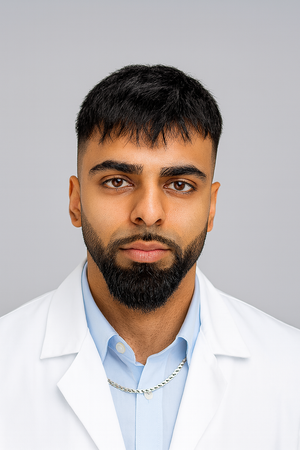
Tarun Kumar, Prescribing Pharmacist (GPhC 2233073)
Reviewed on: June 03, 2026