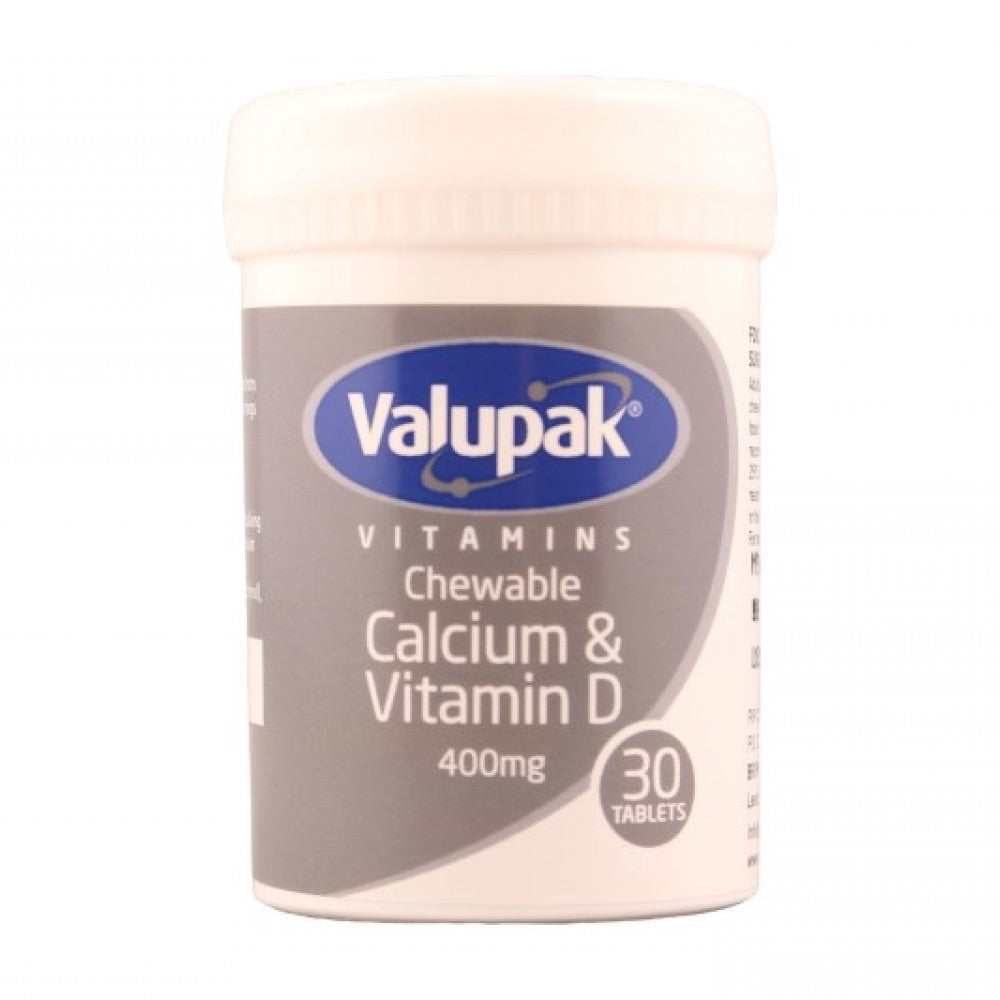
Valupak Vitamins Chewable Calcium & Vitamins D 400mg Tablets 30's
Valupak Vitamins Chewable Calcium & Vitamins D 400mg Tablets 30's
- ✔️ Supports strong bones and teeth with 400mg calcium per tablet
- ✔️ Provides 400 IU vitamin D3 to boost calcium absorption daily
- ✔️ Chewable format — no water needed, ideal for tablet-averse users
- ✔️ Helps prevent vitamin D deficiency during UK autumn and winter
- ✔️ Suitable for adults and children aged 12 and over
Price Checker
 Lowest price guarantee
 Includes FREE private prescription


Couldn't load pickup availability
Are Chewable Calcium and Vitamin D Tablets Right for You?
Bone health is something many of us take for granted — until we start noticing the signs that our diet might not be giving us everything we need. Valupak Vitamins Chewable Calcium & Vitamin D 400mg Tablets offer a simple, affordable way to top up two of the most important nutrients for skeletal strength and everyday wellbeing. At just £1.99 for a 30-tablet pack, they're one of the most accessible options available from our vitamins and supplements range. Each tablet delivers 400mg of calcium alongside 400 IU (10 micrograms) of vitamin D3, in a chewable format that's easy to take without water.
Vitamin D deficiency is genuinely common in the UK. The NHS recommends that everyone consider taking a daily vitamin D supplement, particularly during autumn and winter months when sunlight — our primary natural source — is in short supply. Calcium, meanwhile, is the most abundant mineral in the body, with around 99% stored in bones and teeth. Getting enough of both nutrients together makes good sense for long-term health.
How Do These Tablets Work in the Body?
Calcium and vitamin D work as a team. Calcium provides the structural mineral that bones and teeth are built from, while vitamin D regulates how much calcium your gut actually absorbs. Without adequate vitamin D, even a calcium-rich diet may not translate into strong bones — the two nutrients are genuinely interdependent.
- Calcium carbonate (the active calcium source) is released as the tablet is chewed and dissolved in stomach acid.
- Colecalciferol (vitamin D3) is absorbed in the small intestine and converted in the liver and kidneys into its active hormonal form, calcitriol.
- Calcitriol increases calcium absorption from the gut and reduces calcium loss through the kidneys.
- Together, they support normal bone mineralisation, muscle contraction, and nerve signalling.
Who Should Consider Using These Tablets?
These tablets are suitable for a wide range of people. They're particularly useful if your diet is low in dairy, if you spend limited time outdoors, or if you're in a life stage where bone density becomes a priority. Older adults, postmenopausal women, and those with darker skin tones are among the groups most likely to benefit from supplementation, according to NHS guidance.
- Adults and children aged 12 and over who have a low dietary calcium intake
- People who spend little time outdoors, especially during winter months
- Older adults at risk of osteoporosis or bone thinning
- Those who prefer a chewable tablet over capsules or standard tablets
How Do Valupak Tablets Compare to Other Calcium Supplements?
| Feature | Valupak Chewable Calcium & Vitamin D 400mg | Standard Calcium Carbonate Tablet (no D) |
|---|---|---|
| Contains Vitamin D | Yes — 400 IU (10mcg) D3 | No |
| Format | Chewable — no water needed | Swallowable tablet |
| Pack size | 30 tablets | Varies |
| Price | £1.99 | Variable |
Are Chewable Calcium and Vitamin D Tablets Suitable to Store at Home?
Chewable calcium and vitamin D tablets should be stored below 25°C in a dry place, away from direct sunlight and out of reach of children. The pack contains 30 tablets — a one-month supply at the recommended daily dose — making it easy to keep track of your intake. Check the expiry date printed on the packaging before use, and do not use the product if the tablets appear discoloured or damaged.
If you're managing multiple supplements or medications, it's worth speaking to your pharmacist before adding this product to your routine. Calcium can interact with certain medicines, including some antibiotics and heart medications, so timing your doses correctly matters. You'll find further guidance in the patient information section below.
This product is a medicine. Speak to your doctor or pharmacist before using if you have an underlying medical condition or are taking other medicines.
Valupak Vitamins Chewable Calcium & Vitamins D 400mg Tablets 30's specifications
| Treatment category | Bone health and vitamin supplementation |
| Mechanism of action | Calcium supports bone mineralisation; vitamin D3 enhances intestinal calcium absorption |
| Effective for | Calcium and vitamin D deficiency prevention; bone and teeth support |
| Suitable for | Adults and children aged 12 and over |
| Active ingredient | Calcium carbonate 400mg, Colecalciferol (Vitamin D3) 400 IU (10mcg) |
| Pack size | 30 chewable tablets |
| UK classification | General Sale List (GSL) |
| Drug class | Mineral and vitamin supplement |
| Preparation | Chewable tablet |
| Route of administration | Oral |
Specifications of Valupak Vitamins Chewable Calcium & Vitamins D 400mg Tablets 30's
What Is Valupak Chewable Calcium & Vitamin D and What Is It Used For?
Valupak Vitamins Chewable Calcium & Vitamin D 400mg Tablets are an over-the-counter food supplement designed to help maintain adequate levels of calcium and vitamin D in adults and children aged 12 and over. Calcium is essential for the normal development and maintenance of bones and teeth, while vitamin D supports the absorption of calcium and phosphorus from food. The NHS advises that vitamin D supplementation is particularly important between October and March in the UK, when sunlight levels are insufficient for the skin to produce enough vitamin D naturally.
These tablets may be used to help prevent or address dietary shortfalls in both nutrients. They are not a treatment for diagnosed osteoporosis or severe deficiency — if you have been told by a doctor that you have a clinical deficiency, you may need a higher-dose prescription product.
What Do You Need to Know Before Using Valupak Calcium & Vitamin D Tablets?
Before taking these tablets, read the following carefully. Some people should not take this product, and others may need to take extra care.
Do not take these tablets if you:
- Have hypercalcaemia (too much calcium in your blood)
- Have hypercalciuria (too much calcium in your urine)
- Have kidney stones (nephrolithiasis), particularly calcium-containing stones
- Have severe kidney disease or renal failure
- Have hypervitaminosis D (too much vitamin D)
- Are allergic to any of the ingredients in the tablet
Possible drug interactions — tell your pharmacist if you are taking:
- Thiazide diuretics (e.g. bendroflumethiazide) — may increase the risk of hypercalcaemia
- Bisphosphonates (e.g. alendronic acid) — calcium can reduce absorption; take at least 2 hours apart
- Tetracycline antibiotics — calcium impairs their absorption; separate doses by at least 2–3 hours
- Cardiac glycosides (e.g. digoxin) — high calcium levels may increase the risk of toxicity
- Levothyroxine — calcium can reduce absorption; take at least 4 hours apart
How Should You Use Valupak Calcium & Vitamin D Tablets?
- Check the expiry date on the packaging before use.
- Chew one tablet thoroughly — do not swallow whole.
- Take with or shortly after a meal to aid absorption and reduce the chance of stomach upset.
- Take one tablet per day unless otherwise directed by a healthcare professional.
- Do not take more than the recommended daily dose.
| Indication | Age Group | Dose | Frequency |
|---|---|---|---|
| Calcium & vitamin D supplementation | Adults & children 12+ | 1 chewable tablet (400mg calcium / 400 IU D3) | Once daily |
| Under 12 years | Children under 12 | Not recommended | — |
If you are pregnant or breastfeeding, speak to your midwife or GP before taking this supplement. Calcium and vitamin D are important during pregnancy, but the correct dose should be confirmed by a healthcare professional. You may also find it helpful to browse our women's health range for related products.
What Are the Possible Side Effects of Valupak Calcium & Vitamin D Tablets?
Like all supplements, these tablets can occasionally cause side effects, though not everyone experiences them. Most are mild and tend to settle as your body adjusts.
Common side effects:
- Constipation
- Flatulence (wind)
- Nausea or stomach discomfort
- Mild abdominal bloating
Less common side effects:
- Hypercalcaemia (high blood calcium) — symptoms include excessive thirst, frequent urination, confusion, or fatigue
- Hypercalciuria (high calcium in urine) — may increase kidney stone risk with prolonged high-dose use
- Skin reactions such as rash or itching (possible allergic response)
Stop taking the tablets and seek medical advice if you notice any signs of high calcium levels. If you experience a severe allergic reaction — including swelling of the face, lips, or throat — seek emergency medical attention immediately.
How Should You Store Valupak Calcium & Vitamin D Tablets?
- Store below 25°C in a cool, dry place
- Keep away from direct sunlight and moisture
- Keep out of the sight and reach of children
- Do not use after the expiry date printed on the packaging
- Do not store in a bathroom cabinet where humidity may affect the tablets
For a broader range of daily health essentials, take a look at our vitamins and supplements collection, where you'll find options to support everything from immunity to energy levels.
References
- https://www.nhs.uk/conditions/vitamins-and-minerals/vitamin-d/
- https://www.nhs.uk/conditions/vitamins-and-minerals/calcium/
- https://www.nhs.uk/conditions/osteoporosis/
- https://www.nhs.uk/live-well/bone-health/food-for-strong-bones/
- https://www.nhs.uk/pregnancy/keeping-well/vitamins-supplements-and-nutrition/
- https://bnf.nice.org.uk/drugs/calcium-carbonate/
Written and reviewed by our qualified team
Your safety and success are our highest priorities. Our medical team rigorously evaluates every product and piece of advice we provide, ensuring you receive only the most effective, science-backed solutions available.
Frequently Asked Questions
Where can I buy Valupak Chewable Calcium and Vitamin D tablets online in the UK?
You can buy Valupak Chewable Calcium & Vitamin D 400mg Tablets 30s directly from Cured Pharmacy for just £1.99 — no prescription needed. They're available as a General Sale List (GSL) supplement, meaning you can order them quickly and easily online. Browse our full vitamins and supplements range for more options to support your daily health routine.
How do chewable calcium and vitamin D tablets work in the body?
Calcium carbonate provides the mineral your bones and teeth need for structural strength, while vitamin D3 (colecalciferol) is converted in the liver and kidneys into its active form, which increases calcium absorption from the gut. Without enough vitamin D, your body simply cannot absorb calcium efficiently — even if your diet contains plenty of it. The two nutrients genuinely depend on each other to function properly.
How do I use Valupak Calcium and Vitamin D tablets step by step?
Chew one tablet thoroughly each day — don't swallow it whole, as the chewable format is designed to aid dissolution and absorption. Taking it with or just after a meal can help reduce any mild stomach discomfort. Stick to one tablet per day and don't exceed the recommended dose.
What is the best time of day to take Valupak Calcium and Vitamin D tablets?
There's no single "best" time, but taking your tablet with a meal — particularly one containing some fat — can support vitamin D absorption, as it is a fat-soluble vitamin. If you're also taking other medications such as levothyroxine or bisphosphonates, you'll need to space your calcium tablet at least 2–4 hours away from those medicines. Consistency matters most — pick a time that fits your daily routine and stick to it.
What are the side effects of chewable calcium and vitamin D tablets?
The most commonly reported side effects are constipation, flatulence, and mild nausea — these usually settle within a few days. Less commonly, taking too much calcium over time can lead to hypercalcaemia, with symptoms such as excessive thirst, confusion, or fatigue. If you notice any of these, stop taking the tablets and speak to your GP or pharmacist promptly.
Who should not take Valupak Chewable Calcium and Vitamin D tablets?
These tablets are not suitable for people with hypercalcaemia, hypercalciuria, calcium-containing kidney stones, severe kidney disease, or hypervitaminosis D. Children under 12 should not take this product. Always check with your pharmacist or GP if you have any underlying health conditions before starting a new supplement.
What happens if I miss a dose of Valupak Calcium and Vitamin D tablets?
If you forget to take your tablet on a given day, simply take it as soon as you remember — as long as it's still the same day. Don't double up the following day to make up for a missed dose. Missing the occasional tablet is unlikely to cause any harm, as these supplements work cumulatively over time.
Can I take Valupak Calcium and Vitamin D tablets during pregnancy?
Calcium and vitamin D are both important during pregnancy, but you should speak to your midwife or GP before taking this supplement to confirm the right dose for your individual needs. Some women may already be getting sufficient amounts through pregnancy multivitamins. Your healthcare team can advise on whether this product is appropriate alongside any other supplements you're taking.
How long can you take Valupak Chewable Calcium and Vitamin D tablets?
These tablets can be taken as part of a long-term daily supplement routine, particularly through the autumn and winter months when UK sunlight levels are low. Many people take vitamin D supplements year-round, especially if they have limited sun exposure. If you plan to take them alongside prescription medicines for an extended period, it's worth checking in with your GP or pharmacist periodically.
Do Valupak Calcium and Vitamin D tablets interact with other medicines?
Yes — calcium can interact with several medicines, including bisphosphonates (e.g. alendronic acid), tetracycline antibiotics, levothyroxine, and digoxin. The key is timing: separating your calcium tablet from these medicines by at least 2–4 hours usually prevents any significant interaction. Always tell your pharmacist about all medicines and supplements you're taking so they can advise you safely.
Are Valupak Chewable Calcium and Vitamin D tablets suitable for vegetarians?
You should check the product packaging or patient information leaflet for the full list of excipients to confirm suitability for vegetarians or vegans, as formulations can vary. The active ingredients themselves — calcium carbonate and colecalciferol — can be sourced from animal or non-animal origins depending on the manufacturer. If you have specific dietary requirements, contact Cured Pharmacy or the manufacturer directly for clarification.
What are the alternatives to Valupak Chewable Calcium and Vitamin D tablets?
Alternatives include other calcium and vitamin D combination supplements available in tablet, capsule, or effervescent formats from different brands. For people with a clinically diagnosed deficiency, a GP may prescribe higher-dose colecalciferol or a combined product such as Adcal-D3. You can explore a wide range of options in our vitamins and supplements collection to find the format that suits you best.
How much calcium and vitamin D do adults need each day?
The NHS recommends that adults need around 700mg of calcium per day, with higher amounts recommended during pregnancy and breastfeeding. For vitamin D, the UK government recommends 10 micrograms (400 IU) per day for most adults, particularly during autumn and winter. Each Valupak tablet provides 400mg of calcium and 400 IU of vitamin D3, contributing meaningfully to your daily requirements alongside a balanced diet.
Can children take Valupak Chewable Calcium and Vitamin D tablets?
These tablets are suitable for children aged 12 and over at the adult dose of one tablet per day. They are not recommended for children under 12. For younger children's vitamin D needs, the NHS recommends specific children's vitamin drops — you can find age-appropriate options in our baby and toddler range.
What does the latest research say about calcium and vitamin D supplementation?
Current NHS and NICE guidance continues to support daily vitamin D supplementation for the general UK population, particularly during winter months, given widespread insufficiency. Research consistently shows that combined calcium and vitamin D supplementation can help reduce the risk of fractures in older adults, particularly those who are housebound or in care settings. As with all supplements, the evidence is strongest when they're used to address a genuine dietary shortfall rather than as a substitute for a varied, balanced diet.
Written and reviewed by our qualified team

Reviewed by:
Tarun Kumar
Superintendent/ Clinical Lead
📖 Find out more about our team of medical content authors and how we ensure the accuracy of our content with our content guidelines.
Content last updated: 14 Sep 2026

We’re a safe and
regulated UK service

Lowest Price Guarantee

We're convinced you won't find your treatment cheaper, but if you do we'll refund the difference.
Find out more
100% discreet packaging

Discreet, unbranded packaging for every order.
Find out more

Need help?
Talk to our friendly experts now


How our service works

Service setup

Discreet packaging

Express delivery