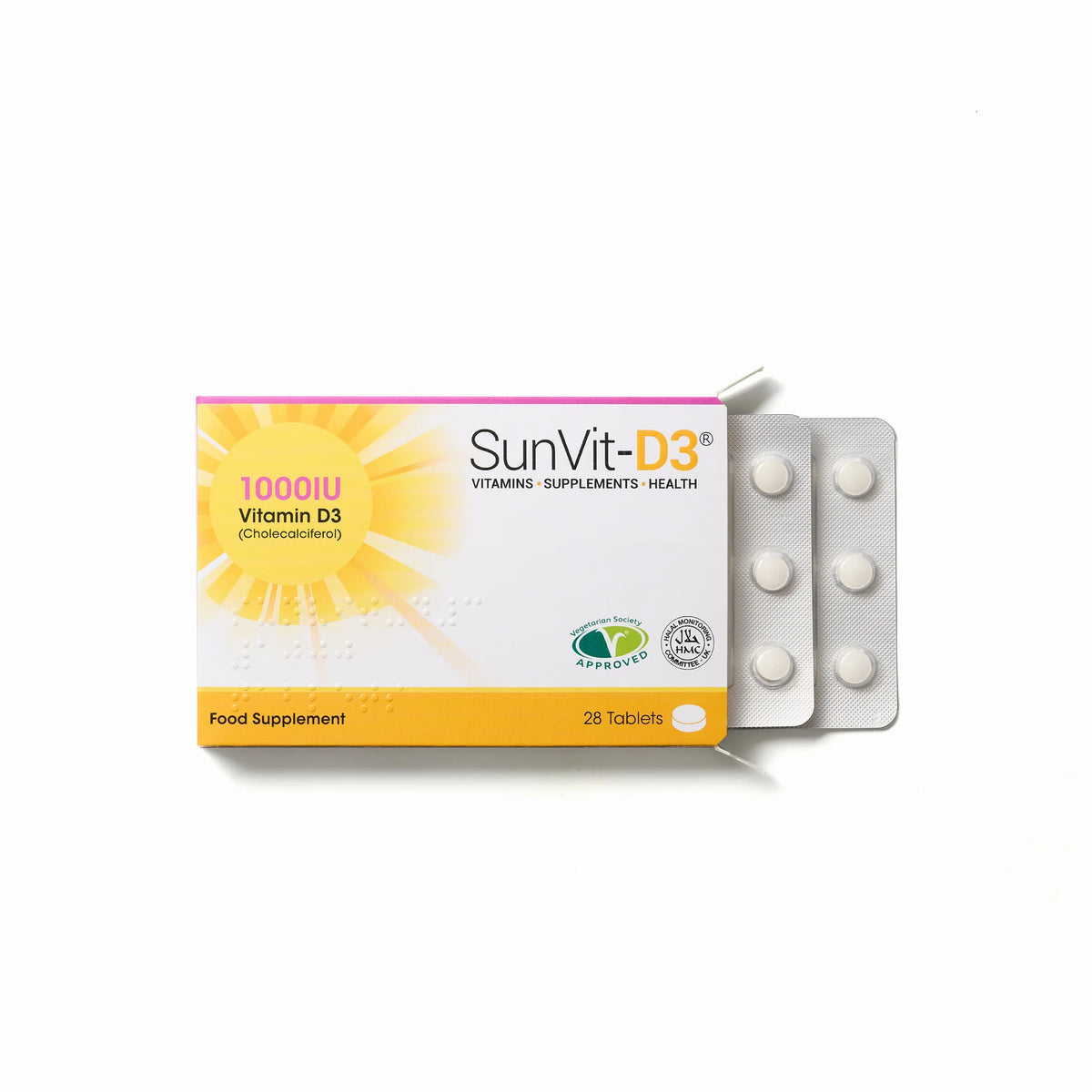
SunVit-D3 1000IU Vitamin D3
- ✔️ Supports healthy bones, teeth, and muscle function daily
- ✔️ Helps prevent vitamin D deficiency during UK autumn and winter
- ✔️ 1000IU colecalciferol matches the body's natural vitamin D form
- ✔️ Suitable for adults and children over 12 years of age
- ✔️ Once-daily tablet for simple, consistent supplementation
Price Checker
 Lowest price guarantee
 Includes FREE private prescription


Couldn't load pickup availability
What Is Vitamin D3 1000IU and Why Do You Need It?
If you live in the UK, there is a good chance you are not getting enough vitamin D — and you would not be alone. The NHS estimates that around one in five people in the UK has low vitamin D levels, largely because our climate simply does not provide enough sunlight for the body to make sufficient amounts, particularly between October and March. Vitamin D3 1000IU from SunVit-D3 offers a straightforward, affordable way to top up your levels and support your overall health throughout the year. At just £5.45, it is one of the most accessible supplements you can add to your daily routine.
Vitamin D is not just about bones, though that is certainly where most people start. It also plays a role in normal muscle function, immune system activity, and the regulation of calcium and phosphate in the body. The NHS recommends that everyone consider taking a daily vitamin D supplement, especially during autumn and winter. You can explore a wider range of options in our vitamins and supplements collection if you are looking for something more tailored to your needs.
How Does SunVit-D3 1000IU Work in the Body?
Colecalciferol — the scientific name for vitamin D3 — is the same form of vitamin D your skin produces when exposed to UVB sunlight. Once you swallow a tablet, it travels to the liver, where it is converted into calcidiol (25-hydroxyvitamin D). The kidneys then convert this into calcitriol, the biologically active form that your body actually uses.
- Calcitriol increases calcium and phosphate absorption from the gut
- It supports mineralisation of bone tissue, reducing the risk of softening conditions such as osteomalacia
- It helps regulate immune cell activity, supporting your body's natural defences
- It contributes to normal muscle function, which is particularly important in older adults
Who Should Consider Taking SunVit-D3 1000IU?
The NHS advises that certain groups are at particular risk of vitamin D deficiency and should consider supplementing year-round, not just in winter. This product is suitable for adults and children over 12 years of age.
- People who spend little time outdoors, including those who work indoors all day
- Individuals with darker skin tones, who require more sunlight exposure to produce the same amount of vitamin D
- Older adults aged 65 and over, whose skin is less efficient at synthesising vitamin D
- People who cover most of their skin for cultural or religious reasons
- Those who are pregnant or breastfeeding, as the NHS recommends supplementation during these periods
How Does SunVit-D3 1000IU Compare to Other Vitamin D Supplements?
| Feature | SunVit-D3 1000IU | 400IU Vitamin D Tablet |
|---|---|---|
| Dose per tablet | 1000IU (25 micrograms) | 400IU (10 micrograms) |
| Suitable for | Adults & children over 12 | Adults, children, infants (dose-dependent) |
| NHS recommended minimum | Exceeds minimum (400IU) | Meets minimum |
| Price | £5.45 | Varies by brand |
Is SunVit-D3 1000IU Safe to Store and Use Long-Term?
Store SunVit-D3 1000IU below 25°C in a dry place, away from direct sunlight and out of reach of children. Do not use the product after the expiry date printed on the packaging. The tablets should be kept in their original container to protect them from moisture.
Long-term use at 1000IU daily is generally considered safe for most adults. However, if you have a history of kidney stones, kidney disease, or hypercalcaemia, you should speak to your GP before starting supplementation. If you are already taking other supplements containing vitamin D, be mindful of your total daily intake. For those managing other aspects of their health alongside supplementation, our women's health collection includes products that may complement your wellness routine.
This product is a medicine. Speak to your doctor or pharmacist before using if you have an underlying medical condition or are taking other medicines.
SunVit-D3 1000IU Vitamin D3 specifications
| Treatment category | Vitamin D deficiency prevention and supplementation |
| Mechanism of action | Colecalciferol is converted to active calcitriol, regulating calcium and phosphate absorption |
| Effective for | Supporting bone health, immune function, and muscle maintenance |
| Suitable for | Adults and children over 12 years |
| Active ingredient | Colecalciferol (Vitamin D3) 1000IU (25 micrograms) |
| Strengths | 1000IU per tablet |
| UK classification | Food supplement / General Sale |
| Drug class | Fat-soluble vitamin |
| Preparation | Tablet |
| Route of administration | Oral |
Specifications of SunVit-D3 1000IU Vitamin D3
What Is SunVit-D3 1000IU and What Is It Used For?
SunVit-D3 1000IU contains colecalciferol, a form of vitamin D3 that is chemically identical to the vitamin D your skin produces naturally in response to sunlight. It is used to help prevent and address vitamin D insufficiency — a condition that is remarkably common in the UK due to limited sunlight exposure for much of the year. The NHS advises that vitamin D is essential for maintaining healthy bones and teeth, supporting normal muscle function, and helping the immune system work as it should.
This supplement is taken orally once daily and is available without a prescription. It is particularly useful during the autumn and winter months, when UVB radiation from the sun is too weak in the UK for the skin to produce adequate vitamin D.
What Do You Need to Know Before Using SunVit-D3 1000IU?
Before starting any new supplement, it is worth checking whether it is appropriate for your individual circumstances. Do not take SunVit-D3 1000IU if any of the following apply to you:
- You have hypercalcaemia (high calcium levels in the blood)
- You have hypercalciuria (high calcium levels in the urine)
- You have nephrolithiasis (kidney stones)
- You have severe kidney disease or renal failure
- You are allergic to colecalciferol or any of the other ingredients in the tablet
- You have sarcoidosis or other granulomatous conditions, which can increase sensitivity to vitamin D
The following medicines may interact with vitamin D3 supplements. Always inform your GP or pharmacist if you are taking:
- Thiazide diuretics (e.g. bendroflumethiazide) — may increase the risk of hypercalcaemia
- Digoxin or other cardiac glycosides — hypercalcaemia can increase the risk of toxicity
- Corticosteroids — may reduce the effectiveness of vitamin D
- Orlistat (weight loss medicine) — may reduce absorption of fat-soluble vitamins including vitamin D
- Anticonvulsants such as phenytoin or carbamazepine — may increase the breakdown of vitamin D
How Should You Use SunVit-D3 1000IU?
Using this supplement correctly is straightforward. Follow these steps for best results:
- Take one tablet daily, preferably with a meal containing some fat to support absorption
- Swallow the tablet whole with a glass of water
- Take at the same time each day to help build a consistent habit
- Do not take more than the recommended daily dose unless directed by a healthcare professional
- If you miss a dose, simply take it as soon as you remember — do not double up the next day
| Indication | Age Group | Dose | Frequency |
|---|---|---|---|
| Vitamin D insufficiency prevention | Adults & children over 12 | 1 tablet (1000IU) | Once daily |
| General supplementation (autumn/winter) | Adults | 1 tablet (1000IU) | Once daily |
| At-risk groups (year-round) | Adults & children over 12 | 1 tablet (1000IU) | Once daily |
What Are the Possible Side Effects of SunVit-D3 1000IU?
At the recommended dose of 1000IU per day, side effects are uncommon. However, taking too much vitamin D over a prolonged period can lead to a build-up of calcium in the body (hypercalcaemia), which can cause a range of symptoms. If you notice any of the following, stop taking the supplement and seek medical advice.
Common side effects (may occur if the dose is exceeded):
- Nausea or vomiting
- Constipation
- Loss of appetite
- Excessive thirst
Less common side effects:
- Frequent urination
- Fatigue or weakness
- Headache
- Dry mouth
- Muscle or bone pain
Allergic reactions to colecalciferol are rare but possible. Signs include rash, itching, swelling of the face or throat, or difficulty breathing. If you experience these, seek emergency medical attention immediately. You can also browse our allergy and hay fever range if you are managing other allergic conditions alongside your supplement routine.
How Should You Store SunVit-D3 1000IU?
Correct storage helps maintain the quality and effectiveness of your supplement. Follow these guidelines:
- Store below 25°C in a cool, dry place
- Keep away from direct sunlight and sources of heat
- Keep the container tightly closed when not in use
- Keep out of the sight and reach of children
- Do not use after the expiry date printed on the packaging
- Do not store in the bathroom or near a sink, as moisture can degrade the tablets
If you are unsure whether your supplement is still suitable to use, speak to your pharmacist. Never dispose of medicines via household waste — return unused tablets to your local pharmacy for safe disposal. For those looking to support their health more broadly, our vitamins and supplements collection has a wide range of products to complement your daily routine.
References
Written and reviewed by our qualified team
Your safety and success are our highest priorities. Our medical team rigorously evaluates every product and piece of advice we provide, ensuring you receive only the most effective, science-backed solutions available.
Frequently Asked Questions
Where can I buy SunVit-D3 1000IU vitamin D3 online in the UK?
You can buy SunVit-D3 1000IU directly from Cured Pharmacy online for just £5.45, with no prescription required. It is available as an over-the-counter supplement and can be ordered quickly and conveniently from our vitamins and supplements collection. Simply add it to your basket and select your preferred delivery option at checkout.
How does vitamin D3 1000IU work in the body?
Vitamin D3 (colecalciferol) is absorbed from the gut and converted in the liver to calcidiol, then further converted in the kidneys to calcitriol — the active form your body uses. Calcitriol regulates the absorption of calcium and phosphate from the intestines, which is essential for maintaining strong bones and teeth. It also supports normal immune cell function and muscle activity.
Who is eligible to take SunVit-D3 1000IU?
SunVit-D3 1000IU is suitable for adults and children over 12 years of age who want to maintain adequate vitamin D levels. The NHS particularly recommends supplementation for people with darker skin, those who cover their skin, older adults, people who spend little time outdoors, and those who are pregnant or breastfeeding. It is not suitable for people with hypercalcaemia, severe kidney disease, or certain other conditions — check with your pharmacist if you are unsure.
What is the correct dose of SunVit-D3 1000IU for adults?
The recommended dose for adults and children over 12 is one tablet (1000IU / 25 micrograms) taken once daily. This exceeds the NHS minimum recommendation of 400IU (10 micrograms) per day and is a widely used dose for those at risk of deficiency. Do not take more than the stated dose without guidance from a healthcare professional.
When is the best time to take SunVit-D3 1000IU?
Because vitamin D3 is fat-soluble, it is best absorbed when taken alongside a meal that contains some dietary fat — breakfast or your main meal of the day works well for most people. Taking it at the same time each day helps you build a consistent habit and reduces the chance of forgetting a dose. There is no strong clinical evidence that the specific time of day significantly affects how well it works.
What are the side effects of SunVit-D3 1000IU?
At the recommended dose of 1000IU daily, side effects are uncommon in most healthy adults. Taking excessively high doses over a prolonged period can lead to hypercalcaemia, with symptoms including nausea, constipation, excessive thirst, and fatigue. If you notice any unusual symptoms, stop taking the supplement and speak to your pharmacist or GP promptly.
Can I take SunVit-D3 1000IU if I am pregnant or breastfeeding?
The NHS recommends that pregnant and breastfeeding women take a daily vitamin D supplement of at least 10 micrograms (400IU). A dose of 1000IU is generally considered safe during pregnancy and breastfeeding, but you should always discuss any new supplement with your GP or midwife before starting. They can advise on the most appropriate dose for your individual circumstances.
What happens if I miss a dose of SunVit-D3 1000IU?
If you forget to take your daily tablet, simply take it as soon as you remember — unless it is almost time for your next dose, in which case skip the missed one and carry on as normal. Never take two tablets at once to make up for a missed dose. Missing the occasional dose is unlikely to cause any problems, as vitamin D is stored in the body's fat tissue.
How long should I take SunVit-D3 1000IU for?
The NHS advises taking a vitamin D supplement throughout autumn and winter (roughly October to March) when sunlight in the UK is insufficient for the skin to produce adequate vitamin D. People at higher risk of deficiency — including older adults, those with darker skin, and people who spend little time outdoors — may benefit from taking it year-round. Speak to your GP if you are unsure how long to continue supplementation.
Can children take SunVit-D3 1000IU?
SunVit-D3 1000IU is suitable for children aged 12 and over. For younger children, the NHS recommends lower doses specifically formulated for their age group — typically drops or lower-strength tablets. If you are looking for vitamin D products suitable for babies and toddlers, our baby and toddler collection may have more appropriate options. Always consult your GP or health visitor before giving supplements to young children.
Does SunVit-D3 1000IU interact with any medicines?
Yes, vitamin D3 can interact with certain medicines. Thiazide diuretics may increase the risk of hypercalcaemia when taken alongside vitamin D. Digoxin toxicity risk may be elevated if calcium levels rise. Orlistat, corticosteroids, and some anticonvulsants can reduce vitamin D absorption or increase its breakdown. Always tell your pharmacist or GP about all medicines and supplements you are taking before starting SunVit-D3 1000IU.
Is vitamin D3 the same as vitamin D2?
Vitamin D3 (colecalciferol) and vitamin D2 (ergocalciferol) are both forms of vitamin D, but they differ in their source and how efficiently the body uses them. D3 is derived from animal sources and is the same form produced by human skin in sunlight, while D2 comes from plant sources. Research suggests that vitamin D3 is more effective at raising and maintaining blood levels of vitamin D than D2, which is why it is the more widely recommended form.
What are the alternatives to SunVit-D3 1000IU?
Alternatives include other vitamin D3 supplements at different strengths, such as 400IU (the NHS minimum recommendation) or higher-dose options for those with confirmed deficiency. Some people opt for combination supplements that include vitamin D alongside calcium or vitamin K2. If you are looking to compare options, our full vitamins and supplements range includes a variety of formulations to suit different needs and budgets.
What does the latest research say about vitamin D3 1000IU supplements?
Research continues to explore the role of vitamin D beyond bone health, with studies investigating its potential links to immune function, mood, and cardiovascular health. The NHS and NICE currently recommend supplementation primarily for bone and muscle health, and for preventing deficiency in at-risk groups. While some studies suggest broader benefits, the evidence base for these additional effects is still developing, and supplementation should not replace medical treatment for any condition.
Can I take SunVit-D3 1000IU alongside other vitamins or supplements?
In most cases, yes — vitamin D3 1000IU can be taken alongside other vitamins and supplements. However, you should be mindful of your total daily vitamin D intake if you are already taking a multivitamin that contains vitamin D, to avoid exceeding safe levels. The NHS advises that taking 25 micrograms (1000IU) or less per day is unlikely to cause harm for most adults. If you are taking multiple supplements, it is always a good idea to check with your pharmacist first.
Written and reviewed by our qualified team

Reviewed by:
Tarun Kumar
Superintendent/ Clinical Lead
📖 Find out more about our team of medical content authors and how we ensure the accuracy of our content with our content guidelines.
Content last updated: 14 Sep 2026
Other popular options


We’re a safe and
regulated UK service

Lowest Price Guarantee

We're convinced you won't find your treatment cheaper, but if you do we'll refund the difference.
Find out more
100% discreet packaging

Discreet, unbranded packaging for every order.
Find out more

Need help?
Talk to our friendly experts now


How our service works

Service setup

Discreet packaging

Express delivery