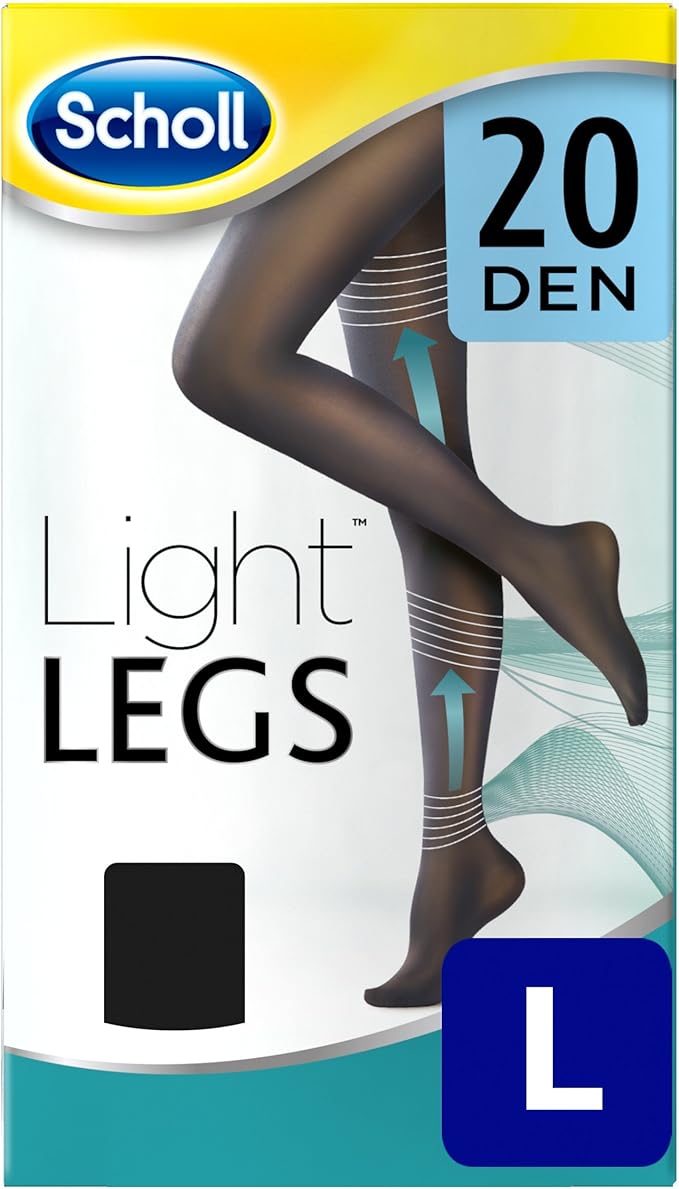
Scholl Light Legs Large 20 black
Scholl Light Legs Large 20 black
- ✔️ Graduated compression relieves tired, heavy, aching legs daily
- ✔️ 20 denier black finish looks like regular everyday tights
- ✔️ Designed specifically for women wearing a large size
- ✔️ Helps improve venous return and reduce leg swelling
- ✔️ Suitable for travel, work, and prolonged standing or sitting
Price Checker
 Lowest price guarantee
 Includes FREE private prescription


Couldn't load pickup availability
Are Scholl Light Legs Large 20 Black the Right Compression Socks for Swollen Legs?
If your legs feel heavy, tired, or puffy by the end of the day, you are far from alone. Millions of people in the UK experience these sensations — often linked to prolonged sitting or standing, pregnancy, or underlying venous insufficiency. Compression socks for swollen legs are one of the most widely recommended non-medicated approaches for managing these symptoms, and Scholl Light Legs Large 20 black tights are a popular, accessible option available without a prescription. At just £11.99, they offer a practical everyday solution for people who want to feel more comfortable on their feet. If you are also managing other aspects of your health, you might find our foot care range useful alongside these tights.
These tights are designed for women who wear a large size and want a discreet, 20 denier black finish that looks like ordinary hosiery. They provide graduated compression — a clinically recognised approach to improving venous return in the lower limbs. The NHS notes that compression stockings and hosiery are commonly used to help manage conditions such as varicose veins, deep vein thrombosis (DVT) prevention during travel, and general leg discomfort caused by poor circulation.
How Do Scholl Light Legs Tights Work to Relieve Leg Discomfort?
Graduated compression hosiery works by applying the greatest pressure at the ankle, with the level of compression gradually decreasing as it moves up the leg. This gradient encourages blood in the superficial veins to move upward, back towards the heart, rather than pooling in the lower limbs. The result? Less swelling, less aching, and legs that feel noticeably lighter throughout the day.
- Tightest compression at the ankle promotes upward venous blood flow
- Pressure gradually reduces towards the knee and thigh
- Reduces the risk of blood pooling in the lower leg veins
- Helps manage the sensation of heaviness and fatigue in the legs
- 20 denier construction provides a lightweight, everyday-wear feel
Who Should Consider Using Scholl Light Legs Large 20 Black Tights?
These tights are suitable for a wide range of people. They are particularly helpful if you spend long hours on your feet at work, sit at a desk for extended periods, travel frequently by plane or car, or simply notice that your legs feel tired and heavy by the afternoon. They are also commonly used during pregnancy to help manage the increased circulatory demands on the legs, though pregnant women should always check with their midwife or GP first.
- People who stand or sit for long periods during the working day
- Frequent travellers looking to reduce DVT risk on long journeys
- Those with mild varicose veins or spider veins causing discomfort
- Women who experience leg swelling or heaviness during pregnancy (with medical guidance)
How Do Scholl Light Legs Tights Compare to Other Compression Hosiery Options?
| Feature | Scholl Light Legs Large 20 Black | Standard Compression Stockings (NHS-prescribed) |
|---|---|---|
| Compression level | Light (approx. 15–20 mmHg) | Class 1–3 (14–35+ mmHg) |
| Prescription required | No — OTC purchase | Yes — GP referral needed |
| Appearance | 20 denier, looks like regular tights | Medical appearance, less discreet |
| Best suited for | Mild leg fatigue, everyday prevention | Moderate to severe venous conditions |
Are Scholl Light Legs Tights Clinically Suitable for You?
Before using any compression hosiery, it is worth considering whether it is appropriate for your specific situation. Compression socks for swollen legs are generally safe for healthy adults, but they are not suitable for everyone. If you have been diagnosed with peripheral arterial disease, severe oedema, or any condition affecting circulation in your legs, you must speak to your GP or pharmacist before wearing them. Similarly, if you have diabetes with associated neuropathy, the reduced sensation in your feet means you may not notice if the hosiery is causing pressure damage.
For those managing general wellness alongside leg comfort, our vitamins and supplements collection includes products that support circulatory health. Always read the product instructions carefully and ensure you have selected the correct size — wearing the wrong size can reduce effectiveness or cause discomfort.
This product is a medical device. Speak to your doctor or pharmacist before using if you have an underlying medical condition or are taking other medicines.
Scholl Light Legs Large 20 Black specifications
| Treatment category | Compression hosiery / leg comfort |
| Mechanism of action | Graduated compression to improve venous return |
| Effective for | Tired, heavy, aching, and swollen legs |
| Suitable for | Adult women, large size |
| Active ingredient | None — non-medicated compression hosiery |
| Pack size | 1 pair |
| Denier | 20 denier |
| Colour | Black |
| UK classification | General sale / medical device |
| Preparation | Compression tights (hosiery) |
| Route of administration | External (worn on legs) |
Specifications of Scholl Light Legs Large 20 Black
What Are Scholl Light Legs Large 20 Black Tights and What Are They Used For?
Scholl Light Legs Large 20 black tights are a pair of graduated compression hosiery designed to relieve the symptoms of tired, heavy, and aching legs. They are a non-medicated, over-the-counter product — meaning no prescription is needed. The tights are intended for adult women who wear a large size and want a discreet, everyday-looking pair of black tights that also provide therapeutic compression support.
They are commonly used by people who experience leg discomfort related to prolonged standing or sitting, mild varicose veins, travel-related leg fatigue, or general poor venous circulation. The NHS recognises compression hosiery as a useful tool for managing symptoms of venous insufficiency and reducing the risk of DVT during long-haul travel.
What Do You Need to Know Before Using Scholl Light Legs Tights?
These tights are not suitable for everyone. Please read the following carefully before use.
Do not use if you have:
- Peripheral arterial disease (PAD) or poor arterial circulation in the legs
- Severe leg oedema or pitting oedema without a confirmed diagnosis
- Open wounds, ulcers, or active skin infections on the legs
- Known allergy to the fabric or materials used in the tights
- Diabetic neuropathy affecting sensation in the feet or legs
Warnings and precautions:
- Always ensure you select the correct size — too tight can restrict circulation; too loose will not provide adequate compression
- Pregnant women should consult their midwife or GP before use
- If symptoms worsen or do not improve after regular use, seek medical advice
- Do not wear overnight unless specifically advised by a healthcare professional
Drug interactions:
- No known drug interactions — this is a non-medicated, physical compression device
How Should You Use Scholl Light Legs Large 20 Black Tights?
Getting the most from your compression tights depends on putting them on correctly and wearing them consistently. Follow these steps each morning for best results.
- Put on the tights first thing in the morning, ideally before getting out of bed, when leg swelling is at its lowest
- Sit on the edge of your bed or a chair in a comfortable position
- Gather the tights from the waistband down to the toe section, turning them inside out as you go
- Ease your foot into the toe section first, ensuring your heel is correctly positioned
- Gradually roll the fabric up your leg — do not pull or tug sharply
- Smooth out any wrinkles or folds, as these can create uncomfortable pressure points
- Repeat on the other leg, then pull the waistband up to a comfortable position
- Remove the tights before going to bed each night
| Indication | Age Group | Usage | Frequency |
|---|---|---|---|
| Tired, heavy legs | Adult women | 1 pair worn during waking hours | Daily as needed |
| Travel (DVT prevention) | Adult women | Worn throughout journey | During travel only |
| Mild varicose vein discomfort | Adult women | 1 pair worn during waking hours | Daily, ongoing |
If you are also dealing with foot discomfort alongside leg fatigue, our foot care collection includes a range of products that may complement your routine.
What Are the Possible Side Effects of Scholl Light Legs Tights?
Because these tights are a non-medicated physical device, side effects are uncommon. However, some people do experience discomfort, particularly if the tights are the wrong size or applied incorrectly.
Common side effects:
- Mild skin irritation or redness at the ankle or knee where compression is greatest
- Temporary indentation marks on the skin after removal
- Feeling of tightness, particularly during the first few days of use
Less common side effects:
- Numbness or tingling in the feet if the tights are too tight or incorrectly sized
- Worsening of swelling if worn by someone with arterial insufficiency (seek medical advice immediately)
- Skin breakdown or pressure sores in people with reduced sensation (e.g. diabetic neuropathy)
If you notice any worsening of symptoms, increased pain, or skin changes, remove the tights and speak to your pharmacist or GP promptly. For general pain management support, our pain relief collection may also be of interest.
How Should You Store Scholl Light Legs Tights?
- Store at room temperature, away from direct sunlight and heat sources
- Keep away from moisture and damp environments
- Store in the original packaging until first use
- Keep out of reach of children
- After washing, allow to air dry naturally — do not tumble dry, as heat damages the elastic fibres
- Do not use fabric softener, as this can degrade the compression properties of the hosiery
- Replace every three to six months, or sooner if the elasticity noticeably decreases
References
- https://www.nhs.uk/conditions/varicose-veins/treatment/
- https://www.nhs.uk/conditions/deep-vein-thrombosis-dvt/prevention/
- https://www.nhs.uk/conditions/leg-swelling/
- https://www.nhs.uk/conditions/varicose-veins/
- https://www.nhs.uk/pregnancy/related-conditions/common-symptoms/swollen-ankles-feet-and-fingers/
- https://www.nice.org.uk/guidance/cg168
Written and reviewed by our qualified team
Your safety and success are our highest priorities. Our medical team rigorously evaluates every product and piece of advice we provide, ensuring you receive only the most effective, science-backed solutions available.
Frequently Asked Questions
Where can I buy Scholl Light Legs Large 20 black online in the UK?
You can buy Scholl Light Legs Large 20 black directly from Cured Pharmacy online for £11.99 with fast UK delivery. No prescription is required, as these are an over-the-counter compression hosiery product. Simply add to your basket and check out securely through our GPhC-registered pharmacy.
How do Scholl Light Legs compression tights work in the body?
Scholl Light Legs tights use graduated compression — tightest at the ankle and gradually reducing up the leg — to encourage blood in the veins to flow upward towards the heart. This reduces the pooling of blood in the lower limbs that causes heaviness, aching, and swelling. The physical pressure supports the vein walls and helps the venous valves function more efficiently.
How do I put on Scholl Light Legs tights step by step?
Start by gathering the tights from the waistband down to the toe, turning them inside out. Ease your foot into the toe section first, position your heel correctly, then gradually roll the fabric up your leg without pulling sharply. Smooth out any wrinkles before standing, as folds in the fabric can create uncomfortable pressure points.
When is the best time to put on compression tights?
The best time to put on your Scholl Light Legs tights is first thing in the morning, ideally before you get out of bed. At this point, leg swelling is at its lowest, making the tights easier to put on and ensuring you get the full benefit of the compression throughout the day. Putting them on after you have been standing for a while is less effective.
Can I wear Scholl Light Legs tights all day?
Yes, Scholl Light Legs tights are designed for all-day wear during waking hours and can be worn comfortably from morning until bedtime. You should remove them before going to sleep unless a healthcare professional has specifically advised otherwise. Wearing them overnight without medical guidance is not recommended.
What is the correct size for Scholl Light Legs tights?
Scholl Light Legs Large 20 black tights are designed for women who wear a large clothing size — always check the sizing guide on the packaging before purchase, as wearing the wrong size can reduce effectiveness or cause discomfort. If you are between sizes, it is generally advisable to size up for comfort. Correct sizing is essential for safe and effective compression.
Who should not wear Scholl Light Legs compression tights?
People with peripheral arterial disease, severe or unexplained leg oedema, open wounds or skin infections on the legs, or diabetic neuropathy should not use these tights without first speaking to a GP or pharmacist. Compression hosiery can worsen symptoms in people with poor arterial blood flow. Always seek medical advice if you are unsure whether compression hosiery is appropriate for you.
Are Scholl Light Legs tights suitable during pregnancy?
Compression hosiery is commonly used during pregnancy to help manage leg swelling and discomfort, but pregnant women should always consult their midwife or GP before using any compression product. The NHS advises that swollen ankles and feet are common in pregnancy and that support hosiery can help, but individual suitability varies. Do not self-prescribe compression hosiery during pregnancy without professional guidance.
How do I manage any discomfort when first wearing compression tights?
It is normal to feel a degree of tightness when you first start wearing compression tights — this usually eases within a few days as your legs adjust. Ensure you have the correct size and that the tights are applied without wrinkles or folds. If you experience numbness, tingling, or worsening pain, remove the tights immediately and speak to your pharmacist. You can also explore our pain relief collection for additional comfort support.
What are the alternatives to Scholl Light Legs tights?
Alternatives include other over-the-counter graduated compression hosiery brands, or medically prescribed Class 1, 2, or 3 compression stockings available through your GP for more significant venous conditions. For more severe symptoms such as chronic venous insufficiency or lymphoedema, NHS-prescribed hosiery provides higher levels of compression than OTC products. Your GP or pharmacist can advise on the most appropriate option for your needs.
How long can I keep using Scholl Light Legs tights?
You can use Scholl Light Legs tights on an ongoing basis for as long as they remain effective and comfortable. Compression hosiery typically loses its elasticity after repeated washing and should be replaced every three to six months. If your symptoms worsen, persist, or change in character, speak to your GP rather than continuing to self-manage with OTC hosiery.
How do I wash Scholl Light Legs tights to keep them effective?
Wash Scholl Light Legs tights by hand or on a gentle machine cycle using a mild detergent, and always air dry them naturally — never tumble dry, as heat damages the elastic fibres that provide compression. Avoid fabric softener, as this degrades the compression properties of the hosiery over time. Proper care extends the life of the tights and maintains their therapeutic benefit.
Can compression tights help prevent DVT on long flights?
The NHS recommends wearing compression hosiery during long-haul flights as one measure to reduce the risk of deep vein thrombosis (DVT), alongside staying hydrated and moving your legs regularly. Scholl Light Legs tights provide light graduated compression that can help maintain circulation during periods of prolonged sitting. If you have a personal or family history of DVT, speak to your GP before travelling for tailored advice. You can also browse our travel health collection for further support.
What are the latest findings on compression hosiery for leg health?
Current clinical evidence, including NICE guidance on venous thromboembolism prevention, supports the use of graduated compression hosiery as an effective non-pharmacological intervention for reducing venous stasis and associated symptoms. Research consistently shows that correctly fitted compression hosiery reduces leg swelling and discomfort in people with mild to moderate venous insufficiency. Always ensure hosiery is correctly sized and fitted, as poorly fitted products can be ineffective or harmful.
Do Scholl Light Legs tights help with varicose veins?
Scholl Light Legs tights can help relieve the discomfort associated with mild varicose veins — such as aching, heaviness, and swelling — by improving venous return in the legs. However, they do not treat or remove varicose veins themselves. The NHS advises that compression stockings are a first-line management option for varicose vein symptoms, but more significant varicose veins may require medical or surgical treatment. Speak to your GP if your varicose veins are causing significant pain or skin changes.
Written and reviewed by our qualified team

Reviewed by:
Tarun Kumar
Superintendent/ Clinical Lead
📖 Find out more about our team of medical content authors and how we ensure the accuracy of our content with our content guidelines.
Content last updated: 14 Sep 2026
Other popular options


We’re a safe and
regulated UK service

Lowest Price Guarantee

We're convinced you won't find your treatment cheaper, but if you do we'll refund the difference.
Find out more
100% discreet packaging

Discreet, unbranded packaging for every order.
Find out more

Need help?
Talk to our friendly experts now


How our service works

Service setup

Discreet packaging

Express delivery