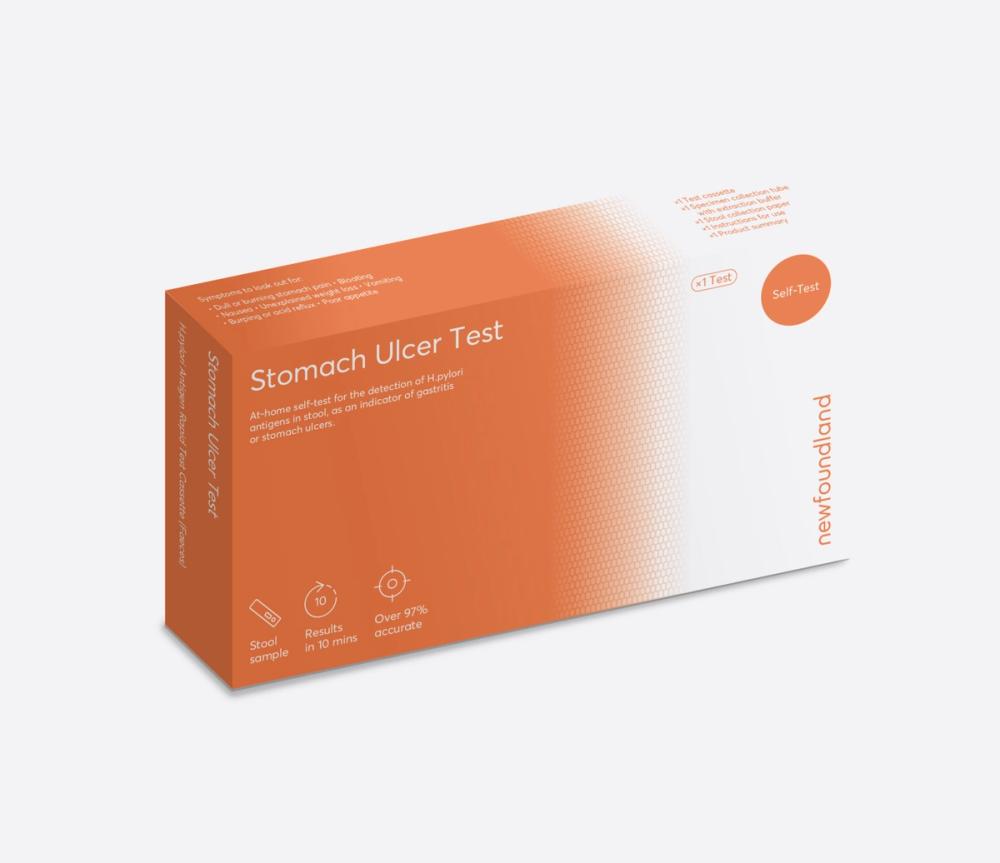
Newfoundland Stomach Ulcer Test
Newfoundland Stomach Ulcer Test
- ✔️ Detects H. pylori — the leading bacterial cause of stomach ulcers
- ✔️ Results ready in just 10 minutes from a stool sample
- ✔️ Over 90% sensitivity and specificity in clinical studies
- ✔️ Suitable for initial diagnosis and post-treatment confirmation
- ✔️ No prescription needed — discreet home testing for adults
Price Checker
 Lowest price guarantee
 Includes FREE private prescription


Couldn't load pickup availability
What Is a Stomach Ulcer Test and Do You Need One?
Stomach ulcers — medically known as peptic ulcers — affect a significant number of people in the UK every year. The most common bacterial cause is Helicobacter pylori (H. pylori), a spiral-shaped bacterium that damages the protective lining of the stomach. If you've been experiencing persistent upper abdominal pain, bloating, nausea, or a burning sensation that seems to ease and then return, a stomach ulcer test could be a sensible first step. The Newfoundland Stomach Ulcer Test is a rapid faecal antigen test that checks for H. pylori infection from the comfort of your own home, for just £6.24.
According to the NHS, H. pylori infection is very common and is thought to affect around half of the world's population, though many people never develop symptoms. When symptoms do appear, getting tested early can help you and your GP decide on the right course of action before the condition worsens. If you're also managing digestive discomfort more broadly, you might find our indigestion range useful alongside this test.
How Does the Newfoundland Stomach Ulcer Test Work?
This test uses a lateral flow immunoassay method to detect H. pylori antigens directly in a stool (faecal) sample. It's the same principle used in many rapid diagnostic tests — antibodies on the test strip bind to specific proteins shed by the bacteria, producing a visible line if the antigen is present. The process is straightforward:
- Collect a small stool sample using the collection tool included in the kit
- Mix the sample with the provided buffer solution in the sample tube
- Apply a few drops of the diluted sample to the test cassette
- Wait 10 minutes and read the result — one line means negative, two lines means positive
No laboratory equipment is needed. The entire process takes under 15 minutes and can be done privately at home.
Who Should Consider Using This Stomach Ulcer Test?
This test is designed for adults who want to check whether H. pylori may be contributing to their digestive symptoms. It's particularly relevant if you've been experiencing recurring symptoms and haven't yet spoken to a GP, or if you want to monitor your status after completing H. pylori eradication treatment. It is not intended as a replacement for professional medical diagnosis.
You may benefit from this test if you:
- Have persistent or recurring upper abdominal pain or discomfort
- Experience frequent bloating, burping, or nausea without a clear cause
- Have a family history of stomach ulcers or gastric cancer
- Want to check whether H. pylori eradication treatment has been successful
How Does This Test Compare to Other H. Pylori Testing Methods?
| Feature | Newfoundland Stomach Ulcer Test | Urea Breath Test (GP) |
|---|---|---|
| Setting | Home use | GP surgery or hospital |
| Sample type | Stool (faecal antigen) | Breath sample |
| Result time | 10 minutes | 30–60 minutes |
| Cost | £6.24 | Free on NHS (with referral) |
Is the Newfoundland Stomach Ulcer Test Clinically Reliable?
Faecal antigen tests are recognised by NICE and the NHS as a reliable method for detecting active H. pylori infection. They are recommended both for initial diagnosis and for confirming successful eradication after treatment. That said, accuracy can be affected by certain medicines. You should avoid using this stomach ulcer test within four weeks of taking antibiotics or bismuth-containing preparations, and within two weeks of stopping proton pump inhibitors (PPIs) such as omeprazole, as these can suppress H. pylori to levels below the test's detection threshold, leading to a false-negative result.
Store the test kit below 30°C, away from direct sunlight and moisture. Keep it out of reach of children. If you're managing other gut-related conditions alongside potential H. pylori infection, our IBS and cramps collection may also be worth exploring.
This product is a medicine. Speak to your doctor or pharmacist before using if you have an underlying medical condition or are taking other medicines.
Newfoundland Stomach Ulcer Test specifications
| Treatment category | Diagnostic / Gastrointestinal |
| Mechanism of action | Lateral flow immunoassay detecting H. pylori faecal antigens |
| Effective for | Detection of active Helicobacter pylori infection |
| Suitable for | Adults aged 18 and over |
| Active ingredient | Anti-H. pylori antibody reagent (diagnostic) |
| Pack size | 1 test kit |
| UK classification | General Sale / Diagnostic device |
| Preparation | Rapid lateral flow cassette |
| Route of administration | Stool sample (faecal antigen) |
Specifications of Newfoundland Stomach Ulcer Test
What Is the Newfoundland Stomach Ulcer Test and What Is It Used For?
The Newfoundland Stomach Ulcer Test is a rapid, at-home faecal antigen test used to detect the presence of Helicobacter pylori (H. pylori) — a bacterium strongly associated with the development of peptic ulcers and chronic gastritis. H. pylori infection is one of the most common bacterial infections worldwide, and the NHS identifies it as the leading cause of stomach ulcers in the UK. By detecting H. pylori antigens in a stool sample, this test can indicate whether an active infection is present, helping you and your GP make informed decisions about next steps.
It is important to understand that this test is a screening tool, not a definitive diagnosis. A positive result should always be followed up with your GP, who may arrange a confirmatory test — such as a urea breath test — before prescribing treatment.
What Do You Need to Know Before Using the Newfoundland Stomach Ulcer Test?
Before using this test, there are several important factors to consider. Certain medicines and conditions can interfere with the accuracy of the result.
Do not use this test if:
- You have taken antibiotics or bismuth-containing medicines within the last four weeks
- You have taken proton pump inhibitors (e.g. omeprazole, lansoprazole) within the last two weeks
- You have active gastrointestinal bleeding, as this may affect the result
- You are under 18 years of age (seek medical advice instead)
- The test kit is past its expiry date or the packaging has been damaged
Potential interactions to be aware of:
- Proton pump inhibitors (PPIs) — can suppress H. pylori below detectable levels
- Antibiotics — may temporarily eradicate or reduce bacterial load, causing false negatives
- Bismuth subsalicylate — suppresses H. pylori antigen shedding in stool
- H2-receptor antagonists (e.g. ranitidine, famotidine) — may reduce test sensitivity if taken recently
How Should You Use the Newfoundland Stomach Ulcer Test?
Using this test correctly is essential for an accurate result. Follow these steps carefully and read the full instructions included in your kit before you begin.
- Wash your hands thoroughly before and after handling the sample
- Use the collection tool provided to collect a small stool sample — approximately the size of a pea
- Place the sample into the sample buffer tube and mix by shaking gently
- Allow the mixture to settle for 1–2 minutes
- Apply 2–3 drops of the diluted sample to the sample well on the test cassette
- Wait exactly 10 minutes before reading the result — do not read after 15 minutes
- Interpret the result: one line (C only) = negative; two lines (C and T) = positive; no lines = invalid (repeat with a new kit)
| Indication | Age Group | Test Use | Frequency |
|---|---|---|---|
| Initial H. pylori screening | Adults 18+ | One test | Once, then GP follow-up if positive |
| Post-eradication confirmation | Adults 18+ | One test | At least 4 weeks after completing treatment |
What Are the Possible Side Effects of the Newfoundland Stomach Ulcer Test?
As a diagnostic test rather than a medicine, the Newfoundland Stomach Ulcer Test does not carry pharmacological side effects. However, there are a few practical considerations worth noting.
Common considerations:
- Mild discomfort or embarrassment associated with stool sample collection
- Anxiety related to awaiting or interpreting the result
- Potential for a false-negative result if medicines have not been stopped in time
Less common considerations:
- Invalid results due to insufficient sample volume or incorrect technique
- Misinterpretation of a faint test line — if in doubt, consult your pharmacist
If your result is positive and you go on to receive H. pylori eradication therapy from your GP, that treatment (typically a combination of antibiotics and a PPI) may cause side effects including nausea, diarrhoea, and a metallic taste. These are related to the treatment, not the test itself. You can browse our diarrhoea relief range if you experience loose stools during antibiotic treatment.
How Should You Store the Newfoundland Stomach Ulcer Test?
Correct storage is important to maintain the integrity of the test components and ensure an accurate result.
- Store at room temperature, below 30°C
- Keep away from direct sunlight, heat sources, and moisture
- Do not freeze the test kit
- Keep out of reach and sight of children
- Do not use after the expiry date printed on the outer packaging
- Once the foil pouch is opened, use the test immediately
- Dispose of used test components as clinical waste or in accordance with your local council guidelines
If you're managing broader digestive health concerns, our pain relief collection includes options that may help with the abdominal discomfort sometimes associated with H. pylori infection while you await GP advice.
References
Written and reviewed by our qualified team
Your safety and success are our highest priorities. Our medical team rigorously evaluates every product and piece of advice we provide, ensuring you receive only the most effective, science-backed solutions available.
Frequently Asked Questions
Where can I buy the Newfoundland Stomach Ulcer Test online in the UK?
You can order the Newfoundland Stomach Ulcer Test directly from Cured Pharmacy online for £6.24. It is supplied by a GPhC-registered UK pharmacy and dispatched discreetly to your home address. No prescription is required as this is an over-the-counter diagnostic test.
How does the Newfoundland Stomach Ulcer Test detect H. pylori?
The test uses a lateral flow immunoassay to detect H. pylori antigens shed in your stool. Antibodies on the test strip bind to these antigens and produce a visible coloured line if the bacterium is present. This method detects active infection rather than past exposure, making it clinically useful for both initial diagnosis and post-treatment confirmation.
How do I use the Newfoundland Stomach Ulcer Test step by step?
Collect a small stool sample using the collection tool in the kit, mix it with the buffer solution provided, and apply a few drops to the test cassette. Read the result after exactly 10 minutes — one line means negative, two lines means positive, and no lines means the test is invalid and should be repeated. Always read the full instructions included in the packaging before you begin.
How accurate is a home stomach ulcer test for H. pylori?
Faecal antigen tests for H. pylori have reported sensitivity and specificity of over 90% in published clinical literature, and they are recommended by NICE as a valid method for detecting active infection. However, accuracy can be reduced if you have recently taken antibiotics, proton pump inhibitors, or bismuth-containing medicines. A positive result should always be confirmed by your GP before any treatment is started.
Who is the Newfoundland Stomach Ulcer Test suitable for?
This test is suitable for adults aged 18 and over who are experiencing symptoms that may suggest an H. pylori infection, such as persistent upper abdominal pain, bloating, nausea, or frequent indigestion. It is also useful for adults who have completed H. pylori eradication treatment and want to confirm the infection has cleared. It is not recommended for children without prior medical advice.
What should I do if my stomach ulcer test result is positive?
If your result is positive, contact your GP as soon as possible to discuss your symptoms and arrange a confirmatory test. Your GP may prescribe a course of eradication therapy — typically a seven-day course of two antibiotics combined with a proton pump inhibitor. Do not self-treat based on a home test result alone.
Can I use this test while taking omeprazole or other antacids?
You should not use this test within two weeks of stopping proton pump inhibitors such as omeprazole or lansoprazole, as these medicines suppress H. pylori to levels that may fall below the test's detection threshold, causing a false-negative result. Standard antacids such as Gaviscon or calcium carbonate tablets are less likely to interfere, but always check with your pharmacist if you are unsure.
What happens if my stomach ulcer test result is negative but I still have symptoms?
A negative result means H. pylori antigens were not detected in your sample at the time of testing, but it does not rule out other causes of your symptoms. If you continue to experience persistent abdominal pain, bloating, or indigestion, you should speak to your GP who can investigate further. Other conditions such as gastritis, irritable bowel syndrome, or acid reflux may produce similar symptoms.
Can I use this test to check if H. pylori treatment has worked?
Yes — faecal antigen tests are recommended by NICE for confirming successful H. pylori eradication after treatment. You should wait at least four weeks after completing your antibiotic course before testing, and at least two weeks after stopping any proton pump inhibitors. Testing too soon may produce a false-negative result even if some bacteria remain.
What are the alternatives to the Newfoundland Stomach Ulcer Test?
The main alternatives include the urea breath test and blood serology testing, both of which are available through your GP on the NHS. The urea breath test is considered highly accurate for active infection and is widely used in clinical practice. Blood tests detect antibodies to H. pylori but cannot distinguish between current and past infection, making them less useful for post-treatment confirmation. You can also explore our electrical health and diagnostic range for other home monitoring tools.
Is the Newfoundland Stomach Ulcer Test safe to use during pregnancy?
The test itself — involving only stool sample collection — carries no pharmacological risk during pregnancy. However, if your result is positive, you should inform your GP that you are pregnant before any treatment is prescribed, as some antibiotics used in H. pylori eradication therapy are not suitable during pregnancy. Always seek medical advice before starting any treatment while pregnant.
How long does it take to get a result from this stomach ulcer test?
Results are available within 10 minutes of applying the sample to the test cassette. You should not read the result before 10 minutes or after 15 minutes, as this may affect accuracy. The result window is clearly labelled on the cassette, and the instructions include a visual guide to help you interpret the lines correctly.
What does a faint line on the test cassette mean?
Any visible line in the test (T) zone — regardless of how faint — is considered a positive result for H. pylori antigens. A faint line does not mean a weakly positive result; it simply means the test has detected the antigen. If you are unsure about your result, contact your pharmacist or GP for guidance before drawing any conclusions.
How should I dispose of the Newfoundland Stomach Ulcer Test after use?
Used test components — including the cassette, sample tube, and collection tool — should be treated as clinical waste and disposed of carefully. Seal them in a plastic bag before placing in your household waste bin, in line with standard guidance for home diagnostic tests. Do not attempt to reuse any part of the kit.
What are the latest research findings on faecal antigen tests for H. pylori?
Current NICE guidance (CG184) supports the use of faecal antigen testing as a first-line non-invasive method for diagnosing H. pylori in patients presenting with dyspepsia. Published clinical evidence consistently shows sensitivity and specificity above 90% for monoclonal antibody-based faecal antigen tests, which are considered comparable to the urea breath test in accuracy. Research continues to support their use for both initial diagnosis and post-eradication confirmation in primary care settings. If you're also looking to support your digestive health more broadly, our IBS and cramps collection includes a range of relevant products.
Written and reviewed by our qualified team

Reviewed by:
Tarun Kumar
Superintendent/ Clinical Lead
📖 Find out more about our team of medical content authors and how we ensure the accuracy of our content with our content guidelines.
Content last updated: 14 Sep 2026

We’re a safe and
regulated UK service

Lowest Price Guarantee

We're convinced you won't find your treatment cheaper, but if you do we'll refund the difference.
Find out more
100% discreet packaging

Discreet, unbranded packaging for every order.
Find out more

Need help?
Talk to our friendly experts now


How our service works

Service setup

Discreet packaging

Express delivery