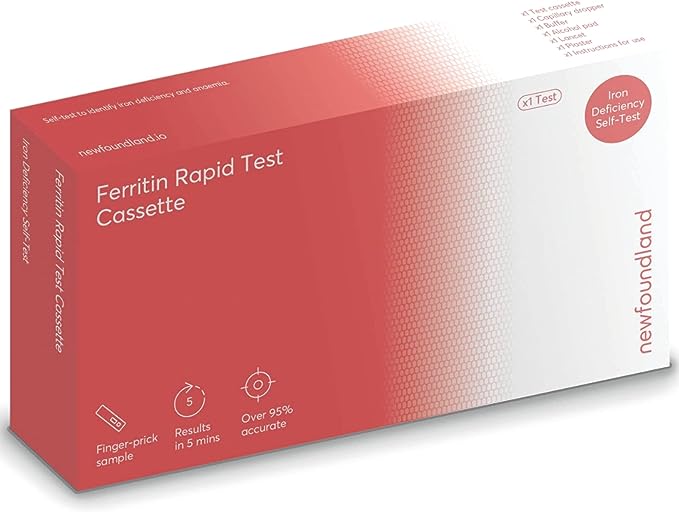
Newfoundland Iron Deficiency Test
Newfoundland Iron Deficiency Test
- ✔️ Screens for iron deficiency using a simple fingerprick blood sample
- ✔️ Delivers a visible result in minutes at home
- ✔️ Suitable for adults with fatigue, breathlessness, or pale skin
- ✔️ Ideal for women, vegans, and those at higher risk of low iron
- ✔️ Single-use sterile lancet included for safe, hygienic testing
Price Checker
 Lowest price guarantee
 Includes FREE private prescription


Couldn't load pickup availability
Is the Newfoundland Iron Deficiency Test Right for You?
Feeling constantly tired, short of breath, or struggling to concentrate? These are some of the most common signs that your iron levels might be lower than they should be. Iron deficiency is the most widespread nutritional deficiency in the UK, affecting millions of people — particularly women of reproductive age, pregnant women, and those with certain long-term health conditions. The iron deficiency test from Newfoundland, available at Cured Pharmacy for just £4.99, gives you a quick and convenient way to check whether low iron could be behind how you're feeling, without needing to wait for a GP appointment.
Iron plays a vital role in producing haemoglobin — the protein in red blood cells that carries oxygen around your body. When iron stores fall too low, your body can't make enough healthy red blood cells, which leads to a condition called iron deficiency anaemia. According to the NHS, symptoms can include fatigue, pale skin, heart palpitations, and difficulty breathing. Catching a potential deficiency early means you can take action sooner, whether that's adjusting your diet, exploring our range of vitamins and supplements, or speaking to your GP about further testing.
How Does the Newfoundland Iron Deficiency Test Work?
This is a lateral flow rapid test that uses a small fingerprick blood sample to detect markers associated with iron deficiency. The process is straightforward:
- A sterile lancet is used to collect a small drop of blood from your fingertip.
- The blood sample is applied to the test strip or cassette as directed in the instructions.
- Reagents within the test react with components in your blood sample.
- A result line appears within the timeframe stated in the pack — typically a few minutes.
- You interpret the result by comparing the lines visible on the test to the guide provided.
The test is designed as a screening tool. It can indicate whether your iron levels may be low, prompting you to seek further medical advice. It does not replace a full laboratory blood test, which can measure serum ferritin, transferrin saturation, and a full blood count in much greater detail.
Who Should Consider Using This Iron Deficiency Test?
This test is suitable for adults who want a quick, at-home indication of whether their iron levels might be low. It's particularly useful if you're experiencing symptoms but haven't yet had the chance to see your GP. You might find it helpful if you:
- Feel persistently tired or weak without an obvious explanation.
- Have noticed pale skin, brittle nails, or unusual hair loss.
- Are a woman with heavy periods, which can deplete iron stores over time.
- Follow a vegetarian or vegan diet, which may provide less easily absorbed iron.
- Are pregnant or planning a pregnancy, as iron requirements increase significantly.
It is not intended for use in children without medical supervision, and it should not be used as a sole diagnostic tool. Always follow up an abnormal result with your GP.
How Does This Test Compare to a GP Blood Test?
| Feature | Newfoundland Iron Deficiency Test | GP Laboratory Blood Test |
|---|---|---|
| Cost | £4.99 | Free on NHS (with referral) |
| Speed of result | Minutes at home | Days to weeks |
| Detail of result | Screening indicator | Full ferritin, FBC, transferrin |
| Requires appointment | No | Yes |
Is the Newfoundland Iron Deficiency Test Clinically Suitable for You?
Before using any at-home diagnostic test, it's worth considering whether it's appropriate for your situation. The iron deficiency test is a screening device — it can flag a potential problem, but it cannot diagnose iron deficiency anaemia on its own. If you receive a result suggesting low iron, the next step is always to speak to your GP, who can arrange a full blood count and serum ferritin measurement to confirm the diagnosis and identify any underlying cause.
Store the test below 30°C, away from direct sunlight and moisture, and keep it out of reach of children. Do not use the test after the expiry date printed on the packaging. If you're already managing a health condition that affects iron absorption — such as coeliac disease or inflammatory bowel disease — you should discuss monitoring with your GP rather than relying solely on a home test. You might also find it useful to browse our electrical health and diagnostic range for other monitoring tools.
This product is a medical device. Speak to your doctor or pharmacist before using if you have an underlying medical condition or are taking other medicines.
Newfoundland Iron Deficiency Test specifications
| Treatment category | Diagnostic / Self-testing |
| Mechanism of action | Lateral flow immunoassay using fingerprick blood sample |
| Effective for | Screening for iron deficiency indicators |
| Suitable for | Adults aged 18 and over |
| Active ingredient | N/A — diagnostic test device |
| Pack size | 1 test per pack |
| UK classification | CE-marked medical device |
| Preparation | Rapid lateral flow test strip/cassette |
| Route of administration | Fingerprick blood sample |
Specifications of Newfoundland Iron Deficiency Test
What Is the Newfoundland Iron Deficiency Test and What Is It Used For?
The Newfoundland Iron Deficiency Test is a rapid, at-home screening device designed to help adults identify whether their iron levels may be lower than normal. It is used as an initial indicator — not a definitive diagnosis — for iron deficiency, which is the most common cause of anaemia in the UK. The NHS estimates that iron deficiency anaemia affects around 3% of men and 8% of women in the UK, with many more people having low iron stores without yet developing full anaemia.
The test is used by people who are experiencing symptoms such as persistent fatigue, breathlessness, pale skin, brittle nails, or difficulty concentrating. It is also used by those who want to monitor their iron status between GP appointments, or who want a quick answer before deciding whether to seek further medical advice.
What Do You Need to Know Before Using the Newfoundland Iron Deficiency Test?
This test is a screening tool only. There are some important things to be aware of before you use it.
Do not use this test if:
- You are under 18 years of age without medical supervision.
- The packaging is damaged or the seal has been broken.
- The test has passed its expiry date.
- You have a known bleeding disorder or are taking anticoagulant medicines such as warfarin — consult your GP before performing a fingerprick test.
Warnings and precautions:
- A negative result does not completely rule out iron deficiency — if symptoms persist, see your GP.
- A positive result is not a confirmed diagnosis; always follow up with a laboratory blood test.
- Do not use the lancet more than once — it is single-use only.
- Dispose of the lancet safely in a sharps container or as directed by your local authority.
- Results may be affected by certain medical conditions, medications, or dehydration.
Known interactions:
- No drug interactions apply to this diagnostic device.
- However, recent iron supplementation may affect the accuracy of some iron screening tests — check the product instructions for guidance.
How Should You Use the Newfoundland Iron Deficiency Test?
Using this test correctly is important for getting a reliable result. Follow these steps carefully and read the full instructions included in your pack before you begin.
- Wash your hands thoroughly with soap and warm water, then dry them completely.
- Allow your hand to hang down briefly to encourage blood flow to your fingertips.
- Use the sterile lancet provided to prick the side of your fingertip with a quick, firm motion.
- Gently squeeze your finger to produce a small drop of blood — wipe away the first drop with the swab provided.
- Collect the required volume of blood using the collection device or pipette included in the kit.
- Apply the blood sample to the designated area on the test strip or cassette as shown in the instructions.
- Wait for the result within the timeframe stated — do not read the result after the stated window has passed.
- Interpret your result by comparing the lines on the test to the guide in the instructions.
| Indication | Age Group | Usage | Frequency |
|---|---|---|---|
| Iron deficiency screening | Adults 18+ | 1 test per pack | Single use; repeat as clinically advised |
What Are the Possible Side Effects of the Newfoundland Iron Deficiency Test?
As a diagnostic device rather than a medicine, this test does not cause systemic side effects. However, the fingerprick procedure itself may cause minor localised reactions.
Common side effects (related to fingerprick):
- Brief, mild pain or stinging at the lancet site.
- A small drop of blood that may take a moment to stop.
- Temporary redness or tenderness at the puncture site.
Less common side effects:
- Minor bruising around the fingertip.
- Very rarely, localised infection at the puncture site if the area is not kept clean — clean the site with the swab provided and keep it dry.
If you experience prolonged bleeding, significant pain, or signs of infection such as increasing redness, warmth, or swelling, contact your pharmacist or GP. People with bleeding disorders should not perform fingerprick tests without medical advice. If you're managing a condition that affects your blood, you may also find our women's health range helpful for related support products.
How Should You Store the Newfoundland Iron Deficiency Test?
- Store below 30°C in a cool, dry place away from direct sunlight.
- Do not refrigerate or freeze the test.
- Keep the test in its original sealed packaging until you are ready to use it.
- Keep out of reach and sight of children.
- Do not use after the expiry date printed on the outer packaging.
- Dispose of used components — including the lancet — safely and in accordance with your local authority's guidance on sharps disposal.
References
Written and reviewed by our qualified team
Your safety and success are our highest priorities. Our medical team rigorously evaluates every product and piece of advice we provide, ensuring you receive only the most effective, science-backed solutions available.
Frequently Asked Questions
Where can I buy the Newfoundland Iron Deficiency Test online in the UK?
You can buy the Newfoundland Iron Deficiency Test directly from Cured Pharmacy online for just £4.99, with no prescription required. It is dispatched from a GPhC-registered UK pharmacy, so you can order with confidence. Simply add it to your basket and it will be delivered to your door.
How does the Newfoundland Iron Deficiency Test work in the body?
The test uses a lateral flow immunoassay method — a small fingerprick blood sample is applied to a test strip, where it reacts with reagents that detect markers associated with low iron levels. A visible result line appears within minutes, indicating whether your iron levels may be within or outside the normal range. It works as a screening tool rather than a full diagnostic measure.
How do I use the Newfoundland Iron Deficiency Test step by step?
Wash and dry your hands thoroughly, then use the sterile lancet to prick the side of your fingertip. Apply the blood sample to the test strip as directed in the instructions, and read the result within the stated timeframe — usually a few minutes. Full step-by-step instructions are included in every pack.
How accurate is an at-home iron deficiency test?
At-home rapid iron tests are designed as screening tools and can give a useful early indication of whether your iron levels may be low. They are not as detailed as a laboratory blood test, which can measure serum ferritin, transferrin saturation, and a full blood count. Always confirm an abnormal result with your GP.
Who is eligible to use the Newfoundland Iron Deficiency Test?
The test is suitable for adults aged 18 and over who are experiencing symptoms of iron deficiency, such as fatigue, breathlessness, pale skin, or brittle nails. It is particularly useful for women with heavy periods, vegetarians, vegans, and pregnant women. It is not recommended for children without medical supervision.
What should I do if my iron deficiency test result is positive?
A positive result suggests your iron levels may be low, and you should contact your GP as soon as possible for a confirmatory laboratory blood test. Do not start high-dose iron supplementation without medical advice, as the underlying cause of iron deficiency needs to be identified. Your GP may also check for conditions such as coeliac disease or gastrointestinal bleeding.
What does a negative result on the iron deficiency test mean?
A negative result suggests your iron levels are likely within a normal range at the time of testing, but it does not completely rule out iron deficiency. If your symptoms persist despite a negative result, you should still speak to your GP. Factors such as dehydration or recent supplementation can occasionally affect test accuracy.
Can I use the iron deficiency test if I am pregnant?
Pregnant women are at higher risk of iron deficiency because iron requirements increase significantly during pregnancy, and the test can be used as an initial screen. However, you should always follow up with your midwife or GP, as routine iron monitoring is a standard part of antenatal care. The NHS recommends all pregnant women have a full blood count at their booking appointment and again at 28 weeks.
Can I use this test if I am already taking iron supplements?
Recent iron supplementation may affect the accuracy of some rapid iron screening tests, so it is worth checking the product instructions before testing. If you are already taking iron supplements prescribed by your GP, a laboratory blood test is a more reliable way to monitor your levels. You can browse our vitamins and supplements range if you are looking for iron support products.
What are the symptoms of iron deficiency I should look out for?
According to the NHS, common symptoms of iron deficiency anaemia include persistent tiredness and lack of energy, shortness of breath, heart palpitations, and pale skin. You may also notice brittle nails, hair loss, difficulty swallowing, or a sore tongue. If you have several of these symptoms, an iron deficiency test is a sensible first step.
What are the alternatives to the Newfoundland Iron Deficiency Test?
Alternatives include a full blood count or serum ferritin test arranged by your GP on the NHS, or other branded at-home iron test kits available from pharmacies. A GP-ordered laboratory test will provide more detailed and clinically reliable results. You can also explore our electrical health and diagnostic range for other self-monitoring options.
How long does it take to get a result from the iron deficiency test?
Results are typically visible within a few minutes of applying the blood sample to the test strip — the exact timeframe is stated in the instructions included in your pack. Do not read the result after the stated window has passed, as this may give an inaccurate reading. The test is designed to be quick and straightforward to use at home.
Is the Newfoundland Iron Deficiency Test safe to use at home?
Yes, the test is designed for safe home use by adults and includes a sterile single-use lancet, making the fingerprick process as safe and hygienic as possible. Dispose of the lancet carefully after use — ideally in a sharps container — and clean the puncture site with the swab provided. If you have a bleeding disorder or are taking anticoagulants, speak to your GP before performing a fingerprick test.
How long can I keep the iron deficiency test before using it?
You can keep the test until the expiry date printed on the outer packaging, provided it is stored correctly — below 30°C, away from direct sunlight and moisture, and in its original sealed packaging. Do not use the test after the expiry date, as the reagents may no longer be reliable. Store it in a cool, dry place rather than in a bathroom cabinet where humidity can be high.
What are the latest findings on iron deficiency in the UK?
Iron deficiency remains the most common nutritional deficiency worldwide, and the NHS recognises it as a significant public health concern in the UK, particularly among women of reproductive age, pregnant women, and those following plant-based diets. NICE guidelines recommend investigating the underlying cause of iron deficiency anaemia in all patients, rather than simply treating with supplements. Early screening using an at-home iron deficiency test can help prompt timely medical review.
Written and reviewed by our qualified team

Reviewed by:
Tarun Kumar
Superintendent/ Clinical Lead
📖 Find out more about our team of medical content authors and how we ensure the accuracy of our content with our content guidelines.
Content last updated: 14 Sep 2026

We’re a safe and
regulated UK service

Lowest Price Guarantee

We're convinced you won't find your treatment cheaper, but if you do we'll refund the difference.
Find out more
100% discreet packaging

Discreet, unbranded packaging for every order.
Find out more

Need help?
Talk to our friendly experts now


How our service works

Service setup

Discreet packaging

Express delivery