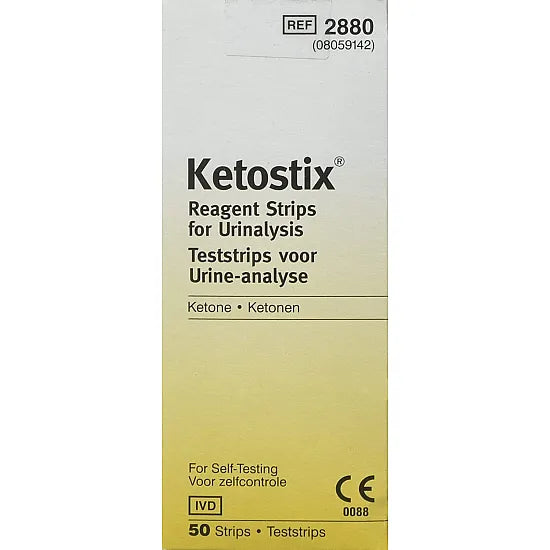
Ketostix Reagent Strips for Ketone Urinalysis - 50 Test Strips
Ketostix Reagent Strips for Ketone Urinalysis - 50 Test Strips
- ✔️ Detects urinary ketones in just 15 seconds
- ✔️ Suitable for type 1 and type 2 diabetes monitoring
- ✔️ Helps identify diabetic ketoacidosis risk early
- ✔️ Ideal for confirming nutritional ketosis on keto diets
- ✔️ 50 single-use strips for consistent, reliable home testing
Price Checker
 Lowest price guarantee
 Includes FREE private prescription


Couldn't load pickup availability
What Are Ketone Urine Test Strips and How Do They Help?
If you're managing diabetes or following a ketogenic diet, keeping track of your ketone levels matters. Ketone urine test strips give you a quick, straightforward way to check for ketones in your urine at home — no clinic visit required. Ketostix Reagent Strips for Ketone Urinalysis come in a pack of 50, making them a practical and cost-effective option for regular monitoring. You can find these alongside other essential tools in our diabetes monitoring collection.
Ketones are produced when your body breaks down fat for energy instead of glucose. In people with diabetes — particularly type 1 — elevated ketone levels can signal diabetic ketoacidosis (DKA), a serious and potentially life-threatening condition. Catching raised ketones early gives you the chance to act quickly and seek medical advice before things escalate.
How Do Ketostix Reagent Strips Work?
The chemistry behind these strips is straightforward but effective. Each strip contains a reagent pad impregnated with sodium nitroprusside (also called nitroferricyanide). When this pad comes into contact with acetoacetate — one of the main ketone bodies found in urine — a colour reaction occurs. The pad changes colour, and you compare it to the reference chart printed on the container label.
- Dip the reagent end of the strip into a fresh urine sample for approximately two seconds.
- Remove the strip and tap off any excess urine against the side of the container.
- Wait exactly 15 seconds before reading the result.
- Hold the strip horizontally next to the colour chart on the label and match the pad colour to the closest shade.
- Results range from negative (beige/cream) through trace, small, moderate, to large (deep purple).
It's worth noting that Ketostix strips detect acetoacetate specifically. They do not measure beta-hydroxybutyrate, which tends to predominate during active DKA. For clinical assessment of DKA, blood ketone testing is generally preferred by healthcare professionals.
Who Should Use Ketostix Reagent Strips?
These strips are suitable for a range of people. Your GP or diabetes nurse may have already recommended urine ketone testing as part of your self-monitoring routine. They're particularly useful during illness, when blood glucose is persistently elevated, or when you're adjusting insulin doses.
- People with type 1 diabetes who need to monitor for DKA risk.
- People with type 2 diabetes on certain medications (such as SGLT-2 inhibitors) where ketone monitoring may be advised.
- Individuals following a ketogenic or very low-carbohydrate diet who want to confirm nutritional ketosis.
- Anyone advised by their GP, diabetes specialist, or dietitian to monitor urinary ketones.
How Do Ketostix Strips Compare to Blood Ketone Testing?
| Feature | Ketostix Urine Strips | Blood Ketone Meter |
|---|---|---|
| Ketone measured | Acetoacetate | Beta-hydroxybutyrate |
| Sample required | Urine | Fingerprick blood |
| Cost per test | Lower (approx. 9p per strip) | Higher (strips typically £1–£2 each) |
| Clinical accuracy for DKA | Moderate — may lag behind blood levels | Higher — preferred for DKA monitoring |
| Suitable for keto diet monitoring | Yes | Yes |
How Should You Store Ketostix Strips and What Affects Their Accuracy?
Storage matters more than people often realise. Keep your ketone urine test strips in their original container with the cap firmly closed. Store them below 30°C, away from direct sunlight, heat sources, and moisture. Do not refrigerate them — condensation can degrade the reagent pad. Always check the expiry date before use; expired strips may give false-negative results, which could be dangerous if you have diabetes.
Certain substances can interfere with results. High concentrations of levodopa metabolites in urine have been reported to cause false-positive readings. Equally, if you're unwell and dehydrated, your urine may be more concentrated, which can affect how you interpret the result. If you're ever unsure about a reading, speak to your pharmacist or GP. For broader health monitoring needs, our electrical health and diagnostic collection includes a range of home testing tools.
This product is a medicine. Speak to your doctor or pharmacist before using if you have an underlying medical condition or are taking other medicines.
Ketostix Reagent Strips for Ketone Urinalysis - 50 Test Strips specifications
| Treatment category | Diabetes management / Diagnostic urinalysis |
| Mechanism of action | Colorimetric reaction between sodium nitroprusside and urinary acetoacetate |
| Effective for | Detection of urinary ketones (acetoacetate) |
| Suitable for | Adults and children (under clinical guidance); people with diabetes; ketogenic diet followers |
| Active ingredient | Sodium nitroprusside (nitroferricyanide) |
| Pack size | 50 test strips |
| UK classification | General Sale / Diagnostic device |
| Preparation | Reagent-impregnated plastic strip |
| Route of administration | Urinalysis (urine dip test) |
Specifications of Ketostix Reagent Strips for Ketone Urinalysis - 50 Test Strips
What Are Ketostix Reagent Strips and What Are They Used For?
Ketostix Reagent Strips for Ketone Urinalysis are single-use diagnostic test strips designed to detect the presence and approximate concentration of ketones — specifically acetoacetate — in urine. They are used primarily by people with diabetes to screen for diabetic ketoacidosis (DKA), a serious complication that can develop when the body does not have enough insulin and begins breaking down fat at an accelerated rate. They are also widely used by people following ketogenic or very low-carbohydrate diets to confirm they have entered a state of nutritional ketosis.
According to NHS guidance, people with type 1 diabetes should test for ketones whenever their blood glucose is consistently above 14 mmol/L, when they feel unwell, or when they suspect DKA. Symptoms of DKA include excessive thirst, frequent urination, nausea, vomiting, abdominal pain, and a fruity or acetone-like smell on the breath. If you experience these symptoms alongside a positive ketone result, seek urgent medical attention.
What Do You Need to Know Before Using Ketostix Strips?
Before using these strips, there are a few important things to be aware of. They are a screening tool, not a definitive diagnostic test. A positive result should always be interpreted in the context of your symptoms and blood glucose readings, and discussed with your healthcare team.
Do not use these strips if:
- The strips have passed their expiry date printed on the container.
- The container has been left open or exposed to moisture, as this degrades the reagent pad.
- The colour of the unused reagent pad has already changed from its original beige/cream colour.
- You are unsure how to interpret the results — always seek guidance from your pharmacist or GP first.
Potential interferences and interactions:
- High urinary concentrations of levodopa metabolites may cause false-positive results.
- Certain preservatives used in urine collection containers can affect the reaction.
- Highly pigmented urine (e.g. from certain medications or foods) may make colour comparison difficult.
- These strips are not affected by common oral medications in standard therapeutic doses, but always inform your pharmacist of any medicines you take.
How Should You Use Ketostix Reagent Strips?
Using these strips correctly is essential for an accurate result. Always wash your hands before and after testing. Use a clean, dry container to collect a fresh urine sample — ideally a mid-stream sample for best accuracy.
- Remove one strip from the container and immediately replace the cap tightly.
- Dip the reagent end of the strip into the urine sample for no more than two seconds.
- Remove the strip and tap the edge gently against the container to remove excess urine.
- Hold the strip horizontally and wait exactly 15 seconds — do not read before or after this time.
- Compare the colour of the reagent pad to the colour chart on the container label in good lighting.
- Record your result and note the time and date for reference.
- Dispose of the used strip safely in household waste.
| Indication | Age Group | Frequency of Testing | Action if Positive |
|---|---|---|---|
| Type 1 diabetes (illness or high BG) | Adults and children (with supervision) | Every 2–4 hours when unwell or BG >14 mmol/L | Contact GP or diabetes team urgently if moderate/large |
| Type 2 diabetes (SGLT-2 inhibitor use) | Adults | As directed by clinician | Seek medical advice promptly |
| Ketogenic diet monitoring | Adults | Once or twice daily, typically morning | Adjust diet as needed; consult dietitian |
What Are the Possible Side Effects of Ketostix Strips?
As a diagnostic strip rather than an ingested medicine, Ketostix strips do not cause pharmacological side effects. However, there are a small number of practical considerations to be aware of when handling them. If you have sensitive skin, prolonged contact with the reagent pad may cause mild irritation — avoid touching the pad directly and wash hands after use.
Common considerations:
- Mild skin irritation if the reagent pad contacts skin directly.
- Colour comparison errors in poor lighting — always read in natural or bright artificial light.
- Anxiety or distress if results are unexpected — always discuss results with your healthcare team.
Less common considerations:
- False-positive results due to levodopa metabolites or certain preservatives in urine.
- False-negative results from expired or moisture-damaged strips.
- Difficulty reading results if urine is heavily pigmented.
If you are following a ketogenic diet and are concerned about your results, our vitamins and supplements collection includes products that may support your nutritional needs during dietary changes.
How Should You Store Ketostix Reagent Strips?
- Store in the original container with the cap tightly closed at all times.
- Keep below 30°C — do not refrigerate or freeze.
- Protect from direct sunlight, heat, and humidity.
- Do not store in a bathroom cabinet where steam and moisture are present.
- Check the expiry date before each use and discard the entire container once expired.
- Keep out of reach of children.
- Do not transfer strips to another container — the original container is designed to protect the reagent.
For people managing diabetes day to day, having reliable monitoring tools at home is essential. You'll find a full range of related products in our diabetes monitoring collection, from glucose testing supplies to lancets and more.
References
- https://www.nhs.uk/conditions/diabetic-ketoacidosis/
- https://www.nhs.uk/conditions/type-1-diabetes/living-with-type-1-diabetes/illness-and-sick-days/
- https://www.nhs.uk/conditions/type-1-diabetes/managing-blood-glucose-levels/testing-your-blood-glucose/
- https://www.nhs.uk/conditions/type-2-diabetes/
- https://www.nhs.uk/conditions/ketosis/
- https://bnf.nice.org.uk/medicines-guidance/urinalysis/
Written and reviewed by our qualified team
Your safety and success are our highest priorities. Our medical team rigorously evaluates every product and piece of advice we provide, ensuring you receive only the most effective, science-backed solutions available.
Frequently Asked Questions
Where can I buy ketone urine test strips online in the UK?
You can buy Ketostix Reagent Strips for Ketone Urinalysis directly from Cured Pharmacy, a GPhC-registered UK online pharmacy, for just £4.44 for 50 strips. No prescription is needed as these are an over-the-counter diagnostic product. They're available alongside other home testing tools in our diabetes monitoring collection.
How do Ketostix strips detect ketones in urine?
Each Ketostix strip contains a reagent pad impregnated with sodium nitroprusside, which reacts chemically with acetoacetate — a ketone body — present in urine. This reaction produces a colour change on the pad, ranging from beige (negative) through shades of pink to deep purple (large ketones). You compare the pad colour to the reference chart on the container label to read your result.
How do I use Ketostix urine test strips step by step?
Remove one strip from the container and replace the cap immediately to protect the remaining strips from moisture. Dip the reagent end into a fresh urine sample for approximately two seconds, then remove and tap off excess urine. Wait exactly 15 seconds before comparing the pad colour to the chart on the label — reading too early or too late can affect accuracy.
What do the colour results on Ketostix strips mean?
A beige or cream colour indicates no significant ketones are present in your urine. Shades of pink through to deep purple indicate increasing ketone concentrations, from trace through small, moderate, to large. If you have diabetes and get a moderate or large result, contact your GP or diabetes team promptly, as this may indicate a risk of diabetic ketoacidosis.
Can people without diabetes use Ketostix strips?
Yes — Ketostix strips are widely used by people following ketogenic or very low-carbohydrate diets to confirm they have entered nutritional ketosis. They are also used by athletes and those on medically supervised weight management programmes. However, if you are not diabetic and are getting consistently high ketone readings alongside symptoms such as nausea or vomiting, speak to your GP.
Are Ketostix strips accurate enough for diabetes management?
Ketostix strips are a well-established and widely used screening tool for urinary ketones, but they only detect acetoacetate — not beta-hydroxybutyrate, which is the predominant ketone in active diabetic ketoacidosis. For this reason, blood ketone meters are generally considered more clinically accurate for DKA monitoring. Urine strips are still useful for routine screening and are recommended by many diabetes teams as a first-line home test.
How often should I test my ketones with Ketostix strips?
If you have type 1 diabetes, NHS guidance recommends testing for ketones every two to four hours when you are unwell or when your blood glucose is consistently above 14 mmol/L. For ketogenic diet monitoring, once or twice daily — typically in the morning — is common practice. Always follow the specific advice of your GP or diabetes care team regarding testing frequency.
What is the best time of day to use Ketostix strips?
For ketogenic diet monitoring, the first morning urine sample is often recommended as ketone concentrations can be more consistent at this time. For diabetes management during illness or high blood glucose, testing should be done as soon as symptoms arise and repeated every two to four hours as advised by your healthcare team. Avoid testing immediately after drinking large amounts of fluid, as this can dilute the urine and affect results.
Can anything cause a false result with Ketostix strips?
Yes — high concentrations of levodopa metabolites in urine can cause false-positive results. Expired or moisture-damaged strips may produce false-negative readings, which is particularly dangerous if you have diabetes. Heavily pigmented urine from certain foods, vitamins, or medications can also make the colour comparison difficult to read accurately.
Who is eligible to use Ketostix reagent strips?
Ketostix strips are suitable for adults and, under appropriate clinical supervision, for children with type 1 diabetes. They are also suitable for adults with type 2 diabetes who have been advised to monitor ketones — particularly those taking SGLT-2 inhibitors — and for adults following a ketogenic diet. If you are pregnant and have diabetes, always consult your midwife or diabetes team before self-monitoring ketones at home.
What should I do if my Ketostix result shows large ketones?
If you have diabetes and your result shows moderate or large ketones — especially alongside symptoms such as nausea, vomiting, abdominal pain, or difficulty breathing — seek urgent medical attention immediately, as this may indicate diabetic ketoacidosis. Do not wait to see if symptoms improve on their own. Call 999 or go to your nearest A&E if you feel very unwell.
What are the alternatives to Ketostix urine test strips?
The main alternative is a blood ketone meter, which measures beta-hydroxybutyrate directly from a fingerprick blood sample and is considered more clinically accurate — particularly for assessing DKA risk. Breath ketone analysers are also available but are less commonly used in UK clinical practice. Blood ketone strips tend to cost significantly more per test than urine strips, so Ketostix remain a practical and affordable option for routine screening. You can explore related home diagnostic tools in our electrical health and diagnostic collection.
How long can I use Ketostix strips for?
You can continue using Ketostix strips for as long as your GP, diabetes team, or dietitian recommends — there is no set maximum duration for their use. Each strip is single-use only, and the container of 50 strips should be used within the timeframe indicated by the expiry date. Once opened, always keep the container tightly closed and store correctly to maintain strip integrity.
Are there any recent studies or updates on urine ketone testing?
Current NHS and NICE guidance continues to support urine ketone testing as a useful first-line screening tool for people with type 1 diabetes, particularly during illness. Research has increasingly highlighted the limitations of urine strips compared to blood ketone meters for detecting DKA, particularly in its early stages when beta-hydroxybutyrate predominates. Clinical guidelines generally recommend blood ketone testing where available, with urine strips as a practical alternative when blood testing is not accessible.
How should I dispose of used Ketostix strips safely?
Used Ketostix strips can be disposed of in your normal household waste — they do not require sharps disposal as no needles are involved. Wrap used strips in tissue before disposal to avoid contact with urine. Do not flush strips down the toilet. If you are also using lancets or needles for blood glucose testing, these should be disposed of in an approved sharps container — ask your GP surgery or pharmacy for details.
Written and reviewed by our qualified team

Reviewed by:
Tarun Kumar
Superintendent/ Clinical Lead
📖 Find out more about our team of medical content authors and how we ensure the accuracy of our content with our content guidelines.
Content last updated: 14 Sep 2026
Other popular options


We’re a safe and
regulated UK service

Lowest Price Guarantee

We're convinced you won't find your treatment cheaper, but if you do we'll refund the difference.
Find out more
100% discreet packaging

Discreet, unbranded packaging for every order.
Find out more

Need help?
Talk to our friendly experts now


How our service works

Service setup

Discreet packaging

Express delivery