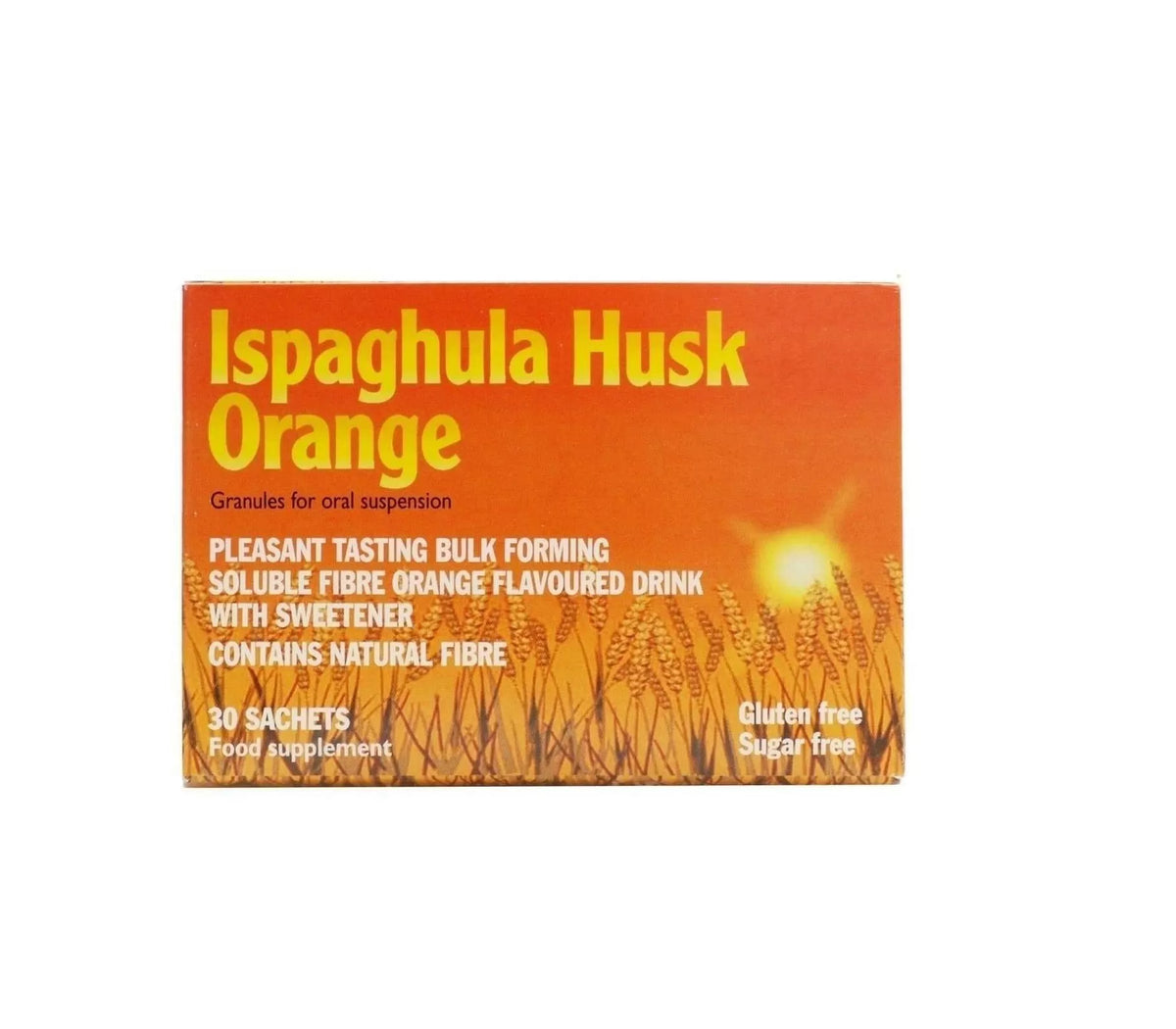
Ispaghula Husk Orange 30 sachets
Ispaghula Husk Orange 30 sachets
- ✔️ Relieves constipation gently using natural plant-derived fibre
- ✔️ Bulk-forming action softens stools without bowel irritation
- ✔️ Orange flavour makes daily fibre supplementation more enjoyable
- ✔️ Suitable for adults and children aged six and over
- ✔️ 30 sachets provide up to 15 days of twice-daily treatment
Price Checker
 Lowest price guarantee
 Includes FREE private prescription


Couldn't load pickup availability
What Are Ispaghula Husk Sachets and How Do They Help?
Constipation is something most people experience at some point — and it can be genuinely uncomfortable. Ispaghula husk sachets offer a gentle, well-established way to get things moving again. Cured Pharmacy's Ispaghula Husk Orange 30 Sachets contain ispaghula husk, a natural plant-derived fibre sourced from the seeds of Plantago ovata. It's one of the most widely used bulk-forming laxatives in the UK, recommended by the NHS for the relief of constipation and to support bowel regularity. If you're looking for a reliable option within our constipation range, this product is a solid starting point.
Each sachet comes in a pleasant orange flavour, making it easier to take consistently — which matters, because fibre supplements only work well when used regularly alongside adequate fluid intake. At £9.49 for 30 sachets, it represents straightforward value for a product that does exactly what it says.
How Does Ispaghula Husk Work in the Gut?
Ispaghula husk is classified as a bulk-forming laxative. Unlike stimulant laxatives, it doesn't force the bowel to contract. Instead, it works by absorbing water and swelling inside the intestine, creating a soft, bulky mass that makes stools easier to pass. Here's how the process unfolds:
- The husk absorbs water in the large intestine, increasing stool volume.
- The increased bulk stimulates natural peristalsis — the wave-like muscle contractions that move stool along.
- Stools become softer and easier to pass without straining.
- Regular use helps establish a more consistent bowel pattern over time.
Because it works with your body's natural processes, ispaghula husk is generally gentler on the gut than stimulant laxatives. It's important to drink plenty of water when taking it — without adequate fluid, the husk can actually worsen constipation rather than relieve it.
Who Is Ispaghula Husk Suitable For?
This product is suitable for a wide range of people experiencing constipation or those who need to increase their dietary fibre intake. It's also used to help manage symptoms associated with irritable bowel syndrome (IBS). You might find it useful if you:
- Experience occasional or chronic constipation.
- Have been advised by a doctor to increase your fibre intake.
- Are managing IBS with constipation as a predominant symptom.
- Need a laxative that is gentle enough for longer-term use.
It is suitable for adults and children aged 6 and over. If you're also managing gut-related discomfort such as cramping, you may find our IBS and cramps collection helpful alongside this product.
How Does Ispaghula Husk Compare to Other Laxatives?
| Feature | Ispaghula Husk Sachets | Senna (Stimulant Laxative) |
|---|---|---|
| Mechanism | Bulk-forming — absorbs water, increases stool volume | Stimulates bowel muscle contractions |
| Onset of action | 12–72 hours | 8–12 hours |
| Suitable for long-term use | Yes, generally considered safe | Not recommended for prolonged use |
| Risk of dependency | Low | Higher with prolonged use |
Is Ispaghula Husk Safe to Store and Use Long Term?
Ispaghula husk sachets should be stored below 25°C in a dry place, away from direct sunlight and out of reach of children. Do not use after the expiry date printed on the packaging. Once a sachet is opened, it should be used immediately — do not prepare a drink in advance and leave it to stand, as the mixture thickens quickly.
When used as directed, ispaghula husk sachets are considered safe for ongoing use. However, if your constipation persists for more than a few days despite treatment, or if you notice any blood in your stools, unexplained weight loss, or a significant change in bowel habits, you should speak to your GP promptly. These could be signs of an underlying condition that needs investigation.
This product is a medicine. Speak to your doctor or pharmacist before using if you have an underlying medical condition or are taking other medicines.
Ispaghula Husk Orange 30 Sachets specifications
| Treatment category | Constipation relief / Bowel regularity |
| Mechanism of action | Bulk-forming laxative — absorbs water to increase stool volume |
| Effective for | Constipation, IBS (constipation-predominant), increasing dietary fibre |
| Suitable for | Adults and children aged 6 and over |
| Active ingredient | Ispaghula husk |
| Pack size | 30 sachets |
| Flavour | Orange |
| UK classification | General Sale List (GSL) |
| Drug class | Bulk-forming laxative |
| Preparation | Oral granules / powder in sachet |
| Route of administration | Oral (dissolved in water) |
Specifications of Ispaghula Husk Orange 30 Sachets
What Is Ispaghula Husk Orange and What Is It Used For?
Ispaghula Husk Orange 30 Sachets is an over-the-counter bulk-forming laxative used to relieve constipation and help restore regular bowel movements. It contains ispaghula husk — a natural dietary fibre derived from the husks of Plantago ovata seeds. The NHS recommends bulk-forming laxatives as a first-line treatment for constipation, particularly when dietary changes alone haven't been sufficient. This product is also used to manage symptoms of irritable bowel syndrome (IBS) where constipation is the main concern, and to soften stools in people who should avoid straining — for example, following surgery or in those with haemorrhoids. You can explore related products in our haemorrhoids and piles collection if this applies to you.
What Do You Need to Know Before Using Ispaghula Husk Orange?
Do not use this product if any of the following apply to you:
- You have difficulty swallowing or a narrowing of the oesophagus or gut (intestinal obstruction or stenosis).
- You have faecal impaction (a severe blockage of hardened stool).
- You are allergic to ispaghula husk or any other ingredient in the product.
- You have a sudden change in bowel habits lasting more than two weeks — see your GP first.
- You have phenylketonuria (some formulations may contain aspartame — check the label).
Speak to your doctor or pharmacist before use if you have diabetes, as ispaghula husk may affect blood glucose levels. Also consult a healthcare professional if you are pregnant or breastfeeding.
Ispaghula husk may affect the absorption of certain medicines. Known interactions include:
- Lithium — reduced absorption possible.
- Digoxin — reduced absorption possible.
- Warfarin and other anticoagulants — may affect levels; monitor closely.
- Carbamazepine — potential for reduced absorption.
To minimise interaction risk, take other medicines at least one hour before or several hours after ispaghula husk.
How Should You Use Ispaghula Husk Orange Sachets?
Always use this product exactly as directed on the label or as advised by your pharmacist. It must be taken with adequate fluid — this is not optional. Taking it without enough water can cause the husk to swell in the throat and create a choking hazard.
- Empty the contents of one sachet into a glass.
- Add at least 150ml (approximately half a glass) of cold water.
- Stir briskly and drink immediately before the mixture thickens.
- Follow with another full glass of water.
- Do not take immediately before going to bed.
| Indication | Age Group | Dose | Frequency |
|---|---|---|---|
| Constipation | Adults and children 12+ | 1 sachet | 2–3 times daily |
| Constipation | Children 6–11 years | Half to 1 sachet | 2–3 times daily (under medical supervision) |
| IBS management | Adults | 1 sachet | 2–3 times daily |
What Are the Possible Side Effects of Ispaghula Husk Orange?
Like all medicines, ispaghula husk can cause side effects, although not everyone experiences them. Most side effects are mild and tend to improve as your body adjusts to the increased fibre.
Common side effects:
- Bloating and a feeling of fullness
- Flatulence (wind)
- Abdominal discomfort or cramping
Less common side effects:
- Allergic reactions — including skin rash, itching, or in rare cases, difficulty breathing (seek immediate medical attention if this occurs)
- Oesophageal obstruction if taken without sufficient fluid
- Intestinal obstruction in patients with pre-existing gut motility problems
If you experience severe abdominal pain, vomiting, or any signs of an allergic reaction, stop taking the product and seek medical advice immediately. You can also find additional gut health support in our diarrhoea collection if your symptoms change.
How Should You Store Ispaghula Husk Orange Sachets?
- Store below 25°C in a cool, dry place.
- Keep away from direct sunlight and moisture.
- Keep out of the sight and reach of children.
- Do not use after the expiry date printed on the outer carton.
- Once opened, use each sachet immediately — do not store a prepared drink.
- Do not transfer sachets to another container.
References
Written and reviewed by our qualified team
Your safety and success are our highest priorities. Our medical team rigorously evaluates every product and piece of advice we provide, ensuring you receive only the most effective, science-backed solutions available.
Frequently Asked Questions
Where can I buy ispaghula husk sachets online in the UK?
You can buy Ispaghula Husk Orange 30 Sachets directly from Cured Pharmacy online without a prescription. It's available for just £9.49 and can be ordered from our constipation collection. No GP visit is needed — it's a General Sale List medicine available to adults and children aged 6 and over.
How does ispaghula husk work in the body?
Ispaghula husk is a bulk-forming laxative that absorbs water in the large intestine, swelling to create a soft, gel-like mass. This increased bulk stimulates the natural wave-like contractions of the bowel — known as peristalsis — encouraging a bowel movement. It works gently and does not irritate the bowel lining the way stimulant laxatives can.
How do I use ispaghula husk sachets step by step?
Empty one sachet into a glass, add at least 150ml of cold water, stir briskly, and drink immediately before the mixture thickens. Always follow with a second full glass of water to ensure the husk moves safely through your digestive system. Never take it dry or without adequate fluid, and avoid taking it immediately before bed.
What is the correct dose of ispaghula husk for adults?
The standard adult dose is one sachet taken two to three times daily. It's best taken after meals to help with tolerance and to reduce bloating. Always follow the directions on the packaging or as advised by your pharmacist — do not exceed the stated dose.
How long does ispaghula husk take to work?
Most people notice a bowel movement within 12 to 72 hours of taking their first dose. The exact timing depends on factors like your fluid intake, diet, and how severe your constipation is. If there's no improvement after 3 days of regular use, speak to your pharmacist or GP.
What is the best time of day to take ispaghula husk sachets?
Ispaghula husk is best taken after meals — for example, after breakfast, lunch, and dinner if you're on a three-times-daily dose. Taking it with food can help reduce the likelihood of bloating and wind. Avoid taking it at bedtime, as you need to remain upright and drink plenty of fluid after each dose.
Can I take ispaghula husk if I am pregnant?
Ispaghula husk is generally considered one of the safer options for managing constipation during pregnancy, as it is not absorbed into the bloodstream. However, you should always speak to your GP or midwife before starting any new medicine or supplement while pregnant or breastfeeding. They can confirm it's appropriate for your individual circumstances.
What are the side effects of ispaghula husk sachets?
The most common side effects are bloating, wind, and a feeling of fullness — these usually settle within a few days as your body adjusts to the increased fibre. Rarely, allergic reactions can occur, including skin rash or breathing difficulties, which require immediate medical attention. Taking the sachets with plenty of water helps minimise the risk of gut discomfort.
Can ispaghula husk interact with other medicines?
Yes — ispaghula husk can reduce the absorption of certain medicines, including lithium, digoxin, warfarin, and carbamazepine, if taken at the same time. To avoid this, take your other medicines at least one hour before or several hours after your ispaghula husk dose. If you're unsure, ask your pharmacist for personalised advice.
Who should not use ispaghula husk sachets?
You should not use this product if you have difficulty swallowing, a known bowel obstruction or narrowing, or faecal impaction. It's also not suitable if you have a sudden unexplained change in bowel habits lasting more than two weeks — in that case, see your GP before using any laxative. People with phenylketonuria should check the label for aspartame content.
What happens if I miss a dose of ispaghula husk?
If you miss a dose, simply take the next one at your usual time — do not double up to compensate for a missed sachet. Ispaghula husk works best when taken consistently, so try to build it into a regular mealtime routine. Missing the occasional dose is unlikely to cause any harm.
How long can you take ispaghula husk for?
Ispaghula husk is generally considered safe for longer-term use when taken as directed, unlike stimulant laxatives which are not recommended for prolonged periods. That said, if you find you need it continuously for more than a few weeks, it's worth speaking to your GP to rule out an underlying cause for your constipation. Lifestyle changes — such as increasing dietary fibre and fluid intake — should be used alongside it where possible.
Is ispaghula husk suitable for children?
Ispaghula husk sachets can be used in children aged 6 and over, but the dose is lower than for adults — typically half to one sachet two to three times daily under medical supervision. For children under 6, always consult a GP before using any laxative. You can also browse our baby and toddler collection for age-appropriate products.
What are the alternatives to ispaghula husk for constipation?
Alternatives include other bulk-forming laxatives such as methylcellulose, osmotic laxatives like lactulose or macrogol, and stimulant laxatives such as senna or bisacodyl. Ispaghula husk is often preferred as a first-line option because it mimics the action of dietary fibre and is suitable for longer-term use. Your pharmacist can help you choose the most appropriate option based on your symptoms and medical history.
What does the latest research say about ispaghula husk?
Ispaghula husk has a well-established evidence base and is recommended by the NHS and NICE as a first-line bulk-forming laxative for constipation and IBS management. Research also supports its role in helping to lower LDL cholesterol levels when used as part of a healthy diet, though this product is indicated specifically for bowel health. It remains one of the most studied and clinically supported fibre supplements available in the UK.
Written and reviewed by our qualified team

Reviewed by:
Tarun Kumar
Superintendent/ Clinical Lead
📖 Find out more about our team of medical content authors and how we ensure the accuracy of our content with our content guidelines.
Content last updated: 14 Sep 2026
Other popular options


We’re a safe and
regulated UK service

Lowest Price Guarantee

We're convinced you won't find your treatment cheaper, but if you do we'll refund the difference.
Find out more
100% discreet packaging

Discreet, unbranded packaging for every order.
Find out more

Need help?
Talk to our friendly experts now


How our service works

Service setup

Discreet packaging

Express delivery