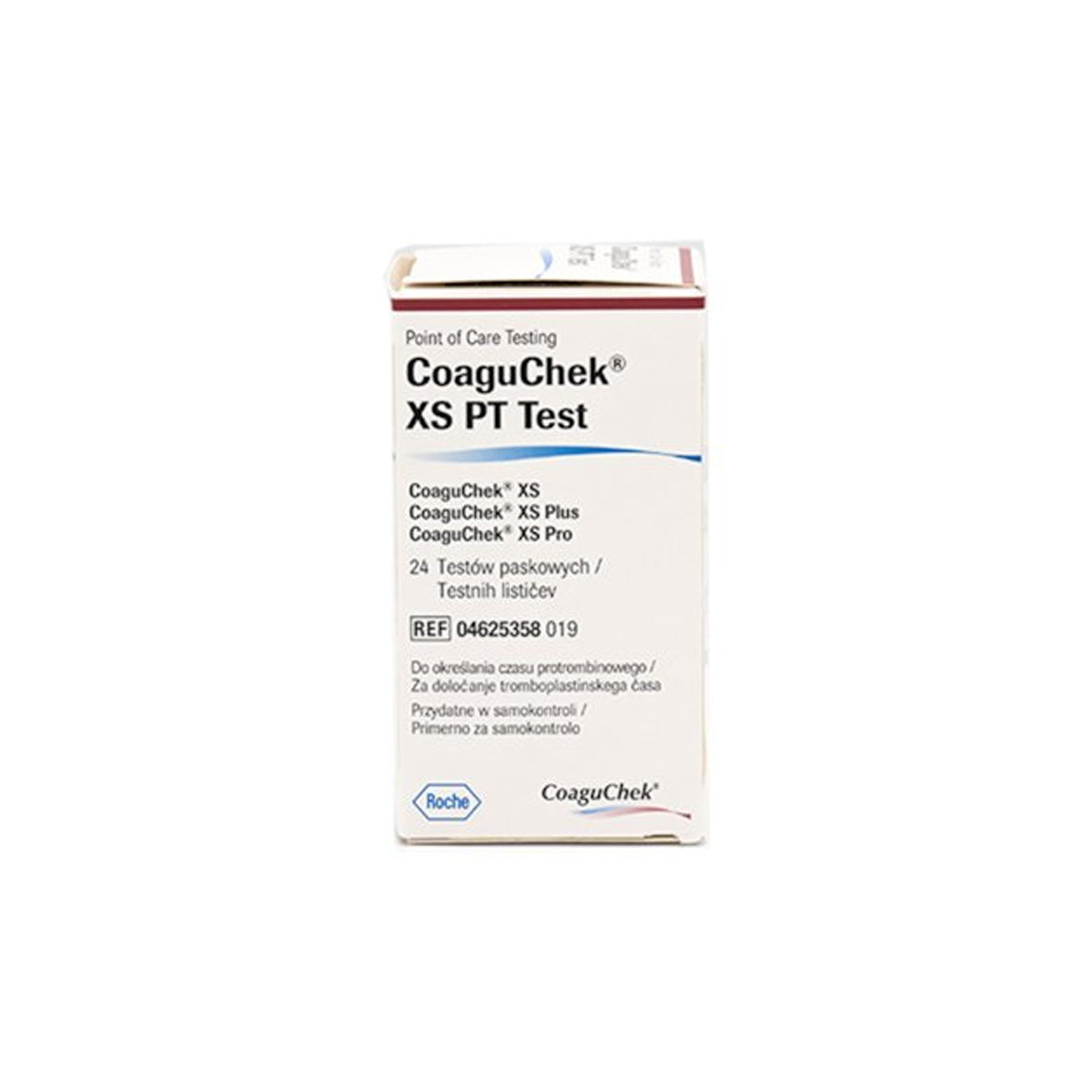
CoaguChek XS 24 PT Test Strips
CoaguChek XS 24 PT Test Strips
- ✔️ Enables accurate home PT/INR monitoring for warfarin patients
- ✔️ Pack of 24 single-use strips for consistent, reliable results
- ✔️ Compatible exclusively with the Roche CoaguChek XS meter
- ✔️ Supported by NICE guidance for warfarin self-monitoring
- ✔️ Results delivered in approximately 60 seconds per test
Price Checker
 Lowest price guarantee
 Includes FREE private prescription


Couldn't load pickup availability
What Are CoaguChek XS Test Strips and How Do They Help?
If you're managing long-term anticoagulation therapy — most commonly with warfarin — keeping a close eye on your INR (International Normalised Ratio) is essential. Too low and you risk clotting; too high and bleeding becomes a real concern. CoaguChek XS test strips give you the ability to check your PT/INR result from the comfort of your own home, using just a small fingerstick blood sample. Each pack contains 24 single-use strips, compatible exclusively with the Roche CoaguChek XS meter. At £104.99, this pack represents a practical investment for anyone on long-term warfarin therapy who wants greater independence between clinic visits.
Warfarin is one of the most commonly prescribed anticoagulants in the UK, used to prevent blood clots in conditions such as atrial fibrillation, deep vein thrombosis, and following heart valve replacement. The NHS recommends regular INR monitoring to keep patients within their therapeutic range. Home testing with CoaguChek XS test strips has been shown to support this, and many NHS anticoagulation services actively encourage self-monitoring for suitable patients. You can also explore our electrical health and diagnostic range for other monitoring devices.
How Do CoaguChek XS PT Test Strips Work?
The science behind these strips is straightforward, though the engineering is precise. Each strip contains a dried thromboplastin reagent — a substance that initiates the clotting cascade when it comes into contact with blood. Here's what happens during a test:
- You insert the strip into the CoaguChek XS meter, which automatically powers on.
- The meter prompts you to apply a blood sample when ready.
- A small drop of capillary blood (from a fingertip lancet prick) is applied to the strip's sample application zone.
- The thromboplastin reagent triggers clot formation within the blood sample.
- The meter detects the change in blood movement caused by clotting and calculates the prothrombin time (PT).
- This is automatically converted to an INR value, displayed on screen within approximately one minute.
The result reflects how quickly your blood clots relative to a standard reference — which is exactly what your anticoagulation team needs to know to adjust your warfarin dose safely.
Who Should Use CoaguChek XS PT Test Strips?
These strips are intended for adults who are already established on warfarin therapy and have been trained in self-monitoring by a healthcare professional. They are not suitable for initial anticoagulation management or for monitoring other anticoagulant medicines. Suitable users include:
- Adults taking warfarin for atrial fibrillation, DVT, pulmonary embolism, or mechanical heart valves
- Patients who have completed a self-monitoring training programme with their anticoagulation clinic
- Those who find frequent clinic visits difficult due to mobility, distance, or work commitments
- Patients whose GP or anticoagulation service has approved home INR testing
Children and patients who have not been trained in self-testing should not use this device without direct clinical supervision. Always share your home INR results with your healthcare team — home testing supports, but does not replace, professional clinical oversight.
How Do CoaguChek XS Strips Compare to Clinic-Based INR Testing?
| Feature | CoaguChek XS Home Testing | Clinic/Lab INR Testing |
|---|---|---|
| Sample type | Capillary blood (fingerstick) | Venous blood (phlebotomy) |
| Result time | ~1 minute | Hours to days |
| Convenience | Test at home, any time | Requires clinic appointment |
| Clinical oversight | Patient-led, results shared with team | Direct clinical supervision |
How Should You Store CoaguChek XS Test Strips?
Proper storage is critical to getting accurate results. Each strip is individually sealed in a foil pouch to protect the reagent from moisture and temperature fluctuations. Store your CoaguChek XS test strips between 2°C and 32°C — a cool, dry cupboard away from direct sunlight is ideal. Do not store them in the fridge unless the ambient temperature in your home regularly exceeds 32°C, and never freeze them. Once a pouch is opened, the strip must be used immediately; do not attempt to reseal and reuse.
Check the expiry date on each individual pouch before testing. Using an expired strip can produce inaccurate INR readings, which could have serious clinical consequences for anyone on warfarin. If you're also managing other health conditions alongside anticoagulation, our vitamins and supplements collection may be of interest — though always check with your pharmacist before starting any supplement while on warfarin, as many can affect INR.
This product is a medical device. Speak to your doctor or pharmacist before using if you have an underlying medical condition or are taking other medicines.
CoaguChek XS 24 PT Test Strips specifications
| Treatment category | Anticoagulation monitoring / INR self-testing |
| Mechanism of action | Thromboplastin reagent initiates clotting cascade; meter measures prothrombin time and converts to INR |
| Effective for | Monitoring warfarin therapy via PT/INR measurement |
| Suitable for | Adults on established warfarin therapy trained in self-monitoring |
| Active ingredient | Dried thromboplastin reagent |
| Pack size | 24 test strips |
| UK classification | CE-marked medical device (IVD) |
| Preparation | Single-use test strip |
| Route of administration | Capillary blood sample (fingerstick) |
| Compatible meter | Roche CoaguChek XS only |
Specifications of CoaguChek XS 24 PT Test Strips
What Are CoaguChek XS 24 PT Test Strips and What Are They Used For?
CoaguChek XS 24 PT Test Strips are single-use in vitro diagnostic (IVD) test strips manufactured by Roche. They are used exclusively with the Roche CoaguChek XS meter to measure prothrombin time (PT) and calculate the International Normalised Ratio (INR) from a small capillary blood sample obtained by fingerstick. They are intended for self-monitoring of oral anticoagulation therapy — specifically warfarin — in adults who have been trained by a healthcare professional.
Warfarin works by inhibiting vitamin K-dependent clotting factors. Because its effect varies between individuals and can be influenced by diet, illness, and other medicines, regular INR monitoring is essential to ensure the dose keeps you within your therapeutic range. The NHS supports self-monitoring for appropriate patients as part of a structured anticoagulation management programme.
What Do You Need to Know Before Using CoaguChek XS Test Strips?
These strips are a medical device, not a medicine. However, there are important contraindications and precautions to be aware of before use.
Do not use these strips if:
- You are not currently taking warfarin — these strips are not validated for DOACs (e.g. rivaroxaban, apixaban, dabigatran)
- You have not been trained in self-monitoring by a qualified healthcare professional
- The strip's individual foil pouch is damaged, open, or the strip has passed its expiry date
- You are using a meter other than the Roche CoaguChek XS
- You have a haematocrit outside the range of 25–55% (the meter may give inaccurate results)
Warnings and precautions:
- Home INR results should always be shared with your anticoagulation team or GP — do not adjust your warfarin dose independently without clinical guidance
- Certain medicines can affect your INR, including antibiotics, antifungals, aspirin, NSAIDs, and some herbal remedies such as St John's Wort
- Dietary changes — particularly involving vitamin K-rich foods like leafy green vegetables — can alter your INR
- Illness, especially with fever or diarrhoea, can affect warfarin metabolism and INR stability
- Always perform a quality control check with the CoaguChek XS control solution periodically to verify meter accuracy
Known interactions (medicines affecting INR):
- Antibiotics (e.g. metronidazole, ciprofloxacin) — may increase INR
- Antifungals (e.g. fluconazole) — may increase INR
- Aspirin and NSAIDs — increase bleeding risk
- St John's Wort — may decrease INR
- Amiodarone — may significantly increase INR
How Should You Use CoaguChek XS PT Test Strips?
Always follow the instructions provided with your CoaguChek XS meter and the strip packaging. The general procedure is as follows:
- Wash and dry your hands thoroughly before testing.
- Remove one strip from its individual foil pouch immediately before use — do not open pouches in advance.
- Insert the strip into the CoaguChek XS meter; the meter will switch on automatically.
- Wait for the flashing blood drop symbol to appear on the meter screen.
- Use a lancet to prick the side of your fingertip and allow a small blood drop to form.
- Touch the blood drop to the edge of the strip's sample application zone — do not smear.
- Hold still while the meter processes the sample (approximately 60 seconds).
- Read your INR result on the screen and record it in your anticoagulation diary or app.
- Dispose of the used strip and lancet safely in a sharps container.
| Indication | Age Group | Typical Target INR | Testing Frequency |
|---|---|---|---|
| Atrial fibrillation | Adults | 2.0–3.0 | As directed by anticoagulation team |
| DVT / Pulmonary embolism | Adults | 2.0–3.0 | As directed by anticoagulation team |
| Mechanical heart valve | Adults | 2.5–3.5 (valve-dependent) | As directed by anticoagulation team |
What Are the Possible Side Effects of Using CoaguChek XS Test Strips?
As a medical device rather than a medicine, CoaguChek XS test strips do not cause systemic side effects. However, the fingerstick procedure itself can occasionally cause minor discomfort. If you're managing multiple health conditions and looking for other health products, our first aid collection includes lancets, plasters, and wound care essentials.
Common effects associated with fingerstick testing:
- Mild soreness or tenderness at the puncture site
- Minor bruising around the fingertip
- Small amount of bleeding that resolves quickly with gentle pressure
Less common concerns:
- Infection at the puncture site if lancet hygiene is not maintained — always use a new, sterile lancet for each test
- Inaccurate readings if the strip is expired, damaged, or used with an incompatible meter — this is a device error, not a physiological side effect, but it carries clinical risk
How Should You Store CoaguChek XS 24 PT Test Strips?
- Store between 2°C and 32°C in a cool, dry location away from direct sunlight
- Do not freeze the strips under any circumstances
- Keep strips in their individual foil pouches until the moment of use
- Do not use strips after the expiry date printed on the pouch or outer carton
- Keep out of reach of children
- Do not store in a bathroom or near sources of moisture or heat
- Once removed from the foil pouch, the strip must be used immediately — it cannot be stored for later use
If you are travelling and need to transport your strips, keep them in their original packaging and avoid leaving them in a hot car or direct sunlight. Our travel health range includes useful accessories for patients managing health conditions on the go.
References
Written and reviewed by our qualified team
Your safety and success are our highest priorities. Our medical team rigorously evaluates every product and piece of advice we provide, ensuring you receive only the most effective, science-backed solutions available.
Frequently Asked Questions
Where can I buy CoaguChek XS test strips online in the UK?
You can buy CoaguChek XS 24 PT test strips directly from Cured Pharmacy, a GPhC-registered UK online pharmacy. They are available without a prescription as they are a CE-marked medical device rather than a prescription medicine. Browse our electrical health and diagnostic collection for the full range of monitoring devices we stock.
How do CoaguChek XS test strips work in the body?
The strips contain a dried thromboplastin reagent that triggers the clotting cascade when it contacts your blood sample. The CoaguChek XS meter detects the change in blood movement as clotting occurs and calculates your prothrombin time, which is then automatically converted to an INR value. The whole process takes approximately one minute from applying the blood drop.
How do I use CoaguChek XS test strips step by step?
Insert a strip into your CoaguChek XS meter and wait for the blood drop symbol to flash on screen. Prick the side of a clean, dry fingertip with a lancet, then touch the blood drop to the strip's sample zone without smearing. Your INR result will appear on screen within about 60 seconds — record it and share it with your anticoagulation team.
Are CoaguChek XS test strips compatible with other meters?
No — CoaguChek XS PT test strips are designed exclusively for use with the Roche CoaguChek XS meter. They are not compatible with the CoaguChek XS Plus, CoaguChek INRange, or any other brand of INR meter. Using strips with an incompatible device will produce an error or an inaccurate result.
What is the correct INR range for someone on warfarin?
For most people taking warfarin, the standard target INR range is 2.0 to 3.0, though patients with mechanical heart valves may have a higher target of 2.5 to 3.5 depending on the valve type and position. Your GP or anticoagulation clinic will confirm your individual target range — never adjust your warfarin dose based on a home result without speaking to them first.
How long do CoaguChek XS test strips last once the pack is opened?
Each strip is individually sealed in its own foil pouch, so opening the outer carton does not affect the remaining strips. Once you open an individual foil pouch, however, the strip must be used immediately — it cannot be resealed or stored for later. Always check the expiry date on each pouch before testing.
Can I use CoaguChek XS strips if I take rivaroxaban or apixaban?
No. CoaguChek XS PT test strips are validated only for monitoring warfarin therapy. Direct oral anticoagulants (DOACs) such as rivaroxaban, apixaban, and dabigatran do not require routine INR monitoring and these strips are not designed or validated for use with those medicines. Speak to your GP if you are unsure which anticoagulant you are taking.
What are the alternatives to CoaguChek XS test strips for home INR testing?
The main alternative home INR testing system available in the UK is the INRatio2 PT/INR monitor. However, CoaguChek XS remains the most widely used and NHS-supported home INR testing platform in the UK, and many anticoagulation services specifically train patients on this system. Always check with your anticoagulation clinic before switching devices.
Who is eligible to use CoaguChek XS test strips at home?
These strips are suitable for adults who are established on warfarin therapy and have been trained in self-monitoring by a healthcare professional — typically through an NHS anticoagulation clinic or GP practice. Patients who are newly started on warfarin, or who have not completed a self-monitoring training programme, should not use home testing without clinical supervision.
What happens if my CoaguChek XS result is unexpectedly high or low?
If your INR result is significantly outside your target range — for example, above 4.0 or below 1.5 — contact your anticoagulation clinic or GP promptly. Do not adjust your warfarin dose independently. If you have symptoms of bleeding (unusual bruising, blood in urine or stools, prolonged bleeding from cuts) or clotting (leg swelling, chest pain, breathlessness), seek urgent medical attention.
Can food affect my INR result when using CoaguChek XS strips?
Yes. Vitamin K-rich foods — including leafy green vegetables such as spinach, kale, and broccoli — can lower your INR by counteracting warfarin's effect. Sudden changes in your diet, rather than consistent intake, tend to cause the most significant fluctuations. Try to maintain a consistent diet and inform your anticoagulation team of any major dietary changes.
How often should I test my INR at home with CoaguChek XS strips?
Testing frequency is determined by your anticoagulation team or GP based on how stable your INR has been. Some patients test weekly, others fortnightly or monthly once their INR is consistently within range. Never increase or decrease your testing frequency without guidance from your healthcare team, as over-testing can lead to unnecessary dose adjustments.
How should I dispose of used CoaguChek XS test strips and lancets?
Used lancets are sharps and must be disposed of in an approved sharps container — never in household waste or recycling. Used test strips can generally be disposed of in normal household waste, but check your local council guidelines. Your GP surgery or pharmacy can advise on sharps bin collection services in your area.
How long do people typically stay on warfarin and need to monitor their INR?
This depends entirely on the underlying condition. Some patients take warfarin for a defined period — for example, three to six months following a DVT — while others, such as those with atrial fibrillation or mechanical heart valves, may remain on it indefinitely. As long as you are taking warfarin, regular INR monitoring with CoaguChek XS test strips remains important.
What does the latest research say about home INR monitoring with CoaguChek XS?
NICE Diagnostics Guidance DG14 (2014) evaluated the CoaguChek XS system and concluded that self-monitoring of oral anticoagulation is clinically effective and cost-effective for suitable patients. Studies have shown that patients who self-monitor spend more time within their therapeutic INR range compared to those relying solely on clinic-based testing. Your anticoagulation team can advise whether self-monitoring is appropriate for your individual circumstances.
Written and reviewed by our qualified team

Reviewed by:
Tarun Kumar
Superintendent/ Clinical Lead
📖 Find out more about our team of medical content authors and how we ensure the accuracy of our content with our content guidelines.
Content last updated: 14 Sep 2026
Other popular options


We’re a safe and
regulated UK service

Lowest Price Guarantee

We're convinced you won't find your treatment cheaper, but if you do we'll refund the difference.
Find out more
100% discreet packaging

Discreet, unbranded packaging for every order.
Find out more

Need help?
Talk to our friendly experts now


How our service works

Service setup

Discreet packaging

Express delivery