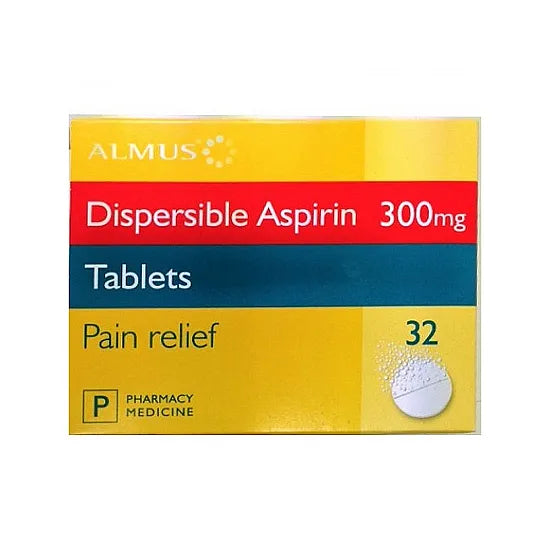
Aspirin Dispersible 300mg - 32 Tablets
Aspirin Dispersible 300mg - 32 Tablets
- ✔️ Dissolves in water for faster absorption and gentler stomach action
- ✔️ Relieves headaches, fever, and mild to moderate pain in adults
- ✔️ Suitable for adults and young people aged 16 and over
- ✔️ Each pack contains 32 tablets for reliable at-home supply
- ✔️ Acts as both an analgesic and antipyretic in a single tablet
Price Checker
 Lowest price guarantee
 Includes FREE private prescription


Couldn't load pickup availability
What Is Aspirin Dispersible 300mg and How Does It Help?
Aspirin dispersible 300mg is a widely used over-the-counter analgesic that dissolves in water before you swallow it, making it gentler on the stomach than standard aspirin tablets. Each pack contains 32 tablets, giving you a reliable supply at home for those moments when a headache or mild pain strikes unexpectedly. At just £1.05, it's one of the most accessible pain relief options available in the UK today.
Aspirin has been used clinically for well over a century. It belongs to a class of medicines called non-steroidal anti-inflammatory drugs (NSAIDs) and is licensed in the UK for the relief of mild to moderate pain, reduction of fever, and — under medical supervision — for cardiovascular protection. The dispersible form simply means the tablet breaks down quickly in a glass of water, which can help reduce direct irritation to the stomach lining.
How Does Aspirin Dispersible Work in the Body?
Aspirin works by blocking an enzyme called cyclo-oxygenase (COX-1 and COX-2). These enzymes are responsible for producing prostaglandins — signalling molecules that trigger pain, inflammation, and fever. By reducing prostaglandin synthesis, aspirin helps to ease discomfort and bring down a raised temperature.
- Inhibits COX-1 and COX-2 enzymes throughout the body
- Reduces prostaglandin production, lowering pain signals
- Decreases inflammation at the site of tissue irritation
- Lowers body temperature by acting on the hypothalamus
- Irreversibly inhibits platelet aggregation, reducing clotting (relevant at low doses for cardiovascular use)
It's worth noting that the antiplatelet effect is separate from its pain-relieving action. At 300mg, the primary use is analgesia and antipyresis — not cardiovascular prevention, which typically uses a much lower 75mg dose under medical guidance.
Who Is Aspirin Dispersible 300mg Suitable For?
This product is suitable for adults and young people aged 16 and over who need short-term relief from mild to moderate pain or fever. It is not appropriate for everyone, so it's important to check before you take it.
- Adults aged 16 and over with headaches or general pain
- People with mild fever who need an antipyretic
- Those who find standard tablets difficult to swallow and prefer a dissolved solution
- Adults with toothache, period pain, or muscular aches (short-term use)
It is not suitable for children under 16 due to the risk of a rare but serious condition called Reye's syndrome. Pregnant women, particularly in the third trimester, should avoid aspirin unless specifically advised by their doctor.
How Does Aspirin Dispersible 300mg Compare to Paracetamol?
| Feature | Aspirin Dispersible 300mg | Paracetamol 500mg |
|---|---|---|
| Drug class | NSAID / Salicylate | Analgesic / Antipyretic |
| Anti-inflammatory action | Yes | No |
| Suitable for under 16s | No | Yes (age-appropriate dose) |
| Stomach irritation risk | Moderate (reduced in dispersible form) | Low |
| Antiplatelet effect | Yes | No |
How Should You Store Aspirin Dispersible 300mg?
Store your aspirin dispersible 300mg tablets below 25°C in a dry place, away from direct sunlight and moisture. Bathrooms are not ideal storage locations due to humidity. Always keep medicines out of the sight and reach of children — a locked medicine cabinet is a sensible choice for any household.
Check the expiry date on the packaging before use. Do not use tablets that appear discoloured, crumbled, or have an unusually strong vinegar-like smell, as this can indicate degradation of the active ingredient. If you're managing multiple medicines at home, you might also find our vitamins and supplements range useful for supporting your general health alongside any pain management routine.
This product is a medicine. Speak to your doctor or pharmacist before using if you have an underlying medical condition or are taking other medicines.
Aspirin Dispersible 300mg - 32 Tablets specifications
| Treatment category | Pain relief, antipyretic |
| Mechanism of action | COX-1 and COX-2 enzyme inhibition; reduces prostaglandin synthesis |
| Effective for | Mild to moderate pain, headache, fever, muscular aches |
| Suitable for | Adults and young people aged 16 and over |
| Active ingredient | Aspirin (acetylsalicylic acid) 300mg |
| Pack size | 32 tablets |
| Strength | 300mg |
| UK classification | General Sale List (GSL) |
| Drug class | NSAID / Salicylate |
| Preparation | Dispersible tablet |
| Route of administration | Oral (dissolved in water) |
Specifications of Aspirin Dispersible 300mg - 32 Tablets
What Is Aspirin Dispersible 300mg and What Is It Used For?
Aspirin dispersible 300mg tablets contain acetylsalicylic acid as the active ingredient. They are used for the short-term relief of mild to moderate pain — including headaches, toothache, period pain, and muscular aches — as well as for reducing fever. The dispersible formulation means each tablet is dissolved in a glass of water before swallowing, which can help reduce the risk of stomach irritation compared to standard aspirin tablets.
This medicine is classified as a General Sale List (GSL) product in the UK, meaning it can be purchased without a prescription. However, that doesn't mean it's without risk. Always read the label carefully and follow the dosage instructions provided.
What Do You Need to Know Before Using Aspirin Dispersible 300mg?
Before taking this medicine, it's essential to check whether it is appropriate for you. There are several situations where aspirin should be avoided entirely.
Do not take aspirin dispersible 300mg if you:
- Are under 16 years of age (risk of Reye's syndrome)
- Are allergic to aspirin, other salicylates, or any NSAID (e.g. ibuprofen, naproxen)
- Have or have had a peptic ulcer or gastrointestinal bleeding
- Have severe kidney, liver, or heart failure
- Are in the third trimester of pregnancy
- Have haemophilia or another bleeding disorder
Aspirin may interact with the following medicines:
- Warfarin and other anticoagulants — increased bleeding risk
- Other NSAIDs (e.g. ibuprofen) — increased risk of side effects
- Methotrexate — aspirin can increase methotrexate toxicity
- SSRIs (e.g. fluoxetine, sertraline) — increased risk of gastrointestinal bleeding
- Antidiabetic medicines — aspirin may enhance their glucose-lowering effect
- Antihypertensives — aspirin may reduce their effectiveness
Always tell your pharmacist or GP about all medicines you are taking, including herbal remedies and supplements. If you're also managing a long-term condition and monitoring your health at home, our electrical health and diagnostic range includes useful monitoring devices.
How Should You Use Aspirin Dispersible 300mg?
Always take aspirin dispersible 300mg exactly as directed on the label or as advised by your pharmacist. Never exceed the recommended dose.
- Drop the required number of tablets into a full glass of water (at least 150ml)
- Stir until the tablets are fully dissolved — do not swallow whole
- Drink the solution immediately after dissolving
- Take with or after food to help reduce stomach irritation
- Wait at least four hours before taking your next dose
| Indication | Age Group | Dose | Frequency |
|---|---|---|---|
| Mild to moderate pain / fever | Adults and young people 16+ | 300mg–900mg (1–3 tablets) | Every 4–6 hours; max 3,600mg/24 hrs |
| Children under 16 | Under 16 | Not recommended — do not use | |
What Are the Possible Side Effects of Aspirin Dispersible 300mg?
Like all medicines, aspirin can cause side effects, although not everyone experiences them. Knowing what to look out for helps you use this medicine safely.
Common side effects:
- Stomach irritation or discomfort
- Nausea
- Indigestion (dyspepsia)
- Mild heartburn
Less common side effects:
- Gastrointestinal bleeding (black or tarry stools, vomiting blood — seek urgent help)
- Allergic reactions including skin rash, itching, or swelling
- Bronchospasm (worsening of asthma symptoms) in susceptible individuals
- Tinnitus (ringing in the ears) — particularly with higher doses
- Prolonged bleeding time after cuts or injury
If you experience any serious side effects, stop taking aspirin and contact your GP or call 111 immediately. For minor stomach discomfort, taking the dissolved tablet with food usually helps. You can also browse our indigestion range if you need additional support for stomach symptoms.
How Should You Store Aspirin Dispersible 300mg?
- Store below 25°C in a cool, dry place
- Keep away from direct sunlight and moisture
- Do not store in a bathroom or near a sink
- Keep out of the sight and reach of children
- Do not use after the expiry date printed on the packaging
- Dispose of unused medicines via your local pharmacy — do not flush down the toilet or throw in household waste
References
- https://www.nhs.uk/medicines/aspirin-for-pain-relief/
- https://www.nhs.uk/medicines/aspirin-for-pain-relief/who-can-and-cannot-take-aspirin-for-pain-relief/
- https://www.nhs.uk/medicines/aspirin-for-pain-relief/how-and-when-to-take-aspirin-for-pain-relief/
- https://www.nhs.uk/medicines/aspirin-for-pain-relief/side-effects-of-aspirin-for-pain-relief/
- https://www.nhs.uk/medicines/aspirin-for-pain-relief/taking-aspirin-for-pain-relief-with-other-medicines/
- https://bnf.nice.org.uk/drugs/aspirin/
Written and reviewed by our qualified team
Your safety and success are our highest priorities. Our medical team rigorously evaluates every product and piece of advice we provide, ensuring you receive only the most effective, science-backed solutions available.
Frequently Asked Questions
Where can I buy aspirin dispersible 300mg online in the UK?
You can buy aspirin dispersible 300mg tablets directly from Cured Pharmacy, a GPhC-registered UK online pharmacy, without a prescription. It's available as a General Sale List medicine, so no consultation is required. Simply add it to your basket alongside any other pain relief products you need and proceed to checkout.
How does aspirin dispersible 300mg work in the body?
Aspirin works by irreversibly inhibiting the cyclo-oxygenase (COX-1 and COX-2) enzymes, which are responsible for producing prostaglandins — the chemicals that cause pain, inflammation, and fever. By reducing prostaglandin levels, aspirin eases discomfort and helps bring down a raised temperature. At 300mg, the primary action is analgesic and antipyretic rather than cardiovascular.
How do I take aspirin dispersible 300mg step by step?
Drop one to three 300mg tablets into a full glass of water and stir until completely dissolved — never swallow them whole. Drink the solution straight away, ideally with or after food to reduce the chance of stomach irritation. Repeat every four to six hours as needed, but do not exceed 3,600mg (twelve tablets) in any 24-hour period.
What is the correct dose of aspirin 300mg for adults?
The standard adult dose for pain relief or fever is 300mg to 900mg (one to three tablets) every four to six hours. The maximum dose in 24 hours is 3,600mg. Always use the lowest effective dose for the shortest time necessary, and speak to a pharmacist if you are unsure.
What is the best time to take aspirin dispersible 300mg?
There is no single "best" time of day — you should take aspirin dispersible 300mg when your symptoms require it, spacing doses at least four hours apart. Taking it with or after food is always advisable to minimise stomach irritation. If you are using it for a specific condition under medical guidance, follow your doctor's instructions on timing.
Who should not take aspirin dispersible 300mg?
Aspirin is not suitable for children under 16, people with a known allergy to aspirin or other NSAIDs, those with active peptic ulcers, or individuals with severe kidney, liver, or heart failure. Women in the third trimester of pregnancy should also avoid it unless directed by a doctor. If you have asthma, check with your pharmacist first, as aspirin can trigger bronchospasm in some people.
Can I take aspirin dispersible 300mg for a headache?
Yes — aspirin dispersible 300mg is a well-established option for relieving general headaches in adults and young people aged 16 and over. It works by reducing the prostaglandins that contribute to head pain and associated inflammation. If your headaches are frequent, severe, or accompanied by other symptoms, you should speak to your GP rather than relying on over-the-counter pain relief.
What are the most common side effects of aspirin 300mg tablets?
The most common side effects are stomach irritation, nausea, and indigestion — these are more likely if you take aspirin on an empty stomach. Taking the dissolved tablet with food usually helps manage these symptoms. If you experience black or tarry stools, vomiting blood, or signs of an allergic reaction, stop taking aspirin and seek urgent medical advice.
How do I manage side effects of aspirin dispersible 300mg?
Always dissolve the tablet fully in water and take it with or after food — this is the single most effective way to reduce stomach-related side effects. Avoid alcohol while taking aspirin, as this significantly increases the risk of gastrointestinal bleeding. If stomach discomfort persists, speak to your pharmacist, who may suggest an appropriate antacid or alternative pain reliever.
Can I take aspirin dispersible 300mg with other medicines?
Aspirin interacts with several medicines, including warfarin, other NSAIDs, methotrexate, SSRIs, and some antidiabetic drugs. These interactions can increase the risk of bleeding or alter the effectiveness of other treatments. Always tell your pharmacist or GP about every medicine you are taking before starting aspirin.
What happens if I miss a dose of aspirin dispersible 300mg?
If you are taking aspirin for short-term pain relief and miss a dose, simply take it when you next need it — there is no need to double up. Aspirin for pain relief is taken as required rather than on a strict schedule, so missing a dose is not usually a concern. If you are taking aspirin under medical supervision for a specific condition, follow your doctor's advice on what to do if you miss a dose.
Is aspirin dispersible 300mg safe during pregnancy?
Aspirin at 300mg is generally not recommended during pregnancy, particularly in the third trimester, as it can affect the baby's circulation and may prolong labour. Low-dose aspirin (75mg) is sometimes prescribed during pregnancy for specific medical reasons, but only under close medical supervision. Always consult your midwife or GP before taking any medicine during pregnancy.
What are the alternatives to aspirin dispersible 300mg?
Common alternatives for mild to moderate pain relief include paracetamol 500mg and ibuprofen 200mg or 400mg, both of which are available over the counter. Paracetamol is generally better tolerated by the stomach and is suitable for a wider range of people, including those who cannot take NSAIDs. You can explore the full range of options in our first aid collection.
How long can you take aspirin dispersible 300mg for pain relief?
Aspirin dispersible 300mg should not be used for pain relief for more than three consecutive days without consulting a pharmacist or GP. Prolonged use without medical supervision increases the risk of gastrointestinal side effects, including ulcers and bleeding. If your pain or fever has not improved within three days, seek professional advice.
What does the latest research say about aspirin for pain relief?
Aspirin remains a well-evidenced analgesic and antipyretic, with decades of clinical data supporting its use for mild to moderate pain in adults. Recent guidance from the NHS and MHRA continues to recommend it as a first-line OTC option for headache and general pain in adults aged 16 and over. Research into its cardiovascular and anti-inflammatory properties continues, but for everyday pain relief, the evidence base is well established and consistent.
Written and reviewed by our qualified team

Reviewed by:
Tarun Kumar
Superintendent/ Clinical Lead
📖 Find out more about our team of medical content authors and how we ensure the accuracy of our content with our content guidelines.
Content last updated: 14 Sep 2026
Other popular options


We’re a safe and
regulated UK service

Lowest Price Guarantee

We're convinced you won't find your treatment cheaper, but if you do we'll refund the difference.
Find out more
100% discreet packaging

Discreet, unbranded packaging for every order.
Find out more

Need help?
Talk to our friendly experts now


How our service works

Service setup

Discreet packaging

Express delivery